



Lettuce Grow is a hydroponic gardening brand that focuses on helping you grow fresh produce at home through vertical garden systems and pre-grown seedlings. The brand’s product lineup includes indoor growing equipment, seedlings, plant nutrients, lighting accessories, and maintenance supplies. Its systems are intended for both indoor and outdoor use, making them suitable if you have limited gardening space, such as balconies, patios, or small kitchens.
In this review, we will explore what the brand offers, along with its potential advantages. We will also compare it with similar options to understand how its offerings differ in terms of convenience, product variety, and growing experience.
Founded by Zooey Deschanel and Jacob Pechenik, Lettuce Grow centers its approach around making home-grown food more accessible. The brand’s primary product category includes vertical hydroponic systems called Farmstands, and it also offers the Counterstand Set, which supports growing in limited indoor spaces. It also features a broad selection of pre-sprouted seedlings.
According to the brand, these seedlings are non-GMO, pesticide-free, and cultivated by its farming and horticulture teams before being shipped. It also provides recipes, growing guides, and quizzes aimed at helping you choose suitable systems and maintain your plants more easily.
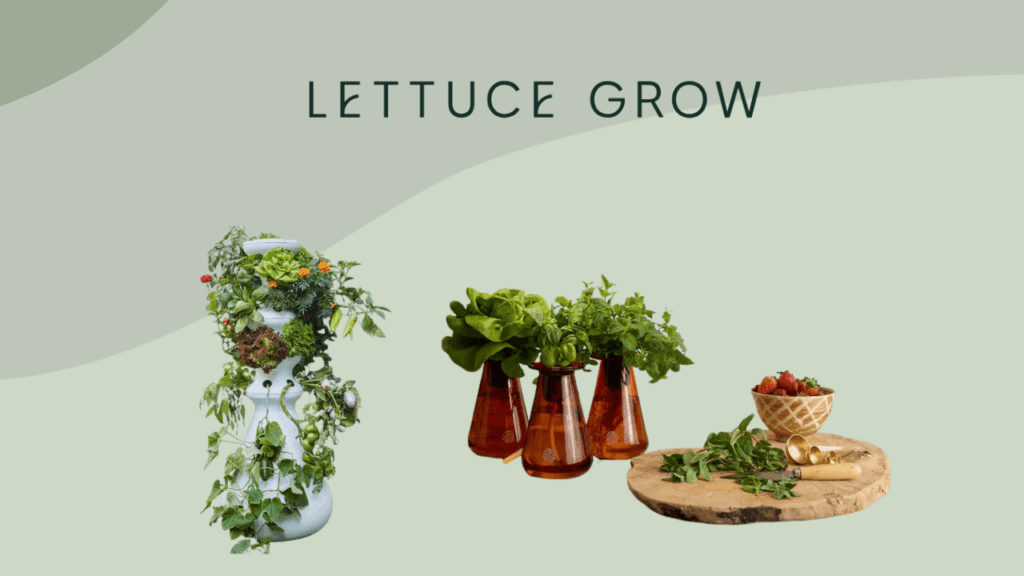
Farmstand models are designed for indoor hydroponic growing, ranging from compact countertop systems to larger vertical gardens. The smaller Counterstand Set is built for kitchen counters, shelves, and windowsills, allowing you to grow herbs, lettuces, edible flowers, and leafy greens such as basil, cilantro, bok choy, parsley, arugula, mint, and Swiss chard. The setup includes three glass Counterstands with live plants and an optional LED Glow Lamp that mimics sunlight, supports year-round indoor growth, and includes an automatic timer. You can begin harvesting within about three weeks through its soil-free growing system and app-guided maintenance alerts.
For larger indoor growing needs, it offers the Farmstand Nook, a compact vertical hydroponic garden capable of growing up to 20 plants simultaneously. Unlike the Counterstand, the Nook supports a wider crop range, including strawberries, cherry tomatoes, peppers, kale, beans, lettuce varieties, herbs, celery, and edible flowers. The model includes built-in LED grow lights, a self-watering and self-fertilizing system, and a 9-gallon water tank intended for year-round indoor use without requiring direct sunlight.
| Category | Seedling Varieties |
| Greens & Herbs | Classic Butter Lettuce, Romaine, Rainbow Swiss Chard, Genovese Basil, Thyme, Cilantro, and Spearmint. |
| Vegetables | Cherry Tomato, Zucchini, Mini Cucumber, Jalapeño Pepper, Dragon Tongue Beans, and Romanesco Cauliflower. |
| Edible Flowers | Zinnia, Snapdragon, Dwarf Sunflower, Marigold, and Viola Mix. |
As per the official site, Lettuce Grow centers on living, pre-sprouted seedlings shipped at about three weeks old, with more than 200 varieties in rotation across greens, herbs, vegetables, fruits, and edible flowers. The company states that these seedlings are nurtured by its own farmers and horticulturalists from seed to germination, checked for root size and pests before shipment, and delivered through optimized routes to reduce transit stress. Its operating model goes beyond a one-time hardware sale because the Farmstand systems are built around recurring seedling replenishment.
The brand also links that seedling program to a guided crop-selection workflow after purchase, with starter seedling credits redeemed separately once the unit arrives. That creates a controlled growing environment where the plant form factor, spacing, and crop menu are designed for the Farmstand platform itself.
You may find this structure lowers the usual germination barrier that comes with home hydroponics. This also helps you start with established plants instead of managing seed starts, thinning, or failed sprouting, which is useful if you want faster early harvests and a more standardized refill process.
Lettuce Grow packages the brand as a guided system with a self-watering, self-fertilizing Farmstand, a setup guide, an app for reminders and harvest alerts, included testing and nutrient tools, and a 3-year warranty plus a 90-day trial on Farmstand orders. The Original Farmstand can be configured indoors or outdoors, and the indoor version includes removable LED Glow Rings. The company also offers an in-home setup service through certified Grow Pros.
The support layer extends into practical operation. The assembly materials specify placement needs, light requirements, weekly water refills, and a minimum 2-foot by 2-foot footprint. The Grow Pro setup support covers steps such as tank filling, pH adjustment, nutrient dosing, system checks, and maintenance walkthroughs. You may benefit from this if you want a home-growing brand with defined operational support. It gives you more hand-holding than a bare hardware purchase, especially if setup, water chemistry, and lighting logistics are the parts you are least confident about.
Lettuce Grow markets the Farmstand ecosystem as a simple, low-maintenance growing option, but the system involves far more operational responsibility than the branding initially suggests. The platform depends heavily on live-seedling logistics, making timing-sensitive deliveries vulnerable to shipping delays, heat exposure, weather conditions, and scheduling conflicts that can directly affect plant viability. Its hardware package includes a water pump, timer, nutrient scoops, and pH tools, which signals a more involved operating routine.
The Original Farmstand starts at a premium $574 base price for the smallest 18-plant configuration, while many of the components required to recreate the polished indoor setups are available separately. Indoor operation often requires additional Glow Ring lighting systems starting around $399, rolling dollies for moving the heavy reservoir base, water-resistant floor mats, and optional paid in-home assembly services.
The broader setup also depends on continuous power access, roughly 4 square feet of level floor space, weekly water refills, and extended daily grow-light usage. You may run into friction if you want a truly low-touch indoor appliance. It also becomes essential to plan for lighting, water, electricity, placement, and periodic nutrient and pH management before the system becomes routine.
Rise Gardens and Lettuce Grow both operate in the home hydroponic gardening category, but their systems, growing methods, and user experience differ considerably. As per its official website, Rise Gardens centers its ecosystem around modular indoor hydroponic systems with horizontal grow beds and smart automation features. Its product lineup includes the Personal Rise Garden for 8–12 plants, the Rise Garden 3, and the Rise Loft, a 36-plant furniture-style indoor unit. The company places significant emphasis on WiFi-enabled controls, app-guided maintenance, automated LED lighting, and expandable configurations that allow you to increase growing capacity over time. However, Lettuce Grow approaches the category differently through vertically stacked Farmstand systems intended for both indoor and outdoor use. Its lineup also includes the Original Farmstand for 18–36 plants, the Farmstand Nook for smaller indoor spaces with 20 plants, and the Counterstand Set.
The two brands also differ in how plants are introduced into their systems. Rise Gardens primarily uses seed pods that begin in nursery trays before being transferred into the main hydroponic unit after germination. The growing process is structured through staged milestones, including initial pod placement, seedling transfer, ongoing nutrient additions, and harvesting, depending on the crop. It also features a Rise app that functions as a management tool for tracking watering schedules, nutrient timing, and lighting reminders throughout the growing cycle. In comparison, Lettuce Grow avoids much of the early germination stage by shipping living seedlings that are already rooted and partially grown before arrival. According to the brand, seedlings are typically 3–4 weeks old when delivered.
Crop selection and production scale are also positioned differently between the brands. Rise Gardens places greater emphasis on system expansion and crop variety. The company states that certain configurations can produce up to 40 pounds of produce monthly and support over 100–200 plant varieties. Its catalog includes crops such as Everbearing Strawberries, Mini Pumpkins, Dasher II Cucumbers, Purple Basil, Mojito Mint, Shishito Peppers, and edible flowers. The brand also highlights varieties that are less common in standard grocery stores, including shiso and specialty herbs. Lettuce Grow’s seedling catalog focuses more heavily on vegetables, greens, herbs, and edible flowers commonly used in home cooking. Examples include Butter Lettuce, Lunchbox Peppers, Genovese Basil, Oregano, Snow Peas, Chamomile, and Mini Cucumbers.
The role of automation and technology also differs between the two systems. Rise Gardens positions its app as a central component of the growing process, combining lighting controls, maintenance reminders, crop planning, nutrient schedules, and plant management. The company also supports modular extensions, multi-level grow beds, and guided cultivation tools intended to support larger indoor growing setups. Meanwhile, Lettuce Grow includes automated watering and lighting support as well, but the technology is presented more as a background convenience feature than the primary focus of the system. The company instead emphasizes simplified maintenance and reduced setup complexity, particularly if you have limited gardening experience.
As per their official website, Rise Gardens focuses more on larger indoor growing capacity, modular expansion, and greater involvement in hydroponic cultivation management. Lettuce Grow, in comparison, focuses more on simplified vertical growing systems, pre-grown seedlings, and lower-effort onboarding.
Gardyn focuses on connected indoor growing systems supported by automation, sensors, cameras, and AI-assisted plant management. Its ecosystem revolves around the Gardyn Home and Gardyn Studio systems, which support 30 plants and 16 plants, respectively. Its Gardyn Home is positioned for households of 3–4 people, while the Gardyn Studio is aimed more toward apartment settings and smaller households. Meanwhile, Lettuce Grow takes a broader home-gardening approach centered around hydroponic convenience and simplified growing. Its product range includes the Original Farmstand, which supports 18–36 plants indoors or outdoors, and the smaller Counterstand Set designed for countertop herb and greens cultivation.
The planting process itself highlights another major difference between the brands. Gardyn relies on proprietary yCubes that sprout and develop within the system over time. The growing cycle is structured around stages such as sprouting, harvesting, maintenance, and replacing plants through the app ecosystem. However, Lettuce Grow removes much of the germination phase by shipping seedlings that are already 3–4 weeks old when delivered. The company emphasizes this approach as a way to reduce failed germination and shorten the time until harvest. Its systems are marketed around harvest timelines of approximately 21 days for certain greens and herbs, while Gardyn focuses more on maintaining long-term harvest cycles across a larger plant system.
Plant variety is also presented differently across the two brands. Gardyn promotes access to more than 100 non-GMO plant varieties through its yCube catalog, including greens, herbs, and vegetables such as Pink Swiss Chard. The emphasis is placed on maintaining a diverse indoor growing system supported by automated care. Lettuce Grow also offers a large variety of herbs, greens, vegetables, and edible flowers, including Butter Lettuce, Snow Peas, Lunchbox Peppers, Garlic Chives, and Rainbow Swiss Chard. However, the presentation is tied more closely to cooking, harvesting, and kitchen use.
Their accessory ecosystems also highlight some differences. Gardyn offers proprietary components and maintenance accessories, including HydroBoost, Harvest Kits, yPods, ySleeves, and bundled accessory packages connected to its growing ecosystem. Meanwhile, Lettuce Grow’s accessory catalog is more focused on practical growing support and kitchen integration, including Glow Rings, Dollies, cleaning kits, nutrient supplies, and harvesting tools.
Gardyn is built around automation and plant monitoring. However, Lettuce Grow focuses more on simplified hydroponic food growing centered around accessibility and convenience.
To evaluate Lettuce Grow, we analyzed customer discussions shared on Reddit from 2025. A consistent pattern across the feedback was the strong satisfaction with the Farmstand hardware itself. Many users described the system as reliable, easy to maintain, and capable of supporting year-round herb and leafy green production. Several customers stated they had been using their systems for multiple years, with some calling it one of the few purchases they did not regret.
However, we noticed repeated criticism surrounding the Lettuce Grow app. Multiple users described the software experience as outdated, poorly maintained, or lacking meaningful updates. This concern appeared frequently, even among otherwise satisfied customers. While users generally trusted the physical product, the app was commonly viewed as the weakest part of the experience.
Another factor we considered was how dependent customers felt on the brand after purchase. Many experienced users explained that they no longer relied on official Lettuce Grow seedlings and instead grew their own plants using compatible pods, seeds, or third-party materials. Several users even stated that the Farmstand would remain functional if the company ever shut down because alternative growing supplies could easily be adapted. This indicates that customers view the system as flexible.
Based on the discussions we evaluated, Lettuce Grow appears to operate more like a dependable gardening product brand. Customer trust is currently sustained by the system’s practical usefulness and adaptability. However, it's better to remain cautious about whether the company can maintain the same level of reliability across its app experience, long-term support, and ecosystem.
We evaluated Lettuce Grow by reviewing the brand’s background, product positioning, customer-facing policies, and publicly available consumer feedback. The brand currently holds a B- rating on BBB, which suggests mixed customer experiences. One recent complaint highlighted issues involving delayed return label processing, slow customer service responses, lack of upfront clarity around return-related fees, and separate return shipping charges for bundled products. The customer also described difficulty obtaining timely escalation support and expressed frustration over extended communication timelines during the return process. Since the complaint was later marked as resolved, it suggests the company ultimately addressed the issue, although the experience itself still reflects concerns around efficiency and communication during returns.
We think the brand may still be adjusting its operational processes as its customer base grows. The complaint history does not strongly indicate widespread product reliability issues, but it does suggest that customer expectations may not always be met consistently. This creates concerns around the ownership experience, especially when making high-cost purchases that typically require stronger post-purchase support and clearer service coordination.
Lettuce Grow aims to simplify parts of the growing process, particularly early-stage plant establishment, where germination inconsistency is common in traditional gardening. However, the systems still require regular maintenance involving nutrient balance, water monitoring, reservoir cleaning, and environmental management.
The brand’s hydroponic systems can become sensitive to pH fluctuations, algae buildup, mineral residue accumulation, water temperature instability, and equipment interruptions when maintenance is inconsistent.
You should also consider that controlled-environment growing systems may require ongoing monitoring of light exposure and reservoir hygiene to reduce the risk of mold formation or bacterial contamination in stagnant water conditions.
Indoor setups can also increase dependency on artificial lighting and electricity usage, particularly in low-sunlight environments. The brand’s reliance on compatible seedlings and recurring growing inputs may further affect long-term flexibility and operating costs for people intending to maintain continuous harvest cycles. Lettuce Grow claims to balance convenience with ongoing maintenance demands, making it more aligned with guided hydroponic cultivation than a fully hands-off gardening setup.

Contact us at [email protected] or follow @leafsnap on Twitter! View our Privacy Policy.