
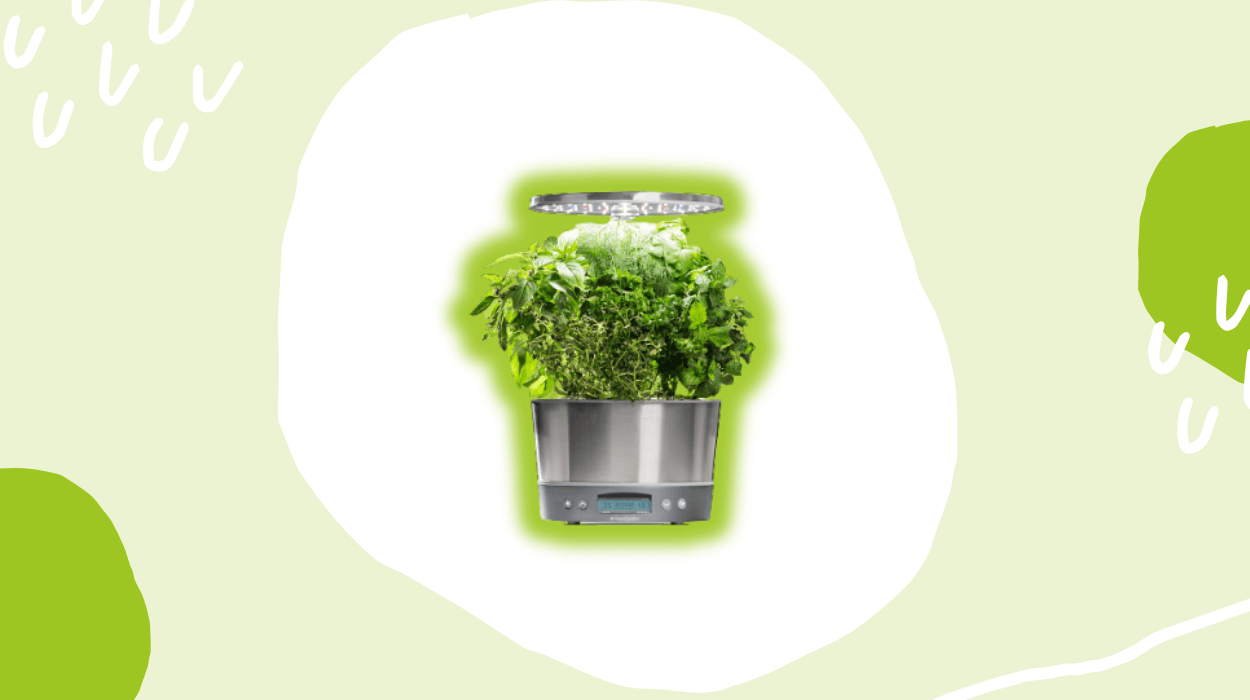

AeroGarden is an indoor hydroponic gardening brand focused on helping you grow herbs, vegetables, flowers, and greens inside your home with compact countertop systems.
The brand keeps its approach around soil-free indoor growing, built-in grow light systems, and simplified gardening setups intended for apartments, kitchens, and smaller indoor spaces. However, does the convenience and smart-growing approach actually make indoor gardening easier for everyday use?
In this review, we examine the brand’s hydroponic growing systems, ease of use, indoor gardening features, and real user experiences with its offerings. The review also explores the overall value the brand offers for home-based indoor gardening and countertop food growing.
AeroGarden operates under ScottsMiracle-Gro, a gardening company formed through the 1995 merger of Scotts and Miracle-Gro. The brand positions itself within the indoor gardening and hydroponic growing segment while extending into seed pod kits, grow lights, countertop garden systems, and gardening accessories. Its catalog includes compact garden models such as Harvest, Bounty, and Sprout, along with plant pod kits for herbs, tomatoes, peppers, lettuce, and other vegetables commonly grown indoors.
The brand also organizes its offerings around plant categories, growing height, indoor placement needs, and seasonal growing preferences, allowing you to select systems based on available counter space and the type of produce you plan to grow indoors throughout the year. It also extends into guided indoor gardening education through resources covering hydroponic gardening basics, indoor garden setup, and crop-specific growing instructions for plants such as peppers and herbs.
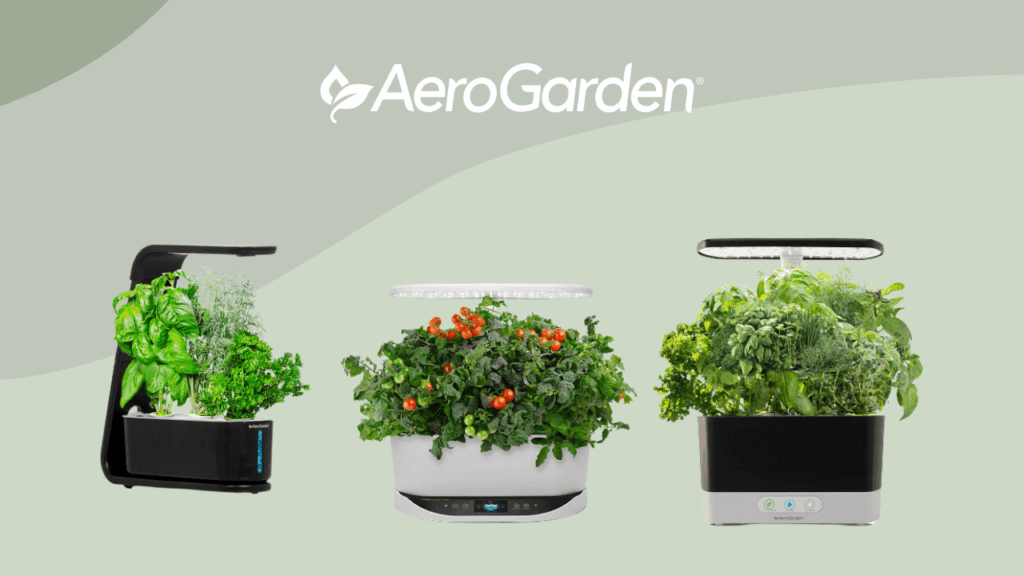
Indoor Garden Systems are built around compact hydroponic growing systems that pair water-based growing, full-spectrum LED lighting, and automated reminders to support plant growth indoors without soil, aligning with broader hydroponic cultivation research focused on controlled-environment growing efficiency and resource optimization.
The Harvest series functions as the brand’s core countertop indoor garden line. Models such as the Harvest, Harvest Lite, Harvest XL, Harvest Elite, and Harvest Elite 360 are intended for smaller indoor spaces and generally support up to six plants at a time. Standard Harvest model uses touch-sensitive reminders and preset light cycles, while the Harvest Elite 360 adds LCD controls, customizable lighting schedules, vacation mode settings, and a stainless-steel finish.
The Sprout series is the most compact category in the range and is designed for basic herb growing and smaller countertops. Systems such as the Sprout and Sprout with Gourmet Herb Seed Pod Kit focus on simplified indoor growing with a smaller footprint. The Bounty line moves toward larger indoor harvests and more advanced growing controls.
Models such as the Bounty, Bounty Basic, and Bounty Elite feature stronger grow lights, taller grow height capacity, touchscreen controls, and support for a wider variety of plants like peppers, cucumbers, tomatoes, and vining crops.
Indoor garden systems like these may also help support emotional balance through regular interaction with plants and indoor greenery. Engaging in activities like indoor gardening helps lower cortisol levels, reduces mental fatigue, and improves mood.
Seed Kits are organized around pre-seeded pod systems made for indoor hydroponic gardens. The range is mainly divided into herbs, salad greens, vegetables, flowers, and customizable growing kits. Herb-focused options include the Gourmet Herbs Seed Pod Kit, Pizza Herb Seed Pod Kit, and Italian Herbs Seed Pod Kit.
The edible seed kit range includes leafy greens and compact fruiting plants that are grouped by plant type and growing pattern. Products such as the Heirloom Salad Greens Seed Pod Kit, Mixed Romaine Seed Pod Kit, and Mixed Kale Seed Pod Kit are intended for fast-growing greens, while kits like Sweet Bell Peppers, Fairy Tale Eggplant, and Mighty Mini Cherry Tomato are intended for indoor vegetable production. Some kits also focus on a single plant variety, such as the Pesto Basil Seed Pod Kit, which centers on Genovese basil for cooking applications.
The range also includes flexible planting systems such as the Grow Anything Seed Pod Kit and Seed Starting Systems for Harvest, Bounty, and Sprout models. Unlike the pre-seeded kits, the Grow Anything kit includes empty grow sponges, baskets, labels, and plant food so you can plant selected seed varieties separately. Seed Starting Systems are intended for early germination before plants are transferred elsewhere.
Grow Lights feature indoor lighting systems intended to support plant growth in spaces with limited natural sunlight. The range is mainly divided into the Stem Grow Light and the Trio Grow Light based on plant coverage, lighting structure, and light distribution. Both models use full-spectrum LED lighting intended to mimic natural sunlight wavelengths involved in photosynthesis.
Stem Grow Light uses a compact single-light design intended for one smaller plant at a time. Its two stabilizing prongs are placed directly into the soil, while the adjustable arm positions the 5W LED light closer to leaves and stems for focused light exposure. The Trio Grow Light uses three bendable arms with separate 5W LED lights that spread light across multiple plants at once. Its wider adjustable structure changes the direction and reach of illumination, helping distribute light more evenly across grouped indoor plants. Both grow lights also connect with the AeroGarden app, allowing remote controls, automatic light scheduling, dimming adjustments, and customized lighting cycles indoors.
AeroGarden builds around countertop hydroponic gardens that automate the core growing inputs. Its systems use water-based growing, a timed pump, and full-spectrum LED grow panels, and the brand states that plants can grow up to five times faster than in soil.
The operating model is consistent across the line with pre-seeded pods going into the unit, water is added to the basin, and the garden regulates light and water cycles for indoor growing.
Seed Pod Kits are designed to work across every model, and the brand pairs those kits with its own liquid plant food and model-specific guides. The same ecosystem extends into replacement pods, accessories, grow lights, and seed-starting systems.
You may find this structure easier to use if you want a guided entry into hydroponics without building a separate lighting, irrigation, and nutrient setup. You can stay inside one operating system for the garden, the pods, the feeding routine, and the replacement parts.
AeroGarden structures its growing system around a broad, interchangeable seed-pod ecosystem that combines both closed-format convenience and open-format planting flexibility. It offers more than 60 varieties of herbs, salad greens, tomatoes, peppers, flowers, vegetables, eggplant, and seed-starting systems, allowing you to rotate between multiple plant categories without changing the core growing hardware itself. T
Its Grow Anything Seed Pod Kit includes reusable grow baskets, grow sponges, labels, and liquid nutrients that allow you to introduce your own external seed varieties into the AeroGarden infrastructure. You can begin with highly controlled pre-seeded pod kits designed for predictable germination and simplified onboarding, then gradually transition into more customized planting setups using independently sourced seeds while still remaining inside the same reservoir, lighting, and nutrient ecosystem. The company also supports the pod system with operational guidance around germination timelines, storage practices, and replacement expectations. You may get more use out of the brand if you want to start with preloaded pods and later move into your own seed collection. It can help you start with a predictable refill system, then expand into custom varieties without leaving the brand’s format.
AeroGarden is built around its own pre-seeded pod kits, which can create ongoing costs if you grow plants regularly. Official refill kits typically cost $15–$20 per cycle, and those recurring purchases can add up over time.
While third-party pods and DIY alternatives are available, using them usually requires more work. You may need to buy seeds separately, assemble pods yourself, manage different germination rates, and handle compatibility issues on your own. It makes the system somewhat restrictive, since the easiest and most convenient way to keep growing is often through continued purchases of AeroGarden-branded pods and replacement supplies.
Mufga Hydroponics and AeroGarden both operate within the indoor hydroponic gardening segment, but the brands differ considerably in scale, product breadth, infrastructure, and gardening philosophy.
The differences between the brands become more visible through their product portfolios and category breadth. Mufga primarily concentrates on compact hydroponic growing systems such as the Mufga 8 Pods Indoor Herb Garden Kit, Mufga 12 Pods Indoor Gardening System, Mufga 18 Pods Indoor Gardening System, and LED Grow Light Hydroponic Kits. Across its lineup, the differentiation mainly comes through pod capacity, grow light adjustments, and compact indoor configurations intended for simple countertop growing. The brand does not extensively expand into adjacent gardening categories, smart gardening ecosystems, or outdoor growing products.
Meanwhile, AeroGarden offers a wide hydroponic lineup organized across gardens, seed kits, accessories, and grow lights. A few featured products include Harvest Lite, Sprout, Bounty, and Grow Anything Seed Pod Kit. The brand also simultaneously operates within Scotts Miracle-Gro’s broader catalog of gardening products like Miracle-Gro Organic Raised Bed Soil, Miracle-Gro Potting Mix, and Shake ‘N Feed Plant Food.
In terms of guidance and support ecosystem, Mufga primarily provides operational guidance through PDF setup manuals, replacement part access, and basic growing instructions intended to simplify indoor hydroponic setup and maintenance. Its ecosystem remains relatively streamlined without app integration, advanced personalization tools, or large-scale gardening education infrastructure. AeroGarden provides access to gardening blogs, seasonal growing guides, personalized lawn planning tools, AI-powered gardening assistance, and broader gardening support resources.
The brands also differ in terms of manufacturing transparency, sustainability communication, and operational scale. Mufga’s official website primarily highlights practical growing functionality, including LED grow lights, circulation systems, easy setup, and replacement component access, but provides comparatively limited public detail regarding its manufacturing certifications, third-party testing standards, sourcing protocols, or formal sustainability initiatives. Meanwhile, AeroGarden highlights large-scale manufacturing operations, research and development efforts, local sourcing initiatives, and environmental projects across its broader gardening business.
When comparing the brands, Ahopegarden and AeroGarden both operate within the indoor hydroponic gardening category, but they differ in terms of brand scale, ecosystem structure, pricing approach, and how they position indoor growing experiences.
In terms of catalog breadth, Ahopegarden primarily concentrates on hydroponic hardware systems and growing accessories, with a lineup organized around varying pod capacities and vertical growing formats. A few core offerings include the 10 Seed Pods Smart Garden, 12 Seed Pods Smart Garden, 44 Seed Pods Vertical Hydroponic Garden, and Transparent Smart Garden series. Meanwhile, AeroGarden maintains a wider ecosystem that extends beyond garden hardware into branded seed pod kits, nutrient systems, grow lights, seed starting trays, replacement components, and guided planting accessories. Its lineup includes featured product lines such as Harvest XL, Bounty, and Sprout, alongside consumable kits including the Gourmet Herb Seed Pod Kit, Golden Harvest Cherry Tomato Kit, and Heirloom Salad Greens Kit.
Accessibility and pricing also separate the brands in noticeable ways. Ahopegarden generally operates within a lower to mid-range pricing tier, with smaller countertop gardens such as the 10 Seed Pods Smart Garden and 12 Seed Pods Smart Garden priced around $52 to $60, while larger vertical systems like the 44 Pod Vertical Garden and 66 Pod Vertical Garden extend toward roughly $380 to $460. Meanwhile, AeroGarden’s entry-level garden systems, such as Sprout, begin near $50, while Harvest and Harvest Elite 360 move closer to the $100 to $125 range, and larger systems such as Bounty extend beyond $200. AeroGarden additionally offers a recurring consumable ecosystem through branded seed pod kits and nutrients, typically ranging between $14 and $30 per kit.
Ahopegarden prioritizes affordability, higher capacity vertical systems, flexible hydroponic configurations, and compact indoor growing formats intended around accessible hardware innovation. Meanwhile, AeroGarden emphasizes ecosystem integration, structured growing systems, proprietary consumables, and automated indoor gardening workflows supported by the parent brand’s Scotts Miracle-Gro infrastructure.
While evaluating AeroGarden, we closely reviewed user feedback related to the brand’s indoor gardening systems, seed pods, and overall service experience across Trustpilot, where the brand currently carries a 1.3 out of 5 rating based on more than 65 reviews.
Some users who tried products such as the Harvest Elite, Bounty Elite, and Family Farm systems described that only a small number of pods successfully sprouted, even after following setup instructions, testing water conditions, cleaning systems, and waiting beyond the expected germination period. Customer support and return handling were also recurring concerns in the feedback. A few users described frustration with the brand’s 30-day return policy, especially because some pod performance issues reportedly became noticeable only after several weeks of use. Reviews additionally referenced delayed responses, chatbot-driven interactions, disconnected support chats, and unavailable replacement parts.
However, a small portion of users shared more favorable long-term experiences with AeroGarden systems, mentioning responsive assistance, replacement support, and satisfactory indoor growing results.
Based on the feedback, AeroGarden appears to deliver mixed long-term experiences that largely depend on pod performance consistency and post-purchase support quality. We believe the brand may suit you if you are comfortable with some trial and maintenance involvement, but approaching the brand with balanced expectations regarding reliability and support handling remains important.
To evaluate the brand, we analyzed AeroGarden’s operational consistency, background, and standing across independent review forums.
On the Better Business Bureau, the brand currently maintains a D+ rating, with the brand’s review profile reflecting a history of temporary closure, relaunch activity, and updated leadership structure.
We also reviewed complaint trends to understand how the brand handled post-purchase concerns. Many complaints focused on hardware reliability issues, including touchscreen failures, flashing lights, pump problems, and units stopping operation within a certain time of use. Other concerns involved changes to the germination guarantee policy, where replacement seed pods were reportedly replaced with partial refunds. Some complaints also mentioned difficulty reaching live support, confusion around warranty coverage, and frustration over recycling or disposal responsibilities for non-working units.
Based on its operational history and public complaint activity, AeroGarden still appears to hold recognition as an established indoor gardening brand, but its reputation currently shows mixed signals. We recommend approaching the brand and its offerings with realistic expectations around its history of temporary closure, potential for delayed customer support responses, and increased costs tied to its garden systems and maintenance.
AeroGarden functions best as a convenience-focused indoor gardening brand that simplifies growing herbs, vegetables, and small plants through automated hydroponic systems and guided growing support. However, the brand’s reliance on proprietary pods, branded nutrients, and model-specific accessories may increase long-term maintenance costs and reduce flexibility for more customized growing preferences.
Indoor growing performance also depends heavily on how you manage placement, airflow, lighting conditions, and routine maintenance. Plant growth consistency may also vary based on water quality, nutrient concentration, pod spacing, room temperature, and pruning habits, making regular cleaning and monitoring important for maintaining healthier root systems.
When committing to the brand’s offerings, you should ensure careful planning around setup conditions, cleaning routines, and ongoing upkeep expectations. Positioning the system away from sleeping areas, maintaining proper airflow, and cleaning the reservoir and grow deck regularly might help reduce common indoor growing issues over time.

Contact us at [email protected] or follow @leafsnap on Twitter! View our Privacy Policy.