



Homegrown Cannabis Co is a seed retailer and genetics-focused brand. Its core lineup includes feminized seeds, autoflowering seeds, cannabis clones, and curated mix packs.
The brand positions its offerings around simplifying the cultivation process. This includes reducing uncertainty and shortening grow cycles. These products are generally associated with home horticulture and controlled cultivation setups, and support more predictable plant development, higher yields, and strain-specific profiles.
In this review, we provide a comparison of the brand with similar brands and assess its potential limitations to provide you with a detailed analysis.
Homegrown Cannabis was founded with a focus on offering a wide variety of seed options for different cultivation preferences and experience levels.
The brand’s catalog includes a broad selection of named seed products and curated collections such as Hash Burger Feminized, Blueberry Banger Feminized, and Granddaddy Purple Feminized. It also offers themed mix packs, including Best Sellers Autoflower Mix Pack, Beginner’s Feminized Mix Pack, High THC Feminized Mix Pack, Outdoor Autoflower Mix Pack, and Sativa Autoflower Mix Pack.
Product listings are organized using categories such as indica, sativa, and hybrid classifications, along with THC percentage ranges, terpene profiles, flavor notes, plant height, flowering duration, and cultivation formats like photoperiod and autoflowering varieties. The platform also includes a quiz feature intended to help you navigate product categories.
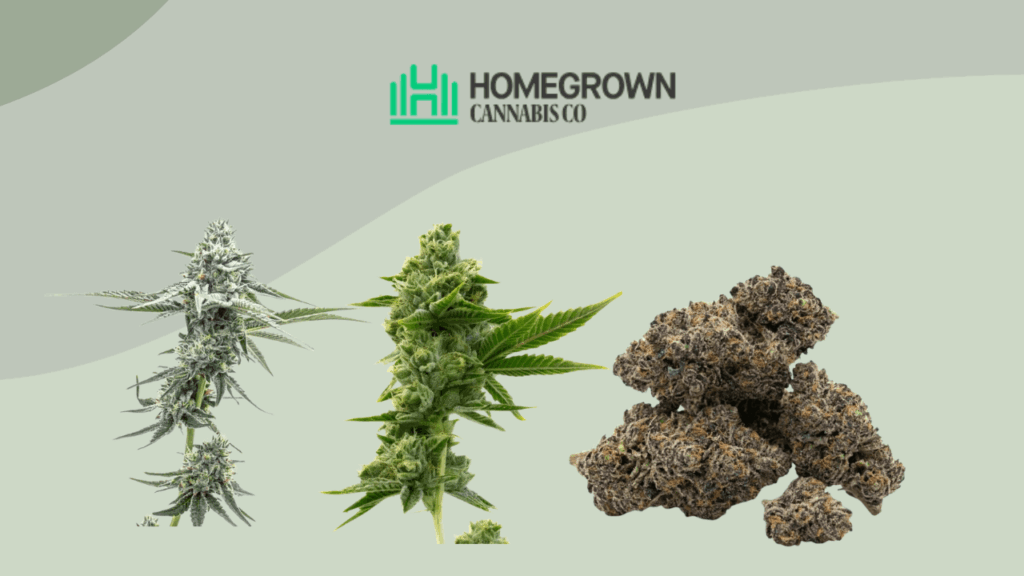
Homegrown Cannabis’s seed-distribution model operates with comparatively limited public transparency around breeder-of-origin sourcing, lineage verification, and proprietary breeding infrastructure. It heavily markets its ecosystem through cultivation personalities, educational contributors, and expert-facing content from figures such as Parker Curtis and Nate Hammer, but the underlying platform functions primarily as a large-scale commercial seed distributor. While the brand emphasizes expert branding, educational ecosystems, and cultivation mentorship, you receive limited public visibility into the exact breeding pipelines, source farms, generation histories, or independently verified genetic-development processes attached to many products. Its white-label-style aggregation structure can leave you with fewer external tools for evaluating long-term genetic consistency, phenotype predictability, or strain authenticity before purchase.
Homegrown Cannabis Co. operates with several shipping and fulfillment restrictions that place part of the transit, timing, and legal risk on you. Although the company offers reshipment protection for lost orders, those protections follow strict internal rules tied to its fulfillment process. One key concern is the 25-business-day waiting period before an order is officially considered lost or eligible for replacement. That means delayed or stalled shipments can leave you waiting weeks before any resolution begins.
The company may also deny reshipment claims for orders sent to states or regions where cannabis-seed laws remain restricted or unclear. This creates added risk if you order from legally sensitive jurisdictions, since seizures or interceptions may not qualify for replacement coverage.
Shipping flexibility is also limited because the company primarily relies on USPS. If USPS experiences delays or routing issues in your area, you have little control over alternative delivery methods. Its live cannabis clone program introduces additional risk as well. Since rooted clones are highly sensitive during transit, shipping delays can increase the chances of stress, damage, or reduced plant viability even with live-arrival guarantees and disease-testing policies.
Seed Supreme and Homegrown Cannabis Co. both operate in the cannabis seed retail market, but the two companies structure their platforms around different operational priorities. Seed Supreme functions primarily as a large-scale seed marketplace centered on extensive strain inventory, breeder partnerships, potency-focused genetics, and high product turnover. The company organizes its inventory across categories such as Feminized Seeds, Autoflower Seeds, High Yield Seeds, Beginner Seeds, Sativa Seeds, Indica Seeds, Hybrid Seeds, and Regular Seeds. Homegrown, in comparison, structures around cultivation support and grower onboarding. Its storefront combines seeds, grow supplies, beginner-oriented product groupings, and cultivation support tools within a single ecosystem.
The two brands also differ in how they include cultivation supplies. Seed Supreme offers cultivation-related products, including the Seed to Harvest Grow Kit, Germ Genie kelp extract, Root Guardian, Bug Blaster, Mold Shield, and Plant Protectants. These products appear as supplementary additions alongside the larger seed catalog. Homegrown Cannabis includes grow supplies more directly into its broader cultivation-support structure. Grow kits are positioned alongside seeds as interconnected components of the growing process.
The breeder and genetics positioning of the two brands also differ. Seed Supreme highlights breeder sourcing, exclusive genetics, and new strain releases. The company features breeder collections such as Happy Valley Genetics, including strains like Pineapple Diesel Autoflower, Easy Button Autoflower, and Oh My Thai Autoflower. It also references genetic stability, terpene profiles, resistance to pests, and resistance to diseases as part of strain selection criteria. Homegrown Cannabis focuses more on curated selection systems tied to yields, reputation, influential cultivators, and media mentions.
Seed Supreme operates as a large seed marketplace focused on strain inventory scale, potency-based merchandising, and breeder partnerships. Homegrown Cannabis Co.offers seeds, grow supplies, and curated grow pathways within a single retail structure.
ILGM and Homegrown Cannabis are structured around different retail strategies and catalog organization models. As per the official site, ILGM positions itself as a large-scale seed bank focused on extensive strain filtering, technical cultivation guidance, and high-volume seed promotions. In comparison, Homegrown Cannabis Co. combines seeds with grow supplies, clones, and curated grower-oriented product collections.
ILGM is built around a highly segmented catalog containing several seed products organized through detailed cultivation filters such as plant type, genotype, climate suitability, resilience, terpene profile, and growing environment. You can sort strains across categories, including feminized, autoflower, photoperiod, indica, sativa, and beginner. Homegrown Cannabis organizes its catalog through curated product groupings and themed collections such as Best Sellers Feminized Mix Pack, Beginner’s Autoflower Mix Pack, and High Yield Feminized Mix Pack. Its listings focus more heavily on simplified grower-oriented categories such as heavy yield, plant height, flowering periods, and broader classifications such as indica-dominant hybrid or sativa-dominant hybrid.
ILGM strongly emphasizes beginner cultivation accessibility through strain-specific classifications and structured growing systems. It highlights beginner-friendly strains, including White Widow Autoflower Seeds, Northern Lights Autoflower Seeds, Blue Cheese Autoflower Seeds, Girl Scout Cookies Extreme Autoflower Seeds, and Apple Fritter Autoflower Seeds. The listing specifies whether a strain is Beginner, Intermediate, or Advanced, allowing you to select genetics based on experience level. Homegrown Cannabis emphasizes guided learning resources, beginner-friendly cultivation education, and multimedia support systems that include videos and audio deep dives.
Their product diversification strategies also differ. ILGM also extends into nutrients, grow tools, seed mix packs, consumption accessories, and cultivation troubleshooting systems, but its core identity remains centered around seed genetics and cultivation optimization. Homegrown Cannabis Co. expands further into clones, grow supplies, wholesale programs, and rewards systems, creating a broader cultivation marketplace.
The two brands reflect different operational priorities. ILGM’s platform centers on strain performance metrics, cultivation precision, high yields, germination success, and large-scale seed catalogs. Homegrown presents a more guided and lifestyle-oriented cultivation experience built around curated bundles, accessibility, and integrated product ecosystems.
Homegrown Cannabis Co. operates in a cannabis market shaped by a mix of federal hemp rules, state cultivation laws, and evolving cannabis regulations. It works within a legal gray area that depends heavily on how cannabis seeds are classified before germination and how individual states regulate home growing.
Under current federal law, cannabis remains restricted under the Controlled Substances Act. However, ungerminated cannabis seeds have historically been treated differently because they contain little to no delta-9 THC. After the 2018 Farm Bill legalized hemp containing no more than 0.3% delta-9 THC, many seed companies began relying on the interpretation that cannabis seeds could qualify as federally lawful hemp products before cultivation begins.
That framework may become more complicated beginning November 12, 2026, when updated federal hemp classification rules are scheduled to take effect. The revised definition shifts more attention toward the genetics of the parent plant instead of focusing only on the THC content inside the seed itself. Seed banks associated with high-THC cannabis genetics could face additional regulatory scrutiny even if the seeds themselves contain negligible THC at the time of sale.
State law plays the biggest role in determining whether cannabis cultivation is allowed after purchase. States such as Alaska, Colorado, Michigan, and Washington, D.C., allow regulated home growing. New York limits cultivation rights mainly to registered participants, while Idaho and Kansas continue to ban home cultivation. Federal cannabis policy also shifted in 2026 through limited Schedule III rescheduling measures tied mainly to FDA-approved cannabis products and certain state-regulated medical programs.
However, those changes did not create nationwide legalization or fully eliminate conflicts between federal and state cannabis laws. Recreational cultivation and interstate seed distribution remain legally sensitive areas.
Homegrown Cannabis positions itself around guided cultivation support and beginner-friendly growing access. However, transparency remains somewhat limited across parts of the catalog, which can make it harder to independently confirm reliability and long-term consistency.
Your experience also depends on shipping conditions, fulfillment handling, and cultivation setup quality. Strict claim timelines, limited shipping flexibility, and the sensitivity of live clones during transit can add uncertainty around delivery outcomes and plant viability.
Cultivation laws are also different across jurisdictions, meaning that compliance responsibilities fall on you. This complexity is also compounded by the fact that some seeds may originate from third-party breeders or larger production systems, which can introduce variation in genetic stability and consistency between batches.
The brand prioritizes guided cultivation accessibility, though shipping uncertainty, legal complexity, and genetic consistency constraints remain important considerations.

Contact us at [email protected] or follow @leafsnap on Twitter! View our Privacy Policy.