

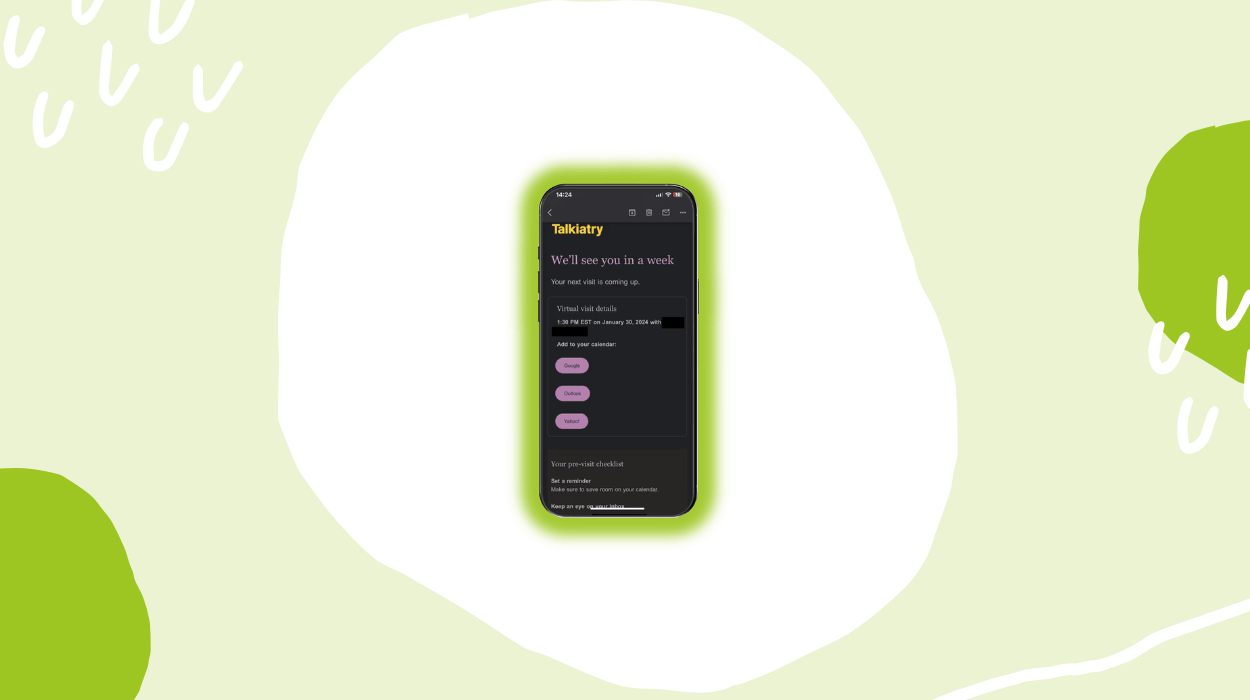

Talkiatry is a mental healthcare service that provides online psychiatric care. The platform focuses on conditions such as anxiety, depression, ADHD, bipolar disorder, PTSD, insomnia, and other mood-related concerns.
The service emphasizes longer appointment times and access to clinicians across multiple specialties and languages, which may help address a wider range of needs.
In this review, we discuss how the company provides care, the problems it addresses, and some comparable services available. We also compare the brand with similar care-providing platforms, and highlight the advantages and limitations.
Talkiatry connects you with licensed mental health professionals through a structured care network. The company was co-founded by Dr. Georgia Gaveras, who is a triple board-certified psychiatrist, with the stated goal of addressing access and operational challenges in psychiatric care.
The company’s operational model is centered on in-network care, with an emphasis on reducing barriers related to insurance access and administrative burden. The platform also includes technology systems intended to support scheduling, communication, and care coordination.
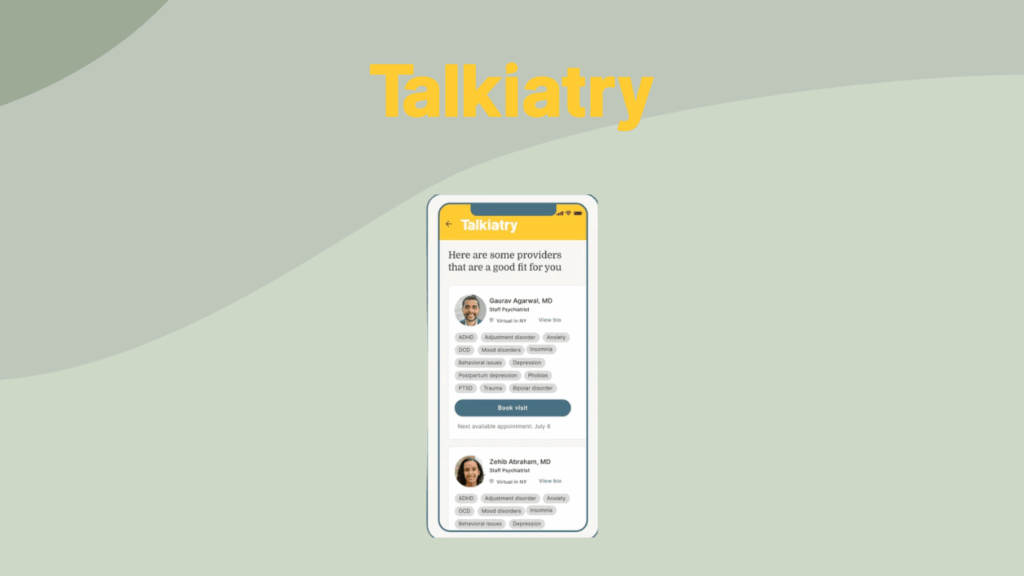
Access to the service begins with an online matching process, where you are paired with psychiatrists based on your needs and preferences. Appointments are typically available within a short timeframe, and ongoing care is structured around continued sessions with the same clinician. This continuity may allow for adjustments and progress tracking over time. The platform also supports prescription management when appropriate, as clinicians are licensed to prescribe medications if required.
Talkiatry gives access to 60-minute initial evaluations designed to give you enough time to talk through your concerns in detail. As per the official site, during this first visit, the clinician reviews your symptoms, personal background, and medical history to better understand what may be contributing to your current challenges. If needed, they can identify a mental health condition, explain their findings clearly, and outline a care plan based on your situation.
Beyond reviewing whether medication may be appropriate, the first session may also include supportive therapy, such as discussing emotional challenges, identifying stressors, and working through coping strategies. The clinician also uses this visit to assess whether the virtual model suits your needs. If they believe in-person or more specialized support would be more suitable, they may guide you toward other care options. To make the visit smoother, you have to complete your portal setup in advance, join from a private space with stable internet, and attend from the same state listed in your profile.
Talkiatry’s care model is built around coordinated psychiatric support with therapy integrated when appropriate. The platform has licensed therapists who can work alongside its psychiatrists, though therapy is not offered as a standalone entry point.
The platform highlights that new users begin by completing a short 10-minute online assessment that helps match them with a clinician based on their concerns, preferences, and procedure approach, after which they can book an initial visit.
Its psychiatrists can also provide supportive therapy during appointments, so follow-up sessions are not limited to medication check-ins. These visits are usually scheduled for 30 minutes or longer, giving time to discuss emotional patterns, daily stressors, and practical coping strategies.
Talkiatry describes this model as a way to address both the psychological and biological sides of mental health, with therapists and psychiatrists able to communicate and build a more cohesive care plan.
Psychiatric care from Talkiary includes medication management for a wide range of concerns, with plans personalized to your symptoms, history, and needs. Its psychiatrists may provide support for anxiety, depression, bipolar disorder, ADHD, OCD, PTSD, and related concerns, and they consider whether medication could help improve mood regulation, focus, emotional stability, sleep, or day-to-day functioning. They claim that their service reduces the impact of symptoms in a way that makes it easier for you to manage daily responsibilities and engage with other forms of support.
Talkiatry notes that psychiatric medications can help relieve symptoms by supporting how the brain and nervous system process stress, mood, and attention, but finding the right fit may take time. During initial evaluations and longer follow-up visits, psychiatrists review your symptom patterns, medical history, side effects, and progress to adjust care as needed. They may also combine medication support with supportive therapy during visits or recommend adding a therapist if more consistent counseling could improve your progress.
Talkiatry structures access to psychiatric care through a single, integrated intake and scheduling flow, beginning with a 10-minute online assessment that captures clinical needs and confirms insurance eligibility. This replaces separate steps such as provider search, insurance verification, and manual appointment coordination. Following this assessment, matched psychiatrists and their real-time availability are presented immediately, with appointments typically available within days rather than extended waitlists. This stands in contrast to the national median wait time of more than 67 days for in-person psychiatry, highlighting the reduction in time-to-access enabled by the platform’s model.
This access is also supported by a network of 800+ psychiatrists, increasing the volume of available appointment slots across specialties and languages. Once scheduled, initial visits are typically 60 minutes for adults and around 75 minutes for children, allowing for a full evaluation within the first appointment rather than requiring multiple shorter sessions.
The brand claims to reduce the time between initial assessment and first visit by consolidating intake, matching, and scheduling into a single system and leveraging a scaled clinician base.
As per the official site, Talkiatry assigns care to a single psychiatrist following the initial match, with that same clinician continuing across subsequent visits rather than rotating between providers. After the first appointment, which typically lasts 60 minutes for adults (75 minutes for children), follow-up visits are scheduled with the same psychiatrist to review symptoms, assess response to the procedure, and make adjustments over time. This continuity is supported by a practice-based model where psychiatrists are part of Talkiatry’s network rather than independent providers handling one-off sessions, which allows care to be structured around ongoing engagement with one clinician instead of reassignment based on availability. Across visits, the same psychiatrist tracks symptom progression, adjusts medication based on prior response, and refines the plan using accumulated clinical context rather than restarting evaluation. In cases where a psychiatrist is no longer available within the network, care is transitioned through a structured hand-off process, where the new clinician has access to prior records and care history to maintain continuity. This approach keeps care longitudinal, with a plan developed and adjusted within a continuous provider relationship rather than across disconnected sessions.
Talkiatry operates on an insurance-based billing model, where visit costs are determined by the specifics of an individual insurance plan rather than a fixed platform price. While the company states that many visits may cost around $30 or less after insurance, this depends on variables such as copays, coinsurance, and whether a deductible has been met. This creates variability in out-of-pocket costs. If a deductible has not been satisfied, visits may be billed at the full contracted rate, which can reach several hundred dollars.
During onboarding, the platform does not provide a precise, real-time estimate tied to your deductible status or remaining benefits. Final out-of-pocket costs are typically determined only after the claim is processed by the insurer, which can take 30 to 45 days. This delays cost clarity until after services have already been received.
Some users report starting with a plan expecting a standard copay and later receiving higher charges due to unmet deductibles or plan-specific terms. Feedback on third-party platforms also highlights concerns about unexpected bills, with reported charges ranging from approximately $160 to over $400 for a single visit when lower costs were anticipated. The absence of a standardized self-pay option further contributes to this uncertainty, as pricing remains tied to insurance variability rather than offering a fixed, predictable option.
Circle Medical and Talkiatry are built around improving access to healthcare, but they differ significantly in scope and structure. As per its official website, Circle Medical offers services that cover primary care, ADHD support, sleep care, hormone therapy, PrEP, annual checkups, skin care, and weight management. Talkiatry, on the other hand, is designed specifically for psychiatry. Its focus is narrower but more specialized, covering ADHD, anxiety, depression, bipolar disorder, insomnia, postpartum support, mood disorders, and children’s mental health. Circle Medical combines virtual access with in-person availability, giving you the option to book same- or next-day appointments through its app or visit one of its 20+ clinics across the US. It highlights video appointments completed and states that its app also supports appointment scheduling, care plan tracking, prescription requests when clinically appropriate, and post-visit summaries. In comparison, Talkiatry is entirely virtual, with no physical clinic network. Its model is built around faster psychiatric access from home, with first appointments available in days, online scheduling, no commuting, and continued sessions with the same psychiatrist over time.
The provider networks also reflect these differences in focus. Circle Medical highlights 400+ board-certified clinicians across family medicine, internal medicine, obesity medicine, lifestyle medicine, and functional medicine. It states that every clinician is selected based on board certification, evidence-based care standards, empathy, and an ability to support diverse backgrounds. Meanwhile, Talkiatry emphasizes psychiatric depth instead of broad medical coverage. It reports 800+ psychiatrists, an average of 10 years of clinical experience, 26 subspecialties, and support in 30+ languages. It also notes that its psychiatrists are fully licensed to prescribe when appropriate.
The experience each platform is built for is also different. Circle Medical is designed for people who want one place to manage routine healthcare, prescriptions, checkups, and specialty support without long office delays. Its platform is structured around convenience, with 15–30 minute visits, app messaging, insurance integration with many PPO plans, and no membership fees or hidden charges. On the other hand, Talkiatry is more focused on in-depth psychiatric support. Its process starts with a matching system that helps you find a psychiatrist suited to their needs, followed by longer sessions intended to build trust, regular follow-ups, and care that adjusts over time. Talkiatry also describes itself as a practice rather than a marketplace, emphasizing that it directly vets and hires its clinicians.
According to their official website, Circle Medical offers broad healthcare access across everyday and ongoing needs, with the added benefit of hybrid visits and app-based coordination. Meanwhile, Talkiatry prioritizes psychiatry-focused support, especially if consistent virtual sessions, longer conversations, and access to a large network of psychiatrists are the main priorities.
LifeStance operates through a large hybrid network that combines in-person appointments with telehealth, giving you flexibility based on location and preference. It serves people across 33 states, including Arizona, California, Florida, Illinois, Massachusetts, New York, Texas, Virginia, and Washington, through approximately 550 centers and a network of around 8,000 clinicians. The platform states that its provider base includes psychiatrists, psychologists, and licensed therapists, which allows it to support a wider range of needs under one system. Talkiatry, in comparison, is built entirely around virtual psychiatry, with no in-person clinics. Its model is designed to reduce wait times and make access simpler through online booking, remote visits, and faster matching, with appointments often available within days instead of longer traditional waitlists.
The range of services each brand offers also reflects its different focus. LifeStance provides a broader mix of psychiatric, therapy, and diagnostic services, including adult psychiatry, talk therapy, couples therapy, family therapy, autism testing, and neuropsychological testing. This makes it more suitable if you want access to multiple types of support without switching networks. It also addresses a wide set of concerns, such as ADHD, bipolar disorder, obsessive-compulsive disorder, disordered eating, perinatal depression, and postpartum depression. On the other hand, Talkiatry keeps its scope more focused on psychiatry and medication-related support, but still covers a broad range of concerns, including ADHD, anxiety, depression, bipolar disorder, mood disorders, and children’s mental health.
Their onboarding and care experience are also structured differently. LifeStance focuses on personalized matching across a large clinician network and gives you the option to choose between office visits and online appointments, depending on what works best for your schedule. Its platform also includes tools such as a provider directory, location directory, self-testing and evaluation resources, billing guides, and medical records support. Meanwhile, Talkiatry’s process is more streamlined and digital-first. It starts with a short online assessment, then matches you with psychiatrists based on your symptoms, preferences, and insurance. The brand also highlights that its psychiatrists average 10 years of clinical experience, represent 26 subspecialties, speak 32 languages, and are fully licensed to prescribe, which adds more specificity to its virtual psychiatry model.
Insurance and cost transparency are another major contrast. LifeStance emphasizes the breadth of its insurance acceptance, stating that it works with more than 290 plans. These include Blue Cross Blue Shield, Cigna/Evernorth, Aetna, Highmark, Anthem, Kaiser Permanente, CareFirst, Medicare, Providence, Quartz, and Quest Behavioral Health. It also provides a mental health cost estimator and notes that most insured copays fall between $27 and $47 based on recent six-month data, while clarifying that deductibles and coinsurance may still affect the final amount. Talkiatry also centers its model around in-network access, working with major insurers such as Optum, UnitedHealthcare, Aetna, Cigna, and Blue Cross Blue Shield. However, its messaging is more focused on affordability for online visits, stating that the majority of visits cost $30 or less after insurance, including copays, deductibles, coinsurance, and $0 visits. The platform also makes it clear that final costs still depend on your plan and accepted network status.
LifeStance offers broader service depth, physical access, and more varied support formats. Meanwhile, Talkiatry is more focused on fast access to online psychiatry with a streamlined, insurance-backed virtual experience.
To understand how Talkiatry performs as a brand, we looked at its business background alongside third-party complaint patterns on the Better Business Bureau. The company currently holds an F rating and has an average customer score of 1.06 out of 5 from 157 reviews. It has also received some complaints over the past years, with many complaints closed in the last 12 months.
Across reviews and complaints, the most common concerns involved unexpected bills after being told visits would likely be low-cost with insurance, disputed cancellation fees, delayed refunds, and limited billing support. Several users also described difficulty getting appointment notes, problems reaching supervisors, long wait times for issue resolution, and technical issues during online visits.
A few users did mention positive aspects, such as being able to book appointments quickly or having a good experience with individual clinicians. However, there were recurring complaints about customer service and administrative handling.
Talkiatry appears to offer accessible online psychiatry on paper, but its BBB record suggests that its backend support, billing processes, and communication systems may not be consistently reliable.
To assess Talkiatry, we looked at recent Trustpilot feedback from 2025 to 2026, where the brand holds a 2.5/5 rating from more than 650 reviews. Several users said their doctors were attentive, empathetic, and helpful over time, with some specifically noting that they were able to get appointments sooner than with local alternatives. At the same time, billing was the most common concern raised across negative reviews. Multiple users said they were led to expect standard copays or insurance-covered visits, only to receive unexpectedly high charges later. Reported bills ranged from a few $100 for intake calls to more than $700 for short virtual visits. Some also said they were charged cancellation or no-show fees despite technical issues, provider-side cancellations, or attempts to reschedule in advance.
Users also highlighted recurring issues with provider continuity and support responsiveness. Several customers described last-minute appointment cancellations, long waits in virtual waiting rooms, and trouble reaching someone who could resolve problems directly. A few users said provider turnover or policy changes disrupted ongoing care, which made the experience feel unstable over time. Talkiatry appears to provide a streamlined access to clinicians and convenient virtual access, but the broader service experience seems inconsistent.
Talkiatry provides access to structured, ongoing mental health support without the need for in-person visits, particularly when faster access and insurance-based care are priorities.
The platform’s approach to coordinated care through online scheduling, matching tools, and follow-up sessions allows plans to adjust over time. Its in-network insurance model and prescription management capabilities may help streamline access to psychiatric services within a single system. However, its fully virtual setup means it does not provide in-person care, which may limit suitability if you prefer or require physical consultations or immediate, hands-on support.
Some operational concerns also affect the experience with the brand. User feedback highlights recurring issues with billing transparency, unexpected charges, and difficulties with customer support or appointment management. Reports of technical disruptions, provider changes, and delays in follow-up may also impact continuity of care in some cases.
The brand offers a structured and accessible approach to online psychiatry, though consistency in service delivery and administrative processes may vary depending on your expectations and specific circumstances.

Contact us at [email protected] or follow @leafsnap on Twitter! View our Privacy Policy.