
Sole Fitness is a home fitness equipment brand that offers machines for indoor exercise, such as ellipticals, treadmills, stationary bikes, rowing machines, and strength training products. Its products are intended to support cardiovascular fitness, endurance training, and general physical activity within a home setting.
This review examines how the brand performs in practical use, including the types of equipment it provides, how its popular models are positioned, and where it may offer advantages or present limitations. It also considers alternative options, the approach used to evaluate the brand, common questions regarding the brand, and a balanced final assessment based on the available information.
Sole Fitness, headquartered in Salt Lake City, Utah, is focused on the development and distribution of home and commercial fitness equipment. The brand originated with equipment engineered for hotel use, and later expanded into broader consumer and commercial markets.
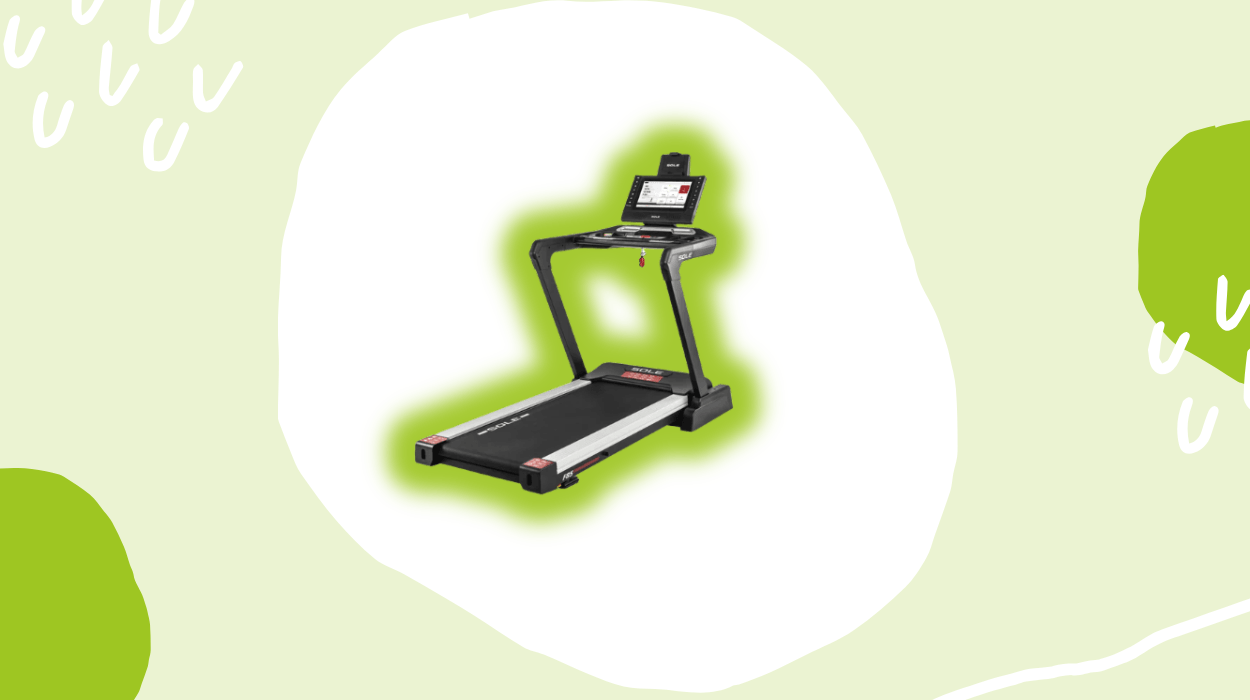
The brand operates with an in-house engineering and design approach, where product development is said to be guided by ongoing research and market analysis. The product ecosystem includes cardio and strength equipment, with treadmills as the primary category. The lineup includes models such as the F63, F65, F80, and F85 with upgraded motors and cushioning systems, and premium models including the F89, TT8, and ST90 that have touchscreen interfaces and decline functionality.
The brand also extends into cycling equipment with recumbent, upright, and indoor cycling bikes. Additional categories include a hybrid rower combining air and magnetic resistance, and a developing strength segment featuring benches, racks, adjustable dumbbells, and all-in-one trainers.
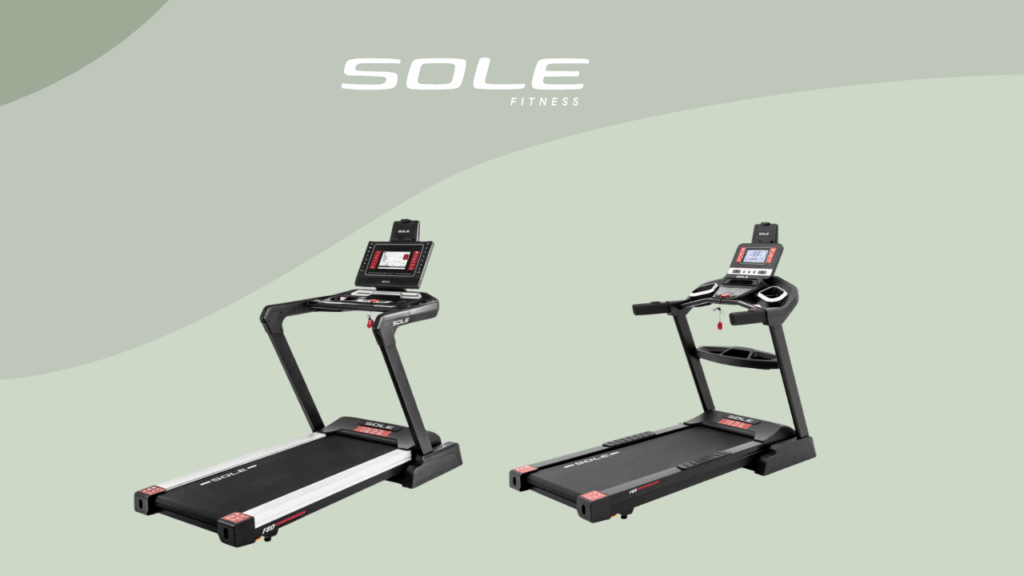
Sole Fitness offers treadmills that are built with features that can directly affect comfort, joint loading, and workout consistency. Their running decks range from 20″ x 60″ on models like the F63 Treadmill and F80 Treadmill to 22″ x 60″ on the F65 Treadmill and the TT8 Treadmill. A longer, wider belt can help reduce the need to shorten your step, which may lower repeated stress on your knees and hips during regular walking or running. The sturdy frames, with weight capacities up to 375 lbs on the F85 Treadmill and F89 Treadmill, also support better stability, which can help you move with more control and less excess vibration.
The belt and incline systems also shape how the treadmill feels during use. Roller sizes range from 2.36″ on the F80 to 2.75″ on the F85 and F89, while the Sole ST90 Treadmill uses a 7.44″ slat belt roller setup that may create smoother belt movement and reduce impact harshness underfoot.
Models like the F85, F89, and TT8 include 6 decline levels, which can shift effort across your calves, glutes, hamstrings, and stabilizing muscles instead of repeating the same movement pattern. Display options from 6.5″ LCD screens on the F63 to 21.5″ touchscreens on the F89 also make it convenient to adjust incline and speed mid-workout.
Sole Fitness claims a long track record in the fitness equipment industry, with its founding in 2001. This gives the brand over 20+ years of continuous operation, which shows sustained presence rather than short-term entry. On its official website, the brand states that it has provided gym-quality equipment for decades across North America and global markets. This reflects a position built on long-term participation across multiple market cycles.
The brand claims that this history supports its role as a consistent equipment provider. It focuses on core categories such as treadmills, ellipticals, and exercise bikes, instead of expanding into unrelated areas. This shows a clear category focus over time. This may offer a clearer view of the brand’s reliability, which may indicate consistency and familiarity with changing fitness standards.
Sole Fitness builds its product architecture around hotel-grade designs, originating from commercial fitness environments where equipment must withstand continuous, high-frequency use across multiple users. This foundation drives the use of heavy-gauge steel frames, high weight capacities, and larger roller systems to reduce mechanical wear.
The brand claims to develop from a commercial baseline, including components like high-inertia flywheels, stable deck construction, and consistent motor performance to ensure durability under repeated stress cycles. It also emphasizes simplified mechanical systems, such as magnetic and eddy current resistance and precision-balanced flywheels, to reduce friction, limit failure points, and minimize maintenance. Supporting features like cushioned treadmill decks, stable bases, and smooth drive systems further enhance vibration control and noise reduction.
Sole Fitness centers its portfolio on cardio machines, including treadmills, ellipticals, exercise bikes, and rowers. It also includes compact strength systems as part of the same fitness equipment lineup, not a separate category. The brand claims that it focuses on home and light commercial equipment. It describes its machines as gym-quality and built for residential and small facility use.
Sole Fitness prioritizes performance, durability, and usability. Its product content highlights motor power, frame strength, cushioning systems, display features, and user experience. The brand also claims that it follows a strategy of continuous improvement. It focuses on refining treadmills, ellipticals, and bikes instead of entering new categories. This shows a long-term commitment to its core products.
As per the official site, Sole Fitness has a structurally limited customization across all machine types. Treadmills, ellipticals, bikes, rowers, and even strength systems like the SRVO trainer all rely on a similar framework. They have 7–12 preset programs and a restricted number of user-defined slots (2–12 depending on model).
Customization is universally governed by segment-based grids, which prevent precise control over interval timing, splits, or multi-phase workout structures. Across consoles, from basic LCDs to larger 10″–22″ touchscreens, and within the SOLE+ app, the system lacks features like periodization, adaptive progression, or cross-machine synchronization.
This indicates that if you want precise control over your training, such as customizing interval timing, building phased workouts, or tracking structured progression, you will likely find the system limiting across all equipment. You may need to rely on external apps like Zwift or Kinomap to achieve that level of control, effectively bypassing the built-in software.
Horizon Fitness and Sole Fitness differ in how they balance training features, hardware build, and overall treadmill experience. As per their official website, Horizon’s lineup is designed to serve casual walkers through regular runners, with models like the T101 Connect and T202 focused on ease of use. Meanwhile, its Studio Series suits more performance-oriented users. On the other hand, Sole’s range is more structured around heavier-duty builds and progressive hardware upgrades, making it more suited to users who want sturdier machines and more built-in console features.
Horizon places more emphasis on workout responsiveness and flexible training. Its Studio Series treadmills use the Rapid Sync drive system to reduce lag during speed transitions, along with QuickDial controls that allow smoother speed and incline adjustments while running. The 7.0 AT offers speeds from 0 to 12 mph, incline up to 15%, an extended 20 x 60-inch deck, eight workout programs, and Bluetooth features such as speakers, media controls, and app connectivity. The brand also includes free on-demand classes and scenic routes through its atZone platform, which supports users who prefer guided or app-based sessions.
Sole, in comparison, focuses more on display upgrades, frame stability, and heavier-duty treadmill construction. It features an F8X series that shows a clear progression in built-in console features and support. The F80 includes a 10.1-inch touchscreen, the F85 upgrades to a 15.6-inch touchscreen and adds six levels of decline, while the F89 comes with a 21.5-inch touchscreen and supports up to 375 lbs. Its F6X series is also built with more emphasis on sturdiness, with the F63 offering a 20 x 60-inch running surface and the F65 expanding to a 22 x 60-inch deck, along with handrail controls and a release lever folding system.
The two brands also differ in warranty structure and long-term support. Horizon claims to provide you with a lifetime frame and motor warranty across its treadmill lineup, with the 7.0 AT including three years on parts and one year labor, while the 7.4 AT extends this to five years on parts and two years labor. This provides a solid level of coverage across both mid-range and performance models. In comparison, Sole also emphasizes durability, particularly in its premium range. Its TT8 includes lifetime coverage on the frame and motor, along with two years on parts and one year of labor for light commercial use, which may appeal more if you are planning frequent or intensive workouts.
Their broader fitness ecosystems also reflect different priorities. Horizon’s accessory lineup offers products such as a fitness mat, Lube-N-Walk kit, silicone lubricant packs, heart rate chest straps, dumbbells, and an adjustable bench. Meanwhile, Sole’s accessories are more treadmill-focused, including equipment mats, Bluetooth chest straps, power cords, and replacement screws for specific models. The brand also promotes its SOLE+ platform with free online workout classes, while Horizon leans more into open app connectivity and device flexibility.
Horizon focuses on quicker speed response, folding convenience, and flexible connected workouts. Meanwhile, Sole prioritizes larger displays, heavier-duty frames, and a treadmill experience that feels closer to commercial gym equipment.
DeerRun is built around making home fitness easier to fit into everyday life, especially if you have limited space or prefer low-maintenance equipment. Its lineup heavily focuses on walking pads, foldable treadmills, and compact cardio machines that can be used in home offices, apartments, or small rooms. The brand also offers niche convenience-driven designs such as the Z20 suitcase-style foldable treadmill, which has a foldable running belt, retractable handle, and wheels for upright storage. Across its site, DeerRun positions itself as a brand for casual movement, work-break walks, recovery training, and quiet daily use. On the other hand, SOLE Fitness takes a more performance-focused approach, with equipment designed to feel closer to gym-grade machines used for structured home training. Its treadmill range is broader in terms of heavy-duty builds and advanced training features. The brand features a F6X series that includes the F63 with a 20″ x 60″ running surface and kick-release folding, and the F65 with a wider 22″ x 60″ deck, 9-inch backlit LCD. Its non-folding models, such as the TT8 and ST90, are built for more serious runners, with the TT8 offering incline and decline training plus a light commercial warranty.
DeerRun mainly functions at the entry-level to mid-range home fitness market, with compact walking pads starting around $149 for the Q2 Urban, foldable incline treadmills like the A6 Plus priced between $249 and $269, and more advanced full-deck options at $799. Its range is built to make daily movement more accessible without taking up much space. Meanwhile, SOLE Fitness sits in a more premium segment, with the F63 starting at $1,299.99, the F65 at $1,499.99, the F80 at $1,899.99, and larger machines going up to $3,999.99.
The two brands also differ in how they use connected features. DeerRun combines tech mainly to make workouts more accessible and engaging in short bursts. Its PitPat app adds game-based fitness elements, and many of its machines include NFC support, Bluetooth, and remote controls to simplify use. In comparison, SOLE Fitness uses technology more as part of a guided training ecosystem. Every machine includes access to the SOLE+ app, which offers hundreds of free instructor-led workout classes ranging from 10 to 60 minutes, with heart rate integration and routines across running, cycling, rowing, and boxing.
DeerRun focuses on compact, foldable equipment that supports walking, light cardio, and flexible use in smaller spaces. Meanwhile, SOLE Fitness prioritizes stable, larger machines with stronger build quality, more advanced treadmill specs, and a setup designed for regular training over the long term.
Sole has built a strong presence in the cardio equipment category, especially with treadmills, ellipticals, and exercise bikes designed for home use. We considered the company’s Better Business Bureau profile to understand how it responds when problems arise after purchase. The brand currently holds an A- BBB rating and is not BBB accredited. Over the past years, complaints have commonly involved delayed technician support, defective products arriving at delivery, app compatibility concerns, poor coordination with third-party delivery teams, and disputes over return or pickup fees.
Customers reported repeated scheduling delays, multiple unsuccessful delivery attempts, long repair timelines, and inconsistent installation quality. These details suggest that while the brand has systems in place to address issues, the after-sales process may not always feel smooth or timely.
Sole Fitness holds a 2.9 out of 5 rating on Trustpilot from 1,000+ reviews. Several customers reported machines arriving with faulty consoles, dead screens, motor issues, speed inaccuracies, or sudden shutdowns within days or months of purchase.
Users of models such as the F80, F85, ST90, and E95 frequently described breakdowns that made their equipment unusable shortly after delivery. Some also found the built-in media features slow, glitchy, or less polished than expected, which reduced the value of the premium price.
Many highlighted dissatisfaction with long waits for replacement parts, delayed technician visits, and a repair-first process that sometimes stretched for weeks or months. At the same time, a few customers praised the durability and feel of their machines during workouts, and long-term users said their equipment lasted years before needing repairs.
Sole Fitness appears to make sturdy, performance-focused equipment that many users enjoy once it is running properly. However, the feedback suggests that quality control and service consistency are not always dependable.
Sole Fitness focuses on home fitness equipment built for structured training. The brand emphasizes refining core equipment, which may make it more relevant for those prioritizing machine quality and long-term use. The products' features, such as larger running surfaces, incline and decline options, and higher weight capacities, reflect a design aimed at consistent use across different fitness levels.
On the other hand, the system relies more on manual adjustments during workouts, which may feel less adaptive compared to platforms that offer automated or highly personalized training programs. The product structure also offers limited customization in workout programming. It may also be less suitable for users with specific medical devices.
Sole Fitness provides a performance-focused home training setup with an emphasis on durability and straightforward functionality, though flexibility in personalization and setup requirements can vary depending on personal needs and environment.

Contact us at [email protected] or follow @leafsnap on Twitter! View our Privacy Policy.