
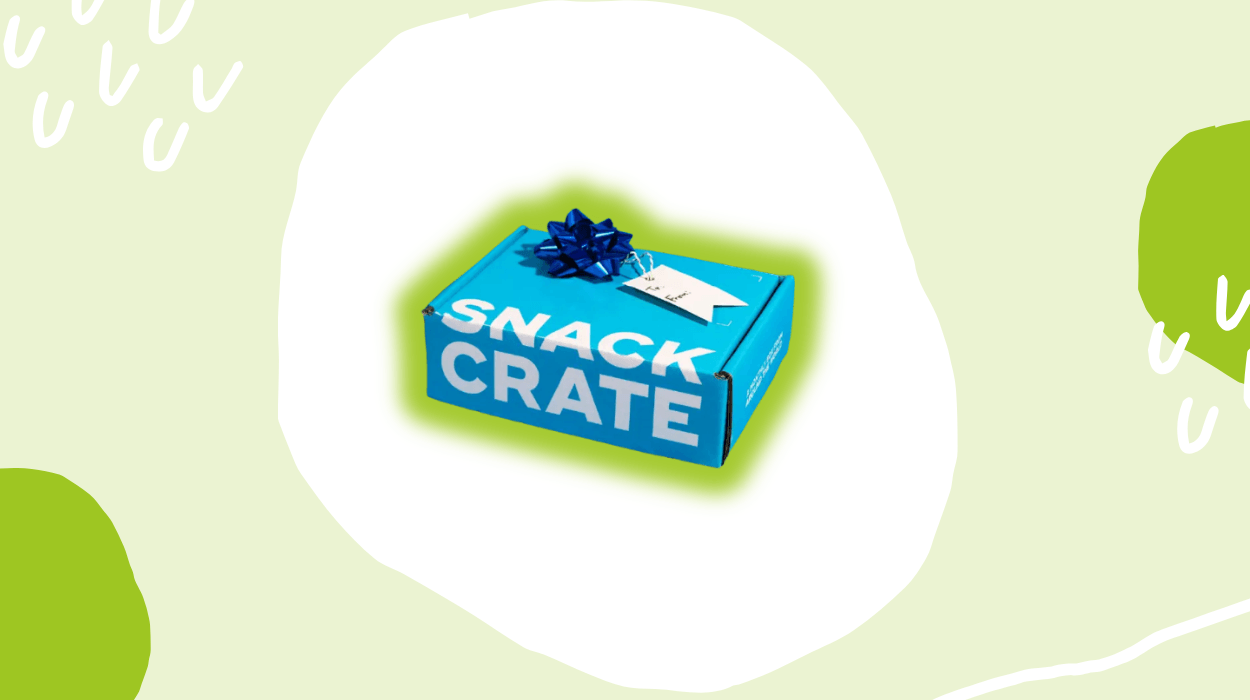

Snack Crate is a subscription-based snack delivery service that focuses on curated boxes featuring packaged snacks sourced from different countries. These snack boxes may feature a mix of sweet, salty, savory, and spicy flavor profiles, intended to fit diverse palates.
Each box typically follows a country-based theme and contains a mix of sweet and savory packaged foods intended to introduce international snack varieties through a recurring delivery format.
This review examines the brand’s subscription model, the structure of its monthly boxes, and how its country-themed format works in practice. It also reviews customer experiences, ordering flexibility, and practical considerations with the brand’s services.
Snack Crate provides curated selections of packaged snacks sourced from different countries through a rotating monthly model. The brand structures its service through subscription tiers that vary by box size, with shipments typically containing various packaged snacks, such as confectionery, savory snacks, cereal bars, gummies, and occasional drinks.
As per its official website, each box features an ingredient and nutrition guide alongside background details about the featured country and its snack culture. The manufacturer states that the brand uses shipping adjustments like temperature-control packaging during warmer periods to help manage product stability during transport.
The brand also highlights global sourcing logistics involving supplier relationships, import coordination, and centralized packing operations at a fulfillment facility in Florida. Customization options appear limited to preference adjustments and optional add-ons rather than full control over monthly selections.
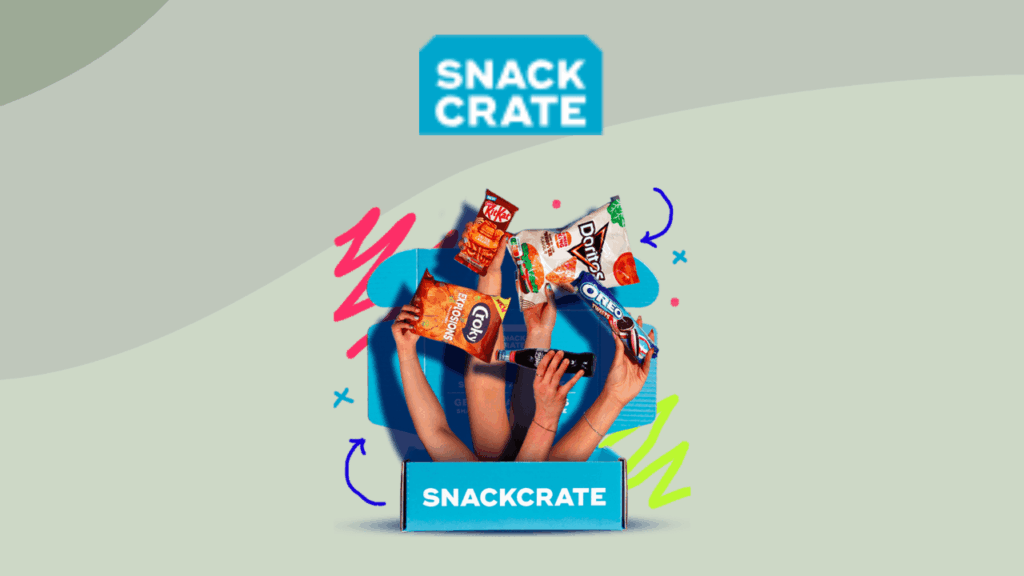
SnackCrate offers a monthly subscription box built around a rotating, country-specific snack experience that updates automatically once you sign up. You start by choosing a crate size and plan, and from there, each delivery introduces snacks from a new country without requiring you to pick a single option.
As per the official website, each box includes a mix of sweet, salty, and savory snacks that are sourced directly from the featured country rather than replicated versions. The selection is designed to stay varied over time, with no repeats for at least two years, which keeps the experience from feeling repetitive even with long-term use.
Along with snacks, the crate includes a local drink that complements the selection, a culture guide that explains the origin and context of the snacks, and a full ingredient and nutrition guide in English.
The subscription also allows some flexibility. You can request adjustments based on preferences, such as avoiding spicy items or favoring certain flavors, and you can customize your box through your account by adding extras or reordering snacks you enjoyed.
SnackCrate claims that its service is supported by a large-scale sourcing and fulfillment system that imports snacks from around the world, processes them through a centralized facility in Florida, and ships them out on a monthly basis.
SnackCrate claims to use a rotating country system as a core part of its subscription. Each month, you receive snacks from a new country. The brand states that the selection rotates automatically. After your first box, you do not need to pick a country. Your subscription moves to the next featured country each month.
The company claims it avoids frequent repeats. It states that once a country is featured, it is not repeated for at least 18 months, and often longer. This structure can keep the experience fresh over time.
SnackCrate claims that all snacks are 100% imported from the featured country. It states that it sources products from local suppliers in each region. The brand also claims to include full-size snacks that are hard to find locally, instead of common global items.
This system claims to make discovery simple. You get a new country every month without making choices. The long gap between repeats may expose you to more countries over time. Direct sourcing also claims to give you access to more region-specific snacks, which may make the experience feel more varied and less repetitive.
SnackCrate claims that its boxes are centered on one country each month. Each crate includes a balanced mix of sweet, salty, and savory snacks, all sourced from that country. The brand states that all items are imported from the featured country, which keeps the box conceptually consistent and avoids random global mixes. This setup claims to reflect a clear local flavor profile rather than a generic snack assortment.
The company claims that each box includes country‑specific content beyond the snacks. It provides a culture guide with background on the country, facts about the snacks, and some travel‑style context. It also includes a full ingredient and nutrition guide in English for each product, which helps you understand items that may be unfamiliar due to language, packaging, or ingredients.
SnackCrate claims to build an immersive experience around each theme. It uses themed packaging and printed materials (such as maps, mini‑zines, or country‑specific artwork) that match the featured country.
Some brand descriptions and marketing also reference digital extras like themed playlists or web‑linked content that align with the country’s vibe, reinforcing the idea of a culture‑focused experience rather than a simple snack box. This model claims to make the experience more structured and educational. You get snacks layered with context, about the country, the flavors, and how the items fit into local food culture. This may help you understand what you are trying and may also make each box feel like a small, guided introduction to a country rather than a random mix of snacks.
SnackCrate operates under an inflexible subscription structure defined by strict billing cycles and limited post-charge flexibility.
Subscriptions are renewed automatically on the 5th of each month, with changes or cancellations required before that date to avoid being billed for the next box. Operational constraints tighten this window further, as address or plan modifications must typically be made before the 1st to apply to the upcoming cycle.
Once a box is billed or enters fulfillment, it cannot be canceled or refunded, and cancellation only applies to future renewals. Multi-month plans (e.g., 6- or 12-month commitments) add additional rigidity, often requiring users to complete the full term or incur early cancellation fees or repayment of discounted pricing. While limited exceptions may exist, they are discretionary and not standardized.
This means you need to actively track deadlines and plan ahead to avoid unwanted charges or shipments. Missing the cutoff dates can result in being billed for a box you no longer want, with no practical way to reverse the charge once processed.
The lack of a post-billing grace period reduces flexibility, especially if your preferences, budget, or availability change unexpectedly. If you commit to a multi-month plan, exiting early can carry financial penalties, making the service less adaptable for short-term use or experimentation.
UniversalYums and SnackCrate both operate on a monthly international snack subscription model, but they differ in how the experience is structured and communicated. As per its official website, UniversalYums presents each box as a guided journey tied to a specific country, such as Japan, Brazil, Germany, Italy, Greece, South Korea, or the United Kingdom. It highlights flavor descriptions like delicate sweets, savory bites, playful flavors, rich, simple flavors, and decadent confections. The experience is positioned as a repeatable monthly destination that you can anticipate or even gift with some level of clarity. SnackCrate, in comparison, builds its model around unpredictability, stating that each month brings a new country but without revealing it in advance, supporting a surprise-first approach where the destination itself is part of the appeal.
The difference becomes more apparent in how snacks are selected and presented. UniversalYums emphasizes sourcing unique products directly from suppliers in each country and highlights a wide range of options such as matcha seaweed tempura crackers, lemon fettuccine gummies, wasabi seaweed crackers, asparagus-shaped black sesame crackers, and pineapple soda. It also showcases globally sourced examples like mushroom long chips from Lithuania, devil emperor chili chips from Thailand, and caramel stroopwafels from the Netherlands. On the other hand, SnackCrate focuses more on bold and recognizable snack experiences, featuring options such as Hitschies Drachenzungen, Mezzo Mix cola and orange soda, Knoppers NussRiegel, Kinder Happy Hippo, and Nic Nacs nacho cheese peanuts. It combines familiar brands with regional variations while emphasizing that all snacks are fully imported and not basic or easily available.
Their box formats further highlight a structured versus flexible contrast. UniversalYums clearly defines three tiers, including the Yum Box with 5 to 7 snacks and a 16-page booklet. It also features the Yum Yum Box with 10 to 12 snacks along with expanded content such as recipes and trivia in a 20-page booklet, and the Super Yum Box with 15 to 18 snacks, including additional full-size options. Meanwhile, SnackCrate mentions that you can choose from a variety of crate sizes and plans, but it does not specify exact snack counts, instead focusing on the idea that each box contains a mix of sweet, salty, and savory snacks built for variety rather than defined quantity tiers.
UniversalYums extends the experience beyond food by including structured content designed for interaction. It highlights that each box contains booklets filled with trivia, games, recipes, and cultural insights, along with features like scorecards and themed activities. It also promotes options like the Taste Adventure Bundle, which includes six country boxes and an additional chocolates of the world box for a bundled experience. On the other hand, SnackCrate keeps the interaction centered on the snacks themselves, describing the process as opening the box, tasting new flavors, and sharing casually with friends or family.
UniversalYums delivers a more structured and content-driven experience with defined box tiers, detailed cultural context, and interactive elements. Meanwhile, SnackCrate centers on surprise, bold snack variety, recognizable imported products, and a fast-paced unboxing experience.
Try Treats follows a more defined and guided format, where you receive hand-picked snacks from a single country each month, framed as a culinary and cultural journey. It supports this structured approach by outlining how the process works, from preparing the box immediately after ordering to delivering it through standard postal services. SnackCrate, on the other hand, builds its identity around unpredictability and excitement, emphasizing that each month brings a new country without prior reveal, positioning the experience as more spontaneous and driven by surprise rather than a curated narrative.
The way each brand handles snack variety further highlights this contrast. Try Treats clearly defines the contents of its boxes, offering 5+ snacks in the Standard Box, 10+ in the Premium Box, and 15+ in the Family Box. These snacks cover familiar categories such as cookies, crackers, chocolates, candies, and chips, giving you a consistent expectation of what each box includes. Meanwhile, SnackCrate does not emphasize fixed quantities in the same structured way but instead focuses on the uniqueness and origin of its products. It highlights full-size, imported snacks such as Hitschies Drachenzungen, Mezzo Mix, Kinder Happy Hippo, and Ritter Sport Pistachio, supporting that these are options you typically cannot find in local stores and are sourced directly from the featured country.
Pricing and subscription structure also reflect different priorities. As per their official website, Try Treats uses a tiered pricing model based on quantity, with the Standard Box starting at $17.95, the Premium Box at $26.95, and the Family Box at $39.95. This allows you to scale your experience depending on how many snacks you want each month. SnackCrate instead organizes its pricing around subscription length, offering $33 for a single month, $99 for three months, $186 for six months, and $336 for twelve months, along with a promotional first box priced at $10. This shifts the focus from quantity selection to commitment duration. In terms of sourcing and differentiation, Try Treats mentions that its snacks are hand-picked from different countries but does not strongly emphasize sourcing claims beyond curation. SnackCrate places much stronger emphasis on authenticity, stating that all snacks are 100% imported from the country of origin, with no duplicates or locally replicated versions, and highlighting that these are rare finds not typically available in stores.
Try Treats focuses more on its curated experience and recognition rather than highlighting guarantees or detailed disclosures, resulting in a more straightforward but less assurance-driven presentation. SnackCrate introduces additional assurances and transparency that are less emphasized by Try Treats. It offers a You’ll Love It, Or It’s Free guarantee, providing a clear fallback if the experience does not meet expectations, and explicitly states that full allergen information is included with every box.
In evaluating Snack Crate, we looked at the user experiences and ratings shared on Trustpilot, where the brand currently maintains a 2.3 out of 5 score based on more than 2,700 reviews.
A noticeable portion of feedback describes billing inconsistencies, including charges that did not match checkout totals, recurring charges after cancellation attempts, and confusion around promotional offers. Some users noted delayed deliveries, missing shipments despite payments being processed, and difficulty tracking orders. A few users also received damaged snacks or incomplete boxes.
Positive feedback mainly focused on the concept rather than the operations. Some users described the experience of trying international snacks as enjoyable and engaging for families.
Based on the available feedback, it appears that most users appreciated the brand’s subscription model and international snack discovery concept. However, critical feedback pointed to recurring concerns around billing transparency, order fulfillment consistency, and unresponsive support from the care team.
When evaluating SnackCrate, we looked at the brand’s subscription-based model, focus on international snack discovery, and its presence across independent review platforms. Its background shows steady visibility in the snack subscription space, which suggests some level of operational continuity.
On the Better Business Bureau, the brand carries an F rating, along with an average customer score of 1.02 out of 5 stars based on dozens of reviews. Complaints often mention problems such as difficulty canceling subscriptions, continued billing after cancellation requests, delayed or missing deliveries, limited customer support access, and confusion around subscription terms. Some complaints also describe issues with order accuracy and dissatisfaction with snack quality. A repeated theme across complaints is slow or missing responses from support channels, which may affect trust when problems occur.
Based on this information, SnackCrate shows the profile of a well-known subscription concept but with mixed signals about service reliability. The review patterns suggest credibility concerns tied more to service experience.
Snack Crate positions itself around recurring international snack deliveries, where the overall experience focuses more on discovery and surprise rather than personalization or flexible purchasing. Its services reflect an emphasis on monthly continuity, predefined box formats, and scheduled fulfillment cycles.
However, the brand focuses on curated country-themed selections instead of allowing detailed snack selection or advanced filtering. Snack variety is therefore determined by the monthly theme rather than individual taste preferences.
Billing follows recurring cycles with automatic renewals, and cancellations generally need completion before processing deadlines to avoid additional charges. Orders already processed or scheduled typically continue toward shipment even after cancellation actions, indicating an inflexible subscription structure.
A careful evaluation of commitment expectations, personalization limits, and the recurring nature of the subscriptions remains important before committing to Snack Crate’s services.

Contact us at [email protected] or follow @leafsnap on Twitter! View our Privacy Policy.