
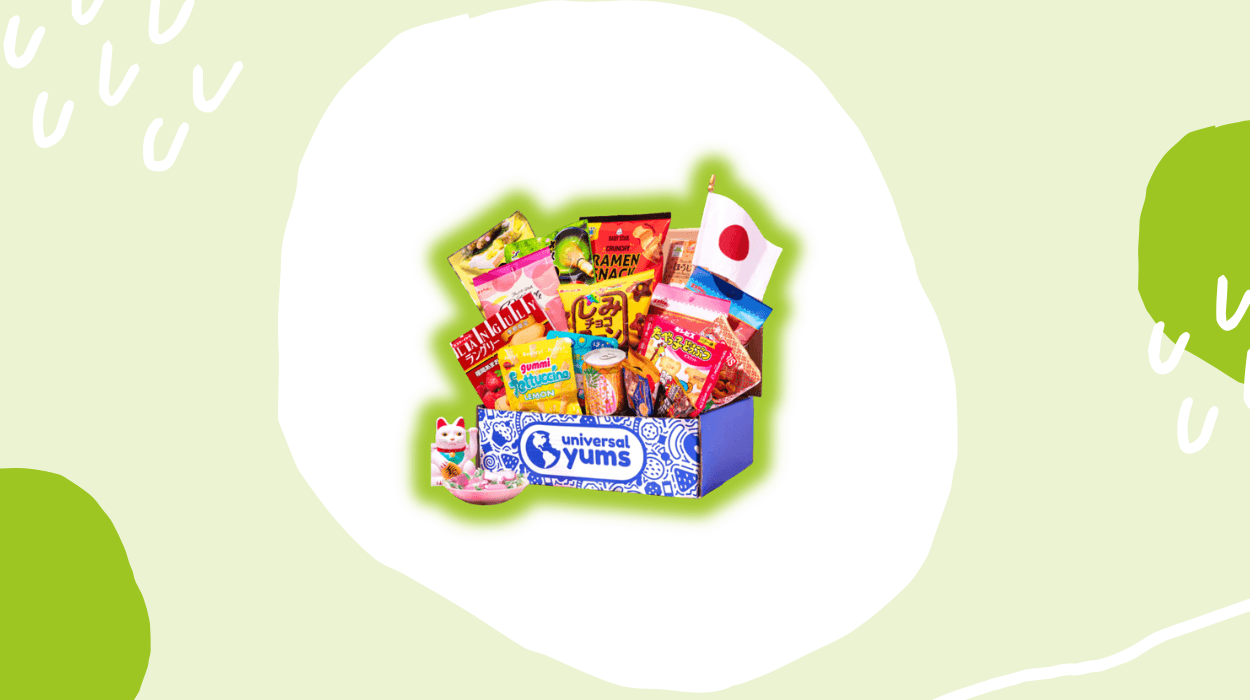

Universal Yums is a subscription-based snack service that delivers globally sourced treats directly to your doorstep, focusing on cultural discovery through food. It curates a box centered around a specific country, featuring a mix of popular local snacks and lesser-known regional options.
The brand’s offerings are built around tiered subscription boxes that vary in size and quantity, along with occasional limited-edition or themed boxes such as holiday varieties. In this review, we will explore Universal Yum’s offerings in detail, its key advantages and potential limitations. We will also analyze what consumer reviews highlight about the overall experience.
Universal Yums offers boxes of international snacks, each focused on a different country, so you get to try new foods from around the world every month, without leaving home. It highlights that each box includes a mix of sweet and savory snacks, and sometimes drinks, inspired by places like Japan, Brazil, Germany, and South Korea.
The brand claims to make sure the snacks meet U.S. safety standards while staying fresh and true to their original flavors by importing the products itself. Inside each box, you might find options like matcha crackers, ramen snacks, fruit gummies, chocolates, cookies, or teas that reflect the country’s food culture.
The brand also offers global bundles like their chocolate collections and cookie assortments, combining treats from multiple countries into a single, cohesive experience.
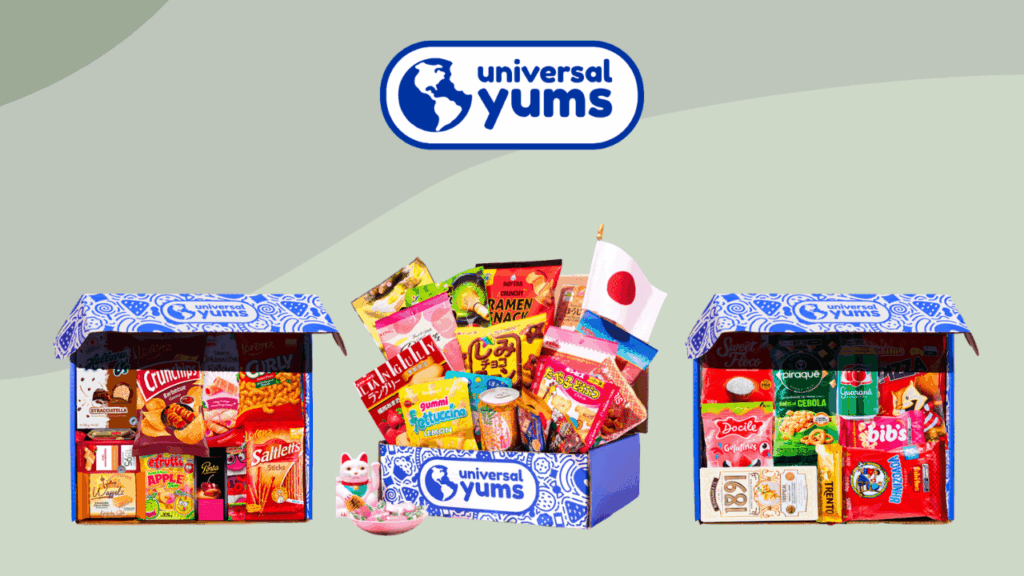
Snack Subscription Box is built around international food discovery. Each shipment focuses on one country and includes a curated mix of packaged snacks sourced from local producers. Product selection changes every month because the country theme rotates. Examples of featured countries include Japan, Brazil, Mexico, Colombia, France, Germany, Italy, Greece, South Korea, the United Kingdom, etc. This rotation creates variation in taste profiles, formats, and snack types across shipments.
Snack boxes typically feature candy, cookies, crackers, chips, chocolate products, and occasional drinks or specialty foods, depending on the box tier. A Japan-themed box, for example, may include Rose and Peach flavored caramels, Matcha seaweed tempura crackers, crispy rice crackers, and pineapple soda. Other country boxes may contain products like caramel stroopwafels from the Netherlands, spicy beef noodle popcorn from Taiwan, garlic and parsley bruschetta bites from Italy, and peanut butter puffs from Germany. Each box also includes printed material such as trivia booklets, recipes, and cultural notes related to the featured country.
According to its official website, Universal Yums offers three main subscription sizes based on snack quantity and added content. The Yum Box includes about 5–7 snacks and costs around $18 per box. The Yum Yum Box expands the selection to about 10–12 snacks and costs about $27 per box. Meanwhile, the Super Yum Box features 15–18 snacks (often a drink or specialty snack) and costs around $41 per box.
Universal Yums structures each box around a single featured country rather than mixing products from multiple regions. According to the brand, you receive snacks and candies from a different country every month, with past selections including places like Brazil, India, Japan, or Mexico.The brand states that it curates each box specifically around that country, combining both sweet and savory items that reflect local flavor profiles. It also highlights that many of these snacks are difficult to find in the U.S., supporting its focus on cultural discovery.
To support this concept, Universal Yums includes country-themed packaging and an interactive guidebook in every box. This guide typically contains snack descriptions, trivia, cultural insights, and occasionally recipes, keeping the experience centered on one location.
The brand also follows a consistent rotation model, changing the featured country each month while maintaining the one-country-per-box format. This approach adds variety without altering the overall structure.
Universal Yums states that each box includes a 16–20 page guidebook, with the length varying by box size. The guidebook combines trivia, games, recipes, and cultural insights about the featured country, along with tasting notes and detailed snack descriptions that walk you through each item step by step.Beyond the booklet, the brand also offers additional elements such as Tunes playlists featuring music from the same country, along with other digital extras. This extends the experience beyond taste, allowing you to pair what you eat with what you hear while adding another layer of cultural context.
Universal Yums also combines structured activities like scorecards, games, and guided comparisons. These elements are designed to keep you engaged while linking each snack to aspects of geography, traditions, and daily life. The format encourages interaction rather than passive consumption, making it easier to share the experience with others.
Universal Yums follows a fixed-assortment model, which limits both pre-shipment customization and upfront transparency around ingredients and allergens. Each box is pre-curated based on a country theme and shipped in the same format, with no option to adjust contents for dietary restrictions. Ingredient and allergen information is typically provided only after delivery through the included booklet, indicating that the brand prioritizes a consistent global snack experience over individual flexibility. This structure can be restrictive if you have allergies, intolerances, or specific dietary preferences. You are required to review the contents only after receiving the box, rather than before purchase, which introduces uncertainty around potential allergen exposure. This is especially relevant for trace ingredients such as nuts or dairy, where even small amounts may matter.
SnackCrate and Universal Yums both center on monthly international snack subscriptions, but they shape the experience differently from the start. As per its official website, SnackCrate builds its model around surprise and discovery, sending snacks from a new country each month without revealing the destination beforehand. It highlights the idea of uncovering unexpected finds, such as wasabi chips from Japan or pink-and-blue Oreos from China, supporting the unpredictability. Universal Yums, in comparison, takes a more structured route by clearly presenting the featured country in advance, such as a Japan box described with delicate sweets, savory bites, and creative flavors, or options like Brazil, Italy, and South Korea, giving you a preview of what to expect.The curation style further separates the two. SnackCrate focuses on full-size, bold snacks that are positioned as hard to find in local stores, with examples like Mezzo Mix, Kinder Happy Hippo and Ritter Sport Pistachio. It also emphasizes that all snacks are imported directly from the featured country and that boxes avoid repeats for at least two years. Meanwhile, Universal Yums offers a wider mix of portion sizes, including both bite-size and full-size options, with examples such as Matcha Seaweed Tempura Crackers, Rose and Peach Caramels, and Strawberry Sandwich Cookies. Its selection leans into variety across categories, combining sweets, savory snacks, and even drinks within a single box.
The overall experience also differs in how each brand engages you. SnackCrate focuses on the act of opening the box and sharing the moment, presenting each delivery as a social and flavor-driven experience with a mix of sweet, salty, and savory options. It highlights features such as full allergen information and a rotating global theme without repetition. Meanwhile, Universal Yums expands the experience by including a structured activity component. Each box comes with a booklet that can range from 16 to 20 pages, depending on the tier, filled with trivia, games, recipes, and cultural insights, turning the tasting process into an interactive activity that can be shared with family or friends.
Subscription structure and clarity also differ significantly. SnackCrate offers multiple subscription lengths, including one-month, three-month, six-month, and twelve-month plans, along with different crate sizes and promotional entry points. It also includes options for gifting and custom orders through its SnackShop. Universal Yums uses a tiered system that clearly defines what you receive. The Yum Box can contain around 5 to 7 snacks with a booklet and free shipping, the Yum Yum Box includes 10 to 12 snacks with additional content, and the Super Yum Box includes 15 to 18 snacks along with a drink or specialty item and expanded activities.
SnackCrate leans toward a surprise-driven experience built on bold, full-size snacks and rotating global themes with no repeats, creating a sense of unpredictability and discovery. Universal Yums focuses on a more guided and immersive journey, combining a curated mix of snacks with educational materials, structured tiers, and cultural storytelling.
Try The World builds its experience around a food journey, where each box introduces you to gourmet snacks. It highlights that the ingredients are sourced from countries like France, Japan, Italy, Thailand, and South Korea. The focus stays on curated discovery, with products such as Palets butter cookies from Brittany and yuzu gummy candies from Japan made with real fruit extract. In comparison, Universal Yums structures its experience around a single-country theme each month, such as a Japan box featuring options like matcha seaweed tempura crackers, hojicha tea and strawberry sandwich cookies, giving you a concentrated snapshot of one destination at a time.Their subscription structures also reflect different priorities. Try The World offers larger, more premium box sizes ranging from 8 to 20 snacks, with pricing starting around $35 per box and going up to $75 depending on the quantity. These boxes often include a mix of ready-to-eat treats and ingredients you can use later, supporting a more culinary exploration angle. On the other hand, Universal Yums provides a more flexible and entry-level pricing model, starting with the Yum Box that includes 5 to 7 snacks at about $18, and the Super Yum Box with 15 to 18 snacks at around $41.
The overall experience also diverges in how you interact with the box. Try The World focuses on transporting you through flavors and cultural context, encouraging you to explore options like Korean yakgwa honey cookies or Thai banana chips. Meanwhile, Universal Yums turns the experience into a more interactive activity, including detailed booklets with trivia, games, recipes, and scorecards, making each box feel like a shared experience, especially for families or group settings.
Try The World leans toward a more refined and culturally rooted tasting experience, where you explore traditional recipes, regional specialties, and artisan producers across multiple countries in one box. On the other hand, Universal Yums offers a more structured and interactive approach, where you explore one country at a time through a wide variety of snacks.
To evaluate Universal Yums, we reviewed publicly available Reddit discussions to understand real-world sentiment toward the brand’s international snack subscription experience. Across discussions, feedback appears mixed and experience-dependent. Users describe the subscription as an enjoyable activity revolving around trying unfamiliar snacks and creating shared experiences, particularly in family settings. Some also described the monthly unboxing process, trivia cards, and tasting format as adding entertainment value beyond the snacks themselves.However, a few users shared that their experience felt repetitive after extended use, particularly when consecutive boxes featured snacks from similar regions or flavor profiles. Some users also suggested that snack boxes prioritize shelf-stable or lower-cost options over widely recognized local favorites.
Other concerns included premium pricing relative to perceived snack quantity, occasional delivery or communication issues, and dissatisfaction with geographic variety. Based on the available feedback, most users highlighted strengths around novelty, gifting suitability, and the experiential aspect of international snack discovery, while common drawbacks were around perceived repetition, questions about snack authenticity, and value considerations over longer subscription periods.
In evaluating Universal Yums, we analyzed its operational consistency, core background, and ratings across independent review forums. On Trustpilot, the brand holds a 4.1 out of 5 rating based on more than 380+ reviews. Experiences shared highlight the novelty of country-themed snack curation, the educational aspect of learning about global food cultures, and the social value of the subscription experience. However, some shared unfavorable experiences focused on perceived value for money, snack selection consistency, shipping timing, and customer service responsiveness. Some reviews describe dissatisfaction with portion sizes relative to subscription cost, while others point to curation concerns such as repetitive snack brands or mismatched expectations based on promotional descriptions.The brand carries an F rating on the Better Business Bureau, with reviews and complaints largely centered around delivery disputes, refund timelines, automatic renewals, and communication gaps during issue resolution. Some complaints describe missing shipments or delays in replacements, while others reference confusion about auto-renewal terms or promotional eligibility requirements.
Our evaluation indicates that Universal Yums maintains a strong experiential appeal tied to its themed snack discovery concept. However, operational factors like delivery handling, subscription clarity, and perceived pricing value indicate areas of improvement for the brand.
Universal Yums centers its offering on a country-specific snack experience that combines tasting with cultural context. However, product quality can vary due to factors associated with international distribution. Exposure to oxygen, humidity, and temperature changes can influence texture and flavor stability, particularly in products such as fried snacks and chocolates.
The fixed-curation model also limits flexibility. You cannot adjust selections based on dietary preferences, and complete ingredient or allergen information is only available after delivery. This reduces your ability to assess suitability in advance, especially if you are sensitive to common allergens.
While flavors vary by country, the overall snack categories, such as chips, chocolates, biscuits, and gummies, can repeat across boxes, which may limit perceived variety over time. Variability in portion sizes further affects how consistent each box feels in terms of quantity and value.
If you are considering Universal Yums, it works best when your focus is on exploration rather than control over ingredients or nutritional composition. You should review product labels upon arrival, particularly if you have dietary restrictions, and store items appropriately to reduce further quality changes. The experience is centered on novelty and cultural exposure, with limitations in customization, pre-purchase transparency, and consistency.

Contact us at [email protected] or follow @leafsnap on Twitter! View our Privacy Policy.