
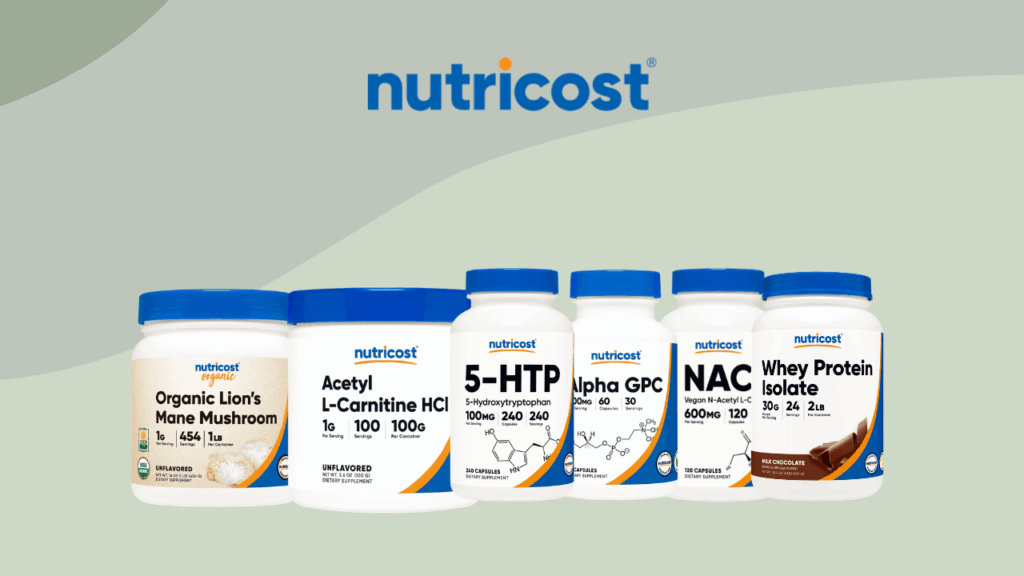
Nutricost focuses on offering a wide selection of nutritional products designed to support everyday fitness and performance goals. Its portfolio includes vitamins, amino acids, and sports nutrition products, allowing you to explore both foundational and goal-specific products.
The brand leans toward straightforward formulations, often featuring single-ingredient or minimally blended products. Alongside commonly used nutrients like vitamin C and B-complex, it also includes more niche compounds such as NAC, NMN, and lion’s mane.
In this review, we will get a closer look at what Nutricost offers across its product range, along with an evaluation of the brand’s reputation and consumer feedback.
As per the official website, Nutricost claims that its products are produced in FDA-registered, GMP-compliant facilities and undergo third-party testing. The brand covers an extensive set of categories that include general formulas, along with targeted areas such as cognitive health, digestive support, heart health, immune support, joint support, sleep, and keto.
Nutricost also places strong emphasis on sports nutrition and performance. Its lineup includes products like whey protein isolate and concentrate, creatine monohydrate (including Creapure® variants), and pre-, intra-, and post-workout formulas. Alongside these, it offers performance-related compounds such as beta-alanine, acetyl L-carnitine, and Alpha GPC. The brand further expands into niche options supplements like NMN, NMNH, NAC, and epicatechin, combining everyday essentials with newer, trend-driven ingredients.
N-Acetyl L-Cysteine plays a role in the production of glutathione, one of the body’s primary antioxidants. The presence of glutathione can help neutralize reactive oxygen species, which are unstable molecules that could contribute to oxidative stress. The product may support the body’s ability to maintain glutathione levels, which are involved in cellular defense, detoxification processes in the liver, and a healthy metabolic function.
Creatine Monohydrate is intended to support workout routines and general fitness goals and can be mixed with liquids for convenient consumption. The product is also offered in several flavors such as unflavored, blue raspberry, fruit punch, watermelon, pineapple mango, grape, and others.
Creatine monohydrate is a naturally occurring compound that is synthesized in the body from amino acids. It is stored in muscles as phosphocreatine, where it plays a key role in the rapid production of adenosine triphosphate. During short bursts of high-intensity activity, ATP is quickly depleted, and phosphocreatine may help regenerate it.
Whey Protein Isolate may support workout performance and help manage post-workout fatigue. It has all essential amino acids, including branched-chain amino acids such as leucine, which play a critical role in muscle protein metabolism and body recovery.
Whey protein might also help in lean muscle building by stimulating muscle protein synthesis, potentially aiding strength gains after training. It might reduce muscle damage and enhance post-exercise rebuilding.
Nitric Oxide Booster may support nitric oxide production and workout performance. The formulation includes L-Arginine HCl, Arginine AKG 2:1, L-Citrulline, and L-Citrulline Malate 2:1. These ingredients are amino acid compounds that the body can use in the production of nitric oxide. Nitric oxide relaxes the muscles in blood vessel walls, helping them to widen and increase blood flow. This process can influence oxygen and nutrient delivery to muscles during physical activity. Citrulline in the formulation may help sustain arginine levels over time. The addition of citrulline malate combines citrulline with a malic acid compound involved in cellular energy production through the Krebs cycle, which plays a role in generating ATP within cells.
Fenugreek Capsules may support metabolic regulation, endocrine balance, and digestive function through the bioactive compounds naturally present in Trigonella foenum-graecum (fenugreek). It contains biologically active compounds, including soluble fiber, steroidal saponins, and alkaloids like trigonelline. Soluble fiber can slow gastric emptying and carbohydrate absorption, which may influence post-meal glucose metabolism by reducing rapid spikes in blood sugar levels. Saponins present in fenugreek can interact with cholesterol metabolism by binding bile acids in the digestive tract, potentially influencing lipid processing. Alkaloids such as trigonelline are associated with metabolic signaling pathways and may play a role in glucose utilization and insulin sensitivity.
Nicotinamide Mononucleotide (NMN) is described by the brand as a precursor to NAD⁺, a coenzyme involved in cellular energy production and metabolic processes. Nutricost NMN may support these internal functions by providing NMN according to the recommended use.
According to Nutricost, each serving delivers Nicotinamide Mononucleotide, a compound that your body can convert into NAD⁺ (nicotinamide adenine dinucleotide). NAD⁺ aids in cellular respiration, where it helps transfer electrons in the mitochondria to make ATP, which is the main energy currency of cells. NAD⁺ is also involved in processes such as DNA repair and the regulation of enzymes like sirtuins, which are linked to cellular maintenance and metabolic regulation. By supplying NMN, the product is intended to contribute to maintaining NAD⁺ levels that may naturally decline with age, as described by the manufacturer.
L-Glutamine Powder may support protein synthesis and cellular recovery by serving as a key amino acid involved in muscle tissue repair and nitrogen transport in the body.
According to the brand, this product contains L-glutamine, which plays a role in nitrogen balance and is necessary for maintaining muscle tissue. It serves as a fuel source for rapidly dividing cells, including those in the intestinal lining and immune system. It is also involved in transporting nitrogen between tissues and supporting the synthesis of proteins and other amino acids.
Colostrum capsules may provide bioactive proteins and immune-related compounds that are described as supporting immune function and tissue development through naturally occurring growth factors and antibodies.
Colostrum is naturally rich in immunoglobulins, lactoferrin, and growth factors. Immunoglobulins are proteins that affect immune system recognition and response, while lactoferrin is involved in iron binding and may contribute to microbial defense mechanisms. Growth factors present in colostrum are associated with cellular signaling processes that influence tissue repair and muscle development.
Nutricost structures a large part of its catalog around single-ingredient or minimally combined formulations, which is reflected across categories like amino acids (e.g., L-citrulline, L-arginine), creatine monohydrate, and standalone vitamins. Many of these products are offered in both powder and capsule forms, with labels that typically highlight the exact ingredient, serving size, and total quantity per container. This format keeps formulations relatively simple, without layering multiple actives into one product, and aligns with a more direct, ingredient-first presentation across the website. It may also make it easier to track how specific ingredients fit into your usage, especially when you are trying to avoid overlapping nutrients across different products.
Nutricost does not provide direct access to batch-specific COAs, so you will not typically find downloadable lab reports for specific lots. Due to this, it becomes harder for you to verify product quality before making a purchase. Instead, you rely more on brand claims than on independently accessible data, which makes it difficult to assess consistency across batches. This limited transparency can affect how much confidence you place in the brand, especially without clear, verifiable supporting reports.
Nutricost does not provide detailed insight into manufacturing practices, sourcing origins, facility locations, or step-by-step testing processes. It keeps its communication minimal, focusing mainly on product labels, pricing, and basic specifications. This means you will not find technical documents, lab walkthroughs, or process-level explanations on its platform, which limits how much you can independently verify about product handling and quality control.
User feedback in independent reviews also highlights gaps in how the brand responds to queries and concerns. Reviews often mention delayed replies, templated responses, or difficulty getting clear answers to specific questions, such as ingredient variations or certificates of analysis. Some users also report challenges with returns, order corrections, and follow-ups on unresolved issues. This combination of limited information and inconsistent support can make it harder for you to get clarity when something does not match expectations.
Microingredients and Nutricost both operate in the same space, but they differ in how they structure their offerings and guide your choices. As per its official website, Microingredients emphasizes formulation-driven products that combine multiple ingredients into a single option, such as its multi-collagen peptides powder that includes Types I, II, III, V, and X, along with hyaluronic acid, biotin, and vitamin C. On the other hand, Nutricost focuses on single-ingredient or minimally combined products like 5-HTP capsules, acetyl L-carnitine powder, alpha GPC, and caffeine capsules, allowing you to select and stack individual compounds without added blends. The product range further highlights this contrast in depth and positioning. Microingredients leans into wellness, beauty, and superfood-based supplementation with products like organic blue spirulina (phycocyanin extract with no fishy smell), organic spirulina, and chlorella tablets. Nutricost, on the other hand, offers a much broader catalog with products covering amino acids, antioxidants, digestive support, immune support, heart health, joint support, keto products, and sports nutrition, but with less emphasis on superfood blends or multi-benefit powders.
Ingredient philosophy is another point of separation. Microingredients focuses on enhanced formulations and synergistic blends, such as magnesium combinations like magnesium L-threonate with magnesium glycinate in flavored powder form. It also features saffron-based advanced formulas designed to support mood-related needs. Meanwhile, Nutricost keeps formulations straightforward, offering isolated ingredients like beta-alanine powder, chlorella powder, or lion’s mane mushroom powder, which gives you more control over dosing but requires combining products manually.
Both brands emphasize quality and manufacturing standards, but with slightly different focus areas. According to their official website, Microingredients highlights third-party testing specifically for heavy metals and microorganisms, CGMP-compliant facilities, and U.S.-based manufacturing. In comparison, Nutricost also states that its products are manufactured in an FDA-registered, GMP-compliant facility and undergo third-party testing, but presents this as a standardized process across its large inventory rather than emphasizing specific testing categories.
Microingredients focuses on curated, multi-ingredient blends, organic superfoods, and combination formulas that simplify supplementation into fewer products. Meanwhile, Nutricost offers a wide, modular catalog of single-ingredient options, giving you flexibility to build a routine based on specific compounds.
NOW Foods offers a wide-ranging catalog that includes formulas, sports nutrition, beauty and health products, essential oils, natural foods, and pet health options. Within the same platform, you can find products such as omega-3 softgels, CoQ10, probiotic blends like Probiotic-10™ in multiple CFU strengths, essential oil roll-ons, teas like ginger mint, and skincare options. On the other hand, Nutricost maintains a narrower but still extensive catalog, organized into categories like amino acids, antioxidants, heart health, immune support, and workout formulas. Its listings include products such as creatine monohydrate powder, NAC capsules, and vitamin combinations like K2 with D3, without extending into non-supplement lifestyle categories.
The brand NOW Foods also provides a protein portfolio with multiple ingredient sources and formats. Its offerings include whey protein concentrate and isolate, egg white protein, soy protein isolate, and bone broth powders. These are available in flavor options such as creamy chocolate, creamy vanilla, vanilla toffee, chocolate mocha, and unflavored variants. Some products are specifically labeled organic, vegan, keto-friendly, or paleo-compatible, and certain formulations like mass gainers and matcha-infused whey further expand the range.
Meanwhile, Nutricost offers protein products such as whey protein isolate, whey concentrate, and grass-fed whey isolate, along with other workout formulas like L-glutamine. However, the selection remains focused on core formats without the same level of segmentation or niche protein sources.
Quality assurance is one of the most detailed areas for NOW Foods. It lists multiple certifications across its product lines, including USDA Organic certification, Non-GMO Project Verified status, Intertek GMP certification aligned with SSCI benchmarks, and Safe Quality Food certification. Its sports nutrition products may carry the Informed Sport seal for banned substance testing, and additional labels include gluten-free thresholds of 20 ppm or lower, vegan certification, and cruelty-free verification through PETA’s Beauty Without Bunnies program. On the other hand, Nutricost communicates a simpler quality framework, stating that its products are manufactured in FDA-registered, GMP-compliant facilities and undergo third-party testing to meet safety and quality standards, without listing certification programs or category-specific validation systems.
Pricing structures further highlight the contrast. NOW Foods offers products across a wide pricing range depending on formulation, size, and certification level, with protein powders ranging from about $19.99 for smaller formats to nearly $199.99 for larger or specialized variants. Nutricost maintains consistently lower price points across categories. Its products, like creatine monohydrate priced around $16.97 on sale, NAC capsules around $9.97, and several vitamins and amino acid formulations typically falling within the $10 to $20 range.
NOW Foods offers a broader product ecosystem supported by extensive certifications, diverse formulations, and category expansion into multiple areas. Nutricost maintains a focused approach with straightforward formulations, consistent third-party testing, and strong emphasis on affordability.
We evaluated Nutricost’s brand reputation based on publicly available data from the Better Business Bureau (BBB). The brand has been listed as a BBB-accredited business with a B rating. However, records have shown complaints related to delayed shipping, lack of communication regarding order status, unexpected charges or add-ons, and difficulties with cancellations or subscription management.
Customer complaints have also highlighted issues with customer service responsiveness. Many users have reported delays in receiving replies, a lack of follow-up, or difficulty reaching support through phone or email. In some cases, they have reported conflicting or unclear communication regarding shipping timelines and order updates.
Refund and return policies have been another recurring area of concern. While the company has advertised a money-back guarantee, some complaints have indicated challenges in obtaining full refunds, requirements for customers to pay return shipping, or partial refunds being offered instead of full reimbursement.
The brand shows generally moderate brand credibility. Its rating and accreditation from the Better Business Bureau support baseline trust, but recurring complaints indicate operational weaknesses.
We evaluated the user experience of the company based on publicly available customer feedback from Trustpilot as of 2026. The brand holds a TrustScore of 1.5 out of 5 based on 55 reviews, with an average rating of 1.7 out of 5. The feedback generally focuses on price and perceived value. Some describe the products as affordable and effective, noting that they experienced no issues when using certain products over time.
However, one of the most frequent issues relates to customer service, with many reporting unresponsive support, a lack of follow-up, and difficulty reaching the company. Shipping and order fulfillment problems are also commonly reported. Customers describe delayed shipments, partial deliveries, or incorrect orders, sometimes with limited assistance in resolving the issue. These user experiences with Nutricost appear mostly unfavorable. While some users find products affordable and effective, frequent complaints indicate an inconsistent post-purchase experience.
Nutricost focuses on offering a broad range built around simple, single-ingredient or minimally blended formulations. You can select and combine products based on your specific goals, like performance, recovery, or general fitness.
However, this flexibility comes with limitations that affect how you evaluate product quality. The brand does not consistently provide publicly accessible, batch-specific test reports, which makes it difficult to independently verify label accuracy, purity, and consistency.
Nutricost may suit you if you prioritize affordability and straightforward formulations. At the same time, you need to approach product selection with closer attention. Make sure to monitor total intake when combining multiple products to avoid exceeding recommended limits, and review ingredient forms and dosages against established guidelines.
Starting with smaller quantities and assessing how its products fit into your routine can help you manage uncertainty, especially given the brand’s gaps in transparency and consistency.

Contact us at [email protected] or follow @leafsnap on Twitter! View our Privacy Policy.