

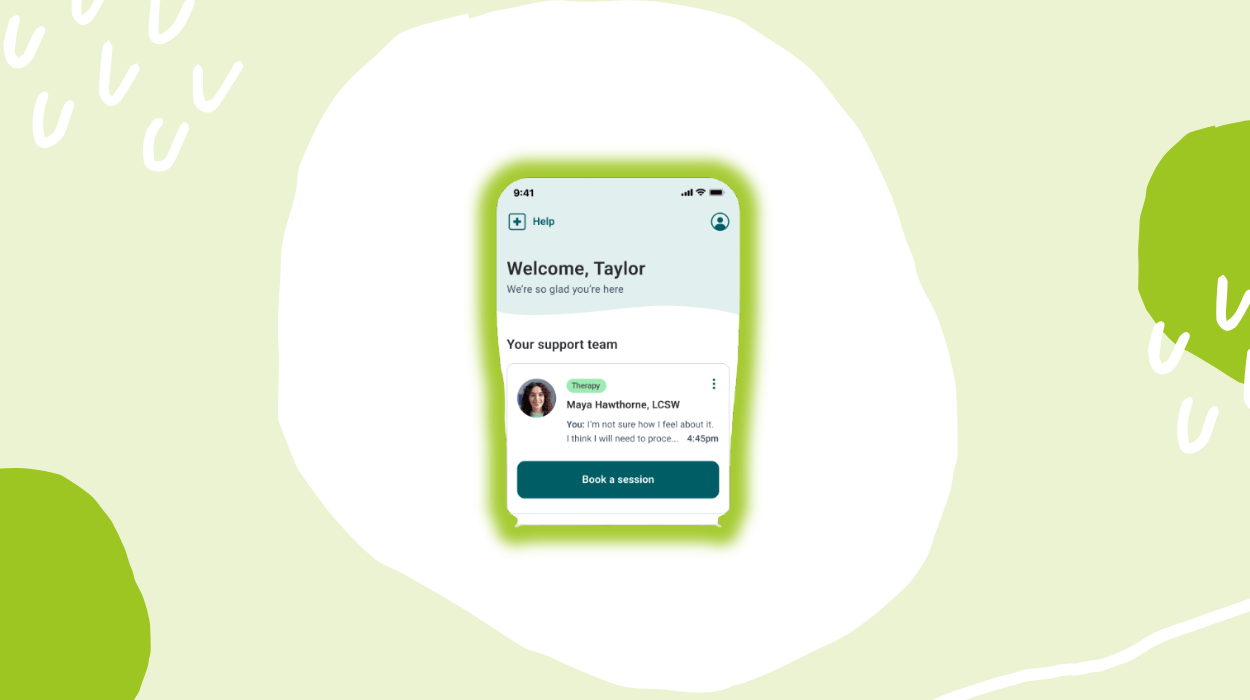

Talkspace connects you with licensed therapists and psychiatric providers through online communication tools. Its service is structured to increase access to care by allowing you to engage in therapy through video, messaging, or audio, without requiring in-person appointments.
The platform indicates that it supports a range of concerns, including anxiety, depression, stress, relationship challenges, and general emotional well-being. It also offers psychiatric services for those who may require medication management.
This review examines the platform’s service structure and accessibility, along with customer feedback where available. It also considers potential advantages and limitations, including how the experience compares to traditional in-person therapy and other digital mental health services.
Talkspace is a U.S.-based digital mental health service founded in 2012 by Oren Frank and Roni Frank. The platform delivers virtual therapy, psychiatry, and related mental health support through a technology-based care model.
The service is structured around access and flexibility, offering individual therapy for adults, teen therapy for ages 13–17, couples therapy, and psychiatric care that includes medication management. You can communicate with providers through asynchronous messaging, live chat, audio, or video sessions. This allows for interaction outside of scheduled appointments, with additional features such as therapist switching at no extra cost and tools like Talkcast content.
The brand operates a network of licensed therapists, psychiatrists, and other psychiatric providers, with reported coverage of more than 5,700+ professionals.
The platform indicates support for over 150+ mental health conditions, including anxiety, depression, OCD, trauma-related concerns, and relationship issues. It also includes digital tools such as online mental health assessments for conditions like anxiety, depression, bipolar disorder, PTSD, and insomnia. These are presented as screening tools rather than diagnostic instruments.
The company also offers self-guided content, AI-supported features, and employer-based mental health solutions through employee assistance programs and organizational partnerships.
Insurance integration is a central part of the service model. The brand highlights connection with major U.S. insurers, including Cigna, Aetna, Optum, Anthem, TRICARE, and Medicare. For some insured people, copays may be reduced or eliminated, while out-of-pocket plans typically start at around $69 per week.
Provider quality is managed through credentialing and ongoing evaluation. Clinicians on the platform are licensed and vetted, with background checks and performance monitoring based on patient feedback and internal review processes. The company reports an average of approximately 10+ years of post-licensure experience among its providers.
The platform also includes research and clinical validation in its positioning. It has conducted more than 30+ studies in collaboration with institutions such as Columbia University, Harvard University, and New York University, with findings published in journals including BMC Psychiatry and the Journal of Telemedicine and e-Health. It also includes AI-assisted tools intended to support provider workflows and user engagement, while maintaining a model centered on licensed clinicians.
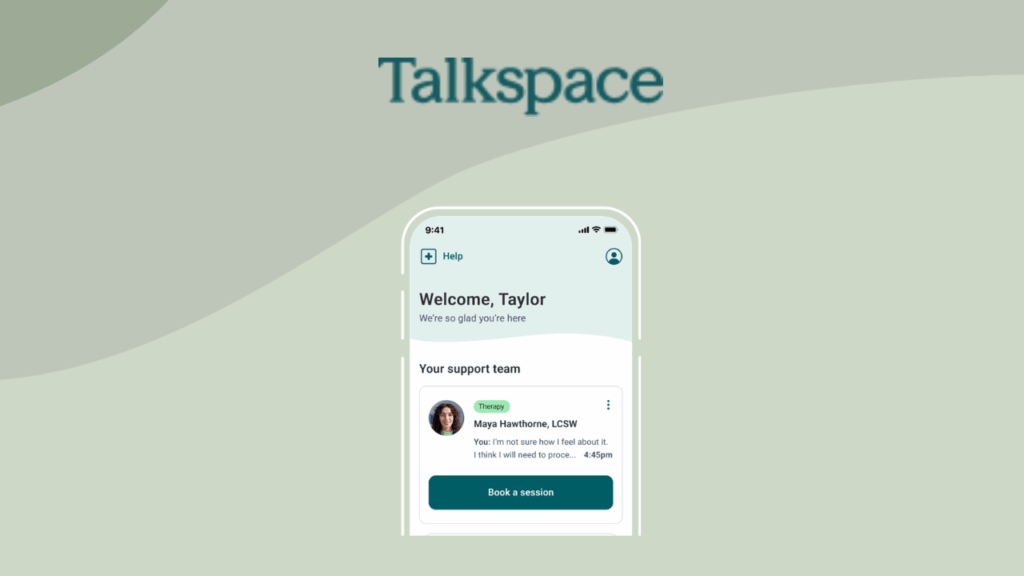
Talkspace offers a range of therapy formats designed to fit different needs and life situations. You can access individual therapy for one-on-one guidance and specialized support. For younger people, teen therapy and programs like NYC Teenspace extend access to age-specific care, while the option to find therapists near you helps align preferences with availability.
As per the official website, the platform also provides couples therapy, where both partners can engage with a therapist to work through communication challenges, shared concerns, or ongoing conflicts.
Sessions are structured to include both individuals, while still allowing room for guided discussions that help you understand patterns, improve interactions, and navigate situations together in a more balanced way. The platform also includes features like unlimited messaging therapy, which can help you to stay connected with your therapist between live sessions, along with AI-supported therapy tools.
Talkspace offers medication support as part of its online psychiatry services, allowing you to access prescriptions or refills without needing an in-person visit. After answering a few questions, you can schedule a video assessment with a licensed psychiatric provider who is authorized in your state. During this session, the provider evaluates your symptoms, health history, and overall needs to determine whether medication is appropriate for you.
If a prescription is recommended, it is sent directly to a pharmacy of your choice, and you continue with follow-up appointments to monitor progress and make adjustments if needed.
The brand provides access to care across a wide range of mental health concerns, including anxiety, depression, ADHD, OCD, PTSD, insomnia, and bipolar disorder, with personalized plans that can address more than one concern at the same time. Providers may adjust prescriptions over time depending on how your symptoms respond, ensuring that your plan evolves with your needs.
Talkspace gives access to treatment through a mix of online therapy and psychiatric care, giving you access to both structured guidance and flexible communication. You can choose between asynchronous messaging, where you text your therapist anytime and receive responses five days a week, or live sessions through video or audio for real-time interaction. This setup lets you stay connected consistently rather than relying only on scheduled appointments. The platform also includes therapy for teens, addressing challenges like academic stress, social interactions, anxiety, and depression with targeted strategies. Alongside therapy, the brand also provides psychiatric evaluation and ongoing management, which can be combined into your overall care plan if appropriate.
Talkspace claims to use a structured matching system that uses an intake questionnaire and a proprietary algorithm to connect you with therapists. The platform collects inputs such as symptoms, therapy goals, personal preferences, location, and scheduling needs, then matches users with providers licensed in their state. It typically presents multiple therapist options, supported by detailed public profiles that include specialties, experience, and insurance acceptance.
The platform also highlights individual providers such as Lucy Evans, Saja Mboge, Terrence Wright, and Maureen Miller, along with a clinical review group featuring professionals like Bisma Anwar, Cynthia Catchings, and Karmen Smith. This structure combines algorithmic matching, credential transparency, and curated oversight as part of its provider-selection framework.
This means you can be matched with licensed therapists relatively quickly without manually searching through large directories. The ability to view multiple provider profiles, including their specialties and insurance compatibility, can help you make a more informed choice upfront. This reduces some of the uncertainty typically involved in finding a therapist.
Talkspace claims to work with a wide range of health insurance providers, as stated by the platform. The platform states it is in-network with providers such as Cigna, Optum, Aetna, Anthem, Blue Cross Blue Shield, Carelon, TRICARE, Regence, and UnitedHealthcare, while also supporting Medicare and Medicare Advantage plans nationwide. It also partners with employers and Employee Assistance Programs (EAPs), positioning its services within existing healthcare and workplace benefit ecosystems rather than relying solely on direct-to-consumer payment. This means you may be able to access therapy at a significantly reduced cost, depending on your insurance plan or employer benefits. If your plan is in-network, you can avoid paying full out-of-pocket subscription fees, which lowers the financial barrier to ongoing care. Employer or EAP coverage can also provide prepaid sessions, making it easier to start therapy without an upfront commitment.
Talkspace implements an in-built system that allows you to change providers directly within your account without canceling or restarting the subscription. Through a Change provider option, you can update preferences, review new matches, and confirm a switch, with the platform stating that this can be done an unlimited number of times.
The system functions as a continuous rematching process rather than a fixed assignment, recalibrating matches based on updated needs, schedules, and preferences. It also includes continuity features, such as the option to share prior chat history or therapy records with a new provider, and supports automatic rematching in cases like provider unavailability, extended leave, service-type changes, insurance updates, or inactivity.
Talkspace operates within U.S. state licensing rules that limit how providers can deliver care across locations. Therapists must hold an active license in the same state where you are physically located during each session. The platform enforces this through its matching system, which connects you only with providers licensed in your current state. This applies even though the service is fully digital.
While the platform reports coverage across all 50 states, provider availability is not evenly distributed. Some therapists hold licenses in multiple states, but this is not common across the network. In lower-density or rural states, the number of available providers may be more limited. This can affect access to specific needs such as certain therapy specialties, language preferences, or flexible scheduling options.
This means your access depends heavily on your location. You may have fewer choices in certain states, even within a large national platform. If you are looking for a specific type of therapist or availability, options may be restricted. This can make it harder to find a strong match and maintain consistent care over time.
Cerebral builds its model around integrated, evidence-based care that combines therapy and medication management within a single system. On the other hand, Talkspace approaches care with a therapy-first structure that allows you to add psychiatry when needed.
With Cerebral, you can sign up once and access therapy, medication, or both, supported by more than 600 trained and certified clinicians working across 65-plus specialties and 35 therapy modalities. In comparison, Talkspace connects you with a licensed therapist after a guided questionnaire and supports care across more than 150 conditions, with a network of around 5,700 licensed providers and dedicated offerings for people aged 18 and above, teens aged 13 to 17, couples, and psychiatry services.
The way you access care differs in both speed and structure. Cerebral emphasizes rapid clinical access, stating that most people can meet a clinician within 24 hours, with same-day appointments available depending on state and capacity. You can browse therapist and prescriber profiles, view real-time availability, and directly book sessions based on your schedule. Talkspace also focuses on accessibility but frames it through a matching process, where you typically get connected to a therapist within 2 days or sooner after answering a few questions, rather than choosing from live calendars.
Cerebral’s care delivery is structured around measurable progress and clinical consistency. Its Resilience Methodology combines compatibility, collaboration, holistic support, personalization, and measurement, supported by tools that track your progress and help develop long-term skills. This approach is supported through the Cerebral Institute, where therapists complete a 10-week program, and prescribers receive supervision, clinical guidance, and access to evidence-based resources such as UpToDate. Meanwhile, Talkspace prioritizes flexibility in how you communicate, offering therapy through video, voice, and live chat sessions, along with unlimited messaging with your therapist available throughout the day. It offers additional features such as Talkcast personalized podcasts for ongoing support between sessions.
Insurance and affordability are presented with different emphasis. Cerebral highlights its partnerships with major insurers, including Aetna, Cigna, Blue Cross Blue Shield, Optum, and UnitedHealthcare. It allows you to search for clinicians who accept your insurance. The platform also highlights support for medication access through its own pharmacy service and partnerships for lab testing. On the other hand, Talkspace also works with major insurers such as Cigna, Aetna, Optum, Anthem, TRICARE, and Medicare, but places a stronger focus on affordability by noting that therapy may be fully covered through employer benefits or Employee Assistance Plans, with out-of-pocket plans starting at $69 per week.
The onboarding experience reflects this difference in approach. Cerebral allows you to explore clinician profiles, filter based on insurance and preferences, and book intake sessions directly. It also offers a free 15-minute consultation with a care coordinator if you are unsure where to start. Meanwhile, Talkspace guides you through a matching flow and focuses on adaptability after onboarding, allowing you to switch therapists without additional cost if your initial match does not feel right. Cerebral focuses on structured, clinician-driven care supported by internal training systems, coordinated pathways, and measurable outcomes tied to its methodology. Talkspace emphasizes flexibility, accessibility, and continuous communication, supported by features such as unlimited messaging and multiple session formats.
LifeStance Health and Talkspace differ in how you access mental health care, starting with their overall care models. As per its official website, LifeStance Health gives you the option to choose between in-person visits and telehealth, which makes it possible to receive care in a clinical setting or remotely, depending on what fits your situation. Talkspace removes the physical layer entirely and focuses on fully online access, where you can connect with a therapist through video, voice, or live chat from anywhere.
The scale and structure of their provider networks further highlight this contrast. LifeStance Health operates with around 8,000+ highly trained clinicians, including psychiatrists, psychologists, and licensed therapists. On the other hand, Talkspace highlights working with more than 5,700+ licensed providers and emphasizes speed of access, allowing you to get matched with a therapist within two days or sooner. Instead of focusing on physical network expansion, Talkspace prioritizes reducing wait times and making it easier for you to start therapy quickly.
Their service offerings also reflect different priorities in care delivery. LifeStance Health covers a wide clinical range, including adult psychiatry, child and adolescent psychiatry and therapy, and specialty services like Spravato and TMS. It also supports conditions such as ADHD, PTSD, disordered eating, and perinatal or postpartum depression. In comparison, Talkspace delivers therapy for people, teens aged 13–17, and couples, along with psychiatry and prescriptions, but all through a digital interface. It also includes features like unlimited 24/7 messaging with your therapist and Talkcast personalized podcasts that extend support between sessions, which changes how frequently you can engage with care.
The way each platform approaches personalization and matching adds another layer of difference. LifeStance Health focuses on clinician-led personalization, where you get matched with a provider from its directory and follow a structured process. This includes identifying your condition, selecting the right clinician, and booking either an in-person or online appointment. On the other hand, Talkspace uses a more streamlined digital intake, where you answer a few online questions and get matched with a licensed therapist based on your preferences. It offers added flexibility to switch therapists at any time without additional cost if the match does not feel right.
Insurance integration and pricing also reflect two distinct systems. LifeStance Health works within a traditional healthcare framework, accepting more than 290+ insurance plans and typically offering copays between $27 and $47. Talkspace also combines with major insurers, but emphasizes lower costs for many users, with most insured members reporting a $0 copay and an average copay of around $15. For those paying out-of-pocket, Talkspace highlights plans starting around $69 per week, and it also includes employer-sponsored and EAP-covered options, which expand access beyond standard insurance billing.
According to their official website, LifeStance Health gives you access to a large, clinic-backed network with structured evaluations and specialized services. Meanwhile, Talkspace centers everything around digital convenience, faster onboarding, flexible communication, and continuous access to your therapist.
To evaluate the overall reputation of Talkspace, we examined third-party data from sources such as the Better Business Bureau.
The company is BBB accredited and holds an A+ rating. At the same time, customer-submitted feedback on the platform shows the brand has a 1.41 out of 5 stars based on 99+ reviews, with recurring concerns related to billing clarity, insurance coordination, and customer support responsiveness. Users frequently describe situations involving unexpected charges, difficulty confirming insurance coverage, and confusion around what services are included or billed. Some also report limited access to direct human support, noting reliance on automated systems and delays when attempting to resolve issues.
The platform also has several complaints filed over the past years, with some closed in the last few months. Reported issues commonly involve billing discrepancies, challenges obtaining refunds, unclear or disputed charges, and technical problems affecting scheduling or account access. While the company has responded to complaints, users often indicate that resolution required multiple follow-ups rather than being handled immediately.
These details point to a mixed reputation profile. The strong rating suggests that the company meets formal business standards, but customer-level feedback indicates recurring friction in operational areas such as billing, insurance handling, and support.
Talkspace shows generally strong customer feedback on Trustpilot, with a rating of 4.5 out of 5 based on 2,000+ reviews. Positive feedback is largely centered on the therapy experience itself. Many describe their therapists as supportive, engaged, and effective in helping manage concerns such as anxiety, trauma, and general emotional challenges. They also mention the option to switch therapists as a useful feature when seeking a better fit.
At the same time, some reviews highlight operational issues related to the platform. These include technical problems such as app glitches, interrupted sessions, scheduling inconsistencies, and confusion related to time zones.
Billing and insurance handling are also recurring concerns, with some users reporting unexpected charges or unclear communication around coverage. Customer support responsiveness is described as inconsistent in certain cases, particularly when resolving account or billing issues.
These details suggest that user satisfaction with Talkspace is generally high, particularly in relation to therapist quality and convenience. However, recurring issues with platform reliability, billing clarity, and support responsiveness indicate that the overall experience can vary, especially in areas tied to service operations.
Talkspace is focused on expanding access to therapy and psychiatric care through remote tools. The platform offers communication through messaging, video, and audio sessions, along with medication management, and is designed to address concerns such as anxiety, depression, stress, relationship challenges, and general emotional well-being without requiring in-person visits. The service model emphasizes speed and flexibility, using asynchronous communication and questionnaire-based matching to connect users with providers, often within a short timeframe.
However, this structure can limit the depth of assessment, particularly for more complex or evolving conditions. Variability in therapist response times and state-based licensing restrictions may also affect continuity of care, especially if you are seeking consistent or real-time interaction. Effectiveness also depends on individual factors, including the nature and severity of the condition, responsiveness to therapy, and whether a digital format is appropriate.
The plattform functions as an accessibility-focused entry point into mental health care. Its strengths lie in convenience and broader reach, while limitations in depth of evaluation, immediacy of support, and consistency of experience may affect its suitability for more complex or long-term needs.

Contact us at [email protected] or follow @leafsnap on Twitter! View our Privacy Policy.