



North Atlantic Seed Co. offers genetics from numerous breeders through a centralized marketplace. The company provides access to a diverse selection of cultivation-focused products.
In this review, we examine the brand’s product selection, breeder network, educational resources, and value proposition. We also explore potential limitations and discuss the legal and regulatory considerations surrounding seed purchases, shipping restrictions, and cultivation laws that may vary by location.
North Atlantic Seed Company is a Maine-based retailer specializing in seed genetics, breeder partnerships, and cultivation supplies. Its catalog includes autoflower, feminized, regular, photoperiod, fast-flowering, and bulk seed options intended for different cultivation goals and experience levels.
The company organizes its inventory according to characteristics such as beginner-friendly genetics, outdoor performance, high-yield potential, disease resistance, compact growth habits, extraction-focused traits, terpene expression, and genetic stabilization, which helps with browsing products based on specific cultivation preferences and objectives.
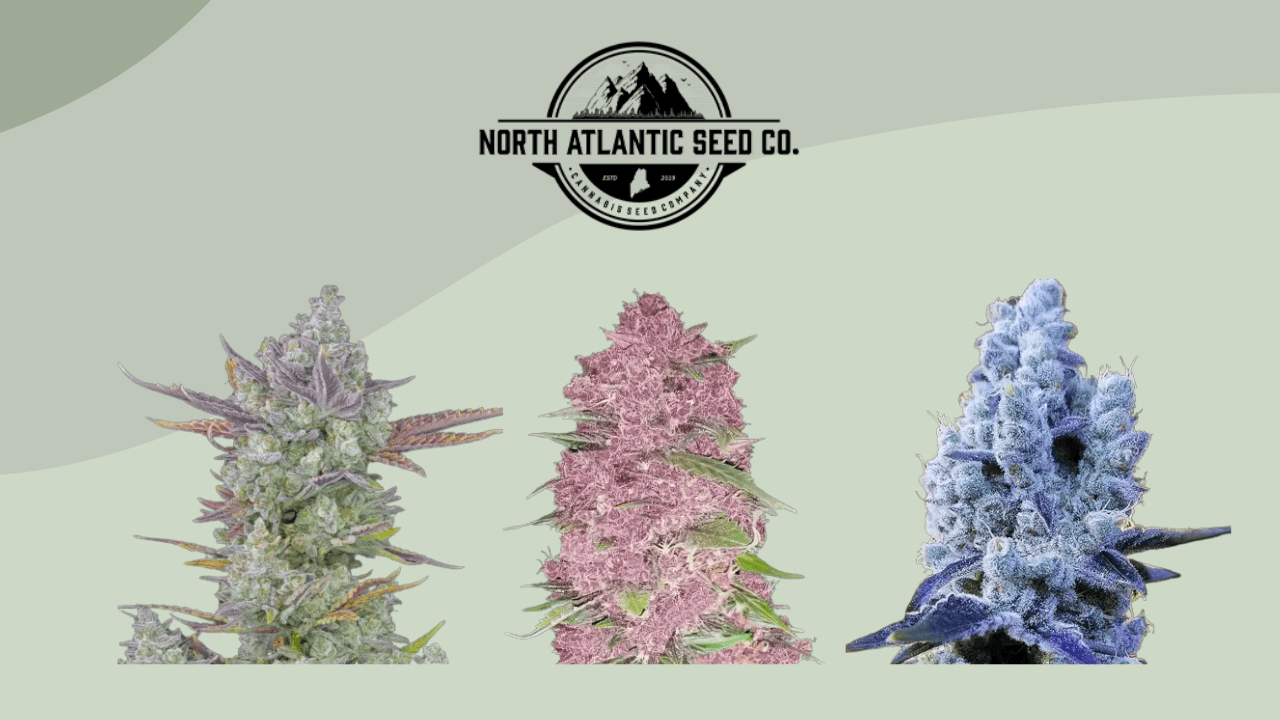
North Atlantic Seed Co.'s germination replacement policy does not apply equally across all U.S. customers. According to the company's stated policy, residents of more than 20 states are excluded from germination-related replacement claims. It creates a significant concern because you may be unable to receive germination replacements even if seeds fail to sprout after recommended germination procedures are followed.
While many seed banks apply germination guarantees broadly across domestic orders, North Atlantic Seed Co. restricts eligibility based on the customer's shipping address. If you live in Texas, Florida, Pennsylvania, Georgia, or Tennessee, for example, may not have access to the same germination-related support available to customers in eligible states. As a result, the risk associated with seed performance may fall more heavily on you. It causes a greater share of the financial risk associated with seed performance, as there is no replacement coverage available in your state.
North Atlantic Seed Co.'s restrictive policy offers limited flexibility by resolving approved claims solely through store credit without any cash refunds. As this credit excludes original shipping costs, taxes, and insurance, you are forced to spend additional out-of-pocket money just to receive a replacement. It ultimately traps your funds within their platform, creating financial friction and preventing you from recovering your original payment to shop elsewhere.
Homegrown Cannabis and North Atlantic Seeds both operate within the seed marketplace, but their structures, catalog depth, and customer focus differ considerably. According to its official website, Homegrown Cannabis is centered on home cultivation and combines seeds with grow supplies, nutrient systems, THCa products, and cultivation guidance into a single ecosystem. Its catalog includes feminized seeds, autoflower seeds, regular seeds, fast-version seeds, clones, grow kits, and fertilizers. In comparison, North Atlantic Seeds functions more as a genetics marketplace focused on breeder access, large-scale strain variety, tester releases, and limited-edition seed drops.
The way both brands organize their inventory also reflects different priorities. Homegrown Cannabis structures its catalog around growing goals through categories. These include Indoor Seeds, Outdoor Seeds, High THC Seeds, High Yield Seeds, Sativa Seeds, Indica Seeds, Hybrid Seeds, and Mix Packs. It also provides filtering systems based on terpene profiles, flowering times, potency ranges, cultivation difficulty, environmental suitability, and plant characteristics. Meanwhile, North Atlantic Seeds organizes its inventory more heavily around breeders and specialty collections. Its catalog contains more than 3,080+ strains and includes breeder collections. The platform also separates products into categories such as Pick and Mix, Punch Collection, Cheese Strains, Limited Drops, Stabilized Genetics, Extraction, Unique Terpenes, and Early Finishers.
The seed catalogs themselves also differ in structure and presentation. Homegrown Cannabis primarily focuses on commercially recognizable and widely marketed strains such as Gorilla Glue #4 Feminized, Purple Haze, Apple Fritter Feminized, and Hash Burger Seeds. In comparison, North Atlantic Seeds uses a less uniform pricing structure because its catalog depends heavily on breeder exclusivity, rarity, tester releases, and pack sizing. The inventory includes products such as Moonveil by In House Genetics and multiple limited tester packs from Brothers Grimm Seeds. Homegrown Cannabis appears more streamlined for mainstream strain browsing, while North Atlantic Seeds leans more toward niche genetics exploration and breeder-driven selections.
Seed Supreme follows a retail-heavy storefront model centered around simplified browsing, repetitive promotional campaigns, and mainstream strain discoverability. Meanwhile, North Atlantic Seeds functions more like a breeder-focused genetics marketplace with deeper catalog segmentation, breeder indexing, and cultivation-oriented filtering systems.
As per its official website, Seed Supreme organizes its storefront using categories such as Indoor Seeds, Outdoor Seeds, Hybrid Seeds, Feminized Cannabis Seeds, Autoflower Seeds, Indica Seeds, Regular Seeds, and multiple curated seed mixes. In comparison, North Atlantic Seeds uses a more breeder-centered inventory structure. It also organizes products across breeder collections and cultivation classifications, including Autoflower Seeds, Fast Flowering Seeds, Feminized Seeds, and Bulk Seeds under Licensed Cultivator Programs. Additional focus is on cultivation traits like Disease + Pest Resistant varieties, Stabilized Genetics, Extraction-focused strains, High Yield options, and Outdoor Seeds. Compared to Seed Supreme, the site appears significantly denser and more organized.
Seed Supreme places strong emphasis on mainstream and trend-driven strains, including Sour Diesel, Blue Dream, Grandaddy Purple, White Widow, Green Crack, Tropicana Cookies Purple, Super Lemon Haze, Fruity Pebbles OG, and Maui Wowie. Product listings display potency classifications such as Very High (20–30%), High (15–20%), Medium (10–15%), and Extremely High (over 30%). North Atlantic Seeds relies less on repetitive potency-focused merchandising and instead places greater emphasis on breeder identity, collection-based releases, limited inventory notices, phenotype families, and exclusive drops.
Seed Supreme also combines broader retail merchandising systems beyond standard seed listings. The platform includes curated seed packs such as High THC Feminized Seed Mixes, Outdoor Autoflower Mixes, Creative Feminized Mixes, High Mixes, Fast Flower Feminized Mixes, and Beginner-focused seed collections. It additionally combines bundled products like THCa Flower + Seeds Bundles, 420 Gift Boxes, and collaborations including Seed Supreme x The Bulldog Seeds. Products such as Mango Sherbet Auto, Pineapple Upside Down Cake Feminized, and Malawi Feminized appear under these collaborative breeder structures. Meanwhile, North Atlantic Seeds remains more concentrated on breeder inventory depth and commercial-scale catalog expansion.
North Atlantic Seed Company operates within a legal framework shaped by federal hemp interpretations, state-level cultivation laws, and industry-standard compliance disclaimers. The company’s operational model depends heavily on how seeds are classified under federal law and how individual states regulate seed possession, germination, and cultivation activities.
A major legal shift emerged through Section 781 of the FY2026 Agriculture Appropriations Act, which changed how seeds may be evaluated under federal hemp definitions. Earlier interpretations following the 2018 Farm Bill generally treated seeds as hemp products because the seeds themselves contain negligible THC levels. The updated interpretation instead focuses on the THC classification of the parent plant from which the seeds originate, creating additional uncertainty for seed banks and online retailers operating across multiple states. It increased regulatory scrutiny around interstate shipping, nationwide seed distribution, and online sales.
Seeds originating from plants exceeding federal THC thresholds may no longer qualify as hemp products under the updated framework, even if the seeds themselves contain little to no THC. The broader seed industry now faces concerns surrounding interstate commerce restrictions, future compliance obligations, and evolving federal enforcement standards.
Another important aspect of the legality framework is the distinction between seed possession and cultivation legality across different U.S. regions. States such as California, Colorado, Michigan, and Maine generally permit both seed possession and limited home cultivation under regulated adult-use laws, although plant-count limits and local restrictions may still apply.
In comparison, several southern and more restrictive states may allow seed possession under hemp-related interpretations while continuing to prohibit germination or home cultivation.
The current legality framework surrounding North Atlantic Seed Company reflects a rapidly evolving regulatory landscape built around changing hemp definitions. It also includes interstate commerce concerns, state-by-state cultivation laws, and ongoing legal interpretation surrounding seed classification and genetics.
North Atlantic Seeds highlights cultivation-related traits such as flowering speed, yield potential, terpene profile, resilience, and environmental adaptability. However, phenotype expression and cultivation consistency remain highly variable, depending heavily on selective breeding quality, environmental conditions, storage practices, and stabilization methods used.
Seed possession, shipping legality, and cultivation permissions vary significantly between countries, states, and municipalities. In many regions, possession may remain legally distinct from germination or cultivation activities, creating a fragmented legal framework that can complicate purchasing decisions.
The brand offers broad strain availability and breeder access, but the brand also operates within a legally sensitive and scientifically inconsistent market segment. It becomes important to independently verify regional regulations, breeder credibility, lineage documentation, and storage practices.
You should also remain cautious of exaggerated cultivation expectations, inconsistent phenotype outcomes, limited scientific validation, and breeder-dependent quality variation, as these remain recurring limitations within highly regulated genetics marketplaces.

Contact us at [email protected] or follow @leafsnap on Twitter! View our Privacy Policy.