

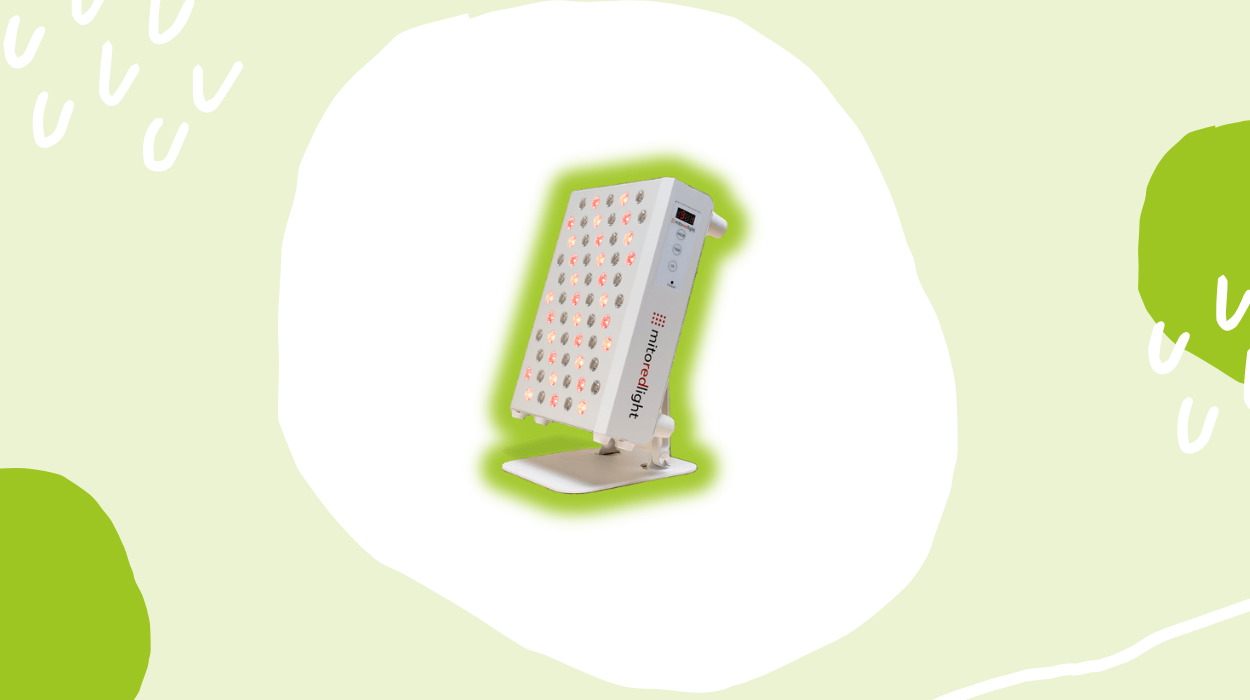

Mito Red Light centers its offerings around LED-based devices designed for both personal and professional use. Its product range covers full-body panels, portable and wearable devices, facial masks, and intranasal tools, along with larger commercial systems.
Alongside its device lineup, the brand also includes topical skincare and hair care products that are intended to complement light therapy sessions. It states that its formulations are designed to work in tandem with specific red and near-infrared wavelengths.
In this review, we will take a closer look at Mito Red Light’s overall offerings, where it stands out, and where it may fall short. It will also explore key advantages, potential limitations, and what actual users tend to highlight in their experiences with the brand’s products.
Founded in 2018 in Scottsdale, Arizona, Mito Red Light centers its offerings around photobiomodulation technology using red and near-infrared wavelengths, designed to support areas like skin appearance, recovery, sleep, and overall wellness.
The brand’s core category is its red light therapy panels, which include multiple series personalized to different levels of use. As per the official website, Mito Red Light also offers a specialized devices segment targeting specific applications. This includes the MitoGLOW™ LED mask with 1064 LEDs and multiple wavelengths for facial use.
The brand states that its panels are FDA Class II registered under the Center for Devices and Radiological Health (CDRH), and each device is independently third-party tested for power output and spectral accuracy. It highlights that its products carry multiple certifications, including ETL (Intertek) electrical safety certification, FCC compliance, RoHS compliance, and CE marking, indicating adherence to safety, electromagnetic compatibility, and environmental standards.
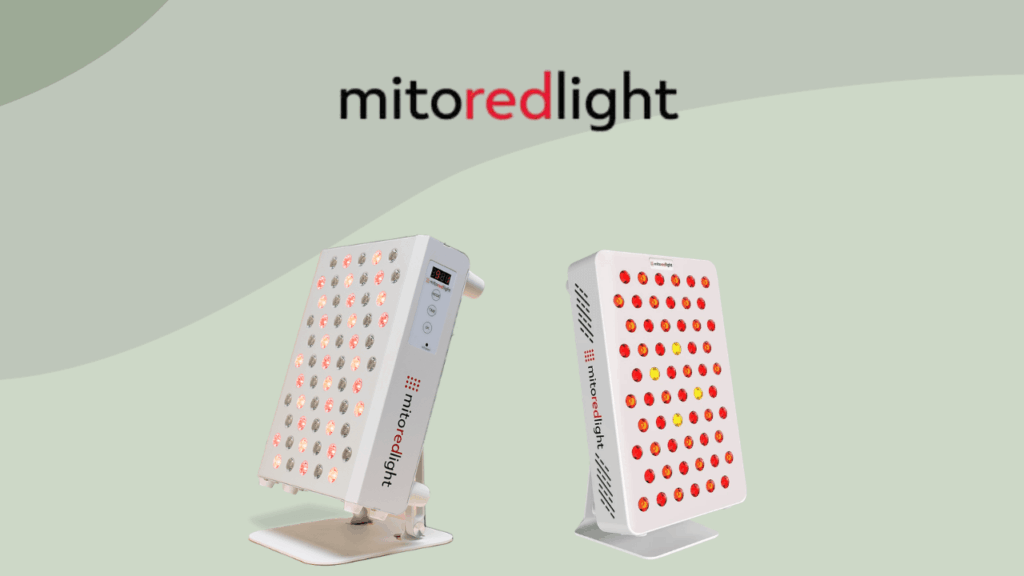
The MitoPRO X is a panel-based red and near-infrared light therapy device made for general wellness use. It provides multi-wavelength light exposure across both visible red and near-infrared ranges, which the brand states may support factors such as circulation, minor muscle and joint stiffness, skin appearance, relaxation, and cellular-level processes.
The device comes with a multi-wavelength configuration, which includes six peak wavelengths of 590nm, 630nm, 660nm, 810nm, 830nm, and 850nm. This range spans both surface-level and deeper-penetrating light bands, potentially allowing coverage across different tissue depths. The inclusion of 590nm may extend the spectrum beyond standard red/NIR combinations, which could broaden the range of biological targets addressed.
The panel uses dual-chip LED (TruDual™) technology, enabling multiple output configurations. You can operate the device in 100% red light, 100% near-infrared light, or a combination of both. This flexibility may influence how the panel is applied.
MitoPRO+ is a series of red and near-infrared light therapy panels intended to support general wellness by delivering targeted light energy to the body. According to the brand, this exposure may contribute to temporary increases in local blood circulation, while also supporting areas such as minor muscle and joint stiffness, skin appearance, relaxation, and cellular activity.
The device emits a combination of red light at 630 nm and 660 nm, along with near-infrared light at 830 nm and 850 nm. These wavelengths fall within spectral ranges commonly referenced in the photobiomodulation process, in which light may penetrate your skin and interact with mitochondria, the energy-producing structures within cells. This interaction is often associated with temporary changes in cellular activity, which may influence how tissues respond to physical stress, strain, or environmental factors.
The panel uses an even distribution of approximately 50% red and 50% near-infrared LEDs. According to the company, this balance is intended to allow simultaneous targeting of both surface-level tissues and deeper structures. This dual-wavelength provision may allow a more comprehensive exposure across different tissue depths within the treated area.
MitoGLOW LED Red Light Therapy Mask provides multiple wavelengths of light to the face, which the brand claims may support improvements in acne, wrinkles, skin tone, and complexion. The mask may influence surface-level appearance as well as underlying skin processes by distributing light energy evenly across the skin.
The device uses four distinct wavelengths of blue light at 465 nm, amber light at 590 nm, red light at 630 nm, and near-infrared light at 830 nm. These wavelengths interact with the skin at varying depths.
The mask includes five preset modes that combine these wavelengths in different configurations depending on the intended use. The anti-aging mode utilizes 630 nm red light, which may assist with supporting skin firmness and smoothness. The purify mode applies 465 nm blue light, which may be relevant for acne-related concerns, while the calm mode uses 590 nm amber light, which the brand associates with reducing visible redness and supporting a more even skin tone.
The deep renewal mode combines 630 nm red light with 830 nm near-infrared light, offering both surface-level and deeper tissue exposure. This may support broader skin responses by engaging multiple layers simultaneously. According to the company, the device is FDA 510(k) cleared for helping manage mild to moderate acne vulgaris and for use on full-face wrinkles.
MitoADAPT 4.0 offers multi-wavelength light exposure across larger areas of the body, which the brand claims may support skin appearance, circulation, muscle recovery, joint comfort, and broader systemic functions.
The device uses a multi-circuit design with TruDual™ chip technology, which the company states enables access to eleven distinct operating modes. These modes combine red, amber, and near-infrared wavelengths in varying configurations, allowing you to adjust exposure depending on the intended application. According to the brand, different modes may be used for purposes such as supporting skin tone and fine lines, collagen-related processes, joint and muscle comfort, circulation, metabolic activity, and more generalized recovery.
Mito Red Light builds its product ecosystem around a high-output performance infrastructure. Devices like the MitoPRO+ series to more advanced systems such as MitoADAPT are engineered to deliver high output levels, commonly cited in the ~57–170 mW/cm² range at standard distances. This consistency extends beyond panels to wearables and specialized formats, including masks, belts, helmets, and full-body systems. Multi-wavelength LED configurations and proprietary chip designs, such as dual-chip or multi-chip arrays, support this uniform output across the lineup. The result is a scalable system where performance remains relatively consistent regardless of the device category. This means shorter, more efficient sessions without relying on large, clinical-grade equipment. Whether you start with a compact panel or move toward a more advanced setup, the consistent output reduces the need to extend exposure times to compensate for weaker devices. It also allows you to scale your setup over time while maintaining similar performance characteristics, making it easier to follow routine-based recovery, skin, or general wellness use.
Mito Red Light combines multiple recognized electrical, medical-device, and manufacturing frameworks across its product ecosystem. Its devices are ETL-certified, reflecting compliance with North American electrical safety requirements such as UL and CSA standards. The company also maintains FDA establishment registration, with certain products following Class II clearance pathways.
Manufacturing processes align with ISO 13485 and MDSAP frameworks, supporting structured quality management, documentation, and traceability. Device-level safety is further supported through adherence to IEC 60601 standards, which cover electrical safety, electromagnetic compatibility, and usability in home-use environments. Additional certifications, including CE, FCC, and RoHS, indicate compliance with international safety, environmental, and electromagnetic requirements. This reduces the likelihood of common risks such as overheating, electrical faults, or interference with other electronics. These certifications also indicate that the devices meet established safety benchmarks across multiple areas.
Mito Red Light relies on established photobiomodulation principles and regulatory pathways that primarily emphasize safety rather than product-specific effectiveness. However, the brand’s proprietary implementations, including multi-wavelength arrays, TriChip systems, and adaptive dosing features in devices like MitoPRO X and MitoADAPT, are not supported by extensive device-specific randomized controlled trials.
The company draws on a broad body of existing research, but most of this evidence evaluates standard wavelength exposure rather than the brand’s exact configurations or delivery systems. Some devices follow FDA Class II 510(k) clearance pathways based on substantial equivalence, while many panels fall under general wellness exemptions. These pathways confirm compliance and safety but do not establish clinical effectiveness for specific outcomes.
This creates a gap between general scientific plausibility and product-level validation. While the devices are built on mechanisms that are biologically supported and are generally considered safe, there is limited direct evidence confirming the superiority or precise performance of Mito’s specific systems.
Novaalab and Mito Red Light take different approaches to red light therapy, especially in how their products are designed and used. As per its official website, Novaalab focuses on targeted, wearable recovery devices such as the Novaa Light Pad, Novaa Knee Ultra, Novaa Light Boot, and the full-body Recovery Pod. These are built for specific areas like the back, knees, feet, or joints, using dual wavelengths such as 660 nm red light and 850 nm infrared. On the other hand, Mito Red Light builds its lineup around panel-based systems like the MitoPRO+ Series and the MitoADAPT 4.0, which offer broader coverage and higher output with 4, 6, or even 8 wavelengths, along with specialized devices like the MitoMIND helmet and MitoQUAD belt.
The difference becomes clearer in how each brand positions its use cases. Novaalab centers its offerings around pain relief and recovery, highlighting applications such as runner’s knee, ACL/MCL recovery, post-training inflammation, and limited mobility after injury. Its messaging emphasizes improvements like reduced inflammation, faster healing, and mobility support. Meanwhile, Mito Red Light frames red light therapy in terms of cellular health and performance, explaining its role in enhancing mitochondrial function and ATP production. It extends beyond recovery into areas like skin health, brain wellness, and immune support through products like the MitoBOOST intranasal device and BioPhotonic Skincare™ formulations.
In terms of usability, Novaalab highlights more accessibility and devices are strapable, lightweight, and designed for ease of use, often requiring around 10–20 minutes per session while allowing you to multitask. Products like the Novaa Light Pad or Knee Ultra are built to be worn directly on the body, with straightforward controls and fixed configurations. In comparison, Mito Red Light introduces more complexity and customization, especially in higher-end models like the MitoPRO X, which includes precision controls and app integration, or the MitoADAPT 4.0 with eleven modes and adaptive wavelength combinations. This creates a more technical experience compared to Novaalab’s plug-and-use approach.
Their product ecosystems also diverge significantly. Novaalab stays within recovery-focused devices, covering categories like muscle, joints, oral care, and skin through products like the Novaa Glow Therapy Mask. On the other hand, Mito Red Light expands into a broader ecosystem that includes not only devices but also complementary skincare like the MitoAURA Activate + Amplify Serum and body spray, which are designed to enhance light absorption using photoactive ingredients and light-responsive compounds. This creates a more comprehensive system around red light therapy rather than just the device itself.
Novaalab focuses on targeted, at-home relief for pain, inflammation, or sports recovery. These benefits are supported by endorsements from chiropractors and use cases like the Chicago Bulls partnership. Meanwhile, Mito Red Light features a more advanced, scalable setup with higher customization, broader applications, and integration into long-term wellness routines.
Kineon keeps its focus tightly centered on the MOVE+ Pro, a clinically backed wearable positioned for joint-specific recovery. It states that its device combines 660nm red light with 808nm near-infrared laser technology to relieve joint pain, reduce inflammation, and improve mobility by energizing mitochondria and boosting cellular function and blood flow. In comparison, Mito Red Light operates across a much broader product ecosystem, offering panel systems like the MitoPRO+ Series v2 with four wavelengths and industry-leading power. It also features the MitoADAPT 4.0 with eight wavelengths and eleven modes designed to replace multiple devices in one setup.
The way each brand delivers support highlights some contrast in precision and coverage. Kineon emphasizes targeted, wraparound delivery where the MOVE+ secures directly around joints such as the knee, shoulder, or elbow, ensuring consistent dosing every session. Its modular system allows up to three connected modules, making it adaptable for multiple pain points while maintaining localized intensity. Mito Red Light leans toward broader exposure through panels and device-based setups. It highlights systems with high LED counts ranging from 60 to over 1,200 LEDs and irradiance levels exceeding 170 mW/cm². Instead of a single wearable solution, it encourages switching between panels, masks, belts, or helmets depending on the area being treated.
Kineon is built specifically around pain management, injury recovery, and long-term joint health. It claims to address knee arthritis, chronic inflammation, stiffness, and post-workout soreness. The brand also promotes benefits such as faster tissue repair, improved mobility, and reduced downtime. On the other hand, Mito Red Light extends beyond recovery into broader wellness categories, including the MitoAURA Activate + Amplify Serum with light-responsive ingredients. It also features the MitoMIND helmet featuring 256 LEDs at 810nm, and the MitoBOOST intranasal device using 450nm blue light, 650nm red light, and 1070nm near-infrared light.
Kineon builds a focused recovery system for trigger point therapy and joint support supplements, all aligned with targeted pain relief and mobility improvement. Mito Red Light positions itself as a comprehensive ecosystem, covering panels, wearable devices, skincare, and commercial-grade systems.
We evaluated Mito Red Light’s brand reputation using publicly available information from the Better Business Bureau and Reviews.io. The company holds an A- rating on BBB, but data on the platform related to the company’s reviews and complaints is scarce, which limits the ability to assess the brand in detail.
Based on Reviews.io, the company has received a rating of around 4.6 out of 5 from 150+ reviews. Customer feedback on the platform has highlighted several positive themes. Many users have reported that the devices function as expected and have described improvements in areas such as recovery, skin appearance, or general wellness with consistent use.
However, negative feedback has identified recurring concerns. Commonly reported issues include product durability over time, with some users indicating that devices may develop faults after extended use. There are also mentions of incomplete shipments, such as missing components upon delivery, which can affect the initial user experience. In addition, some express confusion regarding warranty coverage, particularly around eligibility once standard coverage periods expire, suggesting that terms may not always be clearly understood or communicated.
Customer service responsiveness appears to be another variable factor. Some users report delays in communication, limited availability of support outside standard business hours, and dissatisfaction with how refund or return requests are handled.
We evaluated user experiences for Mito Red Light by reviewing customer feedback and ratings from Trustpilot, where the company holds a TrustScore of about 4.5 out of 5 based on 700+ reviews. Many report positive experiences with product build quality and usability, and customers frequently describe the devices as well-constructed, durable, and comparable to professional-grade equipment. Ease of setup and straightforward instructions are commonly mentioned, with users noting that products are simple to integrate into daily routines. Some also report perceived benefits such as improvements in skin appearance, reduced discomfort, or enhanced recovery.
However, recurring concerns appear in some reviews. Some users report receiving defective or damaged products, such as units that failed to power on or arrived with cosmetic damage. Others describe delays in delivery or confusion around shipping requirements, including signature confirmations. A few also express frustration with warranty or return processes, mentioning that replacements may require returning the original product first, which can lead to delays in continued use.
Mito Red Light focuses on high-output LED devices that deliver wavelengths across formats such as full-body panels, targeted wearables, and facial systems.
The brand’s claims are based on established photobiomodulation mechanisms, which are supported in controlled research settings. However, their effectiveness depends on precise use parameters, including irradiance and exposure time, which are not standardized across Mito Red Light’s device configurations. It also provides limited device-specific clinical validation to confirm consistent outcomes under typical use conditions.
At the same time, operational factors also influence the overall experience. Variability in build quality, shipping, and customer support has been reported, and long-term performance may depend on factors such as heat management and component stability, which can affect output consistency over time.
Before considering the brand and its devices, you should consider consistent positioning, appropriate session timing, and the use of eye protection during exposure. Heat buildup during longer sessions and variability in skin characteristics may influence tolerance and light absorption. Additional caution may be required if you use photosensitizing medications or active skincare ingredients, as these can increase sensitivity to light exposure.

Contact us at [email protected] or follow @leafsnap on Twitter! View our Privacy Policy.