

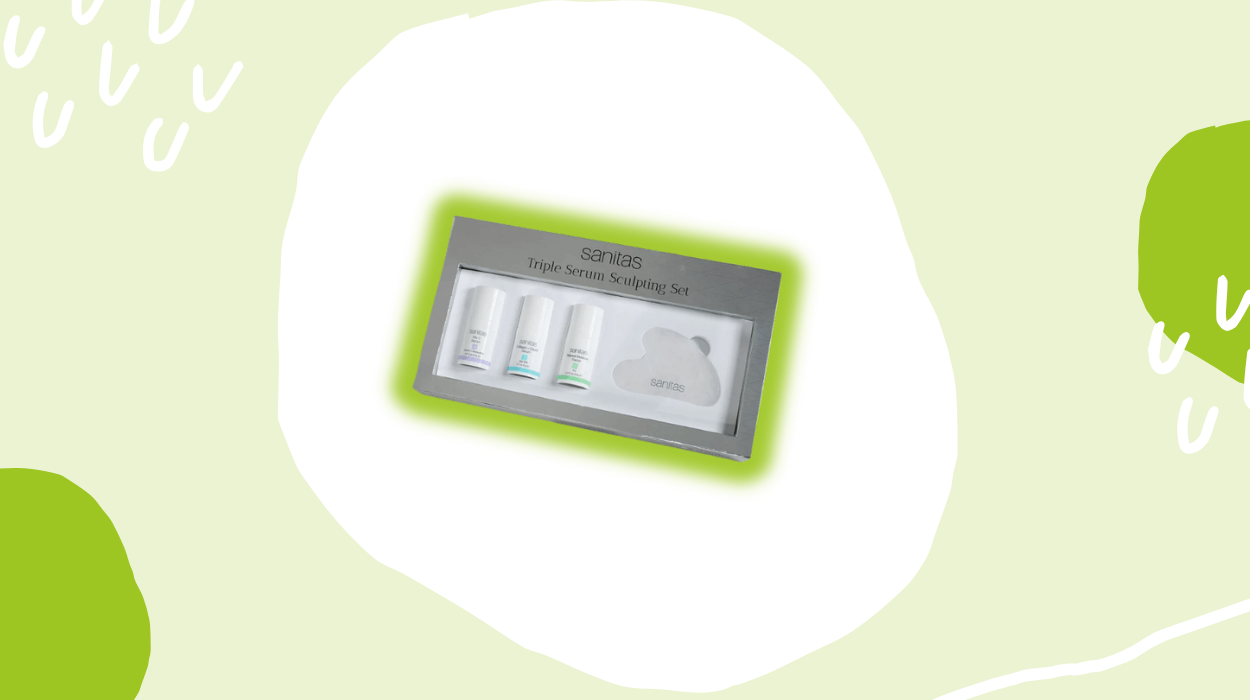
Sanitas Skincare offers topical products designed to support daily skin maintenance and targeted concern management. It primarily operates within the professional skincare category, offering formulations intended to address functional skin concerns. The brand claims that its formulations support hydration balance, skin barrier stability, and skin condition through consistent routine use.
This review examines Sanitas Skincare’s product offerings and formulation approach. It also explores the brand’s advantages, potential limitations, and key user considerations to better understand its position within the skincare market.
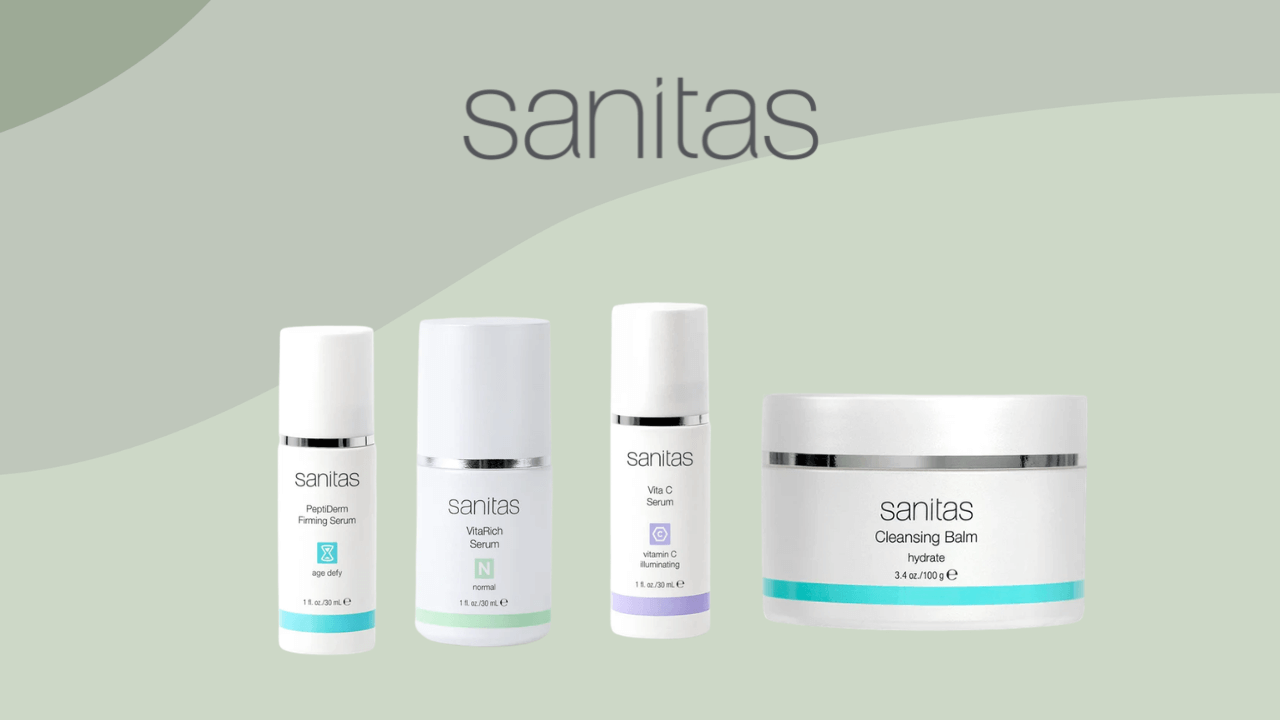
According to the official website, Sanitas Skincare offers a broad portfolio of facial and body care products designed for daily maintenance as well as targeted skin formulas. Its product range covers cleansers and scrubs, serums, moisturizers, facial mists, exfoliants, masks, toners, eye and lip care, and body care products. These products are organized around aging and fine lines, dryness, redness and sensitivity, blemish-prone skin, dark circles, and nighttime skin repair needs.
Sanitas Skincare also categorizes its offerings by active ingredients, allowing you to select products based on formulation focus. Key ingredient lines include vitamin C, hyaluronic acid, ceramides, niacinamide, lactic acid, vitamin E, and vegan collagen + elastin, which appear across serums, moisturizers, and exfoliating pads. The brand also provides skincare sets, along with personalization tools such as an online Skin Quiz and guided shopping support.
PeptiDerm Moisturizing Cream may support skin hydration while helping manage visible signs commonly associated with aging, including dryness, uneven tone, and reduced skin smoothness. It could help improve moisture retention and maintain skin barrier function, which could help preserve skin resilience. Vitamin C in this cream could help maintain skin structure and elasticity. It might also help neutralize reactive oxygen species and help reduce the appearance of uneven pigmentation.
The cream also contains ceramides, which can help maintain the organization of skin cells and support the barrier responsible for preventing excessive moisture loss. They might help restore lipid balance, improving hydration retention and supporting barrier stability.
According to the official website, Vitamin C Serum is formulated to support skin brightness while helping protect the skin from environmental stressors. It might help reduce the visible impact of oxidative stress, which can influence skin tone irregularities and surface roughness.
The makers added murumuru seed butter and cupuacu seed butter in Vitamin C Serum, which are naturally rich in fatty acids such as oleic and stearic acid. Cupuacu butter, in particular, may support prolonged hydration and help improve skin softness and flexibility.
Vitamin C Serum also includes vegan squalane, which could support barrier function by reducing moisture evaporation and improving skin suppleness. This may contribute to a smoother-looking texture and reduced dryness-related irritation.
Collagen + Elastin Serum may support skin structure and hydration while addressing wrinkles, loss of firmness, and uneven texture. The formulation aims to improve how the skin surface appears and retains moisture.
Collagen + Elastin Serum contains caviar lime, which could promote mild chemical exfoliation by loosening the bonds between dead skin cells on the surface. This process encourages cell turnover, helping smoother and newer skin cells become more visible.
The serum contains vegan collagen and elastin analogs, designed to support surface hydration and improve the appearance of skin elasticity. They function as humectants and film-forming agents that attract and retain moisture on the skin surface. This hydration support can temporarily improve skin smoothness and reduce the appearance of fine lines caused by dehydration.
According to the official website, hyaluronic acid in this serum promotes hydration support. It helps draw moisture toward the skin surface, improving hydration levels and contributing to a plumper, smoother appearance.
Visibly Firm + Glow Duo combines a Vitamin C–based serum with a ceramide-focused moisturizer to support hydration, skin brightness, and skin smoothness. The duo may help address visible concerns linked to aging and discoloration by combining antioxidant protection with barrier-supporting lipids.
The Vita C Serum in this duo could support collagen formation by assisting enzymes responsible for stabilizing collagen fibers that help maintain skin firmness. It might also help reduce the appearance of uneven pigmentation and contribute to a brighter and more even-looking complexion. Meanwhile, the PeptiDerm Moisturizing Cream could help maintain the integrity of the skin barrier, which regulates water retention and protects against external irritants.
As per the official website, Lemon Cream Cleanser is formulated to cleanse the skin while helping maintain moisture balance and support barrier stability after washing. The formulation focuses on removing impurities while preserving hydration levels essential for maintaining skin comfort and resilience.
The cleanser contains vitamins C and E, both recognized for their antioxidant activity. Vitamin E works within lipid-rich areas of the skin to protect cell membranes from oxidative damage. These antioxidants help stabilize each other’s activity, supporting skin protection while contributing to a brighter and more refreshed appearance.
The makers also added sandalwood extract, which might help reduce visible redness by influencing inflammatory signaling pathways in the skin. Phellodendrum amurense bark contains naturally occurring alkaloids and polyphenols that exhibit antioxidant and calming effects, which may help maintain skin balance after cleansing.
As per the official website, Brightening Peel Pads support skin exfoliation while targeting concerns such as discoloration, clogged pores, and uneven texture. It may help improve skin clarity by keeping pores clear and promoting more uniform skin renewal.
Brightening Peel Pads contain glycolic acid, which penetrates the outer skin layer efficiently and works by loosening the bonds between dead skin cells. This process boosts surface cell turnover, helping reduce the appearance of sun-related pigmentation and post-breakout discoloration.
The formulation also contains salicylic acid, which might help dissolve excess oil and debris that contribute to blackheads and blemishes. It has keratolytic properties that help prevent buildup within pores, supporting clearer-looking skin over time.
Pumpkin Enzyme Mask is formulated to exfoliate and nourish the skin while supporting hydration balance and barrier function. The mask has pumpkin, which helps dissolve accumulated dead skin cells by targeting protein bonds that hold dull surface cells together. Pumpkin is also rich in beta-carotene and naturally occurring antioxidants that help reduce oxidative stress caused by environmental exposure. This process may support a more even-looking complexion while improving skin softness and radiance.
As per the official website, a reconstructing multivitamin complex in this mask, including Vitamins C, E, and D, further supports skin nourishment and resilience. Vitamin D could support skin barrier regulation and cellular renewal processes, which are important for maintaining balanced hydration and skin integrity.
Sanitas Skincare states that it operates a structured professional partner network. The network includes independent estheticians, multi-location spas, and national franchise systems. The brand references partnerships with Hand & Stone Massage and Facial Spa and properties affiliated with Four Seasons Hotels and Resorts and The Ritz-Carlton. This distribution model centers on procedure rooms rather than mass retail shelves.
Sanitas offers a Pro Partner Program for licensed estheticians and spa professionals. The company requires state license verification. It also includes testimonials from estheticians such as Carla Akers (Park Cities Medicine Spa, Texas), Jaquelene Wiggins (Wiggins Wellness Spa), and Brittany McNees, identified as a Sanitas lead trainer. These professionals describe using the products in chemical peels, facials, and retail programs.
This professional network may indicate that licensed practitioners use the products in real settings. The license requirement and pro-only formulas suggest that certain products target trained applications rather than general consumer use. This means you may be using products that skincare professionals commonly choose in real spa or procedure settings, helping you make more informed product choices.
Sanitas Skincare promotes formulas that exclude parabens, phthalates, synthetic dyes, and certain harsh preservatives. However, the brand does not display the EWG Verified® seal on its website or product pages. The Environmental Working Group grants certification only after reviewing full formulas against its restricted ingredient list and transparency standards.
The brand does not provide direct links to EWG Skin Deep® listings or publish overall safety scores for finished products. Some ingredients, such as niacinamide, may receive low hazard ratings in independent database searches. Still, the brand does not show confirmation that complete formulas have passed EWG’s full verification process.
This means you rely on the brand’s ingredient disclosures rather than an independently audited seal. You must look up ingredients yourself instead of referencing a verified certification badge. If third-party validation matters in your decision, the lack of official EWG documentation limits independent safety confirmation.
Sanitas Skincare does not publish full clinical study reports or peer-reviewed research in journals such as the Journal of Clinical and Aesthetic Dermatology. You do not see detailed study methods, including sample size, control groups, double-blind design, testing duration, or statistical significance values. The brand also does not confirm third-party laboratory oversight.
There is no public release of raw data or instrumental testing details. The brand does not disclose whether it uses tools like corneometers for hydration or visiometer imaging for texture analysis. It also does not provide demographic breakdowns, such as participant age ranges or Fitzpatrick skin types.
This means you rely on summarized internal results rather than fully documented clinical evidence. You cannot review the study design or validate the statistical strength. If transparent methodology and independent testing matter to you, the limited disclosure reduces objective confirmation of the brand’s scientific claims.
SkinMedica and Sanitas Skincare both operate within the professional skincare category, yet their development models, procedure priorities, and product ecosystems reflect fundamentally different approaches to managing skin health.
As per its official website, SkinMedica is built on regenerative skincare research supported by Allergan Aesthetics, an AbbVie company. Its formulations center on biological skin renewal, particularly through patented stabilized growth factor technology used in products such as TNS® Advanced+ Serum and TNS Recovery Complex®. The brand highlights more than 200 global clinical efficacy studies, over 90 peer-reviewed publications, and 50+ granted U.S. patents. It claims that its product development follows a biology-to-clinical validation pathway, resulting in procedure-focused categories that include corrective serums, brightening systems, targeted anti-aging formulas, post-procedure recovery products, and broad-spectrum sunscreens.
Sanitas Skincare, in comparison, builds its range around ingredient-led formulation and routine adaptability rather than patented regenerative technologies. Its catalog addresses concerns such as aging and fine lines, dryness, uneven skin tone, redness, sensitivity, and blemish-prone skin. The brand highlights that its formulations rely on widely recognized actives listed across the product lineup, including glycolic acid, lactic acid, retinol, peptides, ceramides, hyaluronic acid, and vegan collagen + elastin blends. Products like Vita C Serum and Pumpkin Enzyme Mask demonstrate an approach centered on antioxidant replenishment, controlled exfoliation, hydration support, and barrier maintenance for ongoing daily use.
Differences between the brands become more evident in how skincare routines are evaluated and customized. SkinMedica combines the AI-driven SkinMedica Method, which analyzes nine measurable skin parameters, including wrinkles, redness, oiliness, texture irregularities, acne presence, dark circles, and elasticity changes, before generating a personalized routine. This diagnostic framework aligns with clinical procedure planning commonly integrated into dermatology and aesthetic provider environments. Sanitas instead offers a guided skin quiz that allows you to choose between simple, targeted, comprehensive, or fully customized routines, enabling product selection based on preference, concern category, or ingredient focus rather than biometric analysis.
Pricing structure and portfolio organization also highlight operational differences. SkinMedica maintains a premium clinical pricing tier, with products such as TNS® Advanced+ Serum reaching approximately $295, reflecting investment in patented technologies and long-term clinical research programs. Meanwhile, Sanitas maintains a mid-premium professional price range, where cleansers commonly fall near $34 to $40, and serums remain comparatively accessible, allowing routines to be expanded gradually across moisturizers, masks, and targeted formulas without reliance on a single technology platform.
SkinMedica focuses on dermal repair, cellular signaling support, and procedure-adjacent skin correction. On the other hand, Sanitas Skincare emphasizes ingredient diversity, customizable routines, and daily maintenance supported by antioxidant, peptide, and hydration-based formulations.
Dermalogica is structured around a professional skin-therapy ecosystem built on process expertise and guided personalization. The brand positions its products as extensions of in-clinic formulas. Its lineup is organized into clearly defined systems such as Daily Skin Health, Active Clearing, UltraCalming, PowerBright, Dynamic Skin, and BioLumin-C, allowing routines to be developed according to long-term skin conditions like adult acne, hyperpigmentation, dehydration, or sensitivity. The brand reinforces personalization through its Face Mapping skin analysis, therapist consultations, and professional service integration, encouraging structured routines. Its range often includes double cleansing systems, exfoliation steps like the Daily Microfoliant, targeted serums, and SPF moisturizers such as Dynamic Skin Recovery SPF50. On the other hand, Sanitas Skincare prioritizes topical nutrient delivery and active ingredient familiarity. It highlights formulations like Vita C Serum, Brightening Peel Pads, Collagen + Elastin Face Cream, B3 Clarifying Complex, and Hyaluronic Concentrate, reflecting a strategy centered on biochemical skin support and visible correction. The brand’s navigation system encourages you to build routines independently through concern filters such as aging + fine lines, redness + sensitive skin, oily + blemish-prone skin, or uneven tone, supported by a customizable skin quiz rather than diagnostic mapping.
Another key contrast lies in how both brands integrate professional care. Dermalogica strongly connects home care products with professional formulas performed by trained skin therapists worldwide. Sanitas Skincare also maintains spa partnerships and professional login access, places greater emphasis on home-use corrective maintenance, and offers bundled kits like the Overnight Bright Set or Sensitive Skin Trio that allow you to address concerns without requiring ongoing professional supervision.
Their formulation philosophies further separate the two brands. Dermalogica focuses on performance and technological innovation, combining concepts such as exosome-based leave-on formulas and multi-step hydration systems supported by toners and mists like Antioxidant Hydramist. The goal is cumulative skin health improvement through structured routines. Sanitas, meanwhile, concentrates on nutrient replenishment and barrier support using recognizable actives and vitamin complexes, including antioxidant moisturizers, peptide creams, enzyme masks, and exfoliating acid pads.
Product categorization also highlights operational differences. Dermalogica maintains extensive coverage across cleansers, exfoliants, masques, targeted formulas, eye care, body care, and integrated SPF options, positioning sun protection as a routine-essential step within the systems. Sanitas covers similar core categories such as cleansers, serums, exfoliants, masks, moisturizers, and eye formulas, but places stronger visibility on corrective actives and collagen-focused formulations.
Dermalogica functions as a professionally guided skincare system designed around education, protocols, and personalization, while Sanitas Skincare operates as a spa-grade, ingredient-driven corrective brand that gives you greater autonomy in selecting actives based on specific skin concerns.
To evaluate Sanitas Skincare objectively, we considered multiple credibility indicators, including the brand’s age, third-party business presence, and independently available consumer feedback. The brand is not currently listed on the BBB platform. While this absence does not automatically indicate negative business practices, it limits access to standardized complaint records, dispute resolution data, and accreditation status that many widely distributed skincare brands maintain. This reduces one layer of publicly verifiable consumer accountability.
On Tenereteam, it holds a 5.0 rating based on a limited number of reviews. Although the feedback trend is positive, the small review volume provides limited statistical reliability and does not fully represent the large-scale consumer experience.
Our evaluation indicates that Sanitas Skincare demonstrates credibility through its formulation background and professional ecosystem presence, but its independent validation signals remain relatively limited. The brand’s reputation appears to rely more on practitioner trust and controlled distribution than on extensive public review data or third-party accreditation systems.
To understand how Sanitas Skincare performs beyond brand claims, we evaluated customer feedback through verified Amazon reviews across two of its widely used products. This approach helps assess how the formulations translate into real-world skincare routines rather than short-term promotional outcomes.
Lemon Cream Scrub holds a 4.8 rating based on 415+ reviews. Users consistently describe that the product helped them with controlled physical exfoliation that improves skin smoothness, pore clarity, and overall brightness when used regularly. Many report multi-year usage following professional recommendations from estheticians, indicating sustained satisfaction rather than trial-based approval. Feedback also highlights tolerability across sensitive, dry, and acne-prone skin types, suggesting formulation balance between effectiveness and skin comfort. However, a few have highlighted concerns, including perceptions of premium pricing and occasional preference for stronger exfoliation.
PeptiDerm Moisturizing Cream has received a 4.6 rating based on 51+ reviews. Several customers highlighted lasting hydration, lightweight texture, and non-greasy absorption, particularly in dry climates and mature skin routines. At the same time, recurring review patterns point to functional drawbacks unrelated to formulation performance, including concerns about packaging waste, difficulty monitoring remaining product, and rising price sensitivity among repeat buyers.
This feedback suggests that Sanitas Skincare is generally perceived as performance-driven and professionally aligned, though long-term adoption may depend on how users weigh effectiveness against pricing and product design considerations.
Sanitas Skincare structures its lineup around ingredient function and skin concerns, allowing you to select products based on formulation purpose rather than fixed routine systems.
At the same time, the brand provides limited independently verified evidence supporting finished-product performance. It does not publish peer-reviewed clinical trials, quantified efficacy data, or widely recognized third-party certifications.
As several brands’ products rely on exfoliating acids and renewal-focused actives, routine management becomes an important consideration. When choosing Sanitas Skincare, it is essential to begin with gradual product introduction, consistent sunscreen use, and avoidance of combining multiple corrective actives within the same routine. Extra caution may be needed before procedures such as waxing, professional peels, or extended sun exposure.
The brand focuses on professionally influenced skincare and ingredient-based formulations, but limited independent testing and the possibility of overusing active ingredients remain important limitations to consider.

Contact us at [email protected] or follow @leafsnap on Twitter! View our Privacy Policy.