
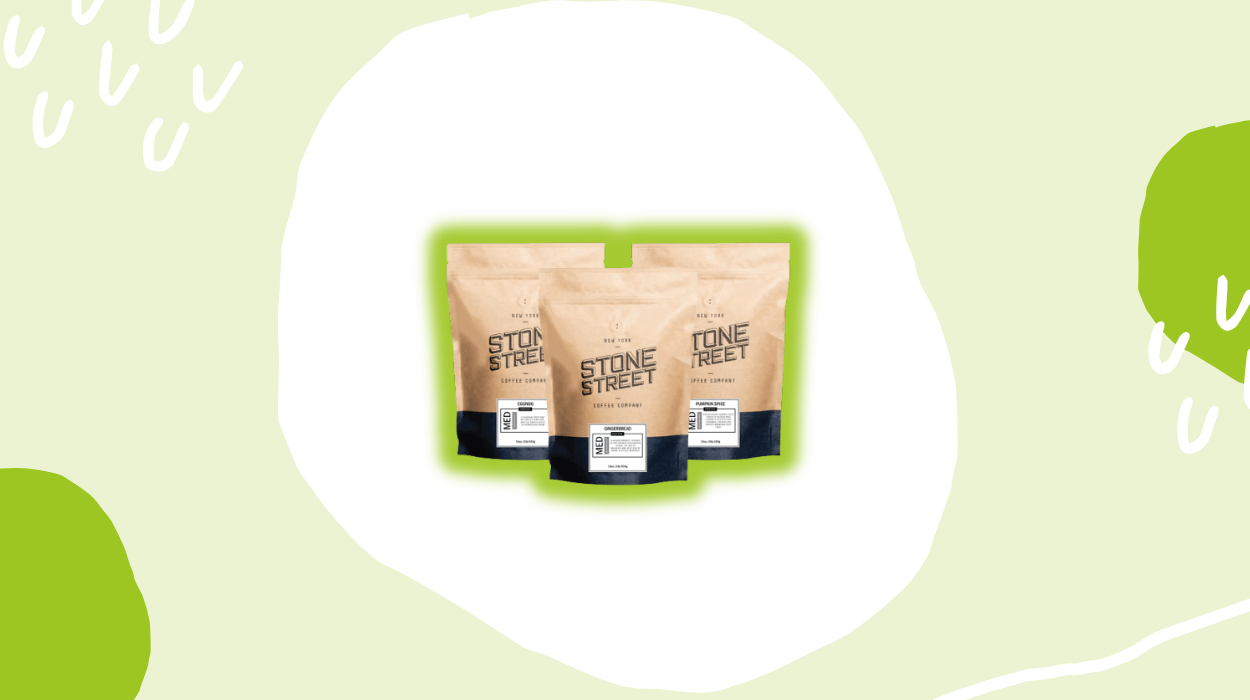

Stone Street Coffee offers whole bean and ground coffee products. The brand focuses on small-batch roasting and offers a mix of blends, single-origin coffees, reserve selections, flavored coffees, and cold brew options.
The brand’s offerings are provided individually and in bundled formats, with availability for both home brewing and café-style preparation. It further highlights freshness, roast timing, and grind customization as part of its production and fulfillment process.
In this review, we explore the brand’s background, coffee varieties, associated advantages, and potential brand limitations. The review further discusses the real user experiences with the brand’s offerings.
Stone Street Coffee operates as a New York-based coffee roaster with both an online storefront and a physical café location. The brand is rooted in Brooklyn, where coffee roasting is described to take place, and it presents itself as focused on freshness through small batch production.
Coffee offerings cover a wide range of formats and origins. The brand’s catalog features blends, single-origin coffees, flavored coffee, cold brew, cold brew boost products, and bundles. Products are further segmented by roast type, like dark roast, medium roast, light roast, and decaf. The brand also categorizes its coffee offerings based on the origin of beans, including Africa, Asia, Central America, South America, and the Reserva El Paraiso.
Brewing preferences are also addressed through options intended for cold brew, espresso, drip, or filter methods. Some signature coffee blends from the brand include options like the Cold Brew Reserve, Dark Roast Blend, and The Perfect Espresso.
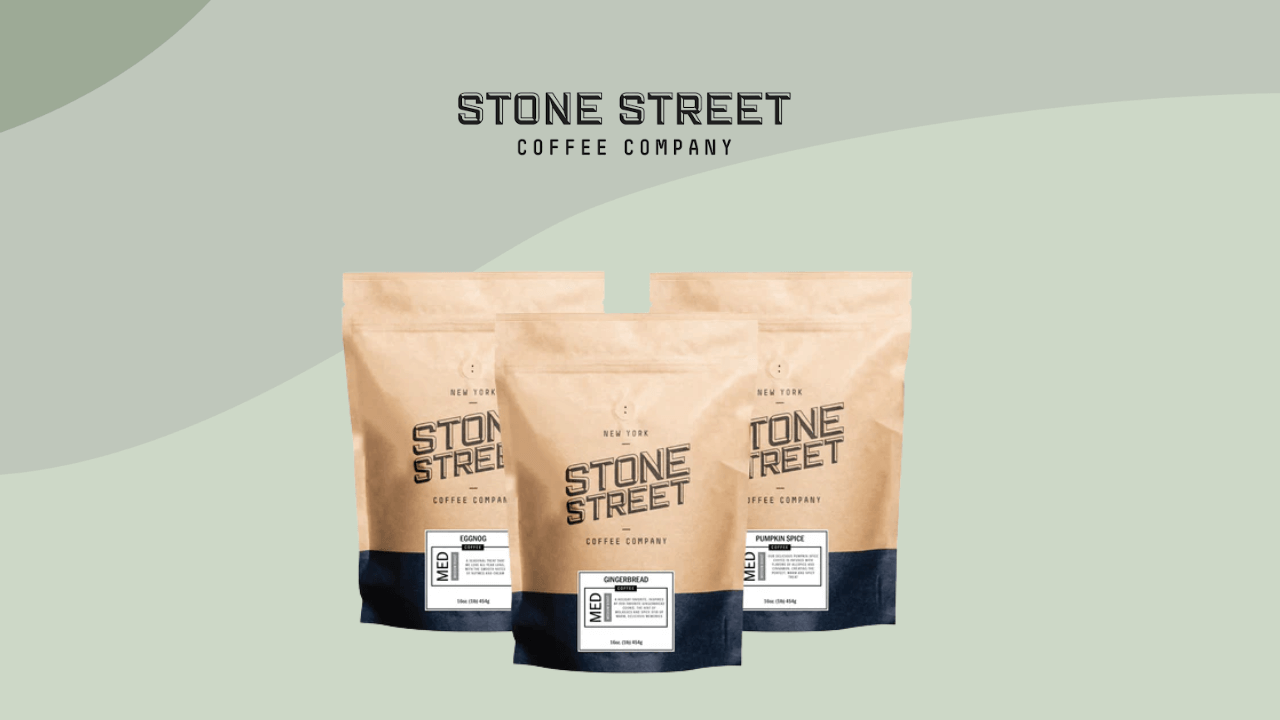
Cold Brew Reserve is a dark roast coffee intended specifically for cold brew preparation, which is available in whole bean and cold brew (coarse) grind options. As per its official site, it is made using 100% Arabica Supremo beans sourced from Colombia. The beans are described as being grown at an elevation between 1,200 and 2,000 meters above sea level and include classic Arabica varieties like Caturra, Typica, and Bourbon. A dark roast profile brings forward nutty and chocolate-forward flavor notes while keeping acidity smooth.
When brewed as cold brew, the coarse grind supports slower extraction and helps reduce bitterness while preserving body and flavor depth. The resulting coffee has a full mouthfeel with low perceived acidity and a clean finish, making it suitable for drinking black or with added milk or sweeteners without losing structure.
Brooklyn Roast blends lighter and darker roasted beans to create a balanced and approachable profile. According to its official website, the medium roast structure allows Brooklyn Roast to perform consistently in drip machines, French press setups, and espresso brewing.
The manufacturer describes that the Brooklyn Roast blend sits between brightness and depth, combining mild acidity from lighter beans with the fuller body and sweetness of darker beans. It could result in a smooth, well-rounded cup that avoids sharpness while still maintaining flavor clarity.
The Perfect Espresso is a medium-roast coffee blend intended for espresso brewing and milk-based drinks. Its roast profile is described as supporting a balanced extraction, which helps produce a thick crema and a layered flavor profile. According to its official website, the formulation is available in medium, coarse, fine, and whole-bean grind options. Caffeine in The Perfect Espresso supports energy and focus by blocking adenosine, a compound that promotes drowsiness in the brain. It also encourages the release of dopamine and norepinephrine neurotransmitters, which are involved in promoting attention, motivation, and reaction speed. The blend’s medium roast profile could help preserve these effects while keeping acidity more even, which may feel smoother during regular consumption.
According to the official website, Tanzanian Peaberry is a single-origin, medium-roast coffee sourced from family-run farms in Tanzania’s Mbozi District. Peaberry beans form when a single coffee seed develops inside the cherry instead of the usual two, which often leads to a denser structure and more concentrated flavor during roasting. The beans are stated to be grown at elevations of around 1,400–1,800 meters, which enables the beans to develop more slowly, supporting balanced acidity and fuller body.
In the cup, Tanzanian Peaberry reflects caramel, stone fruit, and chocolate notes, with a bold but controlled profile. Caffeine in the beans helps stimulate the release of adrenaline, which could help your body mobilize energy levels by increasing fatty acid availability for fuel.
Caramel Nut Cold Brew is made specifically for cold brewing using dark-roasted, gourmet Arabica Supremo beans sourced from Colombia. The makers state that the dark roast provides smooth chocolate and nut-forward notes while keeping acidity low, which may support compatibility for cold brewing. Naturally occurring caffeine in the Caramel Nut Cold Brew may support motivation, mental acuity, and sustained focus during prolonged periods of activity.
Mayan Water Decaf provides flavor depth but without the stimulating effects of caffeine. As per its official site, the blend uses beans sourced from Central America and is decaffeinated using the Swiss Water Process, which removes caffeine through water, temperature, and time rather than chemical solvents. As the caffeine is removed, this decaf blend may support a calmer drinking experience without triggering the central nervous system. It could avoid caffeine-driven increases in heart rate and adrenaline release, which may help minimize concerns like jitters and sleep disruption.
Stone Street Coffee maintains a clear connection to Brooklyn, New York, and places that emphasis at the core of its identity. The brand states that all coffee is roasted in Brooklyn, which keeps production concentrated in a single location and allows closer control over roasting schedules and timing. Product names like the Brooklyn Roast reference the location positioning. The location-first focus influences how the brand is perceived. Local roasting, as claimed by the brand, suggests less time between roasting and shipment, which may signal better freshness. A clearly stated place of origin also helps distinguish the brand from mass-market options that do not disclose where or how roasting occurs.
Stone Street Coffee maintains a community-based presence through direct, real-world engagement. The brand operates cafés in New York City, where drinks are prepared using its own beans and served in everyday neighborhood settings. This places the brand in regular, face-to-face contact rather than limiting interaction to online orders.
Community connection also extends through ongoing communication channels. The Good Taste Club and a recurring newsletter share updates on new roasts, seasonal offerings, and brewing guidance. The brand’s reach expands further through wholesale relationships. It supplies coffee products to restaurants, cafés, and hospitality venues, primarily within New York. Such a presence could make the brand feel connected to its local coffee community rather than operating only as a remote online seller.
Stone Street Coffee has focused on specialty coffee since it began roasting in Brooklyn around 2010. From the start, the brand’s focus has remained on whole-bean, freshly roasted coffee rather than pods or mass-market formats. The brand’s product lineup reflects this direction, as it offers single-origin coffees, espresso blends, and light, medium, and dark roasts, along with flavored options and cold brew. This specialty model has stayed consistent. Roasting remains centralized in Brooklyn, and product pages highlight roast level, intended use, and flavor direction instead of convenience-driven claims. Grind options are matched to standard brewing methods (like drip, French press, pour-over, and espresso), indicating a specialty-first approach rather than a mass-market one. A stable specialty model could support familiar roast profiles and predictable quality, making it easier to stay with the brand based on trust in its ongoing commitment rather than shifting trends or short-term positioning.
Stone Street Coffee puts most of its focus on fixed, repeatable blends and single-origin coffee blends. As a result, variety becomes limited to repeatable products rather than rotating microlot releases. Core offerings like Breakfast Blend and Cold Brew Blend dominate the catalog and remain available year-round. Such a structure results in minimal emphasis on microlot coffees. The brand rarely highlights farm-specific batches, short harvest windows, or one-off releases tied to individual producers. Product descriptions remain broad, with limited detail on lot size, elevation, or processing variation that typically defines microlot-focused roasters. A narrower microlot selection means fewer opportunities to experience rotating, small-batch coffees from the brand.
Lifeboost Coffee and Stone Street Coffee both function within the specialty coffee space. However, the brands differ substantially in their sourcing priorities, production philosophy, range of offerings, and pricing structure. Founded by Dr. Charles Livingston, Lifeboost Coffee emphasizes controlled farming conditions, post-harvest handling, and batch-level testing as core to its identity. Meanwhile, Stone Street positions itself as an artisanal roaster that emphasizes small-batch roasting, roast diversity, and method-specific preparation, with operations centered on local roasting in Brooklyn and a physical café presence.
The way each brand approaches its product lineup highlights a difference in orientation. As per its official website, Lifeboost Coffee focuses primarily on single-origin Arabica coffee sourced from high-elevation farms above 5,700 feet in shaded mountain regions of Central America. Its offerings are organized by roast level, including light, medium, dark, and decaf. These offerings extend into formats like whole bean, ground, coffee pods, flavored options, and bundled variety packs. Some core offerings from the brand include the Lifeboost Medium Roast Coffee, Dark Roast Coffee, and Medium Roast Decaf Coffee. Meanwhile, Stone Street Coffee maintains a more segmented catalog that covers blends, single-origin coffees, flavored coffees, cold brew, cold brew boost products, bulk formats, and curated bundles. Coffees are further categorized by origin regions such as Africa, Asia, Central America, and South America, and by brew methods like espresso, drip or filter, and cold brew. Some signature offerings include options like Brooklyn Roast, Cold Brew Reserve, and The Perfect Espresso.
Sourcing and production practices further differentiate the brands. Lifeboost Coffee emphasizes beans harvested at full maturity, spring-water washed, sun-dried, and then roasted in small batches only after an order is placed. This roast-to-order model is framed as a way to preserve freshness while limiting oxidation and bitterness. Stone Street Coffee also highlights small-batch roasting, but its emphasis is placed more on roast profile control, grind customization, and consistency across a wide range of origins and formats. The brand does not highlight a roast-to-order model.
In terms of pricing structure, there are some differences. For example, most coffee blends from Lifeboost are typically priced between $25 and $155. On the other hand, the coffee blends from Stone Street Coffee are typically priced at around $15–$65, which include both singular coffee blends and bundled options like the Nicaragua Reserve Bundle.
Lifeboost Coffee functions as a niche but scaled brand built around controlled sourcing, batch-level testing, low acidity, and subscription-driven purchasing. Stone Street Coffee, meanwhile, operates as a versatile specialty roaster focused on roast diversity and origin disclosure, but limited transparency on third-party testing.
When comparing the brands, both Volcanica Coffee and Stone Street Coffee are specialty coffee brands. However, the brands have some nuances in terms of their catalog breadth, origin and sourcing, core positioning, and third-party testing transparency.
Volcanica Coffee is a family-owned coffee roaster with operations based in Georgia. The brand structures itself around sourcing high altitude, single origin coffees from volcanic regions, with its formulation identity closely tied to origin characteristics like soil composition, elevation, and selective harvesting. Meanwhile, Stone Street Coffee presents itself as an urban artisanal roaster centered on small batch production in Brooklyn. Its online storefront and an operating café in SoHo (Brooklyn) reflect a multi-channel footprint.
Product segmentation further highlights a point of difference between the brands. Volcanica Coffee structures its catalog primarily around single-origin offerings, clearly segmented by roast level and geographic region, including Africa, the Americas, the Caribbean, and the Indonesian Pacific. Specialty groupings include estate coffees, low acid options, anaerobic and fermented coffees, fair trade selections, and decaf coffees. Some featured products in the brand’s catalog include the Ethiopian Yirgacheffe Coffee, Costa Rica Peaberry Coffee, and Tanzania Peaberry Coffee. Meanwhile, Stone Street Coffee maintains a diversified catalog that features cold brew, blends, single-origin coffees, flavored coffees, cold brew boost products, and reserve series offerings. Some core offerings from the brand include options like the Caramel Nut Cold Brew, Mayan Water Decaf, and Cold Brew Reserve.
Roasting and freshness practices are emphasized by both brands, though applied differently. Volcanica Coffee highlights weekly roasting schedules and rapid order fulfillment as part of its freshness model. Meanwhile, Stone Street Coffee emphasizes small batch roasting and prompt fulfillment, but places weight on roast profile control, grind customization, and consistency across formats (like espresso, drip, filter, and cold brew methods).
Quality and safety standards further reflect points of difference between the brands. Volcanica Coffee references phytosanitary testing before export and additional laboratory testing for mycotoxins such as ochratoxin A upon arrival. These steps are presented as part of controlled sourcing and handling rather than as marketing claims. Meanwhile, Stone Street Coffee does not maintain any transparency around laboratory testing or mycotoxin screening.
When evaluating Stone Street Coffee, we examined the brand’s operational history, core positioning, and presence across independent review forums. We looked at the brand’s standing and scores across Judge.me, where the brand currently maintains a 4.89 out of 5 score based on 3,400+ reviews across the platform. Feedback patterns show frequent mentions of fresh beans, dependable delivery, and reasonable pricing for both single-origin and flavored coffees. However, critical reviews also surface around certain roast levels, especially espresso and decaffeinated options that some users found darker than expected. A few users also noted mixed reactions to flavored coffees due to taste depth or the presence of artificial flavoring.
At the time of writing this review, the brand maintains a minimal presence on other independent review platforms like Trustpilot, Better Business Bureau, and ThingTesting. Our evaluation indicates that the brand’s reputation is built on consistency and repeat purchasing, with occasional criticism tied to roast preferences and flavor expectations.
While evaluating Stone Street Coffee, we reviewed verified Amazon feedback for its two core blends to understand how they perform in everyday use. Cold Brew Reserve holds a 4.6 out of 5 score based on 8,700+ reviews across Amazon. Many users described the taste as rich and robust, holding up well over ice and when mixed with cream without becoming watered down. They also highlight a smooth, bold flavor profile when prepared as cold brew, with many users noting low bitterness and reduced acidity with the blend. However, a few users reported that the product tasted overly acidic, muted, or unbalanced when brewed hot, suggesting it is best suited for its intended cold brew use.
The Dark Roast (Ground) product carries a 4.2 out of 5 score based on 60+ reviews, reflecting a mixed but still favorable response. Positive feedback revolves around freshness, aroma, and grind consistency, particularly for cold brew, pour-over, and press methods. Many users also described the flavor as strong and satisfying. However, critical feedback focused on expectations around roast strength, with some users finding the coffee weaker, less oily, or more acidic than anticipated for a dark roast.
Based on the available feedback, it appears that the brand’s products are appreciated, particularly for cold brew preparation. However, negative feedback revolves around dissatisfaction with smoothness, bitterness profile, and premium pricing of blends.
Stone Street Coffee operates as a specialty coffee brand that emphasizes small-batch roasting and flavor variety. However, it is important to note that factors like preparation habits and tolerance influence freshness and taste experiences with the brand’s coffee blends.
The brand emphasizes sourcing and roasting practices, but does not disclose third-party testing reports or COAs to screen for potential contaminants in the products, indicating a lack of transparency in testing standards. It is also essential to consider the possible caffeine-related effects with overconsumption of the brand’s products, including jitteriness, sleep disruption, or digestive sensitivity. When considering the brand’s offerings, factors like storage conditions, grind size, and brewing style also influence oil content, acidity, and cup consistency. Evaluating caffeine tolerance, roast preference, and preparation routine remains important before including the brand’s offerings in your routines.

Contact us at [email protected] or follow @leafsnap on Twitter! View our Privacy Policy.