

Qoves focuses on facial analysis, helping you understand your features and identify areas of improvement. It uses research-informed methods to assess proportions, symmetry, skin characteristics, and other aesthetic markers.
The brand’s approach considers your age, ethnic background, lifestyle, personal preferences, and natural aging patterns when conducting the assessment. Based on photographs uploaded through the online portal, it maps multiple points to assess your traits and generate a detailed report.
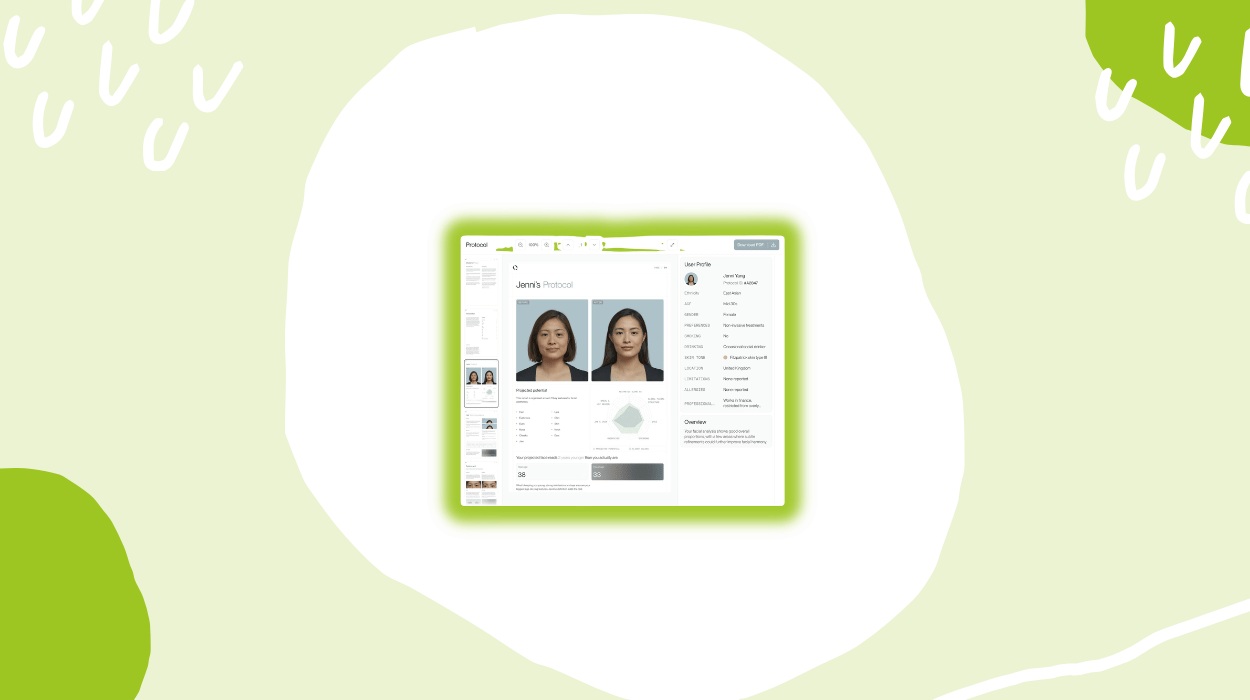
You can receive biometric scores, explanations of the findings, visual previews of potential changes, and an improvement plan with practical suggestions. Its subscription includes ongoing access to the care team via dashboard chat, alongside guidance on skincare, grooming, and appearance-related approaches.
Qoves could help assess your overall face proportions, symmetry, skin quality, and harmony between different structures. As per the official website, the analysis covers 160+ assessments across regions like eyebrows, eyes, nose, cheeks, lips, jaw, chin, ears, and neck. It also examines characteristics like sexual dimorphism, neoteny, contrast, and proportionality.
The process begins by uploading six clear photographs showing front-facing, right and left side profiles, and quarter profile angles. The service uses landmarking technology to measure dimensions, angles, and relationships between features. Post-review, you receive a detailed report up to 28 days after photo submission.
The report covers your aesthetic scores, strengths, and areas with potential for betterment. It then provides access to tailored protocols, which draw on more than 450 methods that the brand describes as evidence- based. Depending on your report, these may include eyebrow shaping, suitable skin care products, grooming tips, and other non-surgical approaches.
The brand also provides access to biometric tracking and ongoing support. You can monitor selected scores relating to symmetry, proportionality, and visual age. Then you may compare later findings with your original results.
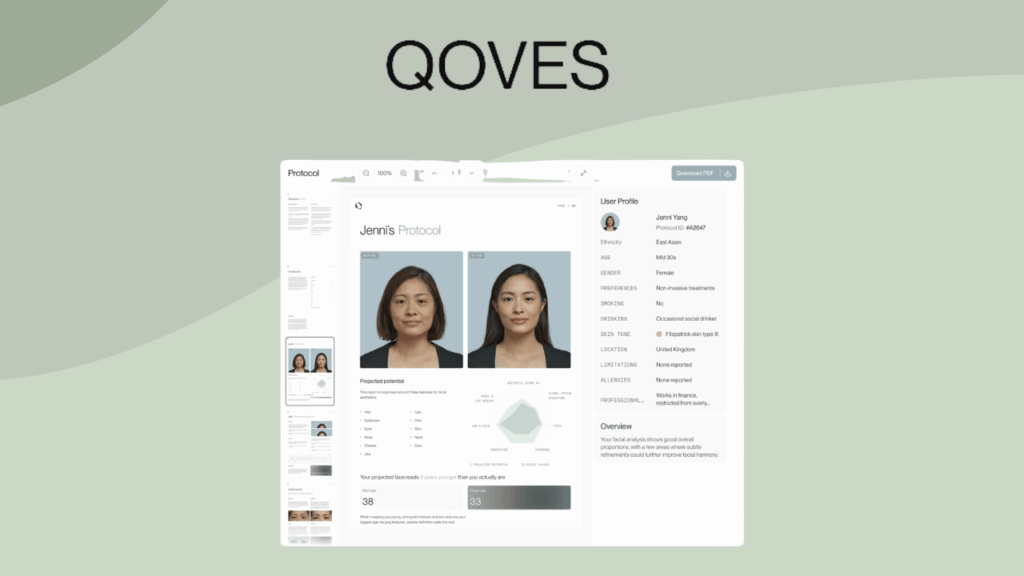
Qoves uses advanced landmarking technology, which maps 521 precise points with an in-depth scan of 160+ beauty markers. These markers cover everything from your facial thirds and structure to smaller details like jawline contrast and limbal rings. Keeping these aspects in consideration, the platform also creates realistic digital previews of potential non-surgical approaches.
It can give you a clearer sense of how subtle adjustments, such as eyebrow shaping or skin texture improvements, may affect your overall appearance. You can preview potential results before spending money on aesthetic programs or other approaches, without relying on guesswork or unrealistic digital edits.
Qoves combines computer-based facial analysis with human specialist review to assess facial proportions, symmetry, skin characteristics, and other visible features.
Automated analysis helps identify measurable patterns, while human review helps in interpreting these findings and developing personalized recommendations for areas such as skincare, hairstyles, and grooming.
The company also says it accounts for factors such as age, ethnicity, lifestyle, personal preferences, and budget. It may help give you a structured starting point for understanding your features and identifying potential improvements.
Qoves uses a recurring annual membership model, which costs $150 per year. However, you only need to upload progress photos once a year, which may create a rigid billing structure when your tracking needs differ frequently. Non-surgical approaches like Retinol or Gua Sha may reflect visible improvements within 2–6 months. However, you need to commit to a full year of the program while receiving actionable data updates on a 12-month cycle.
The annual commitment might also limit your flexibility when you prefer quarterly tracking or need only a one-time screening without ongoing fees. You may want to check your results after a few months and adjust your approach based on the findings, but the yearly tracking cycle does not match that need. In case your plan includes a professional approach or clinical procedures, you may also need to pay for appointments and provider fees separately.
FaceIQ Labs and Qoves both offer tailored analysis intended to help you understand your facial traits and plan appearance improvements. However, the platforms have some differences in their service scope, approaches, protocols, and service ecosystems.
According to its official website, FaceIQ Labs builds its services around four aspects, namely Harmony, Angularity, Dimorphism, and Features. The platform describes using more than 70 ratios and over 100 metrics to assess proportions, bone structure, gender-related characteristics, and symmetry. Qoves takes a broader approach. The brand claims to cover more than 160 aesthetic markers and map 521 points to evaluate areas like the eyes, eyebrows, nose, lips, jaw, and skin.
Their processes also differ in how you need to submit photos, review measurements, and use the resulting suggestions. FaceIQ Labs requires a front photo and a side profile for a complete Harmony score, with around 60% of the score derived from the front view and 40% from the side view. The results remain in a dashboard where you can edit landmarks, compare analyses, and track results over time.
Qoves requires you to submit six clear photos covering front, side, and quarter profile views. It then provides a report and a customized protocol, with every finding reviewed by a dermatological team for consistency and clarity. As part of its plans, the brand may suggest non-surgical measures, product suggestions, exercises, and alternative options, with explanations and step-by-step instructions.
Pricing and access reflect another difference between the platforms. FaceIQ Labs structures its services across Free, Basic, and Pro plans. The Free plan includes landmark mapping, a side profile score, 10 Harmony ratios, and two identified strengths or flaws. Its Basic plan costs $24.99 monthly, or $119.88 yearly, providing 70 or more Harmony ratios, all identified strengths and flaws, the combined Harmony score, and progress tracking. The Pro plan costs around $49.99 monthly, or $239.88 yearly, and adds an action plan, simulations, FaceGPT, and score projections to the existing benefits of the Basic plan.
As per its official website, Qoves charges $150 per year for its services. It includes one updated scan annually, a protocol, biometric tracking, visualizations, a protocol letter, and direct access to its care team. It allows you to cancel membership at any time, with no hidden fees. The brand’s pricing approach is straightforward, unlike the tiered pricing structure offered by FaceIQ Labs.
FaceIQ Labs prioritizes a structured scoring system with optional advanced tools for testing possible alterations and tracking how measurements shift over time. Qoves emphasizes broader insight, human-reviewed insights, and an annually updated program that integrates personal and demographic factors.
When comparing ClinicEvo and Qoves, both provide access to tailored insights, biometric assessments, and appearance improvement guidance. However, they are some differences in their scope and emphasis.
The scope of analysis differs between the brands. As per its official website, ClinicEvo uses six guided photos, a 468-point landmark system, and 3D vector reconstruction from six angles to conduct research. The brand states that its measurements reach approximately 2 mm precision and that it covers more than 100 aesthetic tests and markers. Its reports are reviewed by aesthetics specialists and include harmony, symmetry, proportions, skin indicators, and an evoScore from 1 to 10.
Qoves’ program can assess 160+ markers and beauty tests, uses 521 facial landmarks, and its analyses are reviewed by a human team. Its approach covers areas like the jaw, ears, chin, nose, eyebrows, neck, smile, cheeks, and eyes. The platform also claims to consider factors like age, ethnic background, lifestyle, personal preferences, and cultural beauty standards when developing plans.
In terms of plans and structure, there are further differences. ClinicEvo offers a free plan with a basic view of symmetry, proportions, and face shape. It also comes with access to Studio and five Studio credits. Beyond the free plan, it offers a paid plan that costs $12 per month. It includes a full specialist-reviewed evoReport, daily evoScore scans and score history, weekly dermatology insights, skin tracking, style and skincare guidance, and 25 monthly Studio credits. Qoves provides broad insights, biometric scores, before-and-after visualizations, an improvement protocol, and access to chat-based support. These aspects are included in its annual plan that costs $150.
Both brands offer visual previews to help assess possible appearance modifications before making decisions, but the scope and delivery of their services differ. ClinicEvo's Studio allows experimentation with hairstyles, colours, makeup, brows, beard styles, and grooming. Qoves places greater emphasis on a detailed program, feature-by-feature explanations, and biometric tracking across repeat annual analyses. It also offers guidance that may include brow shaping, skincare products, exercises, or other cosmetic or clinical options.
ClinicEvo may offer a low-cost entry point, optional monthly subscription, and frequent appearance tracking as part of its approach. Qoves offers a more extensive annual assessment, structured protocol with detailed explanations, and expert-reviewed insights. However, neither brand's stated precision, scoring system, or visual previews alone establishes that its findings will produce the predicted appearance improvements.
When evaluating Qoves’s reputation, we focused beyond user satisfaction by looking at the brand’s operating history, ratings on independent review forums, and the level of personalization it offers.
On Trustpilot, the brand carries a 4.6 out of 5 rating from more than 835 reviews. indicating that positive experiences make up a substantial part of the available feedback. It indicates many users appreciated support representatives for answering questions promptly and clarifying queries, while others have valued the structured analysis and practical hairstyle and skincare guidance.
However, the negative accounts raise questions about how consistently the brand translates its data-focused approach into viable protocols for users. Such experiences often revolved around generic hairstyle suggestions, inaccurate assessments, and AI-generated transformations described as artificial or unflattering. One complaint described that a user waited three weeks without receiving account login details or a response from the support team.
We consider the brand’s reputation mixed in terms of service consistency. It may provide useful personalized appearance analysis, but the quality and usefulness of its recommendations may not be consistent for everyone.
To understand what customers think of Qoves, we looked at Reddit discussions about their experiences with its reports, recommendations, delivery times, and customer support.
Many users were impressed by the level of detail in their reports. They appreciated the annotated images, diagrams, measurements, and explanations of facial features such as the eyes, nose, jaw, hair, and proportions. Some also found it helpful that the reports pointed out specific concerns, including birthmarks, hyperpigmentation, wrinkles, and facial asymmetry.
However, not everyone had the same experience. Some users raised concerns about delivery times, the level of personalization, and how practical the recommendations were. While users who chose express or urgent options reported receiving their reports within 2–4 days, others waited around 28 days.
In one Reddit post, a user reported waiting 52 days after submitting their photos. Although high demand was mentioned as a reason for delays, these experiences suggest that delivery times can vary considerably.
Personalization was another mixed area. Some users felt that Qoves took their preferences and lifestyle restrictions into account when creating their plans, while others felt the initial questionnaire did not fully capture their concerns or individual needs.
Based on our evaluation, we found that the brand does well at presenting detailed visual analyses and explaining its findings. However, the usefulness of its recommendations depends on how well they address each person's needs, and the waiting time can be unpredictable.
Qoves may provide a detailed view of your facial features, biometric scores, and visual previews of potential non-surgical changes. Its reports may help explain your proportions and symmetry, while the brand also offers dashboard chat access to the care team.
However, the platform offers an annual subscription model that follows a yearly assessment cycle. It may not suit your needs when you want more frequent comparisons or a one-time report without recurring fees.
While the platform provides biometric scores and detailed measurements, these results describe aesthetic traits and do not confirm that a suggested change will produce a predicted outcome.
The accuracy and consistency of your analysis depend partly on the quality, lighting, camera angles, positioning, and clarity of the six submitted photographs. To get the most from this service, you should consider your report as a reference for planning and tracking appearance-related alterations, not as a definitive measure of your skin health or a guarantee of results.

Contact us at [email protected] or follow @leafsnap on Twitter! View our Privacy Policy.