

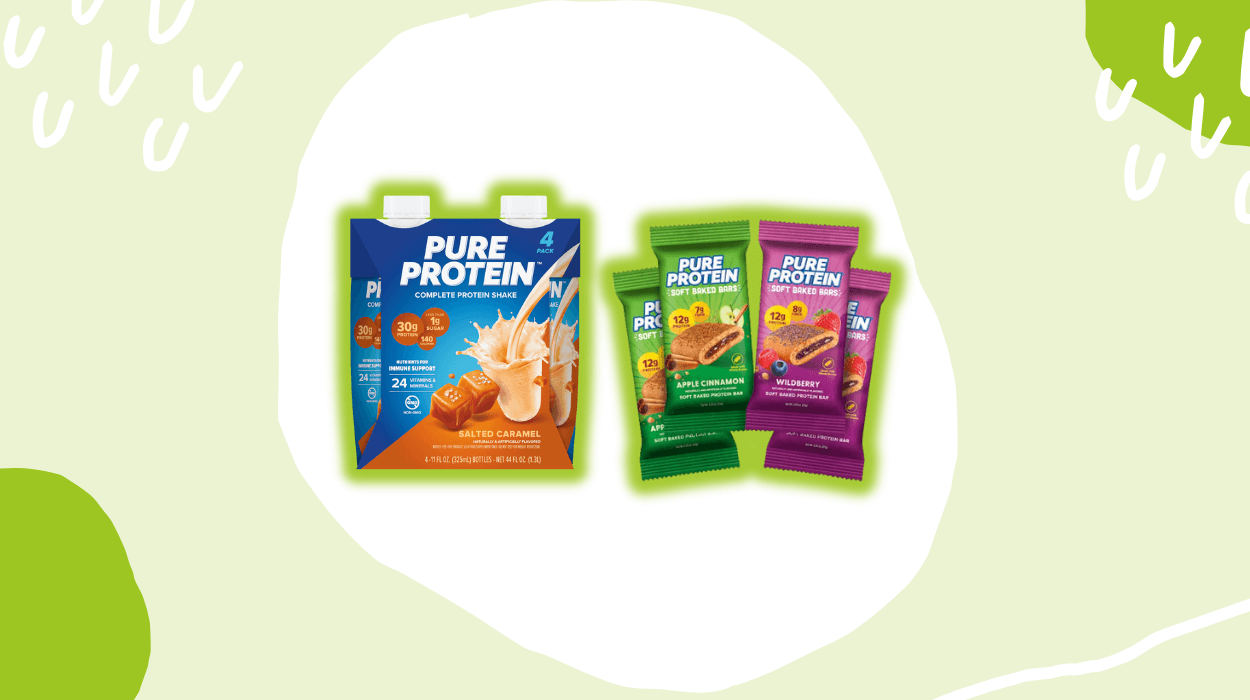

Pure Protein is a nutrition-focused brand that offers a selection of products designed to support practical ways to manage fitness, recovery, and everyday nutrition.
The brand’s portfolio includes protein bars, ready-to-drink shakes, powders, and portable snacks that are built around increasing daily protein intake in a simple, convenient format.
It emphasizes on-the-go usability, low sugar content, and multiple flavor options, aiming to support your protein needs around workouts, busy schedules, or routine meal planning.
This review will explore Pure Protein’s core offerings, how the brand compares with similar protein and nutrition brands, and what consumers are saying based on their feedback and experiences.
Pure Protein offers convenient, protein-rich foods and drinks designed to support everyday snacking, active lifestyles, and post-workout nutrition. The brand organizes its portfolio into four primary categories such as Bars, Snacks, Shakes, and Powders.
In the bars category, it offers a wide selection that includes classic protein bars, soft-baked bars, AMMMAZE bars, and dessert-style or nostalgic flavor profiles.
The range features options such as birthday cake, lemon cake, chocolate deluxe, brookie, sundae cone, and licensed flavors like Cocoa Pebbles and Fruity Pebbles. Many products are also available in sampler or variety formats to help you explore multiple flavors.
The snacks category extends the brand beyond standard bars and includes crunchy and savory options such as popped crisps in sweet chili, sour cream and onion, hickory barbecue, and cinnamon sugar, along with cheddar cheesy crackers, hot and spicy crackers, and curated variety packs.
As per the official website, Pure Protein also offers a lineup of ready-to-drink complete protein shakes in flavors like rich chocolate, vanilla milkshake, strawberry milkshake, salted caramel, chocolate peanut butter, banana pudding, frosted cereal, and galactic brownie batter.
In the powders category, the brand provides mixable protein options for customizable use at home. The selection includes 100% whey protein powders in rich chocolate and vanilla milkshake across 1 lb and 1.75 lb canisters, along with all-in-one powders in rich chocolate and creamy vanilla in 1.25 lb formats.
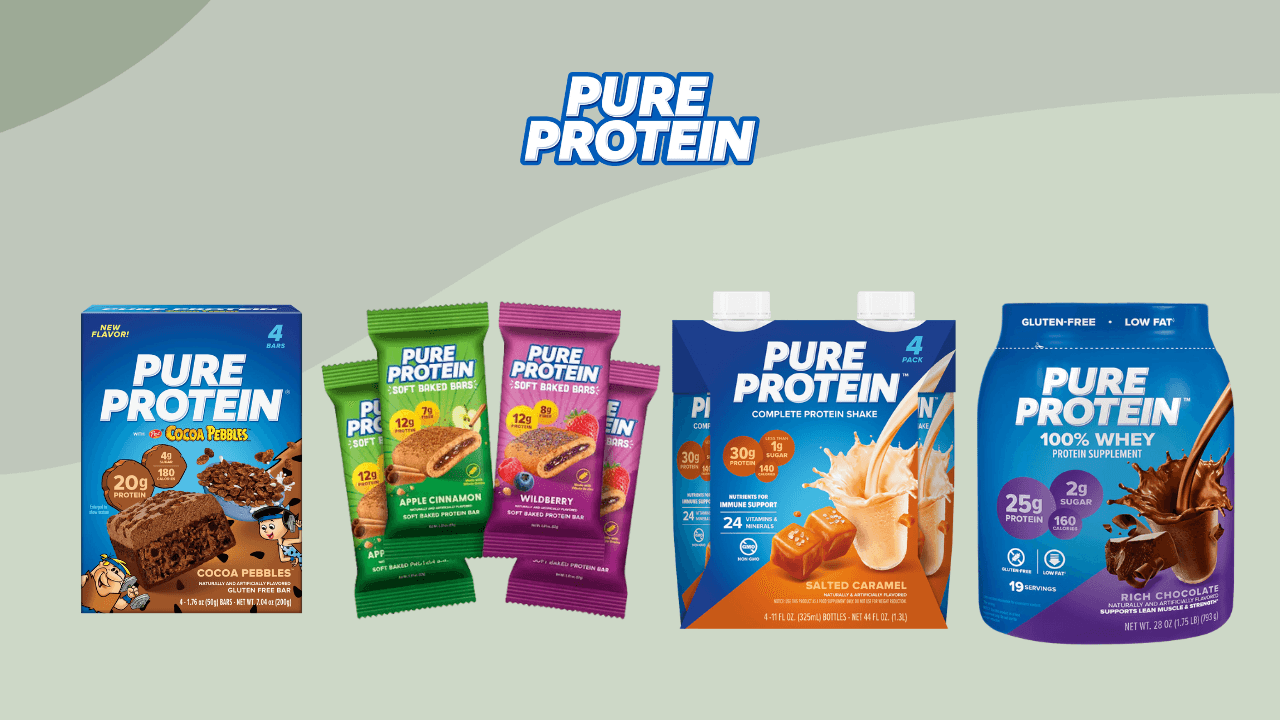
The protein bar line is offered in multiple variants and flavors, including soft baked options such as apple cinnamon, wildberry, and the Soft Baked Protein Bars Variety Pack, as well as standard bars like zig zag cake, cocoa pebbles, fruity pebbles, birthday cake, chocolate salted caramel, sundae cone, brookie, chocolate mint cookie, galactic brownie, caramel churro, and other dessert-style profiles.
These bars include soy protein isolate, milk protein isolate, and whey protein isolate. These proteins supply essential amino acids used in muscle protein synthesis. Whey protein isolate is rapidly digested and is rich in leucine, which aids in activating the mTOR pathway involved in muscle-building responses. Meanwhile, Milk protein isolate contains slower-digesting casein fractions that may extend amino acid availability over a longer period.
As per the official website, soy protein isolate in these protein bars contributes a plant-derived amino acid profile, including glutamine and arginine, which participate in nitrogen transport and recovery-related metabolic activity.
The Protein snack range includes options such as hot and spicy crackers, cheddar cheesy crackers, and popped crisps in flavors like sour cream and onion, hickory barbecue, sweet chili, cinnamon sugar, and Frank’s Red Hot, along with a multi-flavor variety pack. Across these variants, each packet generally provides about 10–20 grams of protein, depending on the specific product and serving size. This protein contribution supports the body’s supply of essential amino acids that participate in muscle protein synthesis.
Protein in these snacks could help promote satiety and energy regulation during the day. As protein is digested, it stimulates gut-derived signaling molecules such as peptide YY (PYY) and GLP-1, which can slow gastric emptying and promote a sense of fullness. This signaling may help moderate between-meal hunger and influence how steadily nutrients are released into circulation.
The Pure Protein Complete Protein Shake range may support muscle-repair processes, tissue turnover, and bone-supportive metabolic functions. It includes flavors such as salted caramel, vanilla milkshake, chocolate peanut butter, strawberry milkshake, rich chocolate, galactic brownie batter, frosted cereal, and banana pudding.
The protein in these shakes may help synthesize collagen and elastin, which are present in connective tissues, skin, ligaments, and tendons. Protein also plays a role in nitrogen balance, where the body regulates the input and breakdown of amino acids to support tissue maintenance, recovery, and cellular renewal.
As per the official website, the Protein powder range includes 100% whey protein powders in flavors such as rich chocolate, vanilla milkshake, and vanilla cream, available in 1 lb. and 1.75 lb. canisters, along with All-in-One Powders in creamy vanilla and rich chocolate. Across these variants, each serving typically provides around 25 grams of protein.
Whey protein is digested relatively quickly compared with some other protein sources, which leads to faster delivery of amino acids into circulation. It is naturally rich in branched-chain amino acids such as leucine, isoleucine, and valine. These powders can contribute to daily protein intake that supports routine muscle maintenance, tissue turnover, and recovery after exercise or day-to-day exertion. Protein intake may also help the ongoing renewal of structural proteins found in connective tissues, skin, and tendons.
Pure Protein maintains broad, nationwide retail distribution across mass merchants, grocery stores, pharmacies, and specialty nutrition retailers, making its products widely accessible across the United States.
The brand has a significant footprint at Walmart, where protein bars, ready-to-drink shakes, and powders are consistently stocked in dedicated protein sections and offered through in-store purchase, pickup, delivery, and nationwide shipping.
Pure Protein is also carried by Target, with a range of bars and shakes integrated into its mainstream food and wellness assortments. Distribution through Kroger extends availability into traditional grocery settings, placing select Pure Protein products alongside everyday nutrition items rather than limiting them to specialty aisles.
In addition, the brand maintains placement within pharmacy retail channels, including Walgreens and CVS, where ready-to-drink protein products are positioned for convenience-focused fitness purchases. Presence at GNC further situates Pure Protein within specialty nutrition environments.
Pure Protein has sustained a visible and consistent shelf presence in the protein snack category since its establishment in 1995, placing it among the early entrants in mainstream protein nutrition. Maintaining presence across multiple decades indicates continued relevance through changing consumer preferences and category shifts, from performance-focused nutrition to everyday protein snacking.
This established shelf presence reflects ongoing retailer confidence and operational reliability, including consistent supply and the ability to refresh packaging or flavors over time without altering the brand’s core positioning.
Pure Protein does not prominently disclose brand-sponsored or independently conducted clinical studies evaluating the effectiveness of its specific products, such as bars, shakes, or powders, for outcomes like muscle support, recovery, or satiety. Public-facing materials and retail listings provide limited evidence that Pure Protein’s finished formulations have been assessed in controlled human trials, which constrains product-level scientific substantiation.
Instead, the brand’s claims are largely grounded in the well-established body of research on protein intake in general. Marketing communications emphasize widely studied protein sources such as whey protein isolates and milk protein concentrates, drawing on broader nutritional science rather than on studies examining Pure Protein’s unique formulations, serving sizes, or processing methods. While this ingredient-level evidence is scientifically sound, it does not directly demonstrate how the brand’s products perform as complete, real-world nutritional options.
There is also minimal visibility of third-party validations related to clinical or performance outcomes. Certifications or verification programs that assess product efficacy through human performance testing or formulation-specific evaluation are not prominently featured in official brand channels.
Pure Protein presents its products primarily through nutritional labels, flavor variety, and general protein-related benefits, without publicly disclosing the existence of a formal scientific or clinical advisory board. Official website content and product packaging emphasize macronutrient profiles and convenience rather than structured expert involvement in formulation or claims development.
There is limited public evidence of ongoing oversight by registered dietitians, sports nutritionists, or medical professionals who guide ingredient selection, formulation adjustments, or interpretation of emerging research. In the absence of named experts or advisory panels, it is unclear how scientific findings are reviewed or translated into brand-level decisions beyond standard nutritional compliance.
Built and Pure Protein differ mainly in how they position themselves and organize their product lines, even though both compete in the high-protein snacking space. As per its official website, Built focuses on a specialized protein-bar format, especially its signature Puff range with a soft, marshmallow-like texture and dessert-style flavor direction.
The lineup includes variants such as S’mores Chunk Puff, Cookies ’n Cream Puff, Peanut Butter Cup Puff, Cookie Dough Chunk Puff, Sweet Peach Punch, Blue Razz Blast, Green Apple Crush, and Sour Puff Variety Box, with most delivering 15 to 17 grams of protein.
The catalog remains relatively focused at around 19 SKUs, organized into mixed boxes, best sellers, seasonal-style variety, and filters like gluten-free and no nuts. Built emphasizes indulgent taste and texture over functional variety, supporting its identity through selective retail availability through locations such as CVS and Walgreens.
Pure Protein takes a broader nutrition-snack and supplement approach that extends beyond bars into multiple functional categories. Its catalog includes protein bars, popped crisps, crackers, ready-to-drink complete protein shakes, and all-in-one powders, offering options for both snacking and daily nutrition support.
The bar lineup features flavors such as zig-zag cake, cocoa pebbles protein bar, chocolate mint cookie, and strawberry shortcake. The range also includes soft-baked protein bars in flavors like apple cinnamon and wildberry, along with complete protein shakes such as galactic brownie batter, banana pudding, and rich chocolate.
Pricing and formats further underline the differences. Built generally positions itself in a premium bar tier, with around $29.99 twelve-count boxes, reinforcing a curated, flavor-led identity focused on indulgent bar experiences.
Pure Protein covers wider price bands depending on format, with many bars starting from $7.19, shakes typically around $11.99, crisps and crackers around $23.99, and powders around $27.99, allowing you to choose between small snack purchases or larger functional nutrition options within the same brand ecosystem.
Built prioritizes format and flavor specialization, offering a consistent, dessert-style bar experience with recognizable soft texture and mid-range protein delivery across indulgent Puff variants.
Pure Protein focuses on category breadth and usage versatility, combining bars, shakes, powders, sweet snacks, and savory crisps to support a wider range of taste preferences, consumption occasions, and budgets.
Quest Nutrition positions itself as a broad lifestyle nutrition brand with an extensive catalog that goes beyond bars and shakes, while Pure Protein maintains a tighter, bar-and-shake-centric lineup with selective snack extensions. Quest’s range covers multiple categories such as All Bars, Salty Snacks, Bake Shop options, Cookies, Candy, Protein Shakes, Protein Milkshakes, Iced Coffee, Protein Powder, and Variety Packs, reflecting a focus on variety, experimentation, and flavor innovation.
Pure Protein primarily concentrates on Bars, Snacks, Shakes, Powders, and Sampler Packs, with products like the Cocoa Pebbles protein bar, Zig Zag Cake protein bar, Cheddar Cheesy Cracker, Sweet Chili Popped Crisps, and Rich Chocolate Complete Protein Shake serving as core offerings within its functional protein-nutrition scope.
Quest Nutrition places strong emphasis on snack-inspired protein formats and seasonal or novelty flavors, supported by options such as Nacho Cheese Tortilla Style Protein Chips, Chili Lime Protein Chips, Peanut Butter Cups, and Chocolate Chip Protein Cookies. It also offers Chocolate Chip Cookie Dough Protein Bars, Pumpkin Pie Protein Bars, and Vanilla Milkshake Protein Powder.
The brand also promotes customization through options like Build a Bundle & Save, alongside newer additions such as Protein Milkshakes and Vanilla Latte Iced Coffee, highlighting a lifestyle-driven, indulgence-meets-nutrition positioning.
Pure Protein, on the other hand, focuses more on traditional performance-aligned formats with incremental flavor variations, along with shakes like Strawberry Milkshake Complete Protein Shake, Rich Chocolate Complete Protein Shake, and Banana Pudding Complete Protein Shake. Its snack extensions, including Franks Red Hot Popped Crisps, Sweet Chili Popped Crisps, Hickory Barbecue Popped Crisps, Sour Cream & Onion Popped Crisps, and Cheddar Cheesy Cracker, lean toward familiar savory snack alternatives rather than confection-style offerings.
When comparing the price range, Quest Nutrition generally sits at a higher-to-mid premium tier, with many snacks and bars priced around $9.99–$32.99, depending on pack size.
Pure Protein typically appears more value-oriented, with several bars starting from $7.19 per pack, popped crisps and crackers commonly priced around $15.99–$23.99, and ready-to-drink shakes usually around $11.99 per pack, while all-in-one powders sit closer to $27.99 per 1.25 lb tub.
Quest integrates features such as subscriptions, rewards, variety packs, and bundles, supporting a community- and lifestyle-oriented ecosystem. Pure Protein maintains a more straightforward retail-style shopping experience, emphasizing accessibility and consistency through offerings like Sampler Packs, Gift Cards, and All-in-One Powders.
To evaluate Pure Protein, we reviewed recent customer feedback on Amazon from 2025 across its bars and ready-to-drink shakes, focusing on taste, nutritional profile, texture, convenience, and satisfaction.
Our evaluation of the Pure Protein Bars, High Protein line, which holds a 4.3-star rating from around 76,000+ reviews, indicates strong appreciation for flavor consistency, chewy texture, and value for money.
Many users describe these bars as moderately sweet, satisfying, and helpful in managing cravings while providing a meaningful protein boost. However, some customers highlight considerations such as calorie and carbohydrate content, sensitivity to sucralose, and the dense texture of certain flavors.
The brand’s Strawberry Protein Shake range carries a 4.5-star rating based on nearly 28,900+ reviews. Customers frequently praise the smooth texture, pleasant strawberry and vanilla flavors, and the benefit of 30 grams of protein per serving.
Many users mention that the shakes help them stay full for longer and work well as a quick meal supplement or post-workout option. A few users note that the shakes can feel slightly thick or contain sweeteners they would prefer to avoid, although the majority still view them as a strong value choice within the protein shake category.
Pure Protein’s Brookie Protein Bar currently holds a 4.2-star rating from about 725 reviews. Some consumers appreciate the softer, dessert-like taste and consider these options a suitable alternative when reducing traditional sweets. Others describe certain flavors as dry, overly dense, or inconsistent in aftertaste, suggesting that these novelty profiles may appeal to more selective preferences rather than a broad user base.
Pure Protein appears to perform well in areas such as taste appeal, protein density, convenience, and affordability across its core offerings. The main trade-offs relate to artificial sweeteners, sweetness levels, and occasional texture variation between flavors.
Pure Protein appears to be a long-established brand in the sports nutrition category. It centers its offerings around convenient, high-protein products intended to support everyday fitness, weight management, and active-lifestyle needs.
The brand’s portfolio primarily includes protein bars, shakes, and powders that emphasize higher protein content, relatively low sugar formulations, and wide retail availability at mainstream price points.
It is currently not listed on the Better Business Bureau, which indicates there is limited detail related to complaint or dispute-resolution history available for reference.
Pure Protein holds a 4.3 out of 5 rating on Tenereteam based on 6+ reviews, reflecting generally positive feedback from a limited number of users. However, the small review volume suggests that the available sentiment should be interpreted cautiously.
Our evaluation suggests that Pure Protein presents as a stable, mainstream brand with a long operational history and mostly positive consumer perception. At the same time, the absence of a BBB profile and the limited number of reviews indicate that you should consider additional sources such as retailer ratings, independent product assessments, and ingredient transparency to learn more about the brand’s reliability and product quality.
Pure Protein presents itself as a convenient and widely available option when you want ready-to-use protein foods and drinks across bars, shakes, snacks, and whey-based powders.
At the same time, the product range places greater emphasis on convenience and flavor variety than on clinically validated, product-specific performance outcomes.
The formulations rely on broad protein research rather than brand-led clinical trials, and some products may contain sweeteners, flavors, or processed ingredients that may not suit stricter or specialty nutrition preferences.
Before combining the brand and its offerings into your routine, make sure to consider a few precautions. Review ingredient lists, especially if you are sensitive to sugar alcohols, artificial sweeteners, or common allergens such as milk, soy, or nuts. Monitor your overall daily protein intake to ensure it aligns with your needs rather than exceeding them.
Avoid relying completely on packaged protein products as ongoing replacements for whole-food meals. It's also essential to check sodium, fiber, and added sugar levels if you manage metabolic, digestive, or cardiovascular concerns.

Contact us at [email protected] or follow @leafsnap on Twitter! View our Privacy Policy.