

LifeBoost Coffee is a specialty coffee brand that focuses on single-origin coffee sourced from high-altitude farms and produced through a detailed farm-to-cup process. The brand offers coffee products across multiple roast profiles and formats like ground, beans, and pods.
The brand positions its products around concerns that many coffee drinkers commonly face, including digestive discomfort, acidity sensitivity, and a lack of transparency regarding sourcing and testing practices.
In this review, we examine the brand’s range of coffee offerings, flavor and roast profiles, sourcing standards, and quality control practices. We also explore the advantages and limitations associated with the brand.
Founded by Dr. Charles Livingston, LifeBoost Coffee features specialty coffee while also extending into complementary categories such as tea, health-focused drink add-ons, coffee accessories, and gift collections.
The brand’s catalog features light, medium, and dark roast coffees, decaf varieties, flavored coffees, coffee pods, and fresh brew flavor collections. A few signature offerings include the Embolden Dark Roast, Medium Roast Decaf, and Midnight Blueberry Mocha, giving you options across different flavor preferences and brewing styles.
According to the official website, the brand sources coffee beans from small farms in Central America. These are roasted in small batches and undergo testing by independent laboratories for mycotoxins, molds, bacteria, pesticides, heavy metals, and potential contaminants. The brand also highlights specific production standards, including USDA Organic certification for flagship roasts, single-origin Arabica sourcing, and laboratory verification of low-acid characteristics.
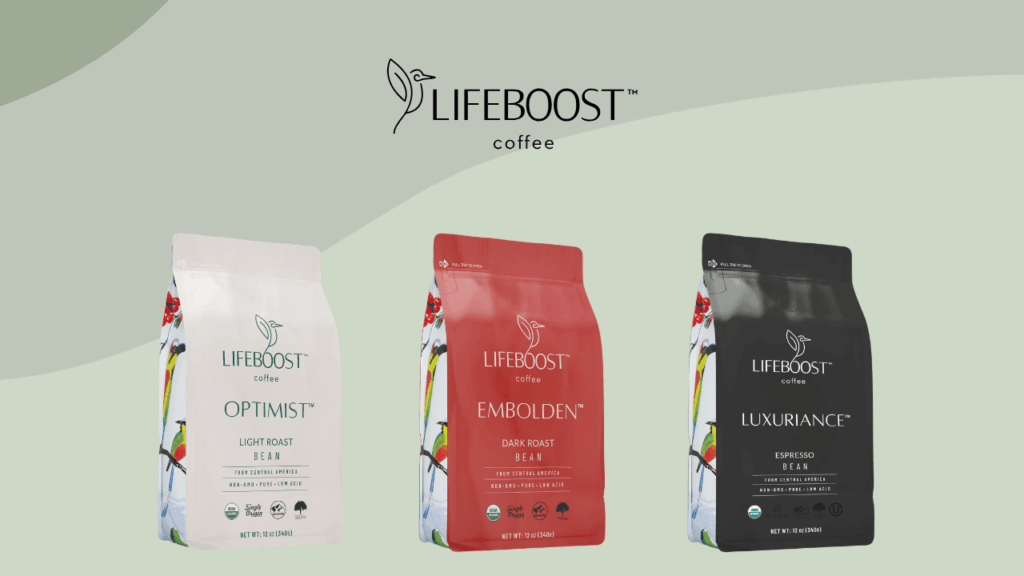
LifeBoost organizes its coffee portfolio across multiple roast categories, allowing you to choose between different flavor profiles and roast intensities. The light roast collection includes options such as Optimist Light Roast and Lifeboost Africa Light, while the medium roast range features products like Grata Medium Roast and Cold Brew Grind. For bolder flavors, the dark roast lineup includes Embolden Dark Roast, Midnight Roast, and Dark Roast Coffee Pods.
The espresso category forms a separate segment within the range and includes products such as Espresso and Blonde Espresso. As per the makers, the Espresso variety is roasted to create a bold and fuller-bodied profile intended for drinks such as lattes, cappuccinos, and macchiatos.
The brand also maintains a dedicated decaf collection and an extensive flavored coffee lineup. The decaf range includes products such as Medium Roast Decaf, Dark Roast Decaf, and Half Caff. LifeBoost’s flavored coffee range expands beyond traditional roast offerings through varieties like Highlander Grogg, French Vanilla, and Caramel Macchiato. These coffee products naturally contain caffeine, a compound that acts mainly by blocking adenosine receptors in your brain. Adenosine contributes to feelings of fatigue and sleepiness, so reducing its activity may temporarily promote alertness, focus, and wakefulness.
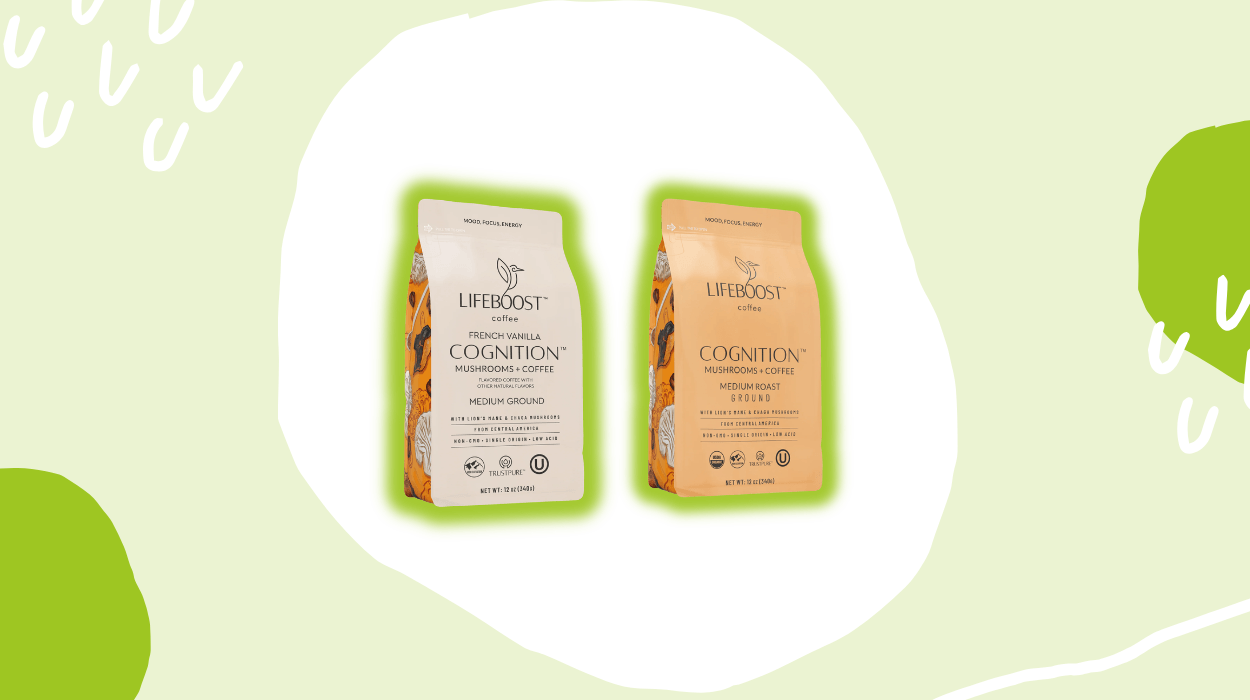
Cognition Mushroom Coffee is a specialty mushroom coffee blend that pairs medium roast, single-origin Arabica coffee with concentrated extracts of Lion’s Mane and Chaga mushrooms. It is formulated to support focus, mental performance, immune function, and digestive comfort. As per its official site, the product is available across various profiles, including Decaf, Ground, Pods, and French Vanilla.
Lion’s Mane mushroom extract features bioactive compounds like beta-glucans, which could help improve focus, concentration, memory, and cognitive performance. Chaga mushroom extract complements the formula with its naturally occurring antioxidant compounds. The compounds in chaga may support immunity and help lower oxidative stress and inflammation within the body. Cognition Mushroom Coffee utilizes hot-water extracted mushroom concentrates, a process intended to improve the availability of beneficial compounds found within the mushrooms.
LifeBoost emphasizes managing multiple stages of coffee production, from cultivation to final testing. The brand places attention on sourcing practices, processing methods, and quality checks. It uses a system called TrustPure®, which tracks the coffee through different stages, which includes growing beans at higher elevations, hand-picking, washing and drying, small-batch roasting, and testing before sale.
The brand also states that it tests its coffee for substances such as mold, bacteria, pesticides, and heavy metals. These testing procedures are part of how the company defines its quality standards.
The beans are sourced from small farms in Central America, with an emphasis on traceability and ongoing relationships with farmers, contributing to a more structured supply chain. You may value this if you want a coffee brand with a clearly described sourcing and testing system, without any generic quality claim.
LifeBoost Coffee relies on a focused sourcing model that mainly uses high-elevation coffee farms in Nicaragua and other parts of Central America. As the brand claims to follow strict cultivation and sourcing standards, it has less flexibility to switch to other regions if problems occur. Issues like bad weather, crop disease, transportation delays, and regional economic instability can have a more direct impact on supply. Its limited sourcing flexibility increases the risk of supply-chain disruptions compared to coffee brands that source from many different regions around the world. This may result in intermittent stock shortages and fewer substitute options for you when specific coffee varieties become unavailable.
Stone Street Coffee and Lifeboost Coffee both operate within the specialty coffee space, but they differ in their underlying philosophy, product development priorities, quality standards, and brand focus.
In terms of positioning, Stone Street Coffee is a Brooklyn-based artisanal coffee roaster that emphasizes freshness, small-batch roasting, and long-standing relationships with coffee growing partners around the world. Meanwhile, LifeBoost Coffee emphasizes organic cultivation, low-acid coffee, environmental responsibility, and extensive purity testing.
The differences become more apparent when comparing their product portfolios. Stone Street Coffee maintains a broad lineup focused on traditional specialty coffee categories, including whole bean coffee, ground coffee, cold brew specific blends, espresso blends, flavored coffees, single origin coffees, and coffee subscriptions. Some featured offerings include the Cold Brew Reserve Blend, Brooklyn Roast Blend, Dark Roast Blend, and The Perfect Espresso Blend. Lifeboost Coffee offers a portfolio built around organic, low-acid, and single-origin coffee varieties, while also extending into flavored coffees, decaf options, coffee pods, and cold brew products. A few core offerings in its catalog include the Grata Medium Roast, Espresso, Midnight Roast, and Cognition Mushroom Ground Coffee.
Their roasting and quality control approaches also reflect different priorities. Stone Street Coffee highlights fresh roasted production methods, direct sourcing relationships, and partnerships with family farms and producers. Meanwhile, Lifeboost Coffee positions its quality framework around verification and testing. The brand highlights organic cultivation, shade-grown production, non-GMO standards, and its TrustPure™ quality process. The brand also states that its coffee products undergo testing for mycotoxins, heavy metals, chemical residues, and other potential contaminants.
In terms of support ecosystem, Stone Street Coffee offers educational materials through its Brooklyn Coffee Academy, alongside brewing guides, coffee preparation articles, industry insights, a Good Taste Club newsletter, and a dedicated mobile shopping app. These resources are largely intended to help you better understand brewing techniques, roast characteristics, and coffee culture. Meanwhile, Lifeboost Coffee maintains an educational platform that focuses on topics such as coffee purity, sourcing transparency, farming practices, sustainability initiatives, and explanations surrounding its TrustPure™ testing standards.
When comparing the brands, Volcanica Coffee and Lifeboost Coffee both offer premium coffee blends. However, they differ in their background, brand philosophy, sourcing priorities, and pricing structures. As per the official site, Volcanica Coffee built its identity around sourcing specialty coffees from volcanic regions around the world. The brand emphasizes the influence of mineral-rich volcanic soil, elevation, and growing conditions on coffee quality, while maintaining a strong focus on origin diversity and specialty coffee exploration. Lifeboost Coffee places greater emphasis on organic cultivation practices, traceability, quality control standards, and low-acid coffee profiles.
In terms of product range, there are further differences between the brands. Volcanica Coffee maintains a broad catalog, offering more than 100+ coffees across categories such as single-origin coffees, estate coffees, peaberry coffees, organic coffees, decaf coffees, flavored coffees, and brewing accessories. Some featured options in its lineup include Jamaican Blue Mountain Coffee, Costa Rica Geisha Coffee, Ethiopian Yirgacheffe Coffee, and Kenya AA Coffee. Meanwhile, Lifeboost Coffee offers a more focused range built around low-acid and organic coffee selections. Its portfolio includes low-acid coffees, single-origin coffees, flavored coffees, decaf coffees, mushroom-infused coffee products, subscriptions, and creamers. Some signature offerings in its lineup include the Half Caff, Embolden Dark Roast, Midnight Blueberry Mocha, and Highlander Grogg.
Pricing further highlights a difference between the brands. Volcanica Coffee accommodates a wide range of coffee categories and rarity levels, with standard single-origin coffees generally priced between approximately $19 and $35 per bag, while premium specialty coffees range from roughly $25 to $60 or more. Meanwhile, core coffee blends from Lifeboost Coffee are typically priced at around $20–$50 per bag, while flavored and specialty coffee selections often range from about $25 to $45 or more per bag.
Volcanica Coffee emphasizes the breadth of its coffee catalog, extensive origin diversity, rare coffee offerings, and roast variety. Meanwhile, Lifeboost Coffee distinguishes itself through its low-acid coffee positioning, extensive third-party testing protocols, organic production standards, and strong focus on traceability and purity.
When evaluating LifeBoost Coffee, we examined real user experiences shared on Trustpilot, where the brand currently carries a 4.7 out of 5 rating based on more than 1,180 reviews.
Several users appreciated the brand's low-acid coffee offerings, with many users noting that products like Dark Roast, Embolden Dark Roast, and Espresso felt gentler on sensitive stomachs. Users also highlighted the flavor, freshness, organic sourcing claims, mold-testing practices, and the variety of available coffee options.
However, a few users reported concerns around subscription billing disputes, difficulties canceling recurring orders, address-change complications, and delayed shipments. While the brand publicly responded to many of these complaints with explanations regarding order records, subscription terms, and promotional conditions, some users remained dissatisfied with how their situations were resolved.
The available feedback pattern suggests that LifeBoost Coffee has built credibility around product-focused expectations, but operational and post-sales experiences are not equally consistent. We believe that you should pay close attention to recurring order settings, promotional claims from the brand, and account management policies to make an informed purchase decision.
To assess LifeBoost Coffee’s credibility, we examined the brand’s operational track record, complaint handling history, and standing across independent review platforms.
On the Better Business Bureau, the brand is accredited and holds an A+ rating. However, BBB reviews and complaint records indicate recurring concerns related to shipping delays, subscription management, refund policies, billing issues, and marketing communications. In several cases, the brand provided detailed responses that included order histories, account activity records, and explanations of internal policies, although some users remain unsatisfied with such responses.
We also reviewed the brand’s profile on Judge.me, where it currently holds a 4.74 out of 5 rating based on more than 44,500 reviews. Many reviews indicated positive experiences with products such as Highlander Grogg, Half Caff, and Cognition Mushroom Ground Coffee. Common themes included smooth flavor, consistency, freshness, and lower perceived acidity. However, some reviews expressed issues involving packaging design, payment management, flavor preferences, and dissatisfaction with roast-level expectations.
In the evaluation, we found that LifeBoost is a brand with a well-established public presence and substantial customer engagement history. However, recurring mentions of fulfillment, billing, and subscription-related issues may lower its credibility. Therefore, we suggest weighing both the brand’s transparency efforts and its recurring service-related concerns before moving forward.
LifeBoost Coffee emphasizes low-acid coffee profiles, organic sourcing practices, and single-origin selections. However, the brand’s focus on a low-acid profile does not automatically minimize the risk of concerns like acid reflux, indigestion, or stomach discomfort, especially if you are sensitive to caffeine.
Mushroom coffee blends from the brand feature ingredients like Lion’s Mane and Chaga, which might further contribute to digestive discomfort, allergic reactions, or ingredient sensitivities. Factors like brewing methods, serving size, hydration, dietary habits, and digestive health may impact your experience with the brand’s offerings. It is also essential that you review the ingredient lists carefully, as that may help you identify blends that align with your preferences and tolerances. Maintaining realistic expectations is equally important, as the benefits associated with low-acid or mushroom-infused coffee are not experienced the same way by everyone.

Contact us at [email protected] or follow @leafsnap on Twitter! View our Privacy Policy.