


Juvenon claims to target blood flow, cellular energy, and metabolic function that tend to decline as you get older. The brand claims that its offerings can help you support those core systems, rather than simply masking age-related discomforts.
It offers formulas aimed at improving blood flow and cardiovascular support, boosting cellular and brain energy. The brand’s offerings are designed to help you feel more physically capable as you age.
In this review, we will evaluate Juvenon’s product lineup, the advantages, and where its approach may have limitations. We will also analyze what real customer feedback shows about how its products perform in everyday use.
As per its official website, Juvenon frames aging around changes in cellular energy, circulation, and metabolic efficiency, drawing heavily from mitochondrial research led by Dr. Bruce Ames of UC Berkeley. That research forms the basis of Juvenon’s core product, Juvenon Cellular Health, which is positioned to support mitochondrial function and cellular energy as part of long-term vitality and physical performance.
The brand operates across multiple aging-related fitness categories rather than offering general products. For cardiovascular and circulation support, it offers products such as BloodFlow-7, BloodFlow-7 XXXL, Artery Shield, and the Blood Pressure Protocol that may support blood flow, vascular function, and healthy blood pressure. Juvenon links these systems directly to stamina, oxygen delivery, and age-related declines in energy.
Men’s health and hormone support form another major part of the lineup. The brand sells products such as Maximum Male System and Alpha Gold Male, which are positioned around testosterone levels, strength, libido, and overall male vitality. These formulas are marketed toward men who experience reduced performance, endurance, and physical drive as they get older.
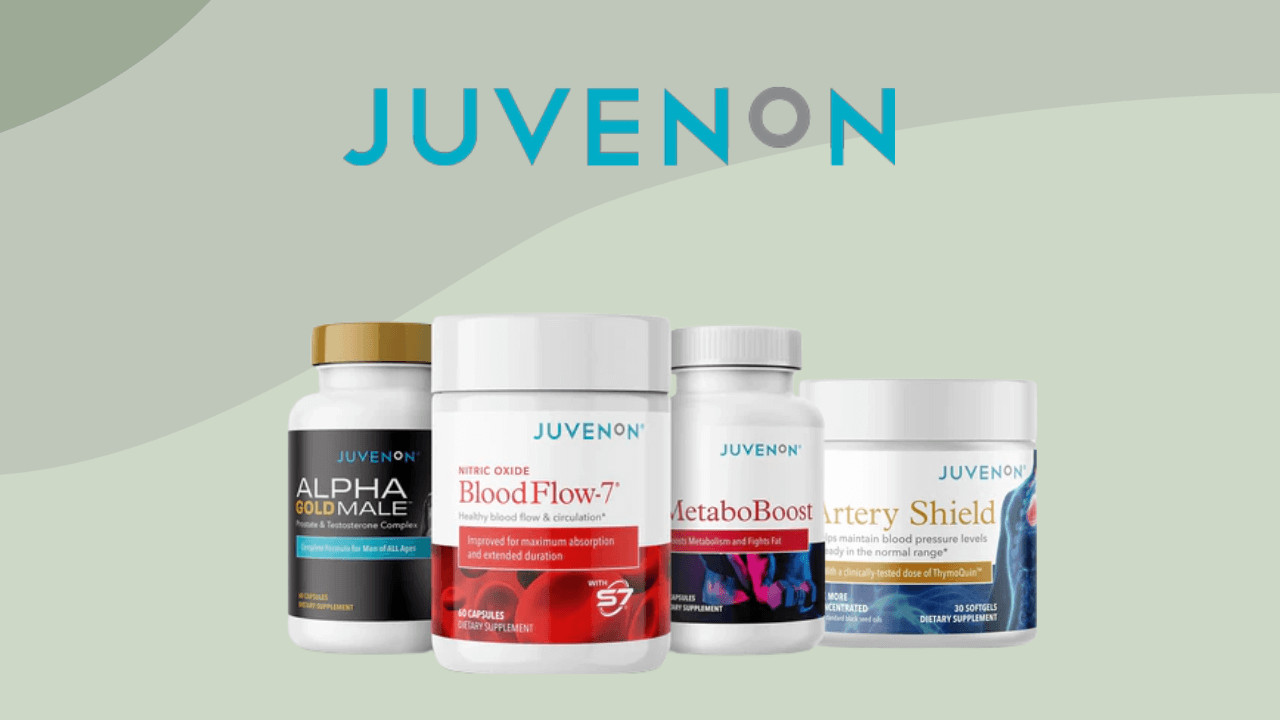
BloodFlow-7 is formulated around three nitric-oxide–supporting compounds that may support circulation and vascular signaling. The formula is designed to influence how blood vessels regulate their diameter, which in turn affects how easily blood, oxygen, and nutrients move through the body.
As per the official website, BloodFlow-7 has nitrosigine®, which is a patented complex of inositol-stabilized arginine silicate. Arginine is an amino acid used by endothelial cells to produce nitric oxide through the nitric oxide synthase pathway. The added silicate helps stabilize arginine in the bloodstream, which may allow more of it to be available for nitric oxide production over time. This can support more consistent blood delivery to tissues during physical activity and at rest.
The formula also combines trans-resveratrol, which interacts with pathways that influence vascular inflammation and endothelial function. It can also support the release of nitric oxide and reduce oxidative stress inside blood vessel walls. BloodFlow-7 also includes S7®, which might help stimulate nitric oxide production through non-arginine pathways and provide antioxidant activity.
According to the official website, GLP-1 Gold focuses on supporting the body’s own glucagon-like peptide-1 (GLP-1) that helps regulate hunger, insulin release, and how quickly food leaves the stomach.
The formula includes CQR-300®, which can influence leptin and adiponectin, two hormones involved in satiety and fat metabolism, while also supporting GLP-1 release. It also combines eriomin™, which might help improve insulin sensitivity in muscle and liver cells, allowing glucose to move out of the bloodstream more efficiently. This combination of better glucose handling and stronger GLP-1 signaling can stabilize energy levels and reduce the sharp rises and crashes in blood sugar that often trigger hunger and cravings.
SucraLow may support carbohydrate metabolism and post-meal blood glucose management. It could function by combining micronutrients and plant-derived extracts that influence how carbohydrates are digested, absorbed, and utilized.
Magnesium in this formula supports the activity of enzymes involved in glycolysis and insulin signaling, which allows glucose to move from the bloodstream into muscle and liver cells more efficiently.
The makers also added chromium, provided here as Chromax®, in SucraLow, which may help glucose enter cells more easily. This can lower circulating blood sugar and reduce the need for the pancreas to release large amounts of insulin.
The formula also combines white mulberry leaf extract, which can inhibit alpha-glucosidase, an enzyme that breaks complex carbohydrates into simple sugars for absorption. This can blunt post-meal blood sugar spikes and reduce the number of calories that enter circulation at once.
As per the official website, Artery Shield supports arterial function and healthy blood pressure already within the normal range. The formula contains black seed extract standardized for thymoquinone (ThymoQuin®), a standardized extract of thymoquinone, which is known for its antioxidant and anti-inflammatory activity at the cellular level. Inside blood vessel walls, oxidative stress can damage endothelial cells that control how much a vessel can expand or contract. Thymoquinone might help protect these endothelial cells so they can continue producing nitric oxide and other signaling molecules that tell arteries to relax.
Thymoquinone also interacts with pathways involved in inflammation and smooth muscle tension within arteries. It may help maintain more flexible, compliant vessels, which allows blood to flow with less resistance and supports more stable blood pressure.
Dream Away The Fat combines plant extracts, minerals, and a B vitamin that influence both sleep physiology and nighttime metabolism. The formula focuses on improving sleep quality, stress hormones, and fat-burning.
As per the official website, Dream Away The Fat combines grains of paradise, which can activate brown adipose tissue and thermogenic pathways. These compounds stimulate receptors involved in heat production, which causes the body to burn more calories to maintain temperature. This increases the activity of mitochondria in fat cells, encouraging them to release and oxidize stored fatty acids for energy even when you are resting.
The formula also has hops extract, branded as Perluxan®, which contributes to the sleep and appetite side of the formula. Hops contain flavonoids that interact with GABA receptors in the brain, which may help in calming neural activity and preparing the body for sleep.
Vitamin B6 in this formula may support amino acid metabolism and neurotransmitter synthesis, including serotonin and dopamine, which affect mood and sleep cycles. It also supports enzymes that help convert stored carbohydrates, fats, and proteins into usable energy.
Alpha Gold Male may influence hormone signaling, stress response, and metabolic pathways linked to muscle and energy. The formula is designed to support how the body regulates testosterone, cortisol, and related systems that affect strength, recovery, and body composition.
As per the makers, KSM-66® in Alpha Gold Male can interact with the hypothalamic-pituitary-adrenal axis that controls cortisol release. It could support better circulating testosterone and better muscle protein synthesis, which can support lean mass and physical performance.
Fenugreek seed extract in this formula might help reduce the conversion of testosterone into other inactive forms while also supporting luteinizing hormone signaling, which tells the testes to produce more testosterone.
The makers also added saw palmetto fruit extract in Alpha Gold Male, which contains fatty acids and phytosterols that inhibit 5-alpha-reductase. It can support prostate and bladder function, which can help manage urinary flow and frequency concerns that can become more noticeable with age.
Cellular Health may support how cells produce energy and maintain structural integrity. The focus is on mitochondrial activity, since mitochondria are responsible for converting nutrients into ATP that powers the brain, heart, muscles, and vascular system.
Cellular Health combines biotin that acts as a coenzyme in metabolic pathways, including the breakdown of fats, carbohydrates, and certain amino acids. Inside cells, biotin is required for enzymes that convert these nutrients into usable energy substrates that feed into mitochondrial ATP production.
As per the official website, the formula also has phosphorus, which might support tissue repair, cell division, and the replacement of damaged cellular components throughout the body. Acetyl L-carnitine in Cellular Health might support the use of fat as an energy source and help maintain steady cellular energy.
Juvenon began in 1999 under the name Mitochondria Regeneration Corp. Its original focus centered on cellular energy and mitochondrial function. This work started well before longevity and NAD-related products became common in consumer wellness.
The brand grew out of licensed academic research. Juvenon built its formulations on studies from the University of California, Berkeley, led by Bruce Ames and Tory Hagen. Their research examined how mitochondrial function declines with age and how specific micronutrient combinations may support cellular metabolism. This work shaped early products such as Juvenon Cellular Health.
Juvenon has kept this scientific foundation central to its identity, as claimed by the brand. Current materials continue to highlight mitochondrial health and age-related cellular processes. The brand relies on Ames-patented nutrient combinations rather than shifting toward short-term product trends.
Juvenon centers its messaging on patented formulations, academic research, and support for healthy aging. However, public materials from Juvenon provide very limited information on sustainability. The brand does not disclose where ingredients come from or how they are grown or produced. It also does not explain how suppliers are selected or evaluated.
Juvenon shares no details about its packaging, and there is no information on bottle materials, recyclability, or efforts to reduce packaging waste. Environmental indicators such as carbon footprint, water usage, and waste reduction are also not addressed. The brand does not reference recognized sustainability frameworks. Instead, it emphasizes GMP compliance, manufacturing quality, and ingredient performance.
Juvenon centers its brand primarily on healthy aging and healthspan extension. Its messaging speaks mainly to consumers who are already thinking about age-related decline and long-term prevention. This focus makes the brand less relevant to younger audiences who are not yet concerned with aging outcomes.
Product names and educational content reinforce this narrow positioning. Labels like BloodFlow 7 and Cellular Health Formula point to later-life biological support rather than everyday performance, fitness, or lifestyle wellness. Brand materials emphasize long-term cellular health and future risk reduction, with limited attention to short-term or immediately noticeable benefits that often matter more to younger consumers.
Juvenon uses a clinical and research-driven communication style. The absence of youth-focused messaging, modern lifestyle framing, and trend-responsive engagement limits appeal among younger segments and positions Juvenon primarily as a niche longevity brand.
Thorne and Juvenon both position themselves as science-based brands, but Thorne emphasizes broad clinical validation, practitioner partnerships, and personalized DTC subscriptions, while Juvenon focuses on patented anti-aging formulas from UC Berkeley research targeting mitochondrial health and longevity.
According to its official website, Thorne functions as a comprehensive clinical wellness platform that combines laboratory testing, digital health tracking, and over 200 products, covering vitamins, minerals, amino acids, protein powders, probiotics, sports nutrition, prenatal care, and condition-specific formulas. Its lineup includes options such as magnesium glycinate, omega-3 with CoQ10, creatine, collagen, iron, and multivitamins. Juvenon, in comparison, runs a focused catalog built around proprietary blends aimed at specific biological systems, with products such as BloodFlow-7, Artery Shield, Cellular Health, Alpha Gold Male, SucraLow, GLP-1 Gold, and Dream Away The Fat targeting circulation, aging, metabolic balance, hormone support, and weight management rather than broad nutritional coverage.
Thorne’s model centers on personalization driven by diagnostic testing. It offers at-home and lab-based tests for biological age, gut microbiome, sleep hormones, stress hormones, and weight-related biomarkers. These results are reviewed by board-certified physicians to generate individualized wellness plans through its Health Intelligence platform. Meanwhile, Juvenon does not offer biomarker testing or physician-reviewed plans. Instead, it guides you toward pre-built systems and bundles, such as blood pressure or male vitality protocols, that apply the same formulations to everyone with similar goals.
Thorne and Juvenon highlight different formulation philosophies, with Thorne prioritizing nutrient precision and clinical versatility, while Juvenon claims to make multi-ingredient options for targeted physiological support.
Thorne relies on single-ingredient and precisely dosed combination options designed to support micronutrient status, performance, and clinical compatibility. Juvenon relies on multi-ingredient, branded formulas designed to produce specific physiological effects such as nitric oxide production, mitochondrial support, testosterone support, blood sugar balance, and appetite control, making its products more condition-driven than nutrient-driven.
Manufacturing and quality control also differentiate the brands. Thorne operates a vertically integrated system with four rounds of testing that include raw material screening, in-process verification, finished product identity and potency testing, and stability testing through expiration. Its facilities hold cGMP certification, NSF certification, NSF Certified for Sport status, GRMA certification, and Australia’s TGA GMP certification, which allows its products to be used by professional sports organizations such as the NBA, NFL, and UFC. On the other hand, Juvenon states that its products are made in an FDA-registered facility and include standard disclaimers, but it does not list comparable third-party certifications, athlete compliance programs, or multi-stage in-house testing disclosures.
Thorne and Juvenon also differ in how their products are priced and positioned. As per its official website, Thorne’s catalog ranges roughly from about $16 to $86 per product, depending on whether you are buying a single-nutrient formula like iron or vitamin B12, or a more complex product like collagen, omega-3 with CoQ10, or creatine stacks. Many of its core products sit in the $20 to $50 range, with higher pricing attached to specialty formulas and clinical-grade products. Juvenon’s pricing is more tightly grouped, with most products falling between $59.95-$119.90.
Tru Niagen is structured around a single biological target, NAD+, using its patented Nicotinamide Riboside (Niagen®) to support cellular energy, repair, and aging at the metabolic level. It positions itself as a clinically supported NAD+ platform, referencing more than 40 clinical studies and FDA New Dietary Ingredient reviews in 2015 and 2018, along with GRAS notification in 2016. Juvenon operates as a multi-category product brand addressing circulation, blood pressure, weight management, male vitality, blood sugar, sleep, and joint health through separate condition-specific formulas.
As per their official website, Tru Niagen offers variations of the same core ingredient across multiple strengths and formats, including 150mg, 300mg, and 1,000mg capsules, stick packs with prebiotics, and add-on blends such as Beauty and Immune. On the other hand, Juvenon provides a portfolio of standalone products such as BloodFlow-7®, Artery Shield™, Alpha Gold Male, GLP-1 Gold, SucraLow, and Dream Away The Fat, each designed for a different fitness goal.
Tru Niagen’s product structure is dosage-based, allowing you to move from lower to higher NAD+ intake depending on your needs. Meanwhile, Juvenon’s structure is outcome-based, with each product formulated to target a specific physiological or lifestyle concern rather than a single adjustable biomarker.
Tru Niagen’s pricing scales with potency, with 300mg priced from $39.20 to $49.00, stick packs from $46.40 to $58.00, and the 1,000mg Pro formula from $92.80 to $116.00. Juvenon uses heavily discounted list pricing, with most core products offered at $33.71, reduced from $59.95, and larger systems such as Blood Pressure Protocol or Maximum Male System priced at $59.90, reduced from $119.90.
Tru Niagen’s catalog remains tightly centered on cellular health, with NAD+ offered alone or paired with immune or beauty-focused actives, while Juvenon’s catalog covers a wide range of aging-related categories, including cardiovascular support, testosterone support, metabolic health, sleep, appetite control, and blood sugar balance.
Tru Niagen’s offerings are primarily vegetarian capsules and drinkable stick packs in standardized counts. Juvenon sells tablets and capsules organized into best sellers, starter kits, and goal-based protocols.
Tru Niagen encourages selection based on dosage through its product quiz, while Juvenon encourages selection based on fitness goals such as blood flow, men’s health, fat burning, and healthy aging. The brand Tru Niagen highlights being a science-led longevity brand, while Juvenon functions as a broad direct-to-consumer option covering multiple aging-related categories under one platform.
We evaluated Juvenon by looking at how its business model, product focus, and customer-handling systems work together in real-world use. It operates as a science-positioned company focused on areas such as cellular aging, blood flow, and metabolic support, using formulas built around compounds tied to NAD pathways, amino acids, and plant-based bioactives.
On BBB, the brand is BBB accredited and holds an A+ rating. However, some customers often report believing they placed a one-time order and later discover recurring charges. Juvenon’s replies consistently reference checkout selections, reminder emails sent before renewals, and terms agreed to at purchase, followed by refunds or account cancellations once the situation escalates. This indicates that the brand is structurally legitimate and operationally responsive, yet its subscription-driven model is the primary source of customer dissatisfaction.
We evaluated Juvenon by reviewing its Trustpilot record, which includes customer feedback from 2021 through late 2025. The brand holds a 2.2-star rating from just over 20 reviews. These reviews consistently point to billing disputes, autoship enrollment issues, and customers feeling misled about pricing and commitments.
Many users describe being charged after asking to delay or cancel shipments, being told refunds depended on products being returned from old addresses, and facing high international customs fees because of how orders were declared. Several customers also reported delayed or missing deliveries routed through low-cost shipping methods, with customer service unable or unwilling to resolve the problems once money had already been taken. Some long-term customers stated that they experienced side effects like dizziness with the brand’s products. However, a few customers did report strong results, such as lower blood pressure, more energy, and fewer menopause symptoms, and they also said customer service worked well for them.
This feedback indicates that Juvenon delivers mixed product outcomes but consistently problematic customer experiences. Even when some users feel the products help them, the volume and intensity of disputes over charges, autoship policies, and refunds weigh heavily in the overall evaluation, which indicates improvements in terms of transparency and operations.
Juvenon centered on mitochondrial biology, circulation, and age-related metabolic decline rather than general wellness. Its formulations are organized around specific physiological systems that tend to weaken with age, including cellular energy production, blood-flow regulation, and hormone signaling.
At the same time, this science-focused approach has some trade-offs. The brand relies more on research about individual ingredients than on clinical studies of its finished products, so much of its support comes from theory rather than real-world user results. Information about ingredient sourcing, sustainability, and packaging practices is limited, which reduces transparency beyond formulation design.
Juvenon offers a structured, science-driven approach. However, its narrow system-based design, higher complexity of use, limited finished-product clinical validation, and lack of sustainability disclosures are important limitations to consider.

Contact us at [email protected] or follow @leafsnap on Twitter! View our Privacy Policy.