

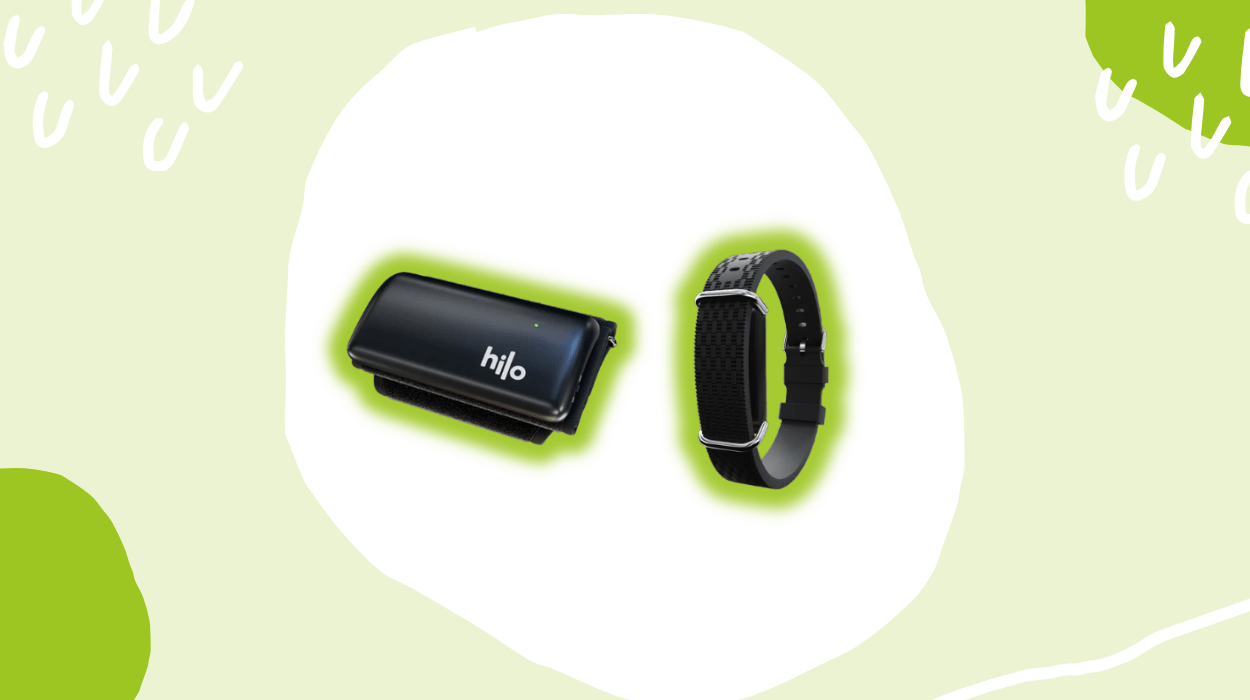

Hilo is a health technology brand focused on making blood pressure monitoring more accessible and informative in everyday life. The brand offers wearable and cuff-based options designed to help you track your blood pressure and understand how it may change over time. With its focus on continuous health tracking and blood pressure awareness, it aims to help you better understand your cardiovascular health and personal health patterns.
In this review, we’ll explore what it offers and take a closer look at its product range and approach. We will also consider customers' experiences to provide a balanced view of what you can expect from the brand and its offerings.
Hilo claims that its development is based on more than 20 years of research into blood-pressure signals and cuffless monitoring. As per the official website, its Core App, available for iOS and Android, is the software component through which you can view and interpret the collected information. It provides weekly, monthly, and longer-term views of blood-pressure trends.
The physical ecosystem also includes accessories and supporting resources. Research and validation form a significant part of its stated technology background. The company traces the origins of its approach to research conducted at the Swiss Center for Electronics and Microtechnology (CSEM). It also references scientific development, four major clinical trials, and 35 collective patents.
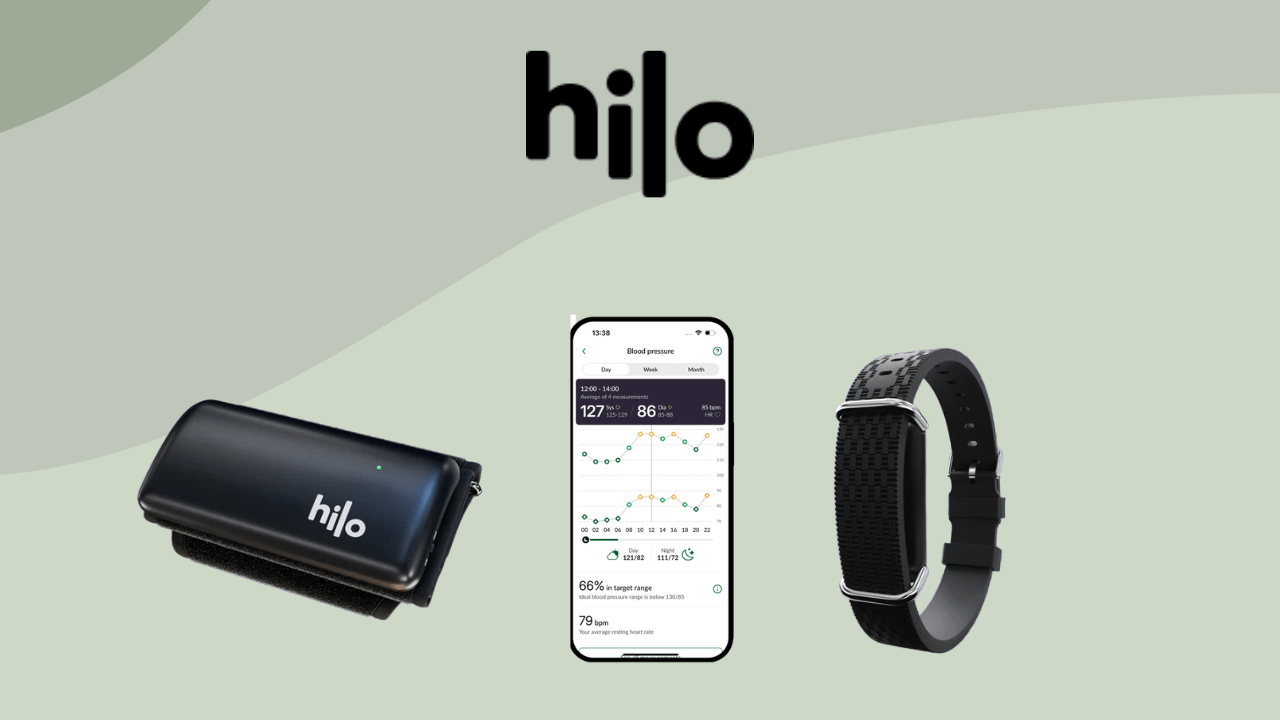
The Hilo Band is a medical-grade wearable designed for continuous blood pressure monitoring. It uses optical sensors based on photoplethysmography (PPG) to collect signals from your wrist, which are processed to estimate blood pressure using Pulse Wave Analysis (PWA).
The Band is meant for continuous wear, including during sleep, and automatically attempts readings several times per hour when you are still. It can take around 25 blood pressure measurements per day, though the number of successful readings may vary with activity and signal quality.
The Hilo Cuff is an upper-arm blood pressure cuff included in the system. It is used for periodic calibration of the Band and can also provide an on-demand blood pressure reading. Cuff readings can be saved in the App, where they can be reviewed alongside other blood pressure data and shared with a healthcare provider.
The Core App serves as the platform for viewing and organizing your blood pressure data. It provides access to blood pressure history, weekly and monthly summaries, timeline comparisons, and Time in Target Range (TTR), which shows how consistently your readings remain within your desired range over time. You can also add health notes, record medications and lifestyle changes, and view related information, such as sleep, daily steps, and heart rate trends, alongside your blood pressure data. The App supports integration with Apple Health and Health Connect and allows you to generate shareable reports for your records or discussions with a doctor.
Hilo uses a connected system comprising the Band, Cuff, and App. Its Band collects physiological signals, the Cuff provides reference blood-pressure measurements, and the App processes and presents the resulting data.
As per the official site, the brand offers the Band, which uses optical sensors and PPG (photoplethysmography) to detect pulse signals at the wrist. It collects signals periodically when the wearer is still and at rest, both day and night. The optical waveforms are processed through signal-analysis algorithms to derive longer-term blood-pressure patterns. Data relating to sleep, steps, activity, and heart rate can also be captured for comparison with these patterns.
Its Cuff can be used during the initial calibration period to establish an individual blood-pressure reference and is subsequently used every 30 days to maintain that reference. During calibration, you need to take Cuff measurements according to the instructions in the App. These measurements establish the reference used alongside the Band's subsequent data. The App can provide notifications for required Cuff measurements.
According to the makers, you can generate reports after at least seven days of data collection. Reports can cover weekly, monthly, or six-month periods and may include blood pressure trends, heart rate averages, sleep hours, step averages, awake/asleep averages, and user-entered notes. Reports can be saved as PDFs, and Cuff measurements can be shared with healthcare providers.
Hilo’s technology was developed through collaboration among engineers, scientists, and clinicians, with research beginning in 2004 at the Swiss Centre for Electronics and Microtechnology (CSEM). Researchers tested more than 30 approaches to cuffless blood pressure monitoring before focusing on optical sensing and pulse-wave analysis.
The brand identifies Josep Solà, PhD, as Chief Technology Officer and Mattia Bertschi, PhD, as Chief Operating Officer, both of whom were involved in blood pressure research at CSEM and later co-founded Aktiia, the company behind Hilo’s technology.
The official site also mentions Jay Shah, MD, FACC, as a medical leader, with experience in cardiovascular disease and previous roles at Mayo Clinic and Mass General. That depth can make the technology easier to evaluate from both technical and clinical perspectives. You get access to a blood pressure monitoring system backed by expertise across multiple relevant disciplines, providing greater context for assessing the technology’s development and intended use.
Hilo takes a low-effort approach to blood pressure monitoring, with routine measurements collected automatically instead of requiring you to start each reading manually. This reflects the brand’s focus on making continuous blood pressure monitoring easier to combine into everyday life.
The brand highlights that its Band takes around 25 blood pressure and heart rate readings per day. It also says it attempts readings several times per hour and looks for periods when you are still, instead of following a fixed schedule. The readings are stored on the band and then synced with the App.
It also highlights that the Cuff in its system is still required for calibration, including periodic calibration about once every 30 days. Once calibrated, the band handles routine measurements automatically in the background. It reduces the effort involved in ongoing blood pressure monitoring. Its band can collect readings throughout the day with minimal user input. You do not need to repeatedly stop to position a cuff or manually start each measurement. This can make regular blood pressure tracking easier to maintain in your daily routine.
Hilo’s hardware-plus-subscription model creates a relatively high first-year commitment to access its full monitoring experience. Its Core costs $239.98 for the first year, combining the $89.99 Band and calibration cuff with a $149.99 12-month subscription. After the first year, the subscription renews at $149 per year.
Access to its blood pressure data and app features requires an active subscription, so the system is not structured as a one-time hardware purchase. It can make the brand’s offerings harder to justify if you only need to check your blood pressure occasionally. A traditional blood pressure cuff may involve a smaller one-time purchase, while its system requires a larger upfront commitment and recurring annual payments.
Hilo has a relatively short history as a consumer-facing health brand. The company says its underlying blood pressure research began in 2004, and the business was founded as Aktiia in 2018. Aktiia introduced the brand to its portfolio in early 2025, culminating in the official launch of its core consumer offering in the U.S. market in July 2026.
The underlying technology, therefore, has a much longer history than the brand itself. It has been developed through more than two decades of research. However, the brand has only recently established its identity in the consumer market. This means there is a limited track record to assess specifically under the brand name. You have less brand-specific history to consider when evaluating consumer recognition, long-term support, and the brand’s track record in the consumer health sector.
Bio Beat and Hilo operate in the same broader cuffless blood-pressure monitoring category, but the brands differ substantially in their regulatory positioning, monitoring approach, and commercial model. According to its official website, Bio Beat describes its offering as Medical-Grade 24-hour Cuffless Ambulatory Blood Pressure Monitoring. It highlights clinical decision-making, 24-hour ambulatory monitoring, regulatory clearance, clinical validation, physician workflows, planning, and reimbursement. Hilo, in comparison, describes its Core as a subscription-based wellness system. It claims that the system helps you track blood pressure over time and examine its relationship with sleep, activity, heart rate, and daily routines.
The wearable architecture reflects these different use cases. Bio Beat's monitoring system uses a wireless, non-invasive, medical-grade chest patch that is attached to your chest for 24-hour monitoring. The brand describes the patch as enabling nighttime measurements without requiring repeated inflation and interruptions associated with traditional cuff-based ambulatory monitoring. Its stated benefits include consistent, unnoticed monitoring and the ability to obtain nighttime measurements while you sleep. Meanwhile, Hilo uses a different configuration consisting of a wrist-worn Band, an upper-arm Cuff, and the Core App. It highlights that the Band uses optical sensors at the wrist to collect physiological signals when the user is still and at rest. The Cuff provides exact reference blood-pressure measurements. According to the makers, the cuff is used during calibration every 30 days to maintain an accurate baseline for the Band. The brand, therefore, treats the wearable and cuff as complementary components with separate functions, while Bio Beat presents the chest patch itself as the primary mechanism for 24-hour cuffless ambulatory monitoring.
Both brands use PPG-based optical sensing, although the technology is described in different contexts. Bio Beat states that its option uses a proprietary, patented PPG sensor to capture measurements and describes its broader approach as combining wearable technology and data analytics. The company states that this approach is intended to provide physicians with information on blood pressure patterns and to support timely interventions and personalized care plans. Hilo describes its technology as a sequence of PPG sensor data capture, optical signal processing, pattern analysis, and cuff measurements. Its PPG sensor uses light to detect pulse signals at the wrist, while optical signal analysis captures waveform patterns from individual heartbeats. Algorithms then help identify longer-term blood pressure trends, with cuff-based measurements providing reference data. The brand makes an explicit distinction between the Band and the Cuff. It states that the Band is intended to provide trend information and changes over time, while the Cuff provides exact reference measurements.
The regulatory positioning of the two brands is another important difference. Bio Beat places FDA clearance and medical-device status directly within its brand communication. It identifies the system as FDA cleared and lists FDA clearance numbers K190792, K181006, K212153, K222010, and K241066, as well as CE 2797. The brand also describes its system as FDA-cleared, medical-grade, cuffless ambulatory blood-pressure monitoring. Bio Beat states that its technology has been validated against the gold-standard cuff and that its 24-hour hypertension-monitoring work has been published in the American Journal of Hypertension. Hilo distinguishes between the regulatory status of the reference cuff and the status of Core as a whole. The Cuff is described as an FDA-cleared upper-arm blood-pressure monitor that supplies exact reference measurements, while Core is explicitly described as a wellness product and not a medical device. The brand also states that it does not provide diagnosis or clinical monitoring. Thus, both brands reference FDA-cleared technology, but the regulatory status is combined into their brand propositions differently.
Bio Beat is oriented toward clinical hypertension monitoring and management. Meanwhile, Hilo is oriented toward pattern awareness and understanding the relationship between blood pressure and everyday life.
Omron focuses on accurate, consistent, and reliable measurements and on helping you establish a clearer picture of your cardiovascular health. The brand provides information about cuff size, cuff type, positioning, right versus left arm, upper-arm versus wrist measurement, and variation between home and clinical readings. It also states that many of its blood-pressure monitors appear on the U.S. Blood Pressure Validated Device Listing, which it describes as a listing convened by the American Medical Association to test and validate clinical accuracy. Meanwhile, Hilo places more emphasis on the limitations of individual readings. Its system consequently focuses on repeated measurements, long-term trends, and contextual information that can help you examine how BP changes over time.
Omron has a broader healthcare portfolio. It lists blood pressure monitors, scales, nebulizers, and pain management options. The platform also features accessories for blood pressure monitors, nebulizers, and pain management devices. Its broader vision, described through its Going for Zero™ concept, connects its technology development with reducing the impact of cardiovascular conditions and supporting heart health, healthy lungs, and freedom from pain. Hilo's positioning is considerably more concentrated. It focuses on blood pressure, with sleep, activity, steps, and heart rate combined as additional context for understanding BP. Its system is structured around the Band, Core App, and Cuff. The brand does not show a comparable multi-category healthcare portfolio, making its positioning more specialized around blood pressure monitoring and longitudinal data.
Omron highlights its blood-pressure portfolio, which offers multiple approaches to conventional measurement. Its range includes upper-arm and wrist monitors, different cuff configurations, Bluetooth and non-Bluetooth options, and models with different storage and connectivity capabilities. The brand features an upper-arm portfolio that includes 3 Series, 5 Series, 7 Series and 10 Series, along with Gold, Silver, Bronze, Platinum and Complete ranges. Its wrist portfolio includes the Gold Wireless Wrist, 7 Series Wireless Wrist and 3 Series Wrist. Meanwhile, Hilo uses a different system architecture. Its technology combines a wearable optical sensor, software-based pattern analysis, and an upper-arm reference cuff. The brand describes a PPG sensor that uses light to detect pulse signals at the wrist, an optical signal that captures waveform patterns from each heartbeat, and cuff measurements that provide reference information.
The distinction between individual measurements and longitudinal monitoring is central to the comparison. Omron’s devices are designed to obtain BP readings when you take a measurement, with connected models that allow those readings to be stored and reviewed over time. The brand states that its Connect app provides historical information, color-coded health graphs, and insights into BP trends. Hilo places longitudinal monitoring at the center of its system. It describes its conventional cuff as providing a point-in-time reference and presents Core as a system for long-term pattern visibility and daily-life context. The brand also states that its system can support up to 35 daily measurements. It also explains that the actual number of measurements displayed may vary because readings with insufficient signal quality can be discarded, and successful readings may be averaged together for easier viewing.
According to its official website, Omron focuses on accurate individual measurements and their management within a broader healthcare-device ecosystem. Meanwhile, Hilo focuses on continuous monitoring and identifying BP patterns in everyday life.
We evaluated Hilo by reviewing the brand's history and its presence across the Better Business Bureau (BBB), Yelp, and ConsumerAffairs. At the time of writing this review, the brand is not available on these platforms.
It states that its technology originated in blood pressure research dating back to 2004. Aktiia, established in 2018, officially rebranded its consumer product line as Hilo in May 2025. This history indicates that the company has spent several years developing and researching its technology.
We also considered the company's scientific and technological background when evaluating the brand. Its technology is supported by research, clinical work, patents, and peer-reviewed publications.
Based on our observation, the brand appears to be a legitimate and promising health-technology brand with a relatively young consumer presence but a more established underlying research and technology history. Its scientific and technical foundation provides a degree of confidence, but you should conduct additional due diligence around customer support, warranty coverage, return policies, subscription requirements, and long-term product reliability before making a purchase.
To evaluate Hilo, we reviewed customer feedback on Trustpilot, where the brand currently holds a 3.6 rating out of 5 based on 5,000+ reviews. Several customers appreciate the brand’s ability to continuously monitor blood pressure throughout the day without repeatedly using a traditional cuff. Users describe the band as convenient, easy to set up, comfortable, and helpful for identifying trends associated with activities such as exercise, diet, and stress. Some long-term users also report that the product has worked well for several years and that the brand’s reporting and trend analysis provide valuable insights.
However, accuracy is one of the biggest concerns. While some customers say the brand’s device readings closely match their conventional monitors, others report consistently higher readings, sometimes by 15-20 mmHg or more. Complaints relate both to the wristband and the calibration cuff.
Reliability and product quality also produce mixed feedback. Several customers report using the brand successfully for extended periods, but some have reported that the bands stopped charging or recording measurements, or became unusable following a firmware update. There are also complaints that replacement bands are unavailable and that warranty replacements take a considerable amount of time. This indicates that while the core product can work well, hardware or accessory failures can significantly affect the overall ownership experience. Based on our evaluation, the brand appears to be innovative but currently has noticeable weaknesses in customer support, reliability, and perceived value.
Hilo takes a science-led approach to blood pressure monitoring, focusing on making cuffless tracking more practical for everyday use. However, the technology still requires an appropriate clinical context. Its offerings should be interpreted as part of an overall blood pressure monitoring routine. Careful adherence to calibration instructions remains important, and unexpected or inconsistent readings warrant confirmation with an appropriate upper-arm cuff.
Cost and ongoing requirements also limit the system’s appeal. The recurring subscription increases the expense, particularly for occasional monitoring. Its relatively recent presence as a consumer brand also means there is less long-term brand-specific history available for assessment, despite the longer research history behind its underlying technology.
The brand seems to offer a distinctive, research-oriented approach to long-term blood pressure tracking, with convenience and longitudinal insights at the center of its proposition. Meanwhile, subscription costs, calibration requirements, the inherent limitations of its cuffless wearable measurements, and its developing consumer track record warrant careful consideration.

Contact us at [email protected] or follow @leafsnap on Twitter! View our Privacy Policy.