
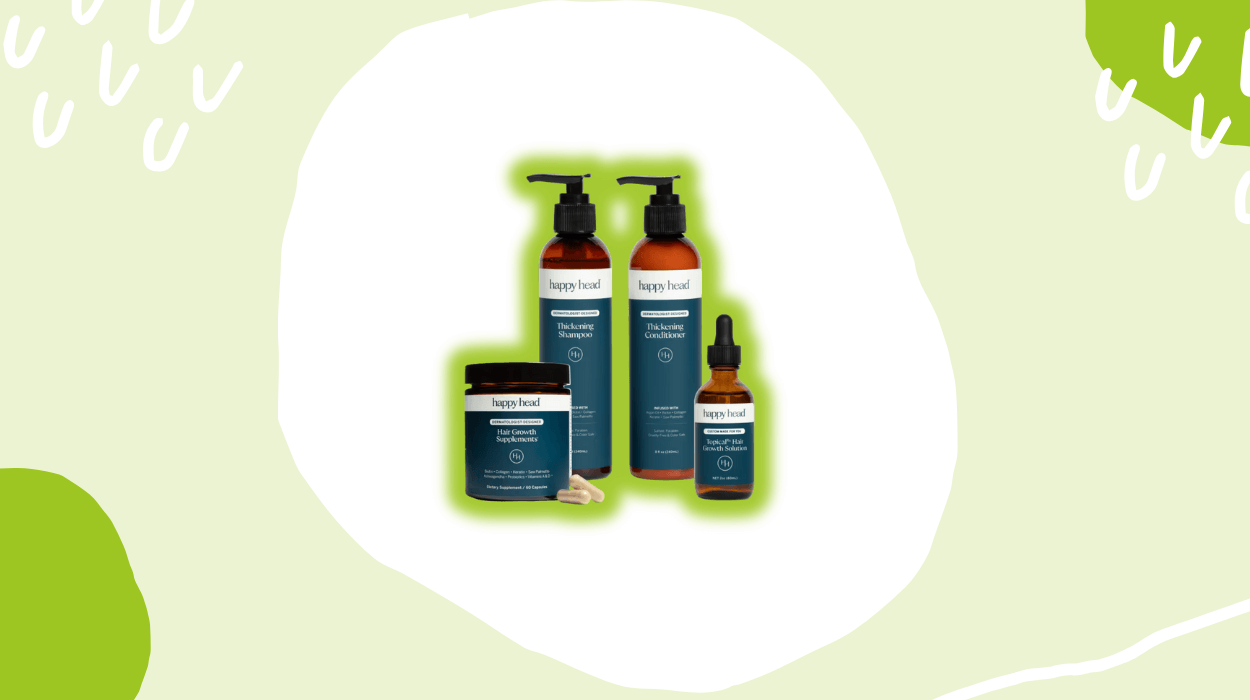
Happy Head is a personalized hair-growth company that claims to provide dermatologist-developed programs through an online assessment and telehealth workflow. It highlights customization rather than standardized formulas, combining customized formulations, over-the-counter serums, supplements, and devices.
The brand claims to address the prevention of progressive shedding, management of receding hairlines, diffuse thinning, and scalp issues like irritation or dandruff. Its formulations may improve follicular signaling and nutrient absorption that might support hair health.
This review explores how Happy Head’s customization framework and approach align with these concerns, and evaluates the brand’s advantages and limitations while also discussing the real-user experiences to understand how its offerings perform in routine use.
Founded by brothers Dr. Ben Behnam, MD, FAAD, and Dr. Sean Behnam, MD, Happy Head offers dermatologist-prescribed, customized hair growth options. The company’s product range includes prescription and non-prescription options across TopicalRx, OralRx, Hair Care, Growth Stimulation, and Bundles.
Its core offerings include custom compounded TopicalRx formulas such as Dutasteride & MinoxidilRx, Finasteride & MinoxidilRx, Minoxidil & Retinoic AcidRx, specialized beard formulas, and multi-ingredient SuperSolution ProBlend and Advanced ProBlend 10-in-1 formulas.
Oral programs center on the SuperCapsule, including Dutasteride, Finasteride, or Spironolactone with Minoxidil and Vitamin D3. Other products include thickening shampoos and conditioners, growth serums, dermarollers, and an FDA-cleared Advanced Laser Helmet. Bundled routines, such as the Complete Growth Bundle and the LLLT Max Growth SuperSystem, combine topical, oral, and device-based modalities.
The StrandIQ DNA Starter Kit adds a genomics component with DNA analysis, a personalized scalp report, recommendations, and the first custom prescription included at no additional cost.
The brand also highlights around 180+ prescription-active combinations and over 200 possible formulations based on age, sex, medical history, hormone status, and individual goals.
Key actives include Dutasteride, Finasteride, Minoxidil, Retinoic Acid, Hydrocortisone, Latanoprost, and Vitamin D3, each accompanied by clear contraindications.
All compounded formulas are claimed to be made fresh in the United States, shipped monthly in discreet packaging, and supported by unlimited virtual dermatologist follow-ups.
The brand’s working process is fully remote. You are required to complete an online hair assessment and submit photos. A dermatologist reviews your case and issues a customized prescription. Once approved, the product is compounded and shipped directly.
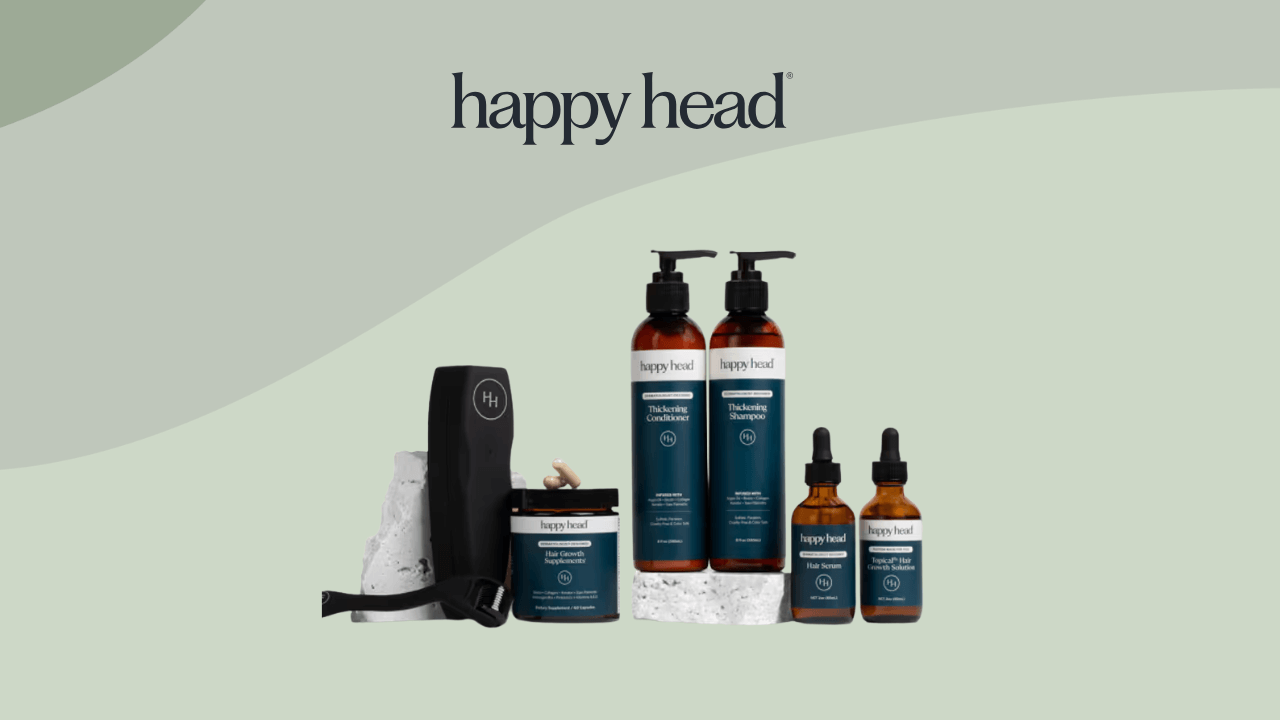
TopicalRX Duterseride & Minodoxil is known as a compounded topical formula that combines androgen suppression, follicle stimulation, and absorption boosters.
According to the makers and official claims, it is to address androgenetic hair loss through several biological pathways. Dutasteride (0.3%) is a dual 5-alpha-reductase inhibitor and may help slow or prevent the miniaturization of androgen-sensitive hairs and support a longer hair growth phase.
Minoxidil (8%) may function through a different pathway, aiding in blood flow to your hair follicles and helping push follicles into the growth phase. It could boost microcirculation and nutrient delivery. Its active form, minoxidil sulfate, raises VEGF levels in dermal papilla cells and enlarges follicle size, which can support thicker hair.
Retinoic acid is included to increase the skin penetration of minoxidil. As stated in some brand and clinical claims, retinoic acid speeds up skin cell turnover, loosens the outer skin layer, and improves how well actives absorb through the follicle. It also influences keratinocyte behavior and may improve the conversion of minoxidil to minoxidil sulfate.
Hydrocortisone is added to reduce irritation from retinoids and high-strength minoxidil. According to the makers, it helps calm inflammation by lowering cytokines and other irritants. While it may not promote hair growth, it might potentially reduce discomfort.
Ketoconazole might target dandruff and seborrheic dermatitis. It is an antifungal and anti-inflammatory agent that can reduce Malassezia levels and related scalp inflammation, factors that can worsen shedding.
Some studies also note that ketoconazole weakly inhibits DHT binding at androgen receptors, offering a mild anti-androgen effect. Improving the scalp environment and reducing buildup may also help active ingredients absorb more effectively.
SuperCapsule might address androgenetic alopecia through three coordinated systemic actions. According to the official site, it targets hormone-driven follicle shrinkage, boosts follicular metabolism, and supports micronutrient pathways involved in normal hair cycling. Dutasteride may function by inhibiting both type I and type II 5-alpha-reductase and reducing androgen signaling inside the dermal papilla.
Oral minoxidil provides a separate growth-supporting effect by increasing scalp blood flow and improving oxygen and nutrient delivery to the follicular bulb. Its mechanisms include potassium-channel opening and VEGF upregulation, helping push follicles back into the anagen phase.
Vitamin D3 supports regulatory pathways that control normal follicular cycling. Dermal papilla cells depend on vitamin D receptors for proper anagen initiation. Low vitamin D is linked to prolonged telogen phases, increased shedding, and inconsistent keratinocyte behavior. Its role is supportive rather than directly growth-stimulating, addressing a common micronutrient gap associated with hair maintenance.
As per the official site, Hair & Scalp Dermaroller uses controlled microneedling to influence scalp biology in ways that support follicle function and improve how well topical formulas absorb. It contains 540 stainless steel microneedles at 0.25 mm, a length chosen to reach only the epidermis and upper dermis without contacting deeper blood vessels. Its effects come from microinjury-driven remodeling and increased transcutaneous penetration.
The small punctures activate a wound-healing response. Platelets release growth factors, fibroblasts are recruited, and the area produces collagen, VEGF, and other signaling molecules. This briefly increases local blood flow and improves the metabolic environment around hair follicles, which can matter for miniaturized follicles that struggle to maintain normal activity in androgenetic alopecia. Microneedling might also help disrupt the stratum corneum for a short period, lowering the barrier that normally limits absorption.
Repeated microinjury prompts collagen remodeling, which can change the mechanical structure of the scalp and improve extracellular matrix organization around follicles. This may help support stronger anchoring of terminal hairs and counter some of the stiffness changes seen as thinning progresses. Microneedling also affects immune signaling by adjusting cytokine patterns and reducing mild chronic inflammation often present in scalp disorders.
TopicalRx Solution: Spironolactone & Minoxidil might help with female-pattern thinning and, according to the makers, works by reducing androgen-driven follicle shrinkage while improving weakened hair-growth cycles. The two ingredients act through separate biological pathways.
Topical spironolactone functions as a local androgen-receptor blocker, competing with DHT at the dermal papilla and reducing the signaling that shortens the anagen phase. This may help slow the miniaturization process in androgen-sensitive scalp regions.
Minoxidil supports follicle recovery through mechanisms independent of hormones. After conversion to minoxidil sulfate, it opens potassium channels and improves intracellular signaling needed for follicles to re-enter anagen. It also increases blood flow and improves oxygen and nutrient delivery.
Spironolactone and minoxidil may address the two major issues in female-pattern thinning, excessive androgen signaling and insufficient anagen support, which potentially create a more f avorable environment for follicles to respond over time.
TopicalRx Minoxidil + Retinoic Acid combines minoxidil’s growth-phase-supporting action with retinoic acid’s effect on epidermal turnover and penetration. According to the makers, the formula is designed to improve follicle activity and extend the growth phase by increasing how much minoxidil reaches its target.
Minoxidil promotes anagen through mechanisms that do not involve blocking androgens. Once converted to minoxidil sulfate, it opens potassium channels in dermal papilla cells and enhances cellular signals associated with anagen entry.
Retinoic acid works mainly by modifying keratinocyte differentiation and increasing epidermal turnover. Softening the stratum corneum and promoting shedding of surface cells, it improves the penetration of topicals and may influence the conversion of minoxidil to its active metabolite. The combined action may help ensure more minoxidil reaches the follicle while also improving the biological conditions needed for sustained growth-phase support.
Thickening Shampoo uses a group of active ingredients chosen to strengthen hair fibers, reduce breakage, and create a scalp environment that supports thicker-looking hair. They may interact with keratin structure, the scalp surface, and the area surrounding the hair shaft in ways that can improve hair quality and appearance.
Argan oil can provide you with a blend of oleic and linoleic acids and antioxidant tocopherols. These lipids may support the cuticle’s protective layer, improving slip, reducing friction, and lowering cuticle damage during washing or styling.
Biotin in this shampoo acts as a cofactor in metabolic pathways used by keratin-producing cells. Topical biotin does not correct internal deficiency, but might support stronger keratin structures at the hair surface and contribute to improved fiber resilience.
Collagen provides hydrolyzed peptides that function as humectants and light film-formers. These peptides might hydrate the hair shaft, reduce brittleness, and smooth the cuticle through temporary surface deposition.
The makers also added hydrolyzed keratin, which offers peptides similar to the hair’s natural protein. These peptides may fill tiny surface defects, smooth the cuticle, and reduce micro-fractures along the fiber.
Saw palmetto extract in Thickening Shampoo introduces a botanical ingredient known to inhibit 5-alpha-reductase in laboratory studies. It may offer mild support at the scalp surface by slightly reducing local DHT-related signaling, contributing to a healthier scalp environment. The components and their combined effects might reduce daily breakage, improve shine and smoothness, and create the visual effect of denser, healthier hair.
Topical SuperSolution with finasteride, minoxidil, and liposomal delivery differs from standard topical options due to its use of phospholipid vesicles. These liposomes blend with follicular membranes and help carry actives directly into the pilosebaceous unit.
Finasteride delivered via liposomes is more efficiently deposited at the site where local DHT reduction matters most while reducing passive diffusion across the skin surface. Minoxidil uses the same pathway, benefiting from a steadier release profile and reduced evaporation compared with traditional hydroalcoholic solutions.
The liposomal matrix prolongs residence time on the skin and protects the actives from early breakdown. This is especially meaningful for finasteride, where targeted delivery directly influences the effectiveness of local DHT reduction.
The formulation aims to support more consistent anagen activity by improving follicular targeting, extending active-ingredient contact time, and potentially reducing surface loss.
OralRx dutasteride might help lower dihydrotestosterone (DHT) throughout your body through dual-isoenzyme inhibition. According to the official product information, this broader inhibition gives dutasteride a stronger DHT-reducing effect than medications that only target type II.
Systemic DHT reduction decreases androgen exposure at the dermal papilla and can shift gene expression away from patterns associated with follicle shrinkage. These changes may help stabilize the growth phase and allow some miniaturized follicles to increase shaft diameter over repeated cycles.
The oral form has a long biological half-life, meaning enzyme inhibition remains consistent even if a dose is missed. This supports steady suppression but also means recovery from inhibition is slow.
Oral minoxidil may work through systemic vasodilation and microcirculatory enhancement, a mechanism that differs from the localized action of topical formulations. It may help in improving oxygen delivery, nutrient transport, and metabolic support across a wider range of follicles than topical minoxidil can reliably reach.
As the entire scalp receives uniform pharmacologic exposure, oral minoxidil might benefit diffuse thinning patterns or areas where topical absorption is inconsistent. At the follicular level, improved blood flow may aid in anagen initiation and prolongation by enhancing endothelial function and strengthening signaling pathways that promote matrix and outer-root-sheath proliferation.
The brand was founded by Dr Ben Behnam, a board-certified dermatologist, and Dr Sean Behnam, a hair transplant surgeon, both of whom have been recognized among leading physicians in the United States.
Their clinical backgrounds in scalp biology, hair growth disorders and procedural hair restoration shape the scientific orientation of the platform. As a result, Happy Head approaches hair loss as a medical condition driven by factors such as hormonal activity, follicular function and inflammatory processes rather than as a purely cosmetic issue.
This clinical foundation influences how the company designs its offerings. Prescription and compounded formulations are developed using ingredients that have established roles in medical hair loss management, including agents that regulate androgen pathways, support follicle cycling, or enhance topical absorption.
Examples such as TopicalRx combinations with dutasteride and minoxidil, the SuperCapsule formulation with dutasteride, minoxidil and vitamin D3, the Hair and Scalp Dermaroller and spironolactone based topical options for women reflect the brand’s emphasis on targeted, evidence informed approaches.
Happy Head positions itself as a gender inclusive hair loss platform by offering processes designed for both men and women through its telemedicine model. The brand evaluates your medical history, pattern of hair thinning and hormonal considerations to create plans that accommodate the different biological drivers of hair loss.
This clinical approach allows the company to treat androgen related thinning, diffuse shedding, postpartum changes and age-related concerns within a single framework while tailoring formulations to individual needs.
The product portfolio reflects this inclusivity. Options such as TopicalRx Dutasteride and Minoxidil, the SuperCapsule with dutasteride, minoxidil and vitamin D3, the Hair and Scalp Dermaroller, TopicalRx Minoxidil with Retinoic Acid, the Thickening Shampoo and the Topical SuperSolution with finasteride, minoxidil and liposomal delivery are made available for varied hair loss presentations.
The brand also provides gender specific formulations, including the TopicalRx Solution with spironolactone and minoxidil for women, as well as oral prescription options such as oral dutasteride and oral minoxidil when clinically appropriate.
Happy Head entered the prescription hair loss market around 2019 and operates entirely through an online telehealth model. As it does not offer in-person clinical services or maintain physical locations, its visibility is shaped mostly by digital advertising, social media activity, and conversations within hair loss communities. This limits its presence in traditional dermatology offices, established retail channels, and broader healthcare settings where long-standing brands typically build recognition and credibility.
The company offers various specialized options such as TopicalRx Minoxidil with Retinoic Acid, Thickening Shampoo, OralRx Medication containing Dutasteride, the Hair and Scalp Dermaroller, and TopicalRx Dutasteride with Minoxidil.
Although these products use well-studied ingredients and align with current medical approaches to hair restoration, newer direct-to-consumer brands generally need time to build extensive real-world outcome data and long-term performance records. Positive feedback has been accumulating since launch, but the brand has not yet reached the level of clinical validation, multi-year safety tracking, or widespread professional endorsement that older dermatology companies typically possess.
Ro positions hair care as a clinically grounded offering embedded within a large, multi-vertical telehealth system that spans sexual health, weight management, fertility, dermatology, and general wellness. Its men’s and women’s hair-loss programs maintain substantial clinical specificity.
For men, the framework centers on FDA-approved and compounded options including topical minoxidil, oral finasteride, off-label oral minoxidil, and Ro Mane Spray, a finasteride–minoxidil–tretinoin compounded formulation.
Women's haircare ranges include some of the parallel options, with off-label oral minoxidil and Hair Solution Rx combining minoxidil, tretinoin, and melatonin.
Ro’s telehealth model highlights free online visits with licensed U.S. providers, secure asynchronous messaging for follow-ups, and discreet home delivery.
The company claims to maintain three three-million user base, high satisfaction metrics, LegitScript certification, and affiliations with ASOP Global, the American Telemedicine Association, and NABP. Its medical leadership, with Dr. Melynda Barnes, Dr. Raoul Manalac, and Dr. Nitin Vaswani, anchors this system.
The platform also highlights a vertically integrated framework spanning nationwide telehealth delivery, EMR-driven workflow, at-home and national lab networks, pharmacy integration, and user-facing functionality for messaging, monitoring, and adherence. Within this ecosystem, hair care becomes one clinical node among many, benefiting from the system’s sophistication but inherently shaped by its broad fitness mandate.
Happy Head diverges by concentrating its entire brand identity, scientific narrative, and technological roadmap on hair-loss support alone. Rather than embedding hair care within a general telehealth environment, the company constructs a precision-focused ecosystem centered on regrowth science, diagnostic personalization, and multi-pathway therapeutic engineering.
The StrandIQ™ System DNA Starter Kit exemplifies this approach and includes a bundled genomic test, hair and scalp analysis, insight report, and complimentary first custom prescription, forming a diagnostic foundation which appears to be missing from Ro’s model.
Happy Head claims to maintain a broader, stronger, and more modular product range than Ro’s. The company emphasizes high-potency DHT suppression through dutasteride, which is described as three times more effective than finasteride, alongside finasteride, multiple forms of minoxidil, spironolactone for women, retinoic acid, hydrocortisone, latanoprost, and vitamin D3. These ingredients are integrated into formulas such as TopicalRx ProBlend 10-in-1 systems, liposomal SuperSolution™ delivery platforms, SuperCapsule™ oral combinations, and bundled routines that match clinical pathways, demographics, and sensitivity profiles.
The company claims to optimize absorption, stimulate follicular cycling, modulate scalp inflammation, and leverage synergistic pathways across DHT suppression, vasodilation, keratinocyte turnover, and prostaglandin signaling.
This specialization extends beyond pharmacology into adjunctive therapy. Happy Head offers an FDA-cleared laser helmet for LLLT, dermarollers for enhanced topical penetration and collagen induction, thickening shampoos and conditioners formulated with argan oil, biotin, collagen, keratin, and saw palmetto, non-prescription serums, and gender-specific minoxidil strengths.
Despite differing missions, both brands share structural similarities. They operate on a telemedicine framework with provider assessments, prescription oversight, monthly shipping, multi-month regrowth expectations, and off-label medications. Both of these brands rely on finasteride–minoxidil pathways, normalize early shedding, and position adherence as central to clinical outcomes.
Ro appears to be a broad-spectrum, national telehealth platform where hair loss is one component of an integrated health portfolio, supported by a large clinical workforce and enterprise technology.
Happy Head is a vertical specialist, leveraging precision diagnostics, high-potency pharmacology, liposomal delivery systems, device integration, and deeply customized options to support hair health.
Ro offers breadth, comprehensive access, streamlined workflows, and multi-condition continuity of care, while Happy Head offers depth, concentrating its entire brand and scientific identity on delivering maximal customization and therapeutic intensity for hair restoration.
Miiskin functions as a broad teledermatology platform centered on independent, board-certified dermatologists who provide care for a range of skin and hair conditions. Its structure relies on transparent consultation pricing, typically $55–$69 for new visits and $30–$39 for follow-ups, and includes Foothills Pharmacy as an optional channel for compounded prescriptions.
Miiskin publishes clear pricing for these formulas, including most hair-related compounds at $48.99, certain advanced formulas at $58.99–$68.99, and typical oral options in the $24.99–$38.99 range depending on count. At every stage, prescribing decisions remain with the individual dermatologists, and the platform positions itself as subscription-free and clinician-driven.
Within Miiskin’s broader dermatology scope, hair-loss support is one clinical category. Dermatologists may utilize commonly used hair‑loss medications, including topical, oral, and compounded options, as clinically appropriate. The platform highlights a simple workflow, which can begin with online submission, dermatologist review, and optional fulfillment through Foothills, and emphasizes the ability to continue with the same dermatologist over time. The model is designed to maintain separation between medical decision-making and product marketing, reflecting Miiskin’s position as a general dermatology service rather than a brand ecosystem.
Happy Head, in contrast, operates as a specialized, vertically integrated hair care brand with a comprehensive catalogue of proprietary and prescription-based offerings. These include the StrandIQ System DNA Starter Kit, which packages DNA testing with a scalp analysis report, -insights report, and a first custom prescription and TopicalRx formulations such as TopicalRx Solution (Finasteride & MinoxidilRx), TopicalRx Solution (Dutasteride & MinoxidilRx), TopicalRx Advanced ProBlend, TopicalRx SuperSolution ProBlend, and TopicalRx combinations for women such as Spironolactone & MinoxidilRx.
OralRx medications, including FinasterideRx, MinoxidilRx, DutasterideRx, and SpironolactoneRx, and multi-ingredient SuperCapsule options combining agents such as dutasteride, finasteride, minoxidil, spironolactone, and vitamin D3.
Happy Head also markets laser-light devices such as the Advanced Laser Helmet Growth System, alongside hair-care products including Hair Serum, Hair Growth Supplements, Thickening Shampoo, Thickening Conditioner, and a Scalp Dermaroller.
Beyond individual products, Happy Head promotes bundled options that package topical, oral, and device-based components into a single routine. Examples include the Complete Growth Bundle, LLLT Max Growth SuperSystem, Growth Essentials Kit, TopicalRx + SuperCapsule bundles (for men, women, and women under 50), and combinations such as Topical Advanced ProBlend + SuperCapsule Dutasteride & Minoxidil or the Growth Duo pairing a serum with other hair-support tools.
The Happy Head business model integrates telehealth with these proprietary offerings, using clinician assessments to route you into personalized versions of the brand’s extensive product lineup. This creates a unified commercial ecosystem in contrast to Miiskin’s open, dermatologist-first structure.
Happy Head’s emphasis is on high-variety formulation design, DNA-based personalization, and adjunct technologies, while Miiskin continues to present itself as an all-conditions teledermatology service where hair loss represents one of many medical domains addressed by independent clinicians.
The key distinction rests on architecture rather than clinical capability. Miiskin delivers dermatologist care within a non-branded, generalist medical framework with flexible prescription pathways and no subscription element.
Happy Head delivers dermatologist involvement within a brand-defined, product-centric hair-regrowth system that includes proprietary topical and oral formulations, genetic testing, device-based stimulation, and bundled regimens.
Both involve board-certified dermatologists, but the role of those dermatologists differs as Miiskin, as a broad medical platform, Happy Head is a specialized hair-growth brand with its own support ecosystem.
Happy Head operates as a telemedicine-based hair-care provider that pairs virtual dermatology consultations with customized compounded prescriptions, positioning itself as a medically supervised alternative to over-the-counter growth products. The brand’s identity relies heavily on clinician involvement, personalized formulations, and predictable subscription-based continuity.
To evaluate the credibility, we examined independent verification sources such as the BBB. Happy Head is BBB-accredited, which highlights a formal commitment to transparency and dispute-resolution standards, but it holds a B rating. There have been several complaints over the past years, alongside a steady mix of favorable and unfavorable consumer reviews. This reflects a company with active customer engagement, but some concerns regarding its services.
Numerous reviewers report visible regrowth, effective formula adjustments, and responsive support when modifying prescriptions or plans. It also mentions timely order fulfillment, meaningful dermatologist follow-up, and members who troubleshoot dosage concerns, sequencing questions, or medication sensitivities. These experiences support Happy Head’s claim that it can deliver medically grounded hair-restoration outcomes.
However, the complaints introduce some operational concerns. Billing and subscription issues, such as unexpected renewals, unclear cancellation processes, and disputes around autoship timing, appear repeatedly.
Fulfillment errors such as missing items, incorrect shipments, or delayed deliveries are also emphasized. Several customers cite slow or inconsistent customer-service responses during critical moments, such as medication inquiries or cancellation requests. Some of the users also complained of dissatisfaction with side-effect disclosure. They felt that risk information became fully apparent only after purchase, despite the company’s standard protocol of providing medical questionnaires and safety materials.
Happy Head’s reputation reflects a clinically credible model constrained by operational inconsistency. The medical foundation is validated by customer outcomes and BBB-documented resolutions, yet the recurring billing, subscription, and fulfillment challenges create a credibility gap for prospective users.
It's essential to view it as a legitimate dermatology-supported option, while also examining subscription mechanics, refund rules, and disclosure timing to ensure expectations and service realities remain aligned.
For evaluating real user experiences with Happy Head, we examined external platforms where verified consumers share detailed feedback, including Trustpilot. The brand’s Trustpilot profile reflects strong sentiment, with a TrustScore of around 4.4–4.5 out of 5 based on approximately 1,470+reviews.
Many users report measurable improvements in hair density, reduced shedding, and more noticeable regrowth after several months of use. Reviewers frequently describe the ability to receive customized, prescription-grade formulations, whether topical finasteride, dutasteride blends, combination capsules, or customized serums.
Many users describe intake processes as clear and note that dermatologists adjust dosages, ingredients, or delivery formats based on tolerance and outcomes. Many also reported quick shipment, discreet packaging, and prescriptions compounded fresh before dispatch.
Critical feedback appears less frequently but aligns around recurring themes. Pricing is the most commonly cited concern, with several users describing the service as expensive. Some customers report extra steps required to cancel or adjust orders, and a minority describe partial shipments or delays that required follow-up. Users also note practical drawbacks inherent to topical rouines, such as the recommendation to wash hair daily after application, which some find inconvenient or difficult to maintain.
Happy Head appears to be a clinically oriented provider with strong user-reported outcomes and generally supportive service, but one that would benefit from improving subscription clarity and reducing logistical friction to create a more satisfying customer experience.
Happy Head claims to deliver customized, compounded topical and oral hair-growth products. Its formulations rely on FDA-approved actives such as finasteride and minoxidil but frequently deploy them at higher concentrations or in multi-agent blends that target DHT suppression, follicular stimulation, penetration enhancement, and scalp tolerability.
The brand’s offerings are compounded to order, and ongoing virtual consultations allow dose adjustments or ingredient substitutions, reinforcing the brand’s positioning around clinician-directed personalization and targeted modulation of follicular and hormonal pathways.
This customization, however, increases the physiologic and dermatologic variability. Multi-ingredient compounded blends carry a higher likelihood of interactions and intolerance compared with single-agent options.
Documented effects include scalp irritation, dryness, itching, flaking, and early shedding during the follicular cycling phase, as well as systemic symptoms such as headaches, dizziness, or lightheadedness. As actives like finasteride influence hormonal pathways, sexual side effects and mood changes remain possible, even at topical doses, and official safety disclosures list additional potentials ranging from gastrointestinal discomfort to cardiovascular symptoms.
The brand offers access to potent, personalized formulations but also demands a realistic understanding of the side effects and the need for ongoing medical oversight as formulas are introduced, tolerated, and adjusted over time.

Contact us at [email protected] or follow @leafsnap on Twitter! View our Privacy Policy.