



Alkamind offers multiple products that it claims may help address concerns related to body acidity, digestion, inflammation, and metabolism. Its lineup features mineral blends, plant-based protein powders, omega-3 formulations, and greens powder.
The brand’s positioning centers on the idea that dietary and lifestyle factors may contribute to acid-related discomforts, such as acid reflux, low energy, and gut imbalances. It claims to support a more alkaline internal environment through its offerings.
In this review, we analyze the brand’s formulation standards, core focus, its featured offerings, and real user experiences with its offerings. The review also explores the advantages and potential limitations of the brand.
Founded by Dr. Daryl Gioffre, Alkamind is built around his idea of dietary acid–alkaline balance. The brand’s approach focuses on reducing dietary acid load through its range of formulations and structured detox programs. As per its official site, all products are sourced and manufactured in the USA.
The makers organize the brand’s catalog around its Acid-Kicking product line, which features Coffee Alkalizer powders, mineral blends, black seed oil, and magnesium products. Its offerings are grouped by intended benefits, such as sleep and recovery, mood and stress, acid reflux and gut health, and energy and performance.
Beyond products, the brand also offers structured programs and plans, including the 3-Day Gut Detox Bundle and DIY 10-Day Gut Detox. These programs combine a downloadable food guide with selected formulations. Program outlines include simple meals such as smoothies, soups, and salads, along with breathing exercises and daily habits.
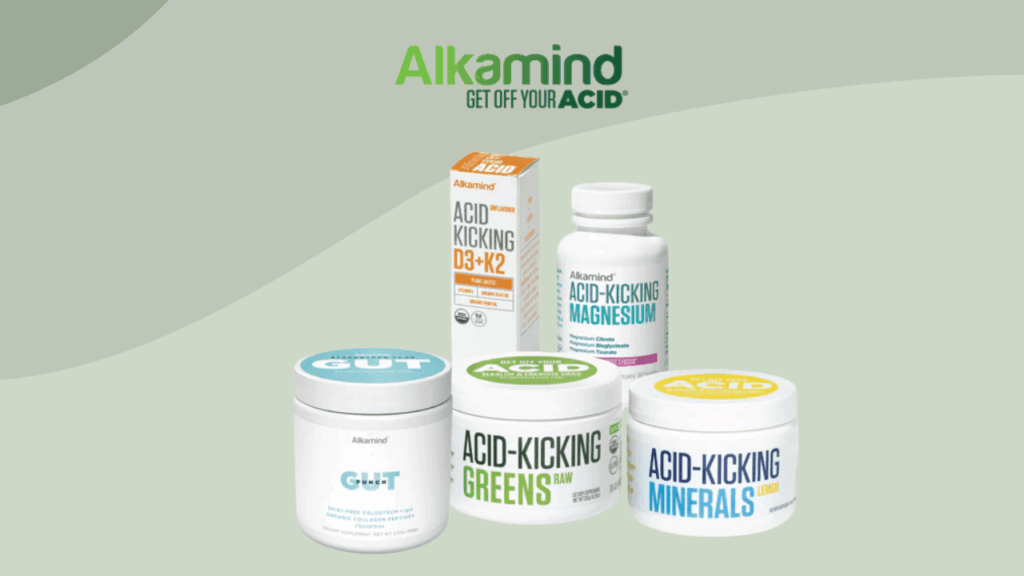
Acid-Kicking Minerals could support digestive health, acid balance, and metabolic function. The formulation provides a mix of alkaline minerals, including calcium citrate, magnesium glycinate, potassium bicarbonate, and sodium bicarbonate.
Calcium acts as a buffering mineral, meaning it may help neutralize excess acidity in the stomach and digestive tract. Magnesium glycinate is included in a chelated form that is easier for the body to absorb. It could support enzymatic reactions that influence processes like energy production, nervous system activity, and muscle function.
Potassium bicarbonate in the formula works alongside sodium to maintain electrical gradients across cell membranes, which are necessary for supporting nerve impulses and muscle contractions. Sodium bicarbonate interacts with excess hydrogen ions in the digestive tract, forming carbon dioxide and water, which may help reduce acidity.
The makers also included organic lemon juice powder in Acid-Kicking Minerals as a natural source of organic acids and plant compounds. Lemon compounds may support digestive enzyme activity and bile production, which could help the body break down fats and absorb nutrients during digestion.
Acid-Kicking Coffee Alkalizer is formulated to help reduce the acidity of coffee while supporting digestion, energy metabolism, and mineral replenishment. According to its official website, the formula is available in salted caramel, vanilla, hazelnut, and mocha. MCT oil (derived from palm oil) is a core ingredient in the formula, which provides medium-chain triglycerides. These MCTs could provide a rapid energy source that could support focus and sustained energy levels.
The formulation contains pink Himalayan salt, which provides naturally occurring trace minerals like sodium, potassium, magnesium, and calcium. These minerals could support electrolyte balance and promote nerve and muscle function, while also helping regulate fluid balance and supporting cellular communication throughout the body. The manufacturer also added silica in the formula, which participates in the formation of connective tissues like the skin, hair, nails, and cartilage.
Acid-Kicking Coffee Alkalizer also contains a DigeSEB enzyme blend, comprising enzymes like amylase, lactase, cellulase, protease, and lipase. Amylase could support the breakdown of carbohydrates into simpler sugars, while protease breaks proteins into amino acids. Lipase helps digest dietary fats, and cellulase assists in breaking down plant fiber from foods.
Acid-Kicking Greens could support daily nutrition needs, digestion, and immune function. The formula contains a mix of 21 raw, organic alkaline superfoods. Wheat grass is one of the core ingredients in the formula and provides chlorophyll, vitamins, and antioxidant compounds. It also contains vitamins like vitamins A, C, and K, which contribute to immune function, tissue repair, and normal metabolic processes.
Oat grass and barley grass whole leaf are also included in the formula and contribute added plant nutrients and fiber. These grasses contain compounds like flavonoids and phenolic acids that could support antioxidant activity within the body and lower inflammation. The fiber present in these grasses may support digestive health by helping promote bowel regularity and providing a food source for beneficial gut bacteria.
The makers further added dandelion leaf to the formula, which contains plant compounds that help stimulate bile production in the liver. Celery seed and parsley are also added to support digestive processes and metabolic function. They contain naturally occurring antioxidants and plant compounds that may help support the body’s normal inflammatory response, cellular protection, and kidney function.
Acid-Kicking Greens also includes broccoli, alfalfa, sesame seeds, and flaxseed sprouts. Broccoli sprouts provide sulforaphane compounds, which could support cellular defense systems and antioxidant pathways. Alfalfa sprouts supply plant proteins and micronutrients that contribute to daily nutrient needs, while sesame seeds and flaxseed sprouts provide healthy fats, fiber, and plant lignans that support digestive health and metabolic balance.
Acid-Kicking Black Seed Oil is formulated to support digestive health, immune function, and cardiovascular health. The formula contains black cumin seed oil as its primary ingredient, which is naturally rich in bioactive compounds like thymoquinone and p-cymene. Thymoquinone interacts with biological pathways involved in the body’s inflammatory response. It influences signaling molecules that influence immune activity and decrease inflammation in tissues.
P-cymene contributes to the antioxidant profile of black seed oil and may support digestive comfort. Acid-Kicking Black Seed Oil also contains chlorophyll, which may support the body’s natural detoxification pathways.
Acid-Kicking Omega-3 is intended to support cardiovascular health, brain function, and healthy inflammatory responses. As per its official site, the formula contains omega-3 fatty acids sourced from wild-caught fish like anchovies, mackerel, and sardines. These marine sources provide EPA (eicosapentaenoic acid) and DHA (docosahexaenoic acid) omega-3 fatty acids.
EPA could stimulate the release of signaling molecules called eicosanoids and resolvins. These molecules help influence immune responses and support the reduction of inflammation. DHA could help maintain healthy brain signaling, which supports cognitive processes such as memory, focus, and attention.
Omega-3 fatty acids like EPA and DHA in the formulation also support cardiovascular function. They influence lipid metabolism and help lower triglyceride levels in the bloodstream, which could support cardiovascular function and blood circulation.
Acid-Kicking Plant-Based Protein is formulated to support lean muscle maintenance, energy metabolism, and fullness. The formulation features 20g of plant-based protein per 30g scoop, sourced from pea protein, sacha inchi, and hemp protein.
Pea protein has plant amino acids, including branched-chain amino acids like leucine, isoleucine, and valine. These amino acids help support muscle protein synthesis. The makers included flaxseeds, chia seeds, pumpkin sprouts, and red clover sprouts in Acid-Kicking Plant-Based Protein, which could support digestive health and gut function.
Pumpkin sprouts contribute plant proteins and micronutrients that support metabolic activity, while red clover sprouts provide additional plant antioxidants and phytochemicals that could support cellular protection.
Acid-Kicking Plant-Based Protein also contains a herb and spice blend consisting of turmeric root, cinnamon, black pepper, and Himalayan pink salt. Turmeric contains curcuminoids, plant compounds that help lower inflammatory markers in the body. Cinnamon contributes plant polyphenols that could support healthy glucose metabolism and energy levels.
Acid-Kicking Magnesium may support nervous system balance, muscle relaxation, and consistent sleep cycles. According to its official website, the formula contains magnesium in three highly absorbable forms, including citrate, taurate, and bisglycinate. Magnesium citrate is commonly used because of its high bioavailability. It could support smooth muscle relaxation in the gastrointestinal tract, which may help support bowel regularity and digestive comfort.
Magnesium taurate combines magnesium with taurine compound involved in cellular processes that regulate calcium signaling in heart and muscle cells. This combination may support normal heart rhythm, nerve signaling, and muscle function. The formula also includes magnesium bisglycinate, a chelated form in which magnesium is bound to the amino acid glycine. Glycine itself acts as an inhibitory neurotransmitter that may help calm the nervous system and support relaxation.
Alkamind’s nutrition philosophy has received exposure through national television and lifestyle media appearances featuring its founder, Dr. Daryl Gioffre. As per the brand claims, Gioffre has appeared on programs such as Live with Kelly and Ryan, Access Hollywood, Good Day New York, and The Doctors, where he discussed nutrition and wellness topics connected to the brand’s philosophy.
The brand also references features in publications like People Magazine, Vogue, and the New York Post, along with mentions in outlets such as US Weekly, Daily Mail, Page Six, and Cosmopolitan. Such appearances generally highlight Gioffre’s perspectives on metabolic balance, diet habits, and gut health.
Alkamind further notes participation in podcasts, interviews, and wellness events, which extend discussion of its nutrition concepts beyond the company’s own website. Media appearances and editorial mentions may provide additional ways to review the brand’s philosophy through third-party platforms rather than relying only on the brand’s self-reported testimonials.
Alkamind’s product development shows innovation bottlenecks that may limit growth beyond its alkaline diet and pH-focused approach. Most products focus on alkaline snacks, supplements, and detox programs, which indicate a narrow product direction. This focus also means the brand has limited presence in areas like personalized nutrition programs and data-driven product development. This could lead to fewer new product types and slower adoption of newer nutrition trends. The brand’s product range may feel restrictive because of the strong focus on alkaline concepts.
When comparing Thorne and Alkamind, both operate within the nutrition space. However, the brands have some nuances in terms of their core positioning, breadth of offerings, testing standards, manufacturing control, and accessibility.
Founded in 1984, Thorne is structured around clinical evaluation, controlled manufacturing, and personalized nutrition strategies. The brand organizes its catalog across multiple categories, such as amino acids, gut health, multivitamins, immune support, metabolism, mood, sleep, and sports performance. Some core offerings include Omega-3 with CoQ10, Creatine, Whey Protein Isolate, and Super EPA.
Meanwhile, Alkamind instead organizes its offerings around its acid-alkaline dietary framework. The brand segments its offerings based on intended goals, such as digestion, metabolism, brain function, mood, and energy balance. The brand's catalog features powdered and capsule products like Acid-Kicking Greens, Acid-Kicking Minerals, and Acid-Kicking Coffee Alkalizers. Other offerings across its Acid-Kicking line include options like Magnesium, Black Seed Oil, and D3+K2 Mint.
Manufacturing infrastructure also reflects a point of difference. Thorne claims to follow vertically integrated production at its Summerville, South Carolina facility, where ingredient sourcing, formulation, testing, and packaging occur under one operational structure. Meanwhile, Alkamind does not describe comparable vertically integrated manufacturing detail in its messaging.
Quality control disclosures further differentiate the brands. Thorne describes four stages of testing, including raw material verification, in-process checks, finished product testing, and stability analysis. On the other hand, Alkamind references testimonials and educational alignment but provides fewer operational details about any multi-stage testing infrastructure.
Thorne operates as a research-oriented brand built around clinical involvement, vertically integrated production, and extensive testing controls. Meanwhile, Alkamind is structured around an acid-alkaline dietary framework. It pairs formulations, detox programs, and educational content, with less visible emphasis on manufacturing infrastructure depth.
AG1 and Alkamind both offer nutritional products positioned around supporting daily nutrient intake and lifestyle support. However, there are some differences in terms of formulation strategy, operational transparency, sustainability disclosures, and ecosystem structure.
The brand AG1 structures its identity around a limited, formulation-focused portfolio built primarily around AG1 Next Gen. It is a daily powder containing more than 75 components covering vitamins, minerals, prebiotics, probiotics, adaptogens, and plant compounds. The brand also offers AGZ Nightly Sleep Support formulation to support sleep quality and relaxation. Beyond these, it also offers products like AG Omega-3 and AG Vitamin D3+K2. Meanwhile, Alkamind operates with a broader range of products within its Acid-Kicking line. Under the Acid-Kicking line, it offers products like Coffee Alkalizer, Minerals, Greens, Black Seed Oil, Magnesium, and Plant-Based Protein.
Scientific positioning shows another separation in approach. AG1 highlights ingredient identity verification through third-party laboratories such as Alkemist Labs and screening against standards from organizations such as NSF International and US Pharmacopeia. Alkamind instead frames its model around the acid-alkaline nutrition concept promoted by founder Daryl Gioffre. Its model is supported by educational content, detox protocols, and nutrition messaging.
Quality control disclosures also differ in technical depth. AG1 describes batch-level certificates of analysis covering microbial contamination, heavy metals such as lead and mercury, pesticide screening, allergen controls, and banned substance testing through NSF Certified for Sport validation. Meanwhile, Alkamind provides fewer detailed descriptions of comparable testing frameworks across its product lines.
Platform ecosystem design also shows structural differences. AG1 integrates digital education, bundled nutrition stacks, travel formats, and routine-based nutrition planning focused on simplification of multi-product routines. Alkamind integrates formulations with structured programs such as the 3-Day Gut Detox Bundle and DIY 10-Day Gut Detox. These programs pair products like Acid-Kicking Citrus Greens and Lemon Minerals with meal plans, breathing routines, recipes, and quizzes aligned with its acid-alkaline philosophy.
When evaluating the brand, we looked at its market positioning, operational history, and standing across independent review platforms. Alkamind presents itself around alkaline diet principles, gut health education, and structured detox programs developed around the work of Dr. Daryl Gioffre.
On TenereTeam, the brand carries a 4.5 out of 5 score based on more than 2,500 ratings. However, these reviews are based on old user experiences shared on the platform in 2023. Feedback on the platform highlights the structured nature of the brand’s programs, focus on alkalizing products, and the brand’s support ecosystem. However, some reviews pointed out concerns like higher pricing for programs and delays in order fulfillment and refund processing.
Reputation signals remain limited outside TenereTeam as the brand currently shows minimal presence on independent platforms such as BBB, Trustpilot, and ThingTesting. Based on these factors, the brand appears to have a generally favorable but still limited reputation footprint.
To understand the external perception of Alkamind, we examined the availability of verified customer feedback across recognized third-party review platforms and discussion forums. Across major review platforms such as Trustpilot, Sitejabber, and CBInsights, no dedicated brand profiles or meaningful rating histories currently appear for Alkamind. Most publicly visible feedback instead appears in the form of testimonials presented on the brand’s own website rather than through independent review forums.
Discussion-based feedback exists but remains limited in scale. Some Reddit conversations about the brand appear between 2019 and 2022, with a smaller number of more recent discussions between 2024 and 2025. These conversations largely center on the brand’s alkalizing coffee positioning and claims related to reduced acidity. However, the volume of these discussions remains relatively low, and the tone tends to focus more on debating the scientific plausibility of alkalizing claims rather than documenting detailed long-term usage experiences.
Alkamind is built around an acid-alkaline dietary framework supported by formulations, detox programs, and structured routines. The brand structure focuses more on lifestyle alignment than on single products.
However, scientific understanding shows that the body tightly regulates blood pH regardless of diet, which means outcomes from the brand’s model are more likely related to general diet improvements and habit changes rather than measurable pH shifts alone.
When considering Alkamind, tolerance and safety factors also remain relevant. Mineral blends, greens powders, and plant extracts may trigger mild digestive discomfort or electrolyte shifts. Personal experiences also depend on factors like digestive sensitivity, metabolism, and adherence to the recommended routine.

Contact us at [email protected] or follow @leafsnap on Twitter! View our Privacy Policy.