

Hungryroot combines online grocery shopping and meal planning into a single subscription service. Its model brings together three types of offerings, including everyday grocery products, chef-crafted recipes with shoppable ingredients, and ready-made meals. You can create a weekly order by selecting groceries, meal ingredients, and prepared foods within your chosen budget.
The brand uses a credit-based system, assigning each product a specific credit value. Beyond groceries and meal ingredients, it also offers ready-to-eat options for different occasions, including breakfast, lunch, dinner, and snacks.
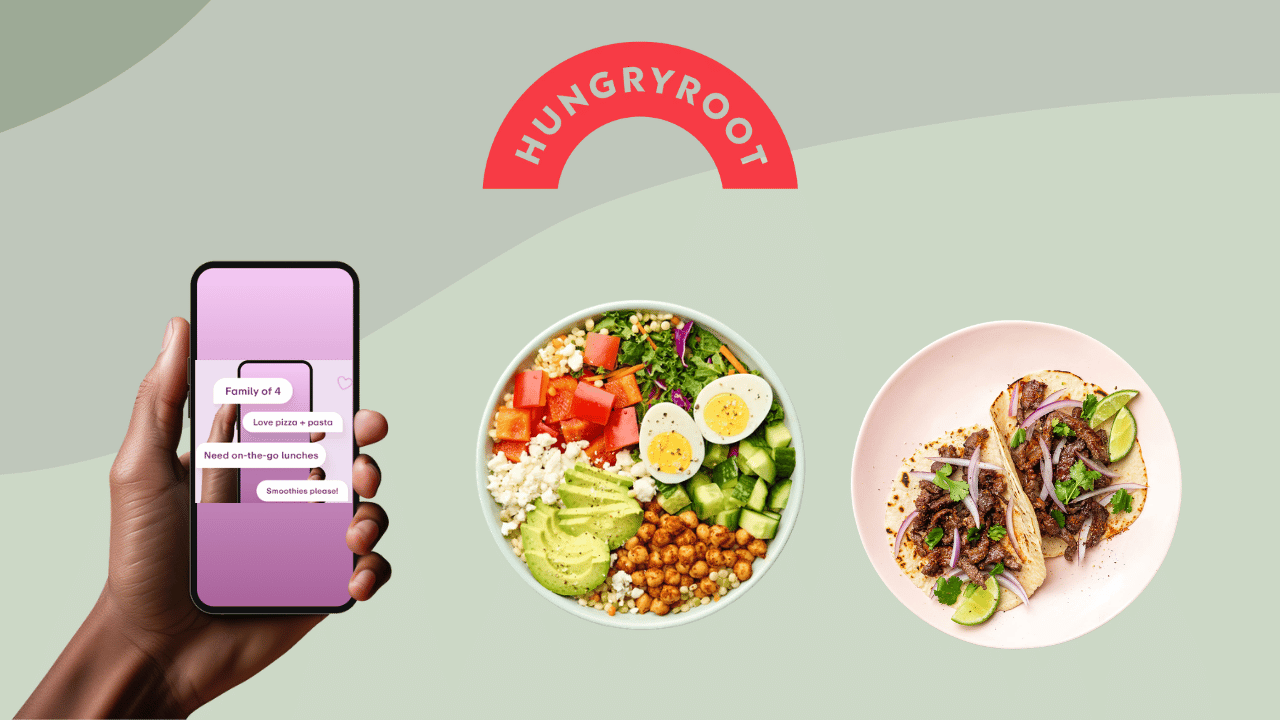
Hungryroot’s grocery selection brings together everyday essentials, fresh ingredients. and packaged foods. You can choose fruits and vegetables, meat, seafood, eggs, dairy products, plant-based proteins, pasta, sauces, and pantry staples.
There is also a mix of familiar supermarket brands, including Annie's, Califia Farms, Cabot Creamery, Vital Farms, Rummo, Unreal, and Stumptown. Their products range from cheddar snacks and almond milk to pasta, cheese, coffee, and ready-to-eat eggs.
The selection also includes snacks, sweets, beverages, and products, making it possible to pick up smaller grocery items alongside your usual purchases. Some recognizable examples include Annie's Cheddar Bunnies, Califia Farms Almond Milk, Rummo Farfalle Pasta, and Stumptown Ground Coffee.
You will also find vegetarian, gluten-free and dairy-free products, along with higher-protein and reduced-sugar options. It gives you more flexibility when choosing groceries that fit your eating habits, although the selection isn't exclusively tailored to any one diet. For stricter dietary requirements, you will still need to check individual product labels before adding items to your order.
Hungryroot uses its SmartCart™ system to recommend groceries and recipes based on your food preferences, dietary needs, and eating habits. The initial questionnaire asks about your favorite foods, ingredients you avoid, and eating habits. Based on these details, it puts together a suggested cart with groceries and recipes that match your preferences.
Your Food Profile lets you refine these recommendations by selecting preferred cuisines, protein sources, spice levels, and nutrition goals. You can also choose dietary preferences such as High Protein, Gut Friendly, Immunity Boosting, and Anti-inflammatory to help SmartCart suggest products that better match your needs.
SmartCart™ uses your ratings and history to refine its recommendations. You can rate groceries and recipes or mark individual foods as Sometimes, Often, or Never. For instance, marking a product as Never tells the system to exclude it from future suggestions. You can also review the recommended items and adjust your cart before placing an order.
Hungryroot lets you add recipe ingredients, individual groceries, and prepared foods to the same weekly order. You can select meals and purchase their required ingredients alongside everyday essentials, eliminating the need to order separately from a meal-kit service and a grocery retailer.
The service lets you customize ingredients within selected recipes. After adding a meal to your cart, you can edit the ingredients to remove or choose an available chef-suggested replacement.
For example, you could replace Brussels sprouts with broccoli when that alternative is offered. It gives you more control over meal ingredients without having to rebuild the recipe or look for substitutions separately.
The groceries section also includes everyday items such as eggs, yogurt, vegetables, snacks, beverages, and pantry staples. For example, your weekly order could contain ingredients for chicken pesto pasta and a vegetable bowl, along with breakfast oats, Greek yogurt, and other snacks.
Having recipes, meal ingredients, and everyday groceries available in one place makes it easier to manage your weekly food shopping without switching between multiple services.
Hungryroot uses a credit-based pricing system that makes individual grocery and recipe costs less straightforward to assess. Each weekly subscription plan provides a set number of credits to spend on meals and groceries.
For example, a 51-credit plan could cover five recipes costing nine credits each, leaving six credits for other products. Since items display only the credit values, you must calculate their actual cost using your plan's credit-to-dollar rate. If you pay $100 for 50 credits, for instance, each credit represents $2, making a five-credit box of pasta equivalent to $10.
You must also convert credit values before comparing products such as chicken breasts, pasta, or pantry staples with prices at traditional supermarkets and other delivery services, where dollar prices are displayed directly.
Although eligible unused credits may roll over to your next order, they do not reduce your recurring subscription charge. The brand also generally requires you to spend at least 20 credits on a delivery to qualify for rollover. You may end up adding groceries or snacks to meet the minimum, even when you do not need them.
Hungryroot automatically renews your subscription each week and charges you for the next order unless you skip the delivery, pause your plan, or cancel before the weekly cutoff.
Skipping a delivery does not automatically stop future orders. It only applies to the selected week, so your subscription will continue renewing unless you pause or cancel it separately.
According to the brand’s terms, the weekly cutoff is generally 11:59 p.m. in the time zone of your delivery address on the renewal date, unless your account displays a different deadline. After this cutoff, the company may process the order and charge your saved payment method. You could therefore face an unexpected charge if you miss the deadline, assume your subscription is paused, or remove items from your cart without skipping the delivery.
The Reddit discussions also highlight customers reporting unexpected charges after believing they had skipped or paused their deliveries. One person also described a billing dispute involving a subscription pause that they believed was still active. This is particularly inconvenient if you travel frequently, have irregular schedules, or do not need groceries every week.
Sunbasket and Hungryroot are two US-based food delivery services that help you save time on grocery shopping and meal preparation. Both offer convenient ways to plan your meals, but they follow different approaches. Sunbasket focuses on meal kits and prepared meals, while Hungryroot combines grocery, recipe recommendations, and prepared foods in one subscription.
The two services differ in their meal portions, dietary categories, ingredient standards, preparation times, and pricing systems. Sunbasket offers two main types of meals, including Meal Kits and Fresh & Ready meals. Its Classic Meal Kits serve two or four people and include pre-portioned ingredients with step-by-step cooking instructions. Most Classic Meal Kit recipes can be prepared in 30 minutes or less. You can also choose Pre-Prepped Meal Kits, which come with ingredients such as chopped vegetables, measured portions, and prepared sauces.
If you want to spend less time in the kitchen, Sunbasket offers Fresh & Ready meals. There is no need to chop ingredients or follow a full recipe. You simply heat the meal, and some options can be ready in as little as four minutes. Hungryroot follows a different system. When you sign up, you complete a food preference quiz covering your dietary needs, food likes, and eating habits. Its SmartCart technology uses your answers, history, and product feedback to recommend groceries and recipes for your weekly order.
According to Hungryroot, you can choose from prepared meals, recipe ingredients, meat, seafood, vegetables, fruits, dairy products, breakfast foods, snacks, and drinks. The biggest difference is that Sunbasket mainly organizes your food around planned meals, whereas Hungryroot allows you to combine groceries and recipes in one order.
Sunbasket also offers a Diabetes-Friendly category featuring recipes approved by the American Diabetes Association. However, this does not mean that every meal is suitable for every person. You should still review the carbohydrate content, serving size, and other nutritional details. Hungryroot provides a different type of dietary flexibility. Instead of relying mainly on predefined meal categories, it uses your Food Profile to recommend suitable groceries and recipes. You can update your preferences when your eating habits or dietary needs change. The company then adjusts future recommendations.
For example, if you prefer vegetarian meals, you can select suitable plant-based groceries and recipes. If you want more protein, you can choose products containing chicken, fish, eggs, beans, lentils, or plant-based protein. You can also select foods according to gluten-free, dairy-free, and other dietary preferences.
Hungryroot may be more useful if you prefer choosing individual food products instead of following a fixed meal category. Sunbasket may be easier if you want meals already organized around specific dietary patterns.
Food allergies require special attention with both services. Sunbasket prepares meals in a facility that handles major allergens, including milk, eggs, fish, shellfish, tree nuts, peanuts, wheat, and soybeans. Its gluten-free-friendly meals are not recommended for people with celiac disease or severe gluten intolerance because of possible cross-contact. Hungryroot allows you to add food restrictions to your Food Profile, but some products may still involve allergen cross-contact. You should check individual product labels and ingredient information before ordering.
Sunbasket and Hungryroot use different pricing structures. According to Sunbasket's official website, meals start at $9.99 per serving. Its meal kits serve two or four people, while Fresh & Ready meals serve one person. You need to order at least four servings per week. The company also lists an approximately $65 order minimum for its marketplace selection. Hungryroot highlights starting prices of $3.99 per breakfast serving, $5.99 per lunch serving, and $8.99 per dinner serving. Snacks and sweets start at $1.99 per serving, while drinks start at $3.99.
Sunbasket may be easier to budget for when you know how many meal servings you need. Hungryroot may be more flexible if you want to combine meals with groceries, snacks, and other food products. However, you should review the complete order total before confirming either subscription.
You can choose Sunbasket for trying a structured meal delivery, specific dietary meal categories, and pre-portioned ingredients. Choose Hungryroot for a more personalized grocery shopping, and a large recipe selection, with more flexibility in your weekly food orders.
Green Chef focuses on organic meal kits with pre-portioned ingredients and recipes for home cooking, while Hungryroot combines recipe recommendations, grocery, and prepared foods in one place.
With Green Chef, you receive pre-portioned ingredients, sauces, and step-by-step cooking instructions to prepare meals at home. According to the company, many recipes take approximately 30 minutes or less to prepare. Hungryroot offers a different level of convenience by combining meal ingredients with ready-to-eat and ready-to-heat products.
As per the meal variety and customization, Green Chef offers several meal categories, including Mediterranean, Plant-Based, Gluten-Free, High Protein, Calorie Smart, Carb Smart, Functional Nutrition, and Quick & Easy. You can also customize selected meals by swapping proteins or adjusting certain ingredients. Hungryroot, in comparison, gives you more flexibility to combine individual groceries, meal ingredients, and prepared foods instead of relying mainly on structured meal kits.
Green Chef places a stronger emphasis on organic ingredients and offers pre-portioned produce and other meal components. Hungryroot also offers selected organic products, but its main focus is personalized grocery shopping and convenient meal options.
As per the protein options, Green Chef offers a dedicated High Protein category and allows you to customize selected meals with additional protein. According to the company, some customized meals may provide up to 50 grams of protein per serving. Hungryroot offers individual protein sources such as chicken, fish, eggs, Greek yogurt, tofu, beans, and lentils, allowing you to build meals according to your daily protein requirements. Green Chef gives you access to ready-planned high-protein recipes, while Hungryroot gives you greater flexibility in combining different protein sources.
Green Chef also helps you plan your weekly meals around selected recipes with pre-portioned ingredients. However, you still need to cook and clean up afterward. Hungryroot may be more convenient if you want to purchase groceries, prepared foods, and meal ingredients through one subscription. However, some of its products also require cooking or assembling before serving.
Green Chef offers you organic ingredients, helps you enjoy cooking at home, and provides structured meal plans with specific nutritional categories. Hungryroot provides flexible grocery shopping and a mixture of prepared foods and meal ingredients.
Customer experiences with Hungryroot vary, although its Trustpilot reviews lean more toward positive feedback. As of November 2026, the service has a 4.1 out of 5 rating from more than 7,400+ reviews.
Customers often praise the freshness of the groceries, the variety of recipes, and the convenience of having food delivered for the week. Some also enjoy trying ingredients they might not have picked up during a regular supermarket visit.
The cost, however, doesn't receive the same response from everyone. Some feel the service is worth paying for because it saves time and makes meal planning easier. Others aren't as convinced, particularly when they find the portions smaller than expected or feel that their order costs more than buying similar groceries elsewhere.
Delivery problems are another source of frustration. Customers mention missing groceries, damaged packaging, spoiled produce, and late arrivals. These complaints don't mean every shipment arrives with problems, but they do show that delivery quality isn't consistent for all customers.
Subscription charges and customer support also feature in negative reviews. Some users describe unexpected payments, missed opportunities to skip an order, and difficulty getting billing or delivery issues resolved.
Customer feedback points to a service that many enjoy for its food selection and convenience, but one that still receives criticism over pricing, delivery reliability, and subscription management.
To evaluate Hungryroot's brand reputation, we looked at its details on the Better Business Bureau (BBB). The company holds an A+ BBB rating and is an accredited business.
However, its complaint record provides another perspective on how customers view their experience with the service. The platform highlights 250+ complaints, showing that customers have raised concerns covering product and delivery issues, subscription management, billing, and customer service.
Recurring concerns include orders being processed despite customers believing their subscriptions were paused or deliveries skipped, unexpected charges, and unclear notifications about upcoming orders.
Customers have also reported receiving groceries in poor condition, including perishable items that were not kept sufficiently cold during transit. Some also describe difficulties getting timely support and resolving disputes. These details suggest a mixed picture of this service. Its rating and accreditation reflect some credibility, but the complaint history highlights areas of customer dissatisfaction.
Hungryroot brings groceries, meal ingredients, and prepared foods together in one subscription. It also helps with providing products and recipes based on your food preferences and previous orders, making it easier to plan your weekly meals.
However, the credit-based pricing system makes it harder to track what you actually spend, while automatic renewals require you to keep track of delivery deadlines. Reports of missing items, poor product freshness, unexpected charges, and customer support issues also raise concerns about service reliability.
The hybrid grocery and meal model gives you more variety and an easier way to plan your meals, but it falls short in pricing transparency and order reliability. You get a wide selection of products and personalized recommendations, but you might also have to deal with recurring charges and potential delivery issues.

Contact us at [email protected] or follow @leafsnap on Twitter! View our Privacy Policy.