
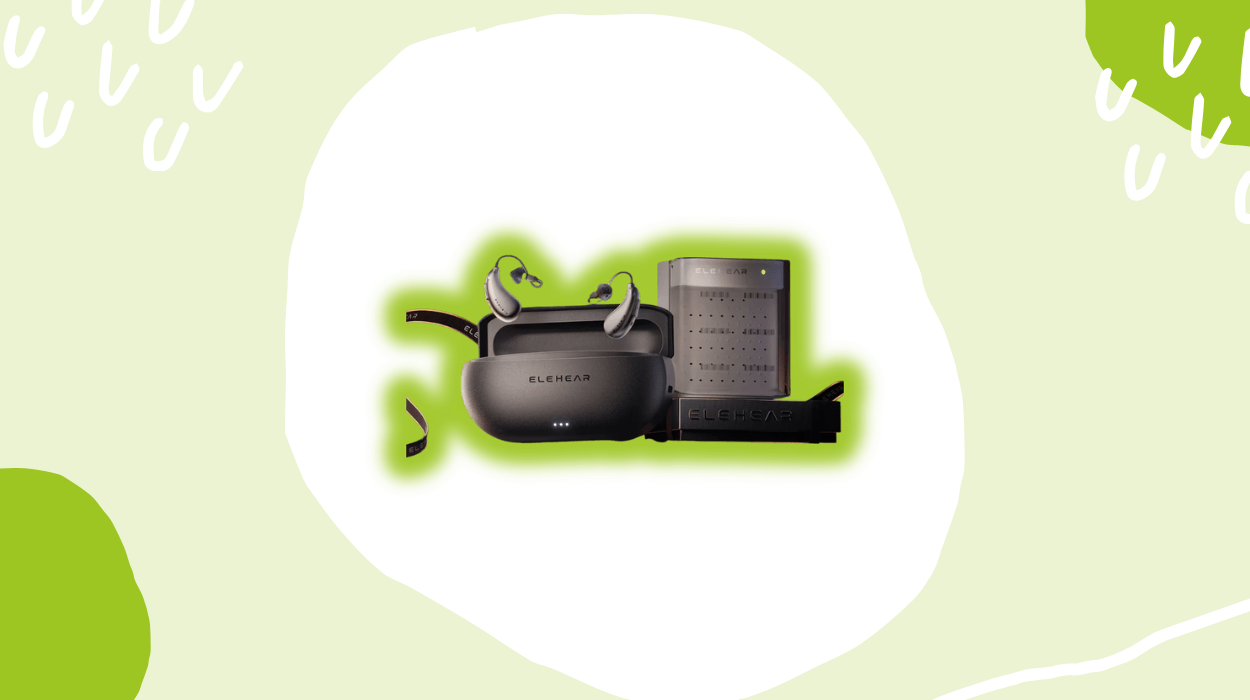

Elehear is a hearing-care brand focused on making hearing support more accessible through modern hearing options.
Its product range includes hearing aids designed to support you with different levels of hearing difficulty, with an emphasis on clearer listening and greater ease in everyday situations.
The brand claims to combine hearing technology with a user-friendly approach to address difficulty following conversations, hearing in noisy surroundings, and staying connected in daily life.
In this review, we’ll explore the brand’s offerings, the advantages and limitations of its products, and what consumers have to say about their experiences with the brand.
Elehear develops AI-powered hearing options combining hearing assistance, digital connectivity, and remote care. Its offering extends beyond hearing aids to include accessories, mobile applications, Bluetooth connectivity, and online audiology services. The company’s primary product category is hearing aids, which includes Beyond Pro, Beyond, and Delight. It also offers a range of accessories designed to support the maintenance, fitting, and continued use of its hearing aids. These include a Dry Box, Wax Guards, complete ear-dome sets, Open Ear Domes, Closed Ear Domes, Tulip Ear Domes, Power Ear Domes, and receiver replacement kits for single or dual sides. As per the official website, the portfolio also includes an Essentials Kit, accessories specifically designed for the Delight model, such as Open Domes, Closed Domes, and Ear Wings, as well as a protection plan.
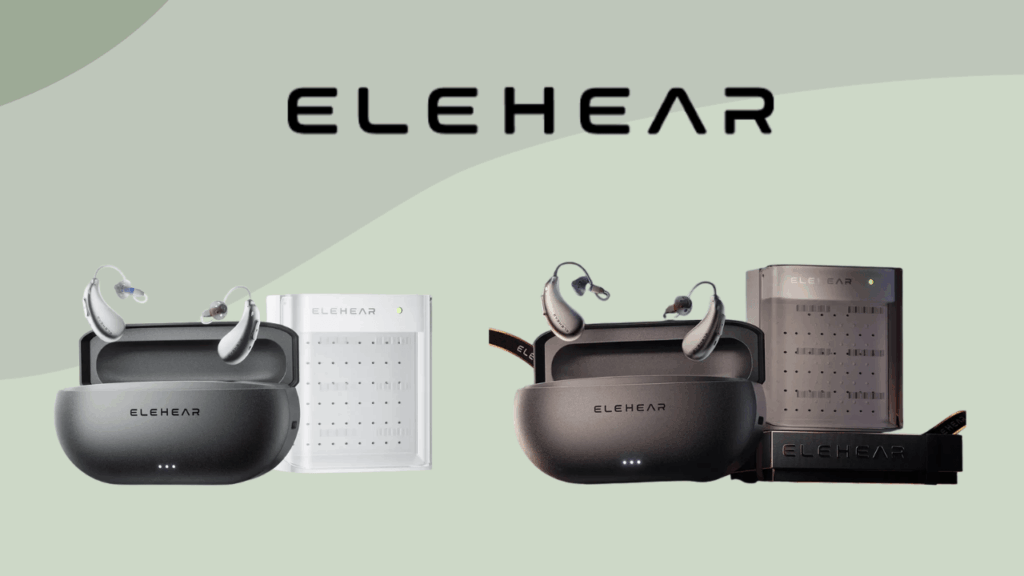
The Beyond Pro is an OTC hearing aid designed for mild to moderate hearing loss. It uses Vocclear® 2.0 technology to deliver clearer speech and fuller, more natural sound. The product is designed not only for everyday conversations but also for music, phone calls, and other listening situations. As per the official website, it features enhanced AI noise reduction and feedback control. The hearing aids can provide up to 24 dB of AI noise reduction, helping reduce distracting background sounds so that speech can be easier to follow. Its soft speech enhancement feature is also designed to make quieter voices more audible, while feedback control helps minimize unwanted whistling or sound feedback.
Beyond Pro is also designed to provide a richer listening experience. It has an extended 125 Hz–8500 Hz frequency range. This broader range, combined with the new Music Mode, is intended to make music sound more immersive while maintaining clear speech for everyday conversations.
The makers also claim that their product emphasizes personalized listening and tinnitus relief. Through the app, you can also customize your sound experience according to your preferences and access features designed to provide serene relief and mask tinnitus. This allows the hearing aids to be adapted to different listening environments and individual needs.
Beyond provides up to 50 dB of gain, with up to a 17% improvement in speech clarity. It uses AI noise reduction and feedback cancellation to manage background sounds and unwanted feedback.
As per the official website, it also supports Bluetooth 5.3 for music streaming and phone calls and is compatible with iOS and Android devices. They also include real-time AI translation, which provides translation functionality through the connected device and app.
The product has a battery life of up to 20 hours per charge, while a 15-minute quick charge can provide up to 6 hours of use. Each hearing aid weighs 4.8 grams and measures 1.29 × 0.65 × 0.36 inches. The makers state that the hearing aids have a 125 Hz–7000 Hz frequency range, a stated HFA-FOG50 gain of 35 ± 5 dB, and maximum AI noise reduction of 24 dB.
According to the official website, the Delight uses AI-powered sound processing that automatically adjusts to the listening environment. Its main design distinction is the earbud-style form factor. A Soft-wing helps keep the device securely positioned during physical activity, making it suitable for workouts, commuting, and other situations where a more secure fit is useful. Delight uses one omnidirectional microphone per hearing aid, and has a 125–7000 Hz frequency range and 35 dB HFA-FOG50 gain. For connectivity, the device includes Bluetooth 5.3 for music streaming and phone calls, along with real-time AI translation. Its app is available on iOS and Android and provides access to the hearing settings and other connected features.
Elehear offers app support that gives you convenient control over compatible hearing aid settings from your smartphone. According to the brand, you can adjust volume, tone, and noise settings through the app, making it easier to personalize your listening experience for different situations.
The app-based controls allow you to make adjustments without relying solely on the physical controls on your hearing aids. Compatible devices may also offer additional features through Elehear's connected ecosystem, including tinnitus-relief options and other device-specific functionality.
This gives you more convenient control over your listening experience. You can adjust supported settings directly from your smartphone as your environment or preferences change.
Elehear states that it provides ongoing professional support for its hearing aid users, including remote guidance and support through its ElePro services. This extends the customer experience beyond the initial purchase and gives you access to professional assistance as your hearing needs and listening preferences change.
Through the brand’s remote-care services, you can receive personalized support and guidance from hearing professionals without necessarily visiting a clinic. Depending on the service and compatible device, professional support may also include remote adjustments or fine-tuning of hearing settings.
Lifetime professional support can make it easier to get continued help after purchasing your hearing aids. Instead of relying only on the initial setup or arranging an in-person visit for every concern, you may be able to access professional guidance and eligible remote support as your hearing needs change.
Elehear provides free round-trip shipping for eligible quality-related warranty claims during its 45-day trial period. After the trial ends, you are responsible for the full transportation cost associated with warranty service. This cost may apply even when the hearing aids remain covered by the one-year limited warranty.
The brand does not publish a fixed post-trial shipping fee, meaning the actual cost can vary depending on the shipment. A covered repair or exchange may still involve an out-of-pocket transportation expense.
It can be a significant concern after the trial period. For example, a repair or exchange needed several months after purchase may be covered under the warranty, while the cost of shipping the device for service remains the customer's responsibility. As the brand does not state a standard shipping amount, the exact expense cannot be known in advance.
This may involve additional and unpredictable out-of-pocket costs. Although the warranty may cover an eligible repair or replacement, paying for transportation can make the overall cost of receiving warranty service less predictable.
Audicus and Elehear both make hearing care more accessible from home, but their strengths sit in different areas. Audicus puts more weight on professional hearing support, with licensed U.S. audiologists, ongoing care, remote programming, and lifetime support built into the experience. Elehear is more technology-led, with AI hearing systems, adaptive sound processing, app-based personalization, and remote updates forming a larger part of its offering.
That difference is especially noticeable in how the brands talk about their hearing aids. Audicus focuses on how its devices fit into different listening situations and everyday use. The Ray, for example, is designed around group conversations and all-day comfort, while the Omni 2 uses a discreet RIC design and the Mini 2 emphasizes a more invisible fit. These products sit within a broader care model where hearing assessments, adjustments, and audiologist support remain important parts of the experience. Elehear puts more attention on the technology inside the devices, including Vocclear® AI Technology, which the brand describes as adapting sound to changing environments, along with Hybrid Feedback Cancelling and OTA upgrades.
The same difference carries into hearing assessments. Audicus gives you more information about how its online test should be completed, including the need for headphones or earbuds, a quiet room, and controlled volume. It also explains that the assessment is a screening tool and that factors such as background noise and equipment can affect the results. Elehear keeps the process simpler, requiring only a phone or computer and presenting the results as immediately available. Audicus, therefore, gives more attention to the conditions surrounding the assessment, while Elehear makes the process feel more straightforward and technology-driven.
Once you move from testing to everyday use, the apps show another distinction. Audicus combines app controls with its audiologist-led support, letting you adjust volume, sound settings, and listening profiles while still having access to professional help. Elehear puts more of the personalization directly into its app, with controls for hearing and Bluetooth settings, automated sound profiles, and OTA updates. The app is, therefore, a more central part of how Elehear expects you to manage the hearing experience yourself.
The difference is ultimately about where each brand puts its value. Audicus builds around continued access to professional hearing care and support after you receive your device. Elehear puts more of the experience into AI-driven hearing technology and digital control, giving technology and self-directed personalization a more prominent role.
MDHearing and Elehear both focus on making hearing aids easier to access from home, but they put their emphasis in different places. As per its official site, MDHearing centers its offering on affordability, convenience, and accessible support. It manufactures and sells its own hearing aids directly, offers OTC devices for mild to moderate hearing loss, and combines a free online hearing test with home delivery, remote assistance, and a 60-day trial. Elehear puts more of its identity into hearing technology, particularly Vocclear®, AI-based speech processing, environmental sound analysis, and automated noise reduction.
The difference is also visible in the way the two brands structure their product ranges. MDHearing has a broader lineup that spans multiple hearing-aid families and includes both in-the-ear and behind-the-ear designs. Its current range includes models such as the NEO XS, NEO XS PRO, VOLT 4, and VOLT MAX 2. Elehear's lineup is more concentrated around the Beyond Pro, Beyond, and Delight. This gives MDHearing more variation within its own product range, while Elehear keeps its selection more focused around its core hearing technology.
That product difference becomes clearer when you look at personalization. MDHearing gives you more visible control over how your device is adjusted. The NEO XS PRO and VOLT MAX 2 offer customized sound profiles and smartphone app controls, while the NEO XS and VOLT 4 use physical buttons for functions such as volume adjustment. This creates a more obvious distinction between basic and connected options within the range. Elehear also offers app-based controls on models such as the Beyond Pro, Beyond, and Delight, but its technology does more of the adjustment automatically. Vocclear® is described as a Deep Neural Network-based system that analyzes environmental sounds 500 times per second and performs 450 million operations per second, putting automated sound processing at the center of the experience.
Both brands also provide information about how their devices are developed and tested, though the emphasis differs. MDHearing discusses its acoustically engineered sound laboratory, where hearing aids are evaluated using simulated speech and a lifelike ear model, along with its stated adherence to ANSI and FDA standards. Elehear gives more attention to the mechanics behind its processing technology and how its AI responds to changing sound environments.
MDHearing gives you more choice around device style, pricing accessibility, and hands-on control, with professional assistance available throughout the process. Elehear is more focused on having the hearing aids automatically interpret and adapt to the sounds around you, making its AI and processing technology a more central part of the experience.
Elehear is a relatively young but established brand, with its history tracing back to 2017. This provides the company with several years of operating experience, although it does not have the decades-long presence of some traditional, prescription hearing-aid manufacturers. The company develops and markets over-the-counter (OTC) hearing products through an online and direct-to-consumer model.
As part of our evaluation, we reviewed its presence across major consumer protection organizations and review platforms. At the time of writing this review, the brand does not have a Better Business Bureau rating or accreditation, reflecting its brief retail track record in the direct-to-consumer medical tech space. It also currently has no meaningful rating or complaint history on consumer platforms such as Yelp or ConsumerAffairs. While these platforms offer limited insight into the brand at this stage, the brand has developed a highly active presence across independent tech publications and audiology review sites, providing additional perspectives on its products.
Based on our evaluation, Elehear appears to be a legitimate and growing player in the OTC hearing-aid market. Its baseline product performance is well-documented, while its broader consumer service reputation is still developing.
We evaluated Elehear by analyzing its Trustpilot reviews, where the brand holds a 4.3 rating based on 67 reviews. Many users compare the brand favorably with significantly more expensive prescription hearing aids. Several experienced hearing-aid users say that the Beyond or Beyond Pro performed as well as, and in some cases better than, devices that had cost them thousands of dollars. Customers frequently praise the hearing improvement, Bluetooth connectivity, adjustable settings, tinnitus masking, and over-the-air updates. Several users also report wearing the devices for many hours a day or using them successfully for more than a year.
We also evaluated the brand based on its customer support. Numerous customers describe the support team as responsive, knowledgeable, and willing to provide practical solutions. Users mention assistance with hearing-aid settings, audiograms, troubleshooting, replacement units, and accessories. Some customers specifically praise individual representatives for resolving problems quickly, while others say replacement devices or components were provided when needed.
Meanwhile, one user found the Beyond Pro overly bright and unnatural, particularly when listening to music, while others noted that noisy restaurants and large environments can still be challenging. The app also receives some criticism, and battery performance does not appear to meet every customer's expectations. These reviews suggest that users may need to experiment with ear domes and settings to achieve the best results.
Reliability and after-sales service are the most significant areas of concern. Although many customers report receiving replacements promptly when something goes wrong, a few users describe repeated hardware failures. One customer reported two failures within eight months, while another had a particularly negative experience involving a defective device, shipping costs, and delays with a replacement after the trial period.
Based on our observation, the brand appears to be a generally well-regarded, value-focused hearing-aid brand with strong customer support and products. It appears to be a strong option for affordable hearing aids with modern features and accessible customer support. You should still review the warranty and return policy, battery expectations, and potential differences in sound quality and reliability before making a purchase.
Elehear combines AI-powered hearing assistance with digital connectivity, smartphone-based controls, accessories, and remote professional services. The combination of digital customization and ongoing professional support may provide greater convenience and flexibility in day-to-day hearing management.
However, AI-powered features, app-based adjustments, and remote support should not be viewed as substitutes for appropriate hearing assessment or medical evaluation when significant or unusual hearing symptoms occur.
Its app-based controls and continued support services strengthen its focus on convenience and personalization, while its range of hearing aids and accessories creates a broader supporting ecosystem.
However, the potential for out-of-pocket transportation expenses after the trial period remains an important concern. It is important to review the applicable warranty terms, device compatibility, and the scope of available remote services. The brand may stand out for its connected hearing ecosystem, but its long-term value ultimately depends on weighing its digital advantages against its potential service-related costs and individual hearing-care needs.

Contact us at [email protected] or follow @leafsnap on Twitter! View our Privacy Policy.