

Good Molecules is a skincare brand built around ingredient-focused formulations designed to target everyday skin concerns like acne, hyperpigmentation, and dark circles.
The brand offers an extensive range of products, including cleansers, toners, serums, moisturizers, exfoliating treatments, eye care products, and sunscreen formulas. Its offerings are positioned to support hydration, skin barrier maintenance, exfoliation, discoloration management, and texture refinement.
In this review, we will explore its product offerings, ingredient approach, pricing accessibility, and brand positioning. We will also examine the brand’s advantages, potential limitations, formulation concerns, and consumer feedback to provide a broader understanding of how the brand performs beyond its marketing claims.
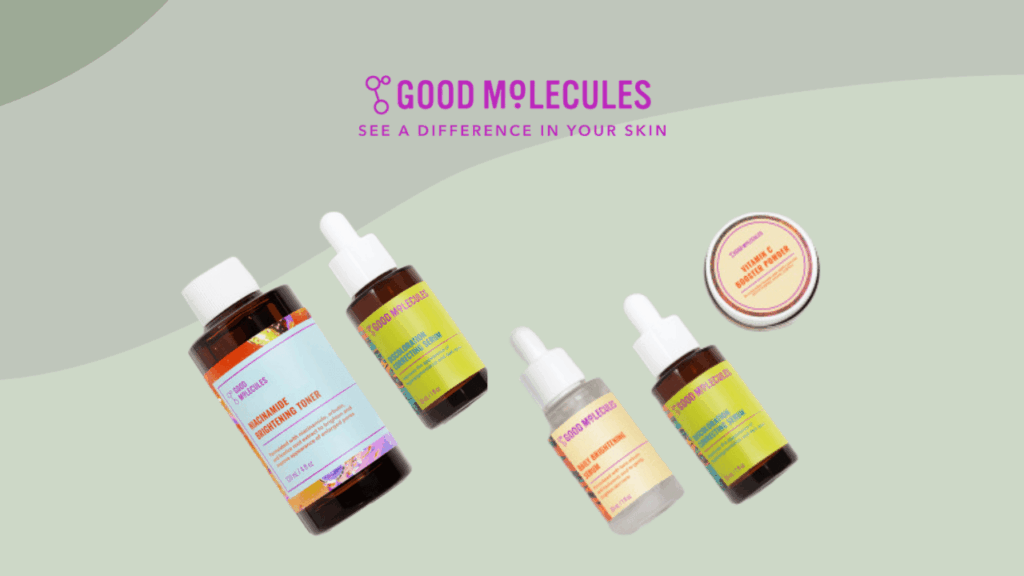
Good Molecules emphasizes ingredient-focused skincare and organizes many of its products around specific active ingredients. Its lineup includes formulations featuring niacinamide, salicylic acid, azelaic acid, glycolic acid, hyaluronic acid, retinol, and tranexamic acid.
The brand features a catalog that includes products such as the Discoloration Correcting Serum, Hyaluronic Acid Serum, Niacinamide Serum, Hydrating Facial Cleansing Gel, and mineral-based sunscreen formulations. It provides routine-building support through skincare bundles and an online skincare quiz that recommends personalized product routines based on user concerns. The brand also includes select body-care and targeted products, such as dark spot bars and acne-focused formulas.
Brightening & Dark Spots Bar could support a more even-looking skin tone while also cleansing the skin. According to the official website, the bar targets discoloration and dark spots.
Kojic acid plays a central role in the formula and is used for its ability to help reduce uneven pigmentation and post-blemish marks. Kojic Acid is known to provide support for hyperpigmentation concerns such as melasma. In the product, it contributes to maintaining a more balanced-looking complexion over time.
The formula also includes niacinamide, which complements the brightening approach by helping improve the look of uneven skin tone and dullness. It can also support the skin barrier, since frequent washing can sometimes leave the skin feeling stripped or dry.
Olive fruit oil has been added to provide conditioning properties that help counterbalance the cleansing base of the bar. Its emollient nature may help the skin feel softer and more comfortable after rinsing.
Discoloration Correcting Serum targets uneven skin tone and visible discoloration. Niacinamide is one of the main ingredients in the serum and is included to help reduce the appearance of discoloration, post-acne marks, and dullness.
The serum also features cetyl tranexamate mesylate, a derivative associated with tranexamic acid. It is used to help reduce the visibility of stubborn dark spots and uneven pigmentation, supporting a more uniform-looking complexion over time.
Propanediol gives the serum a lightweight and smooth texture, allowing it to spread more evenly across the skin. It also supports hydration retention, which helps the formula feel less drying despite its focus on correcting discoloration.
Yerba Mate Wake Up Eye Gel may help refresh and hydrate the under-eye area and also make the skin appear smoother. The makers have used hyaluronic acid to support hydration around the delicate eye area by attracting moisture to the skin. It helps the under-eye region appear fuller and less wrinkly, which can soften the look of fine dryness and fatigue.
The formula also features panthenol, which helps maintain skin comfort and supports moisture retention. It contributes to the soothing feel of the gel and may help prevent the eye area from feeling tight or dry after application.
Tocopherol has been added for antioxidant support. It could support the skin against environmental stressors while also contributing to a smoother and more conditioned feel. Allantoin in the formulation may help calm and comfort delicate skin.
Hyaluronic Acid Serum can provide lightweight hydration that helps the skin appear smoother, softer, and more refreshed.
Sodium hyaluronate is the key hydrating ingredient in the formula and works by attracting and retaining water within the skin. It helps replenish moisture levels so the skin appears plumper and less tight, which can improve the appearance of dryness-related texture and dullness.
The formula also includes hydroxyacetophenone, which contributes antioxidant properties. It may help maintain the freshness of the formulation and support skin comfort during regular use.
Niacinamide Brightening Toner is designed to help address dullness and uneven skin tone without feeling overly harsh or stripping the skin. The toner combines arbutin to help reduce the appearance of discoloration and uneven pigmentation. It may contribute to promoting a clearer and more uniform-looking complexion over time. The makers also included sodium hyaluronate, which helps maintain hydration levels and gives the toner a more comfortable feel on the skin.
Theobroma cacao seed extract has been added for its antioxidant properties, helping support the skin against environmental stressors that contribute to a dull or tired appearance. Tocopherol further supports the antioxidant profile of the product while helping the skin feel softer and more nourished after application. It can help prevent the finish from feeling overly dry or tight.
Niacinamide Serum may support clearer, more balanced-looking skin by improving the appearance of uneven tone, texture, and visible congestion.
Niacinamide is the central ingredient in the formula, which could help refine the look of enlarged pores, excess oil, and discoloration. It also supports the skin barrier, which can help the complexion appear smoother and less prone to dryness or irritation over time.
The formula includes glycerin to attract moisture into the skin and maintain hydration levels throughout wear. This helps balance the feel of the serum so it remains comfortable and does not leave the skin feeling stripped. Betaine contributes additional hydration support and helps the skin maintain moisture balance.
Lightweight Daily Moisturizer might provide hydration and skin-softening support. It consists of shea butter to help nourish and soften the skin barrier. Shea butter may help reduce moisture loss and support smoother-feeling skin. The formula also has avocado oil, which contributes emollient properties that help condition dry or rough areas.
Green tea leaf water has been added to provide antioxidant support and a refreshing skin feel. It helps support skin comfort and complements the lightweight nature of the formula by contributing a fresh finish.
According to the official site, Gentle Retinol Cream is intended to support skin renewal.
The formula includes retinol, which may support faster skin cell turnover and encourage smoother-looking skin over time. Retinol is intended to help soften the appearance of fine lines, improve uneven texture, and gradually refine dull or rough skin.
The makers have also added bakuchiol, which is often included alongside retinol to help complement visible anti-aging benefits while improving tolerability. It helps support skin smoothing while reducing irritation. The formula also includes allantoin for its soothing and barrier-supportive properties. It helps calm visible irritation and supports skin comfort.
Hydrating Facial Cleansing Gel could help remove surface buildup while helping maintain skin hydration and comfort. It has coco-betaine as one of its primary cleansing agents to help lift away excess oil, sunscreen residue, and daily impurities. It also includes citric acid, which can help maintain an appropriate acidic environment that supports skin barrier balance while also contributing gentle exfoliative activity.
The makers also added pineapple fruit extract, which contains enzymes and antioxidant compounds that may help support a fresher-looking complexion by assisting with the removal of surface debris and environmental buildup. Its Rosa damascena flower water may provide additional soothing and hydrating support.
Good Molecules focuses on a transparent ingredient-disclosure system and publicly breaks down the full quantitative composition of many formulas through its ingredient-percentage matrix, including solvents, stabilizers, preservatives, emulsifiers, and supporting ingredients. You can directly evaluate how much of the formula consists of active ingredients versus water, texture agents, or preservative systems.
The structure can also reduce formulation guesswork if you actively layer skincare products or monitor ingredient sensitivities. As the percentage disclosures extend beyond the primary active ingredients, you can more easily identify overlapping acids, niacinamide concentrations, solvent systems, or preservative blends before combining multiple products into the same routine.
The brand’s quantitative disclosure also reduces some of the ambiguity commonly associated with low-percentage marketing ingredients. You can immediately see whether a featured botanical, antioxidant, peptide, or soothing extract appears in a clinically meaningful concentration or exists only in trace amounts near the bottom of the formulation structure.
Good Molecules' formulation philosophy creates both sensory repetition and routine-management friction across the portfolio. It heavily prioritizes lightweight gels, watery serums, and thin fluid textures, which limits formulation diversity. The brand’s emphasis on single-active products shifts customization responsibility, as you have to layer numerous targeted products together. This can cause ingredient overlap, sequencing complexity, and active redundancy. It can also make routines feel overly repetitive, overly layered, and mentally fatiguing over time. Different products may deliver similar lightweight or tacky skin-feel experiences despite serving different functions, reducing sensory distinction within the routine and limiting options if you prefer richer or more nourishing textures.
Addressing multiple concerns, such as hydration, pigmentation, acne, and barrier repair, often requires combining several separate serums, which can increase routine length and make it harder to avoid overlapping ingredients or irritation.
Drunk Elephant and Good Molecules differ in how they position skincare, structure their product ranges, and present active ingredients. Drunk Elephant operates within the premium skincare category and builds its identity around high-strength formulations, layered skincare routines, refillable packaging options, and extensive category expansion. It emphasizes exfoliation, hydration layering, nourishment, and active ingredient performance. In contrast, Good Molecules maintains a narrower and more concern-focused skincare identity. Its offerings are centered on affordability, ingredient clarity, and options for concerns such as discoloration, acne, dehydration, redness, uneven tone, visible pores, and post-acne marks.
The brands also differ in formulation emphasis and active ingredient intensity. Drunk Elephant’s product lineup is heavily centered around exfoliating acids, peptides, vitamin C derivatives, retinol, marula oil, hydration complexes, and peptide-focused moisturizers. Products such as C-Firma Fresh Vitamin-C Day Serum and C-Luma Hydrabright Gentle Hydrating Vitamin C Serum reflect the brand’s strong focus on skin renewal, resurfacing, anti-aging support, and advanced active ingredient layering. Good Molecules takes a more direct approach centered around niacinamide, salicylic acid, azelaic acid, hyaluronic acid, yerba mate extract, rosehip oil, and jojoba oil. Products are usually tied closely to a single concern or ingredient category, such as salicylic acid targeting pimples, blackheads, and whiteheads, and azelaic acid helping reduce post-acne spots and redness.
Drunk Elephant’s stronger resurfacing products, exfoliating acid systems, vitamin C serums, peptide options, and retinol formulations are claimed to support advanced skincare routines and intensive active ingredient use. Good Molecules generally frames its products as lightweight, soothing, nourishing, and comfortable cleansing. Products such as the Hydrating Facial Cleansing Gel, Soothing Azelaic Acid Cleanser, and Gentle Retinol Cream reflect a more focused approach to active ingredient delivery and daily-use compatibility.
CeraVe offers support for skin barrier maintenance through formulations built with three essential ceramides. The brand emphasizes fragrance-free formulations, suitability for sensitive and acne-prone skin, and compatibility with a broad range of skin types. Good Molecules, in comparison, focuses on targeted products aimed at concerns such as discoloration, uneven tone, puffiness, and texture irregularities.
CeraVe claims that its products contain technologies such as MVE delivery systems, ceramide booster technology with pre-ceramides, and formulas intended to strengthen the skin barrier. Products such as the Hyaluronic Acid Water Gel are presented in terms of hydration duration, barrier restoration, and skin compatibility. Good Molecules instead frames many of its products around visible cosmetic outcomes, especially improvement in discoloration, blemish marks, redness, pores, and acne-related concerns.
Their product ecosystems also differ in scope and structure. CeraVe operates across both skincare and haircare categories, including shampoos, conditioners, anti-dandruff systems, oil-control haircare, and scalp-focused formulations. The brand repeatedly positions scalp care as an extension of skincare and emphasizes sulfate-free haircare suitable for sensitive scalps, curl patterns, and color-treated hair. Good Molecules remains focused on facial skincare and concern-specific products.
In terms of formulation priorities, CeraVe products are repeatedly described as suitable for normal-to-dry, normal-to-oily, sensitive, or acne-prone skin, with barrier-supporting ingredients such as ceramides, niacinamide, and hyaluronic acid appearing throughout the lineup. Good Molecules' portfolio includes discoloration serums, retinol creams, salicylic acid acne products, and niacinamide toners designed for targeted concerns. CeraVe’s product lineup appears structured around a complete routine for broad skin categories and long-term maintenance. Good Molecules, meanwhile, structures much of its assortment around individualized concerns and layering of serums or targeted products.
When evaluating Good Molecules, we considered factors such as the brand’s operational history, customer accountability platforms, retail expansion, and positioning. The company highlights ingredient percentages directly on product packaging, which adds a stronger transparency angle to its formulation approach.
We also considered the brand’s business foundation and external growth indicators. It has expanded beyond online sales into larger retail channels such as Ulta Beauty, Target, and international pharmacy distribution. However, currently, the brand is not available on Yelp, and only minimal information is available through BBB, which limits the amount of independently verifiable customer service and complaint history that can be assessed publicly.
We believe that Good Molecules does not have a deeply established legacy skincare company yet. It clearly benefits from strong retail partnerships and a more credible operational foundation. However, its long-term reputation is still developing, and much of its authority continues to rely on accessibility, online skincare visibility, and rapid retail expansion. We view it as a brand that is still in the process of building a deeper long-term trust profile.
To evaluate Good Molecules, we analyzed customer sentiment shared through Thingtesting reviews, where the brand holds a 4.6 rating based on 50+ reviews.
In these reviews, products such as the niacinamide serum, hyaluronic acid serum, pimple patches, and discoloration products were repeatedly mentioned for producing visible improvements without causing significant irritation. Many customers emphasized that the formulas felt approachable for beginners, worked across multiple skin types, and fit easily into everyday skincare regimens. Accessibility appeared to be another major factor in customer satisfaction, with users appreciating the brand’s retail availability and pricing structure. Several users also reflected positive perceptions around ingredient transparency and cleaner formulations, showing that trust in ingredients plays a role in the brand’s appeal. However, a few users noted texture-related concerns, including serums or moisturizers feeling slightly soapy or products shifting during application. Others suggested that certain formulas perform better for mild maintenance concerns.
Good Molecules may feel approachable if you want affordable, easy-to-use skincare without complicated routines. You may appreciate the ingredient-focused formulas and consistent everyday usability, though check your skin concerns, texture preferences, and how its products layer within your routine.
Good Molecules is built around familiar active ingredients, transparent labeling, and simplified routines. Many of the ingredients used throughout its lineup have existing dermatological research supporting their general cosmetic functions.
Good Molecules and its offerings may work well if you want straightforward skincare. However, you should still approach active-heavy routines carefully, especially when combining exfoliating acids, retinoids, brightening agents, or multiple serums within the same routine.
Overlayering active ingredients may increase the risk of irritation, dryness, redness, peeling, or barrier disruption, particularly if you already have sensitive or reactive skin.
Some exfoliating products may also increase sun sensitivity, making daily sunscreen use more important during consistent use. Patch testing also remains important, especially if your skin reacts easily to concentrated actives, botanical extracts, or fragrance substitutes.

Contact us at [email protected] or follow @leafsnap on Twitter! View our Privacy Policy.