
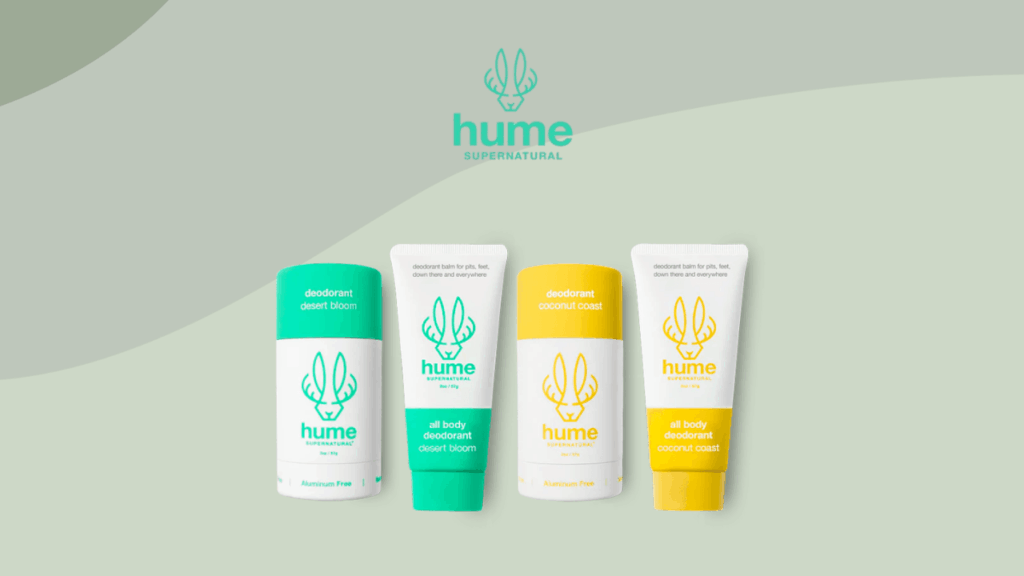
Hume Supernatural focuses on plant-based personal care, with a strong emphasis on deodorants designed for both underarms and full-body use. Its product range includes deodorant sticks, all-body deodorant balms, body washes, dry body oils, and curated bundles, offering multiple formats and scent options.
The brand centers its lineup around daily hygiene essentials and states that its formulations are built with prebiotics, probiotic ferments, and mineral-based compounds.
This review will explore Hume’s offerings in detail and compare the brand with similar options in the clean personal care space. We will also evaluate its reputation based on available information and consumer feedback.
Hume Supernatural is a body care brand that claims to avoid ingredients like parabens, phthalates, baking soda, triclosan, and talc. The brand’s product range covers core body care categories, along with a pH-balanced body wash formulated with skincare-level actives. It also offers dry body oils aimed at addressing dryness and supporting the skin barrier, with mini versions available for portability. These products are organized into single options, curated sets like the Essential, Refresh, Balance, and Starter Sets, and bundle formats across categories.
As per the official website, the lineup includes multiple scent options such as Desert Bloom, Coconut Coast, Amber Woods, Wild Coral, and Vanilla Daze, built around citrus, neroli, coconut, sandalwood, and vanilla notes.
Hume Body Wash can remove impurities on the body surface and provide skin hydration and barrier function through skincare-focused ingredients. The formulation includes niacinamide, which may help support the skin barrier by influencing lipid production and improving texture, while also contributing to a more even-looking surface. Hyaluronic acid is also present as a moisture-binding ingredient that may attract and retain water in the outer layers of the skin, which could help maintain hydration during the cleansing process. The product also consists of prebiotic and probiotic ferments to support the skin microbiome by providing nutrients for beneficial microorganisms.
The makers have added prickly pear seed oil, cactus flower extract, and aloe, which may function as soothing and emollient components that help soften the skin and reduce moisture loss. These ingredients are used to balance cleansing with hydration and skin comfort.
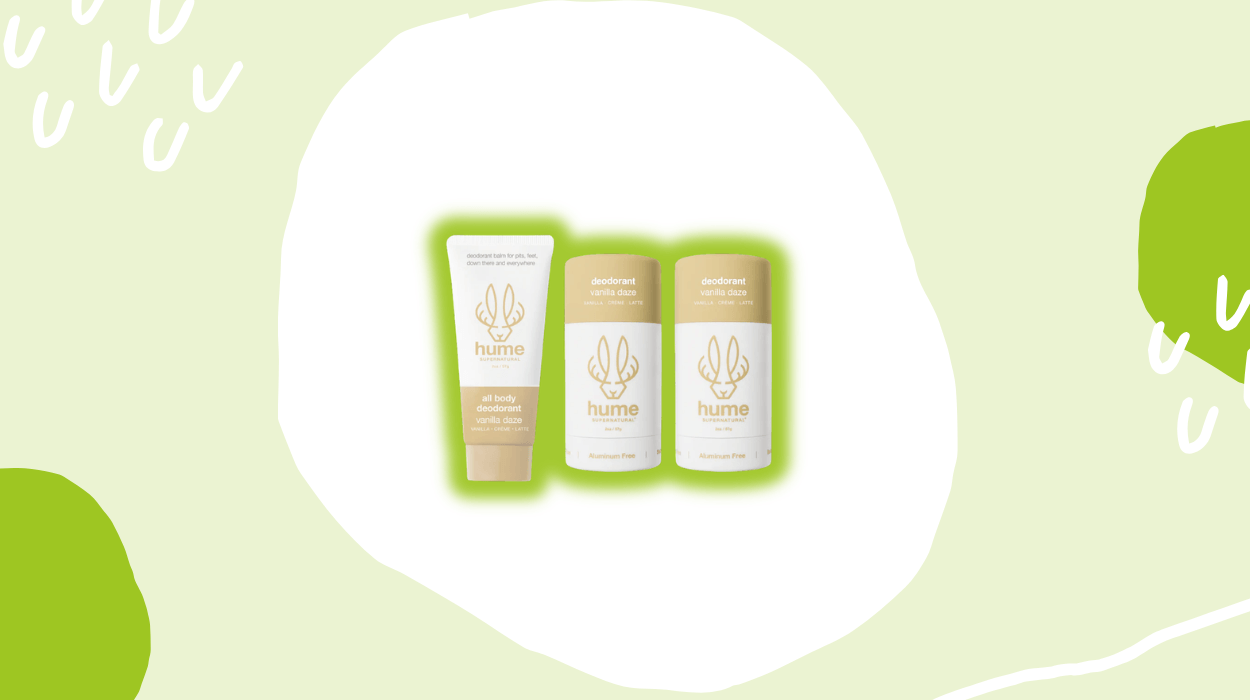
Hume Deodorant includes multiple offerings, such as Vanilla Daze Duo deodorant and other scent variations like Desert Bloom, Coconut Coast, and Amber Woods. These offerings could help reduce body odor and provide support to the skin’s natural balance through plant-derived and mineral-based ingredients.
The deodorant formulations contain sodium stearate, which may function as a structuring agent that helps maintain the solid stick format and supports smooth application. They also include coconut fruit extract, which may provide mild antimicrobial properties that help reduce odor-causing bacteria on the skin.
The makers have added aloe barbadensis leaf juice, which may help soothe the underarm area and support hydration, particularly for skin that may be sensitive to frequent application. Prickly pear seed oil is also included as a lightweight emollient that may help soften the skin and strengthen the barrier by reducing moisture loss.
Dry Body Oil may help hydrate the skin and improve softness while delivering a lightweight, non-greasy finish. It consists of caprylic/capric triglyceride, which may function as a lightweight emollient that helps soften the skin and improve spreadability while reducing moisture loss.
Apricot kernel oil is included and provides fatty acids that support skin conditioning and contribute to a smoother texture. Sunflower seed oil is also present, which may help reinforce the skin barrier through its linoleic acid content and support hydration. The makers have added rosemary leaf extract, which may provide antioxidant properties that help protect the skin from environmental stress while supporting skin condition.
Hume Supernatural’s brand system is built around a gender-neutral framework that centers selection around needs like odor control, pH balance, and microbiome support. This structure simplifies decision-making. Product choice is based on function, such as prebiotic deodorants or body cleansers, making the process more direct and need-based.
Fragrance profiles like Desert Bloom, Out West, and Coconut Coast are positioned as universally wearable, avoiding traditional scent categorization. The brand’s inclusive structure reduces friction in product selection, standardizes usage, and aligns personal care with universal needs.
Hume Supernatural’s positioning relies heavily on microbiome-focused language, but this introduces limited technical transparency. The brand uses terms like Microbiome Approved and Plant + Prebiotic Powered, yet does not disclose specific concentrations of active ingredients such as Lactobacillus or Saccharomyces, nor does it provide peer-reviewed clinical data demonstrating measurable changes in skin flora.
While the messaging emphasizes balancing the skin barrier and neutralizing odor, the functional mechanics behind these claims are not explained in detail. There is limited information on formulation stability, strain behavior, or long-term interaction with the skin’s microbiome. Without standardized metrics, ingredient transparency, or comparative benchmarks, it is difficult to assess performance against traditional deodorants or antimicrobial systems.
Native focuses on cruelty-free and vegan positioning, and savings through bundles and subscriptions. Meanwhile, Hume Supernatural takes a more targeted route, framing itself around microbiome-focused skincare. The difference becomes more pronounced in product breadth and structure. Native offers a wide catalog that includes deodorant sticks, deodorant sprays, whole body sprays, and body washes. Its offerings also include moisturizing and scalp detox shampoos and conditioners, 2-in-1 hair formats, body lotions, mineral zinc oxide sunscreen with SPF 30, toothpaste, and liquid hand soaps. The brand also features seasonal drops and limited-edition variants like Sugar Cookie and Strawberry Matcha. Hume Supernatural maintains a narrower lineup with a focus on prebiotic deodorant balms, all-body deodorants, a pH-balanced body wash, and dry body oils. It also features minis and bundles such as Essential, Balance, Refresh, and Starter sets.
Native states that its deodorants are designed to work with sweat. It emphasizes fragrance-driven freshness across options like Coconut and Vanilla or Sea Salt and Cedar. In comparison, Hume Supernatural focuses on odor neutralization at the source through prebiotic deodorant balms that aim to balance the skin microbiome and target odor-causing bacteria. Ingredient philosophy further separates the two. Native highlights formulas free from aluminum, dyes, sulfates, silicones, phthalates, and petrolatum, keeping its ingredient lists simple and broadly suitable for daily use. Meanwhile, Hume Supernatural excludes many of the same components but extends this further by removing baking soda, triclosan, gluten, and talc.
Native leans into variety and sensory appeal, offering more than 20 scent profiles along with frequent limited-edition releases. These include Japanese Golden Pear and Strawberry Matcha, alongside core options like Eucalyptus and Mint, Coconut and Vanilla. It encourages exploration through mix-and-match bundles and scent layering. Meanwhile, Hume Supernatural offers fewer but more composed scent profiles, such as Desert Bloom with citrus, neroli blossom, and agave, and Wild Coral. It also highlights a defined fragrance-free option for sensitive users.
As per their official website, Native prioritizes variety, scent diversity, and full-category coverage across personal care. Meanwhile, Hume Supernatural narrows its focus to fewer, more specialized products built around microbiome balance, plant-based actives, and targeted functionality.
Lume centers its entire system around mandelic acid, a low-pH AHA used across solid sticks, cream deodorants, sprays, wipes, body wash, and body creams. Its formulas combine this acid with corn starch, caffeine, aloe, and cocoa butter, creating a mix of exfoliation, moisture absorption, and skin conditioning. Hume Supernatural takes a different route by relying on plant and mineral-based ingredients derived from desert botanicals. It positions these ingredients as naturally adaptive and capable of supporting the skin without relying on acid-driven mechanisms.
As per its official website, Lume emphasizes 72-hour odor control across its deodorants. It also expands into sweat control formats, where ingredients like aluminum chlorohydrate and aluminum sesquichlorohydrate are introduced in sprays and sticks for added perspiration reduction. Meanwhile, Hume Supernatural focuses instead on stopping odor effectively through consistent daily use. It positions its products as reliable for everyday wear across different environments.
Lume maintains a broad free-from formulation approach, excluding baking soda, parabens, phthalates, sulfates, and talc. It also offers both aluminum-free deodorants and aluminum-based sweat control options within the same range. The brand highlights ingredient lists that include ethylhexylglycerin, citric acid, and ferment-based components in wipes, reflecting a mix of preservation, absorption, and microbiome support. In comparison, Hume Supernatural keeps its positioning consistent across all products, claiming to avoid parabens, phthalates, baking soda, triclosan, and talc entirely.
The breadth of each product ecosystem also differs significantly. Lume extends beyond deodorant into a multi-step hygiene system, offering spray deodorants, acidified body wash, cleansing bars, deodorant wipes, and body creams. These are supported by starter kits, travel kits, and customizable bundles that scale with product quantity. Hume Supernatural keeps a more focused, skincare-oriented range with deodorants, all body deodorants, pH-balanced body wash, and dry body oil mists designed for skin barrier support. It also features starter sets, balance sets, refresh sets, and bundle options centered on fewer product categories.
Lume promotes versatility through multiple application formats, including sticks, creams, sprays, and wipes. It allows use across underarms and other odor-prone areas with flexible textures and formats. However, Hume Supernatural makes this positioning more direct with its all-body deodorant designed specifically for pits, feet, intimate areas, and other zones.
Lume Deodorant centers on acid-based, performance-driven odor control supported by a broad, system-wide product range. In comparison, Hume Supernatural focuses on plant-based, non-toxic formulations with a streamlined, skincare-focused lineup.
Lume centers its entire system around mandelic acid, a low-pH AHA used across solid sticks, cream deodorants, sprays, wipes, body wash, and body creams. Its formulas combine this acid with corn starch, caffeine, aloe, and cocoa butter, creating a mix of exfoliation, moisture absorption, and skin conditioning. Hume Supernatural takes a different route by relying on plant and mineral-based ingredients derived from desert botanicals. It positions these ingredients as naturally adaptive and capable of supporting the skin without relying on acid-driven mechanisms.
As per its official website, Lume emphasizes 72-hour odor control across its deodorants. It also expands into sweat control formats, where ingredients like aluminum chlorohydrate and aluminum sesquichlorohydrate are introduced in sprays and sticks for added perspiration reduction. Meanwhile, Hume Supernatural focuses instead on stopping odor effectively through consistent daily use. It positions its products as reliable for everyday wear across different environments.
Lume maintains a broad free-from formulation approach, excluding baking soda, parabens, phthalates, sulfates, and talc. It also offers both aluminum-free deodorants and aluminum-based sweat control options within the same range. The brand highlights ingredient lists that include ethylhexylglycerin, citric acid, and ferment-based components in wipes, reflecting a mix of preservation, absorption, and microbiome support. In comparison, Hume Supernatural keeps its positioning consistent across all products, claiming to avoid parabens, phthalates, baking soda, triclosan, and talc entirely.
The breadth of each product ecosystem also differs significantly. Lume extends beyond deodorant into a multi-step hygiene system, offering spray deodorants, acidified body wash, cleansing bars, deodorant wipes, and body creams. These are supported by starter kits, travel kits, and customizable bundles that scale with product quantity. Hume Supernatural keeps a more focused, skincare-oriented range with deodorants, all body deodorants, pH-balanced body wash, and dry body oil mists designed for skin barrier support. It also features starter sets, balance sets, refresh sets, and bundle options centered on fewer product categories.
Lume promotes versatility through multiple application formats, including sticks, creams, sprays, and wipes. It allows use across underarms and other odor-prone areas with flexible textures and formats. However, Hume Supernatural makes this positioning more direct with its all-body deodorant designed specifically for pits, feet, intimate areas, and other zones.
Lume Deodorant centers on acid-based, performance-driven odor control supported by a broad, system-wide product range. In comparison, Hume Supernatural focuses on plant-based, non-toxic formulations with a streamlined, skincare-focused lineup.
We evaluated user experiences by reviewing feedback and ratings for some of its products on Amazon. Many users describe mixed but generally positive experiences with the Probiotic Roll-On Deodorant, which holds a 4.1 out of 5 rating from over 1,400 ratings. Users highlight that it helps control odor effectively for a natural deodorant, with some noting all-day freshness and smooth application. However, some report experiencing reduced effectiveness during heavy activity or toward the end of the day. A few users also mention that the gel-like texture can feel wet on application.
The brand’s Ultra Nourishing Body Wash is rated 4.4 out of 5 from over 60 ratings and is generally stated to provide a pleasant cleansing experience. However, feedback for this product is more limited, and some users feel that the results are not different from standard body washes.
The Dry Body Oil Spray, which holds a 4.4 out of 5 rating from 750+ ratings, tends to receive more consistent feedback. Customers describe it as lightweight and easy to apply, noting that it absorbs quickly without leaving a greasy residue. Some also mention improvements in skin hydration and softness, particularly for dry skin. However, a few users note that the moisturizing effect may require reapplication.
Hume Supernatural claims to use mineral-based absorbents and probiotics. The brand aims to help you manage odor, which may work if you want to avoid traditional antiperspirants. However, since it does not stop sweating, performance can vary, especially in hot weather or during intense activity.
The scent options are limited, and certain fragrances may feel too sweet or synthetic. This can affect how often you want to use its products. Fragranced versions may also cause irritation or allergic reactions, especially if your skin is sensitive.
Before considering Hume Supernatural, take a few precautions. You may need time to adjust if you are switching from antiperspirants, as odor can change at first. Try a patch test for its products to check for irritation, and avoid applying the deodorants right after shaving. The brand offers an alternative approach to odor control, but its effectiveness and usability depend on your expectations, skin sensitivity, and preference for scent.

Contact us at [email protected] or follow @leafsnap on Twitter! View our Privacy Policy.