

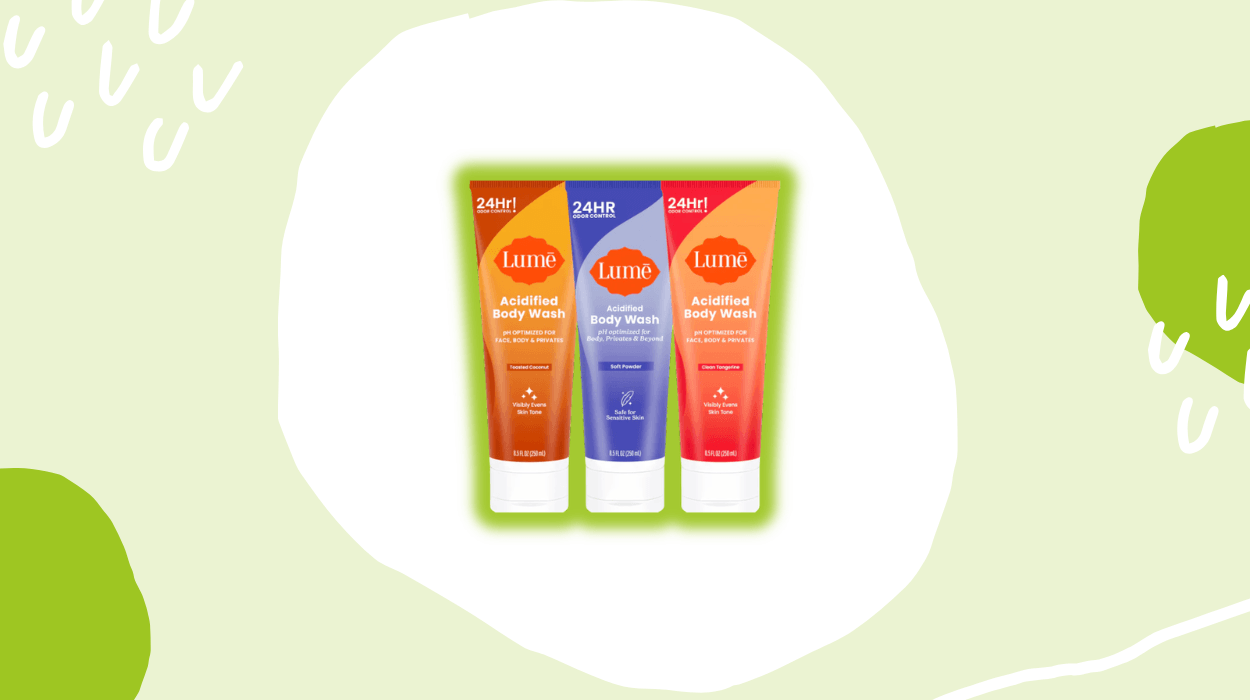
Lume Deodorant focuses on managing odor through its formulations, which are designed for use across multiple areas of your body, including underarms, feet, skin folds, and other external areas. The brand’s product range includes cream deodorants, solid sticks, and sprays, along with complementary products.
This review will examine the Lume Deodorant’s key offerings, the functional advantages of its approach, and the limitations. We will also analyze real user feedback to provide a more balanced view of how its products perform across different needs.
Developed by Dr. Shannon Klingman, Lume Deodorant emphasizes pH-balanced, skin-compatible formulations intended for broader body application. Its formulations are built around mandelic acid, which helps inhibit odor-causing bacteria.
The brand covers a wide range of categories that extend beyond standard deodorants. Its core offerings are available in both aluminum-free odor control versions and sweat-control variants that use aluminum-based actives. It also expands into body care with products like body wash, cleansing bars, soaps, deodorant wipes, and body creams.
As per the official website, most of its offerings are free from baking soda, parabens, phthalates, sulfates, or talc, while also aligning with vegan and cruelty-free standards.
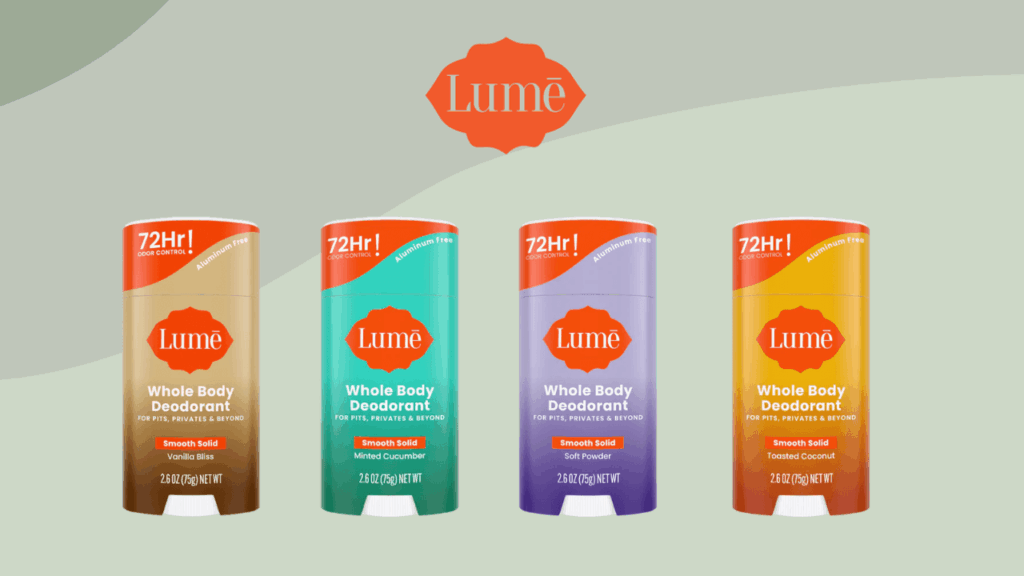
As per the official site, the Spray Deodorants are available in scents like Vanilla Bliss, Minted Cucumber, Soft Powder, Toasted Coconut, Clean Tangerine, Peony Rose, and Lavender Sage. The formulations include mandelic acid as a gentle alpha hydroxy acid that lowers skin pH, creating an environment that could limit the growth of odor-causing bacteria. This mechanism may also provide mild exfoliation, which could contribute to a smoother and more even skin surface over time. The product also consists of aloe vera, vitamin B5, and caprylic/capric triglyceride, which may work together to support hydration by attracting and retaining moisture in the skin. These ingredients help maintain softness and reduce dryness.
The makers have added caffeine, which may help soothe the skin by reducing visible redness and calming irritation. Vitamin E is also included as an antioxidant that could help lock in moisture and support skin conditioning.
Cream Tube Deodorants come in scents like Vanilla Bliss, Minted Cucumber, Soft Powder, Toasted Coconut, Lavender Sage, Fresh Alpine, Unscented, Peony Rose, and Clean Tangerine. The deodorants consist of potassium hydroxide, which may help adjust the pH of the formulation.
Maranta arundinacea root powder is also included to absorb moisture on the skin surface, which could contribute to a drier feel without blocking natural perspiration. The makers have also added allantoin, which may help soothe the skin and support recovery from minor irritation, particularly in areas that experience friction or frequent application.
Cream Stick Deodorants contain tapioca starch, which may help absorb surface moisture and reduce wetness without blocking natural perspiration. The product also consists of cocoa seed butter, which works as an emollient that can soften your skin and support the skin barrier.
The formulators have also combined vitamin B5, which may help support skin hydration and improve skin condition by attracting and retaining moisture. Caprylic/capric triglyceride is also included as a lightweight emollient that may enhance spreadability while helping maintain softness and reducing dryness during use.
Sweat Control Deodorants include aluminum chlorohydrate, which may function as an antiperspirant by forming temporary plugs within sweat ducts, helping reduce the amount of moisture released onto the skin surface. This mechanism may contribute to a drier feel and reduced sweat visibility during wear. These deodorants come in Vanilla Bliss, Soft Powder, and Clean Tangerine scents, as well as sets like the Triple Threat 3-Pack and Don’t Sweat It Girl 3-Pack.
Lume Deodorant claims wide availability through major retail partners such as Target, Walmart, Costco, Ulta Beauty, CVS Pharmacy, and Walgreens. It also appears in grocery chains like Kroger and Publix. These placements increase visibility and make in-store buying easy. The brand also has availability on e-commerce platforms like Amazon. This gives you another option to buy online outside the brand’s website. You can choose how and where to buy. You may order directly for subscriptions and full access, or shop in-store for convenience. This flexibility might help you stay consistent, since the products are easy to find across multiple channels.
Lume’s efficacy is built on a mandelic acid–based system that lowers skin pH to inhibit odor-causing bacteria, but this creates a consistent sensory limitation across the brand. The acidification process produces a distinct base aroma, which is not fully masked because the brand avoids heavy synthetic fragrances. Independent reviews also cite these experiences, where people shared that the brand’s offerings had a foul smell, which made them discontinue them. Others also report the base scent lingering or even intensifying when they begin to sweat. This can make the brand’s performance inconsistent across different skin profiles. Even unscented versions can carry a noticeable underlying scent tied to the active formula.
Native builds a full-spectrum personal care lineup that includes deodorant, body wash, shampoo, conditioner, skincare, hand soap, and toothpaste. Its catalog includes deodorant sticks sized at 2.65 oz with over 45 scent options, body washes, and haircare products such as strengthening and moisturizing shampoos and conditioners. Lume, in comparison, stays centered on odor control and extends only into related categories such as acidified body wash, cleansing bars, wipes, body cream, and even laundry products like pretreat sprays and detergent boosters.
The way each brand approaches odor control reflects a clear functional difference. As per their official website, Native states that its deodorants are designed to work with your sweat to create a noticeable scent. The brand emphasizes fragrance-led options like Sea Salt & Cedar, Eucalyptus & Mint, Citrus & Herbal Musk, and seasonal scents such as Sugar Cookie or Strawberry Matcha. Lume takes a different route by focusing on odor prevention through mandelic acid, a low pH alpha hydroxy acid that reduces the growth of odor-causing bacteria on the skin. Its products are positioned as clinically proven for 72-hour odor control and are designed for use across multiple body areas. Their ingredient strategies further highlight this contrast. Native promotes simple formulations that exclude aluminum, dyes, sulfates, silicones, phthalates, and petrolatum across its range. It also claims to maintain vegan and cruelty-free standards. Products such as its sulfate-free body washes are formulated to lather well while remaining gentle, and its mineral sunscreen uses zinc oxide with a non-greasy, fast-absorbing base. Meanwhile, Lume takes a more ingredient-focused approach by building formulations around mandelic acid, along with supporting ingredients like caffeine, panthenol, aloe, tapioca starch, and arrowroot powder.
Product format diversity also separates the two brands. Native keeps its deodorant formats relatively straightforward with sticks, sprays, and whole body sprays, focusing more on scent variation than on texture differences. Its lineup includes standard deodorant sticks, spray deodorants in 3.5 oz sizes, and whole body sprays with select scent options. In comparison, Lume offers a wider range of formats, including solid sticks, cream sticks, cream tubes, spray deodorants, and sweat control sprays, along with bundled packs. This variety allows you to choose between different textures and application methods depending on preference and coverage needs.
Hume develops its deodorant as a prebiotic balm designed to stop odor at the source while supporting the skin barrier. It claims to use plant and mineral-based ingredients inspired by desert flora that sustain and protect the skin. The brand’s microbiome-focused approach treats deodorant as an extension of skincare, combining prebiotics with formulation insights to maintain balance across different body areas. In comparison, Lume centers its formula on mandelic acid that creates an environment where odor-causing bacteria struggle to thrive. Instead of focusing on microbiome balance, the brand takes a more direct, acid-driven route to controlling odor formation.
Ingredient transparency and exclusions also show a clear distinction. Hume outlines a strict formulation standard that excludes aluminum, baking soda, parabens, phthalates, triclosan, gluten, and talc. It also claims to maintain cruelty-free practices and a clean, non-toxic approach rooted in plant and mineral sources. The brand supports a better-by-nature philosophy and highlights compatibility with all skin types. Lume also avoids aluminum, baking soda, and dyes and maintains vegan and cruelty-free standards, but its differentiation comes from being doctor-developed and built around a clinically relevant acid. The brand emphasizes functional performance and targeted odor control.
The product ecosystem further highlights how differently the two brands expand beyond deodorant. Hume offers a more curated lineup that blends deodorant with skincare-style body care, including a pH-balanced body wash. It also offers all-body deodorant options and structured sets such as essential, refresh, balance, and starter kits, along with bundle options across deodorant, body wash, and oils. In contrast, Lume builds a broader hygiene system with multiple deodorant formats such as solid sticks, creams, sprays, and wipes, alongside acidified body washes, cleansing bars, body creams, and even laundry products.
Hume presents its all-body deodorant as suitable for pits, feet, and intimate areas. Meanwhile, Lume uses similar positioning for underarms and intimate areas but emphasizes function and reliability, presenting its offerings as an option that eliminates odor across multiple zones through its acid-based system. The distinction lies in Hume focusing on skin harmony while Lume focuses on consistent odor elimination.
Fragrance strategy adds another layer of contrast. Hume focuses on more layered scent profiles, such as Desert Bloom with neroli, citrus, and agave, and Vanilla Daze with crème and latte notes, along with a clearly defined fragrance-free option for sensitive users. Lume offers a wider range of simpler, familiar scents such as Vanilla Bliss, Minted Cucumber, and Soft Powder, along with an unscented option, prioritizing variety and everyday usability over complex scent layering.
Hume Supernatural stays rooted in microbiome support, plant-based formulation, and skin barrier care with a curated, skincare-adjacent product line and more complex scent profiles. Meanwhile, Lume Deodorant emphasizes doctor-developed, mandelic acid-powered odor control, broader product formats, and clearly defined long-lasting performance.
We have evaluated Lume Deodorant’s brand reputation using publicly available information from the Better Business Bureau (BBB), where the brand has received a B- rating. On the platform, there are several complaints filed against the business over the years.
A common concern in the complaints has involved product quality and packaging, particularly with spray deodorants. There have also been many billing and return-related issues. Customers mention difficulty obtaining refunds despite stated return policies, with some claims denied due to terms not communicated during purchase. Customer service has also been an area of concern. Some have reported delays in follow-up, unresolved outcomes, or dissatisfaction with how their concerns were handled.
Our evaluation suggests that there are clear areas for improvement in improving product packaging reliability and providing clearer and more transparent return policies.
We looked at publicly available customer feedback and ratings from Trustpilot to assess the real user experiences with the brand, where it holds a TrustScore of 1.8 out of 5 based on 500+ reviews.
Across the reviews, users frequently mention products such as the Whole Body Deodorant and Whole Body Spray in scents like Lavender Sage and Alpine. Many users report that these products do not consistently deliver the advertised 72-hour odor protection, with several noting that odor returns within a day or even by the evening.
Product quality and usability concerns are also noted. Users mention issues with spray deodorants malfunctioning, such as nozzles clogging or switching from mist to stream before the product is fully used. Others describe the cream deodorant as leaving residue, feeling chalky, or transferring onto clothing. Some users also report that newer formulations differ in consistency, with products like body lotion appearing thinner or less stable than expected.
Some users report irritation, rashes, or discomfort after using products on underarms or sensitive areas. There are also mentions of stronger reactions, which contribute to concerns about suitability for all users.
While some users report acceptable short-term odor control, concerns around scent quality, inconsistent performance, and product reliability significantly impact satisfaction.
Lume Deodorant centers its formulation strategy on acidifying the skin to inhibit odor-causing bacteria. Since sweat itself is largely odorless until metabolized by skin bacteria, this approach addresses the biochemical source of odor.
However, repeated use of low-pH formulations as offered by the brand may influence the skin barrier and microbiome balance. An initial adjustment phase may also occur as microbial populations shift, temporarily intensifying odor or discomfort before stabilization.
When considering the brand and its offerings, taking precautions becomes important for consistent use. Application on intact, non-irritated skin, spacing use after shaving, and gradual introduction can help reduce adverse reactions.
While Lume presents a targeted approach for odor management, its lack of sweat control, potential for skin sensitivity, and reliance on an adjustment period remain key limitations to consider.

Contact us at [email protected] or follow @leafsnap on Twitter! View our Privacy Policy.