

Wesper is a sleep health technology brand focused on at-home sleep testing and monitoring. The brand focuses on making sleep analysis more accessible and easier to manage from home.
The company’s product ecosystem includes wireless sleep patches, a pulse oximeter, and a companion app that provides overnight reports and insights. It also provides access to a cloud-based portal, along with optional consultations and personalized guidance.
In this review, we look at Wesper’s core offerings and evaluate its advantages, along with potential limitations. We also compare it with similar alternatives to provide you with a detailed brand analysis.
Wesper was founded by Amir Reuveny and Adi Mordechai, with a focus on addressing issues such as poor sleep quality, snoring, irregular breathing, and conditions like sleep apnea. The platform is made to help you better understand the underlying causes of disrupted sleep.
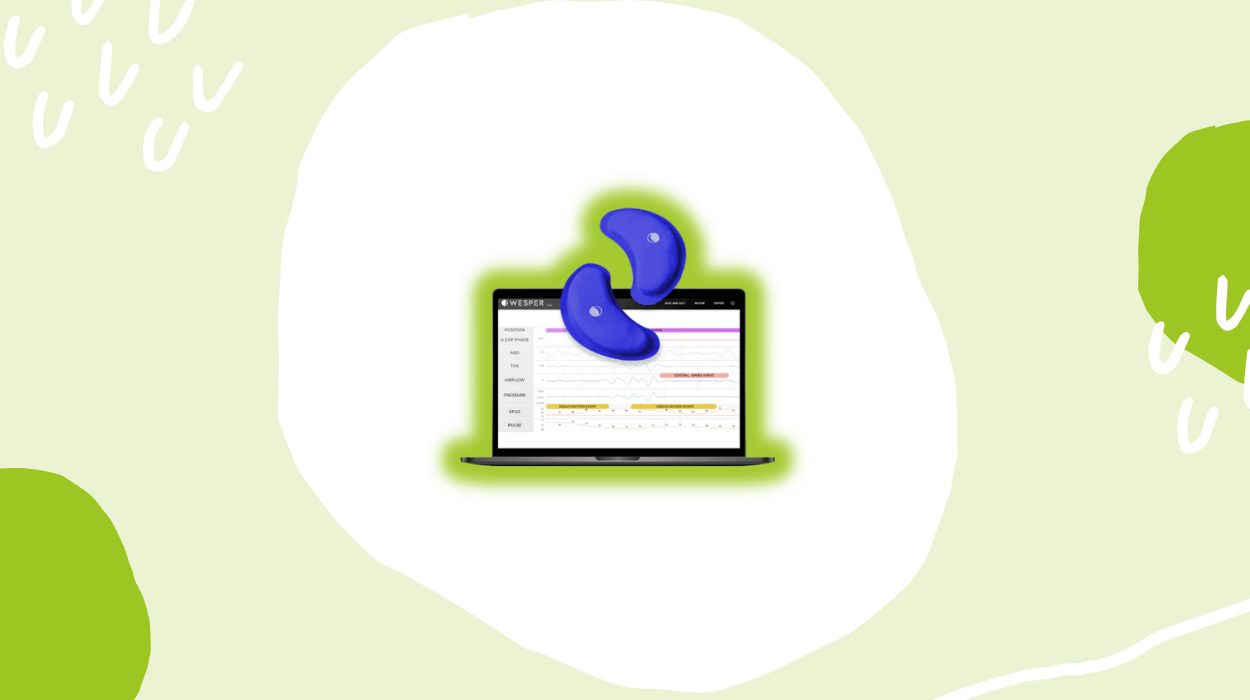
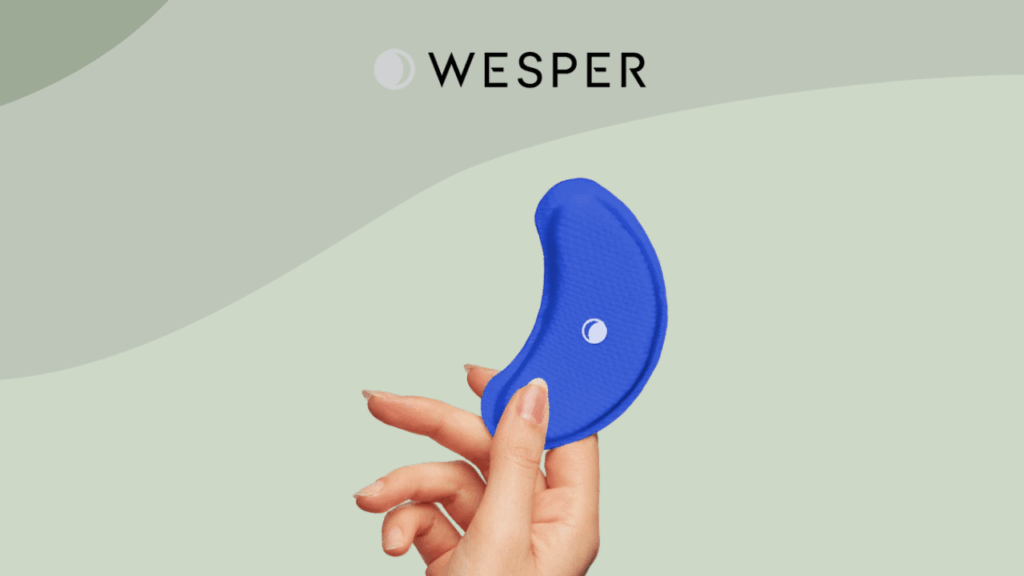
Wesper offers an FDA-cleared home sleep testing system that uses wireless patch-based sensors instead of traditional wired equipment. This system collects a range of physiological data, including respiratory effort, heart rate, sleep duration, and body position.
Wesper offers Home Sleep Testing, which evaluates how your body functions during sleep by tracking physiological signals such as respiratory effort, airflow, blood oxygen saturation, heart rate, and total sleep time. Respiratory effort and airflow reflect how efficiently your lungs move air, where increased effort may signal restricted breathing that can interrupt sleep continuity. Blood oxygen saturation shows how effectively oxygen is delivered to tissues, supporting cellular energy production and brain activity overnight. The system also captures pressure and body position, which can influence airway alignment and breathing stability during the night.
The test also evaluates advanced signals such as hypoxic burden, snoring, temperature, leg movement, and sleep staging to provide a more detailed view of how your body behaves during rest. These metrics help identify how often oxygen levels drop, how your brain transitions through different sleep phases, and how physical movements or disruptions may affect recovery, memory processing, and hormonal balance. Delivered through a system that combines a wearable patch, a patient app with sleep reports and educational insights, and a provider portal for ongoing monitoring, the HSAT supports both single-night assessments and multi-night tracking.
The Wesper platform connects the entire care process, from kit delivery and multi-night testing to automated AI scoring and provider consultations, into one unified workflow. It links the wireless patch to a cloud-based Sleep Improvement Platform that processes data into actionable clinical reports and ongoing monitoring tools. Its multi-night diagnostic capability captures comprehensive physiological data (respiratory effort, airflow, SpO2, heart rate, position, and more), enabling differentiation between obstructive, central, and positional sleep apnea. This provides longitudinal pattern tracking and response monitoring over multiple nights. AI scoring can give faster, standardized results while platform integration streamlines provider workflows.
Wesper uses disposable wireless patches for multi-night at-home data collection, capturing natural night-to-night variability in sleep patterns. All data is securely stored in a cloud-based system, with each night's results organized for easy review and comparison. The platform supports trend analysis over time. The provider portal consolidates multiple tests into a single patient record, enabling clinicians to identify patterns and adjust treatment based on longitudinal changes. This facilitates ongoing monitoring of therapy response, lifestyle impacts, or progression. This longitudinal capability offers a clearer clinical picture, supporting more informed care decisions through extended data collection and trend visualization.
Wesper positions its service as a clinical-grade sleep diagnostic, not a basic wellness tool. The process often requires a physician’s involvement, including prescriptions or clinical oversight. These requirements slow down how the brand can update and expand. New features, algorithm changes, or service improvements must go through validation and compliance checks before release. This means the experience is more structured and less immediate. You may need provider approval at different steps. Updates and improvements may take longer to reach you. This can make the service feel slower and less adaptable than typical consumer-focused solutions.
Wesper requires licensed physicians to review sleep data, confirm diagnoses, and guide treatment. This makes the service dependent on third-party providers instead of a fully automated, direct-to-consumer system. This reliance creates limits in access and timing. Progress depends on provider availability, schedules, and network capacity. Coverage can vary by location. Reviews may take longer if providers are not immediately available. This leads to less consistent timelines than fully automated sleep trackers. This means you have less control over the pace of your care. You need to wait for the provider's input before getting results or moving forward. Changes in provider access can also interrupt your care. This can make the experience feel slower and less predictable.
Sleep Doctor and Wesper take very different approaches to sleep care, which affects how you go from noticing a problem to actually improving your sleep. The experience begins differently across both platforms. Sleep Doctor introduces you to sleep care with a short 30-second sleep quiz designed to identify issues such as snoring, sleep apnea, insomnia, or uncertainty about symptoms. From there, you move into consultations with licensed experts such as registered respiratory therapists and polysomnographic technologists who help interpret your concerns and recommend next steps. This flows into a defined four-step pathway that includes consultation, choosing between options like a home sleep study or coaching, receiving hands-on care based on your results, and continuing with structured support to help improvements last. On the other hand, Wesper removes this guided progression and instead delivers a streamlined diagnostic workflow. Its wearable patch system collects multi-night data without wires, which is then processed into autoscored reports and reviewed via a cloud-based provider portal, emphasizing efficiency and clinical clarity over step-by-step coaching.
Sleep Doctor operates as a broad sleep care ecosystem where you can access home sleep tests alongside CPAP machines, masks, supplies, and accessories, as well as oral appliances, such as BongoRx, iNap Therapy System, and ULTepap with replacement parts. It also extends into sleep wellness with bedding and sleep accessories, supported by services like a free CPAP success course with machine purchase, clinical follow-up programs, subscription management, and price match guarantees. Wesper maintains a focus on diagnostics. Its core offering is an FDA-cleared Level 3 home sleep testing platform designed to deliver high-fidelity physiological data, without directly offering treatment products, coaching programs, or retail-style sleep solutions.
Technology and data depth represent one of the most significant differences. Sleep Doctor emphasizes accessibility by offering home sleep tests that are simple to use, quickly shipped, and capable of delivering results within a few days. The goal is to make sleep testing approachable and connect the findings to a broader care plan. Meanwhile, Wesper states that its device is built around advanced data capture and analysis. Its system records signals including thoracic and abdominal effort, airflow, pressure, SpO2, heart rate, respiratory rate, snoring, skin temperature, movement, and sleep staging. The brand mentions that its product also provides advanced metrics such as hypoxic burden, apnea indices including AHI 3% and 4%, oxygen desaturation index, total sleep time, T90, and leg activity.
Device design and usability reflect different priorities. Sleep Doctor focuses on convenience at the service level, ensuring that its home sleep tests are easy to use and fit into your routine, without emphasizing proprietary hardware innovation. Wesper places strong emphasis on device design. It highlights that its system uses flexible silicone patches that are durable, easy to clean, and designed for repeated use, with gentle adhesives that allow secure all-night wear without irritating the skin. The wire-free design of its device helps avoid common issues found in traditional testing methods, such as cannula discomfort and signal dropout, while maintaining consistent data collection.
Sleep Doctor provides a comprehensive and guided experience that combines diagnosis, treatment options, education, and ongoing human support within a single ecosystem. On the other hand, Wesper focuses on transforming sleep diagnostics through high-resolution data, multi-night analysis, and clinically validated insights.
CPAP.com and Wesper take different roles in sleep care, which directly affects how you move from identifying a problem to addressing it. The platform combines testing, equipment, and long-term therapy support in one place. In comparison, Wesper is built around improving diagnostic precision, offering an FDA-cleared at-home sleep platform that emphasizes clinical reliability and high-fidelity data capture.
When you compare what each platform offers, CPAP.com gives you a complete range of products designed to match different breathing styles and lifestyles. You can choose Auto CPAP (APAP) machines that automatically adjust pressure throughout the night, travel CPAP machines, and BiPAP machines. The brand also lets you build machine bundles that include everything needed for setup, and access masks across three categories, such as full face masks, nasal masks, and nasal pillow masks. Beyond that, CPAP.com extends into cushions, hoses, filters, and headgear, along with cleaning machines, mask liners, and chinstraps. Meanwhile, Wesper does not provide any of these therapy tools. It delivers a diagnostic system that captures Level 3 HSAT signals, including thoracic and abdominal effort, airflow, pressure, SpO2, and body position, along with additional data like snoring, skin temperature, heart rate, respiratory rate, and detailed sleep staging.
The testing process further highlights how differently you experience each platform. CPAP offers the at-home sleep test, positioned as a simple entry point priced at about $149 and completed in your own bed over one to two nights using a single device that fits into your nightly routine. Results are reviewed by a licensed sleep doctor within about a week, with a prescription and care plan provided if you are diagnosed. Meanwhile, Wesper expands this experience into a more advanced, multi-night diagnostic model that tracks 45 longitudinal trends, including AHI at both 3% and 4% thresholds, ODI, total sleep time, SpO2 levels, including T90, snoring, skin temperature, sleep position, and leg activity. This allows you to capture night-to-night variability and gain a more complete, clinically relevant picture.
The difference in device design also changes how the testing or procedure feels. CPAP.com relies on traditional CPAP therapy setups that involve machines, tubing, and masks, supported by a 60-night mask fit guarantee. The machines themselves are designed with smart features and dependable comfort, while accessories help reduce issues like dryness, skin irritation, and air leaks. Wesper removes most of that physical complexity by using a wireless, flexible patch system made from durable silicone that can be easy to clean and designed for repeated use. The patches use gentle adhesives for secure, all-night wear without irritating the skin, and eliminate common issues seen in other tests, such as cannula discomfort, signal dropout, or bulky wires.
Support and workflow further separate the two experiences. With CPAP.com, you get hands-on, human support through phone and chat, including direct access to CPAP Guides, quick reorder options, and prescription upload services. The platform also includes educational resources like its Sleep Talk blog, mask guides, and product deep dives, such as the AirSense 11 AutoSet review. In comparison, Wesper shifts this into a more clinical and technology-driven system, offering a cloud-based provider portal where clinicians can access their data, autoscored reports, and overscoring capabilities. It also combines automated workflows and real-time updates, reducing logistical burdens like inventory management while enabling faster, data-driven decision-making.
We evaluated Wesper by looking at its background, how long it has been around, and its presence across major review platforms like BBB, Trustpilot, Yelp, and Thingtesting. The brand is not available on any of these platforms, which limits access to verified, large-scale customer feedback. Based on available information, Wesper shows promise in terms of usability and product design, but the limited information available through these platforms impact its overall credibility of the brand.
To evaluate Wesper, we reviewed real user discussions on Reddit to understand how the experience holds up after purchase. The feedback points to confusion around insurance-related documentation. One user expected to receive a bill or superbill for out-of-network reimbursement but received inconsistent responses from multiple representatives. Even though they only requested documentation to submit independently, they were eventually told that it would not be provided.
There are also repeated mentions of customer support challenges. Interactions with both representatives and automated systems were described as unclear and, at times, unhelpful. In a category tied to sleep data and health concerns, this lack of clear communication can affect how reliable the experience feels.
Another point raised is subscription management, where one user reported being unable to cancel despite not using the product. While this is limited feedback, it contributes to a broader concern around post-purchase control and account handling.
These discussions reflect a gap between the convenience of an at-home sleep test and the expectations that come with using it beyond personal tracking. The experience appears to become more complicated when documentation, reimbursement, or account management is involved.
Wesper is built around multi-night data collection, AI-driven analysis, and provider-reviewed interpretation. Its patch-based setup and connected app reflect a shift away from traditional lab studies toward a more accessible, data-rich home testing model. The main strength is diagnostic depth. The platform provides a more complete view of sleep patterns by collecting data across multiple nights and analyzing physiological signals. Its AI-based scoring system adds consistency and allows for faster processing of results.
However, the platform relies on provider involvement for interpretation and next steps, which can slow timelines and limit flexibility. The adhesive patches may cause mild skin irritation for some users, especially with repeated use. Wearing sensors overnight can feel unfamiliar at first and may slightly affect sleep quality during the initial nights, which can influence data capture.
Wesper may be a strong fit if you want a data-driven, at-home system with deeper, multi-night insights into your sleep. If you prefer faster turnaround, less provider involvement, or a simpler plug-and-play experience, these factors are worth considering before committing.

Contact us at [email protected] or follow @leafsnap on Twitter! View our Privacy Policy.