



Carnivore Bar offers meat-based snack bars made primarily from grass-fed beef and beef tallow, which prioritize protein and healthy fat content while minimizing carbohydrates. These bars could help suppress snack cravings, support post-exercise recovery and muscle growth, and promote satiety. However, are these bars safe to include in your daily routines?
In this review, we examine the brand’s ingredient philosophy, macronutrient structure, and its positioning within the snack market. The review further explores the associated advantages and potential brand limitations.
Founded by Phillip Meece, Carnivore Bar provides animal-based meal replacement bars that are presented as compatible with carnivore, paleo, and keto dietary patterns. As per its official website, a single bar features around 400-420 calories, with zero-carbohydrate and honey-containing variants also available.
The manufacturers state that the beef used in the bars is grass-fed and sourced from American ranch operations. It references regenerative ranching practices and American sourcing as part of its supply narrative. The bars do not contain plant-derived additives, seed oils, sweeteners, or synthetic preservatives. As per the makers, the offerings can be suitable for on-the-go consumption and are shelf-stable to maintain structural integrity across different temperatures. However, their texture may soften in warmer environments due to the natural fat content.
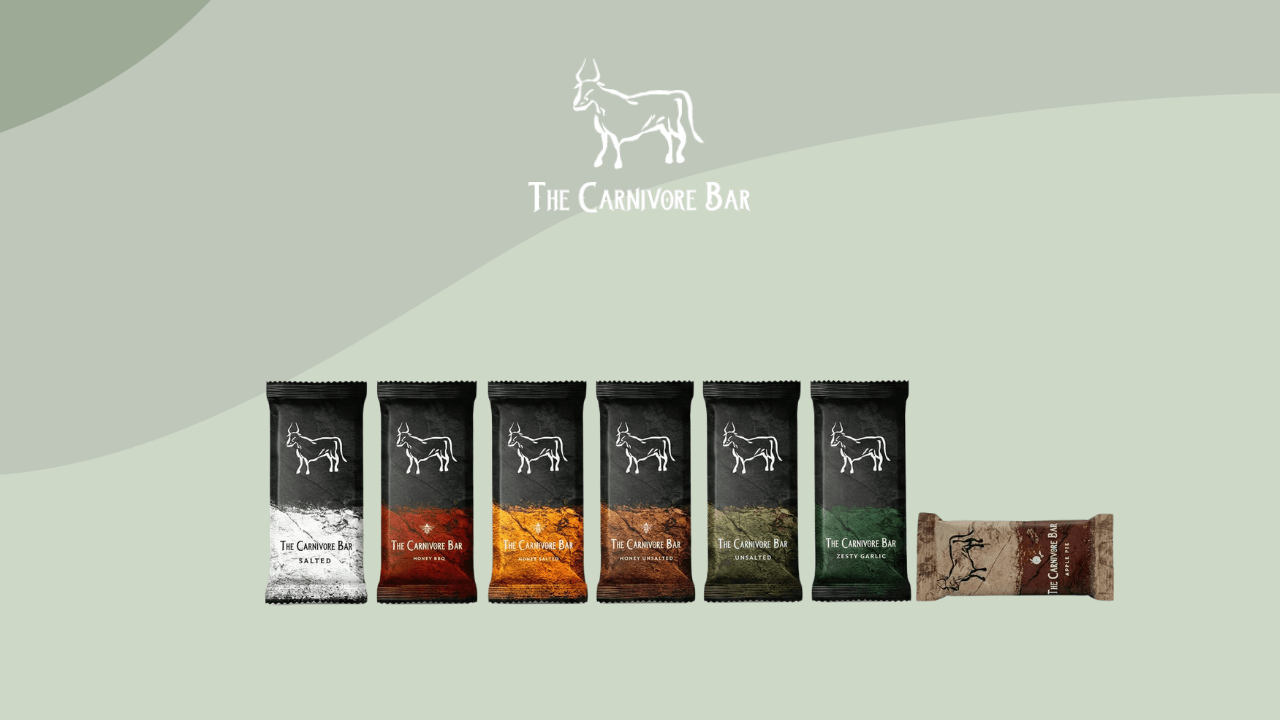
Carnivore Bars are shelf-stable meat-based bars that primarily contain grass-finished beef, beef tallow, and mineral-rich Redmond salt, with raw honey added in some varieties. According to its official website, each 2-oz bar features about 20g of protein and 35g of animal-based fat. Flavor options include salted, unsalted, honey BBQ, zesty garlic, honey salted, honey unsalted, and apple pie.
Grass-finished beef contains protein and essential amino acids needed for muscle maintenance and cellular repair. Amino acids like leucine help stimulate the mTOR signaling pathway, which supports muscle protein synthesis and recovery. Beef also naturally contains nutrients such as heme iron and vitamin B12 that contribute to oxygen transport and red blood cell formation, helping support energy metabolism during physical activity.
Carnivore Bars also feature beef tallow, which supplies saturated and monounsaturated fatty acids that serve as a dense energy source and help slow digestion. Such effects may increase satiety after consumption and suppress snack cravings. Redmont salt contributes trace electrolytes that could help maintain fluid balance and nerve signaling. In honey-based flavors, small amounts of raw honey provide simple carbohydrates such as glucose and fructose, which your body can absorb rapidly and utilize for immediate energy production through glycolysis.
Carnivore Bar presents its offerings as inspired by traditional pemmican, a food historically used by Native American tribes. Historical accounts describe pemmican as valued for its portability, long shelf life, and high energy density, qualities that made it useful in demanding travel and survival conditions.
The brand states that its meat bars follow the basic structure of this historical food. Traditional pemmican typically consisted of dried meat combined with rendered animal fat such as tallow, sometimes with added salt. Carnivore Bar explains that its formulation mirrors these elements using beef, tallow, and salt while avoiding harmful additives. The brand also connects this approach to the broader ancestral diet movement, which promotes eating patterns inspired by foods consumed before modern industrial food production.
Physical retail availability of Carnivore Bar offerings remains limited. The brand sells most of its products through its official website, providing no store locator or list of retail partners on its website. Official materials also do not indicate product placement in major grocery chains like Walmart or Kroger. This suggests that the brand does not maintain widespread distribution through brick-and-mortar retailers. It may limit the opportunity to view and compare products in-hand before purchase.
Carnivore Bar’s compatibility with mainstream nutrition guidance is limited due to the brand’s strict dietary focus. The brand keeps its identity on a carnivore diet philosophy and promotes its offerings as meal replacement bars made with grass-fed beef, beef tallow, and salt. This animal-only formulation strategy differs from widely recognized nutrition frameworks that typically encourage balanced meals including fruits, vegetables, whole grains, and dietary fiber.
As a result, the brand’s offerings can feel restrictive when compared with snack options that also include plant ingredients and fiber. The narrow dietary focus may therefore reduce the brand’s suitability if you prefer more balanced or diverse nutrition products.
Equip Foods and Carnivore Bar both offer animal-derived nutrition products and focus on minimal ingredient formulations. However, the brands differ in their breadth of offerings, positioning, testing transparency, and pricing structures.
In terms of positioning and product range, Equip Foods emphasizes whole-food–derived nutrition powders and functional formulations. The brand claims to offer doctor-formulated products built around limited ingredient lists and nutrient-dense animal sources. Its product catalog includes options like Prime Protein Powder, Prime Bar, Grass-Fed Collagen Powder, and Clean Coffee. Meanwhile, Carnivore Bar focuses on a single shelf-stable bar. Its signature Carnivore Bars are made from grass-finished beef, beef tallow, and mineral salt. They are provided in multiple flavor varieties, including Honey Salted, Salted, Honey BBQ, Zesty Garlic, and Apple Pie. Beyond bars, the brand does not extend into other product formats.
Product purpose also differs between the brands. Equip Foods products are positioned as daily nutrition support formulas intended to complement meals through protein powders, collagen drinks, colostrum products, and functional snacks. Meanwhile, Carnivore Bar positions its offerings as portable meal replacements with extended shelf stability. This could make its offerings compatible for travel, outdoor activity, or situations where refrigeration and cooking are not available.
Pricing structure further differentiates the brands. Most offerings from Equip Foods products are typically priced at around $22–$70, with Prime Bars priced around $49.99, Colostrum at $47.99, and Prime Protein at $63.99. Meanwhile, the offerings from Carnivore Bar have a premium positioning and are available in packs of 6, 24, and 50 bars. These packs are typically priced between $95 and $700.
When comparing Chomps and Carnivore Bar, both brands provide animal-based products and emphasize simple ingredient formulations. However, the brands have some nuances in terms of their range of offerings, product formats, nutritional philosophy, and quality standards/certifications.
Founded by Pete Maldonado and Rashid Ali, Chomps focuses on portable meat sticks formulated as convenient protein snacks intended for everyday consumption. The brand organizes its catalog across categories like beef, turkey, venison meat sticks, chomplings, and variety packs. Some signature offerings in its catalog include the Original Turkey Stick, Salt & Pepper Venison Stick, Original Beef Stick, and Habanero Beef Stick. Meanwhile, Carnivore Bar keeps its identity around pemmican-style meat bars intended to function as compact meal options. The brand’s flagship Carnivore Bar is formulated from grass-finished beef, mineral salt, honey, and beef tallow. Flavor options provided include Honey Unsalted, Zesty Garlic, Salted, and Honey BBQ. Such offerings are provided in six-pack, 24-pack, and a larger 50-bar Ammo Box sizes.
Ingredient philosophy overlaps in the emphasis on simple sourcing but differs in structure. Chomps uses grass-fed and finished beef and venison, along with turkey raised without antibiotics or added hormones. Meanwhile, Carnivore Bar highlights a restrictive formulation model built around grass-fed beef, beef tallow, and honey, while avoiding plant ingredients, seed oils, preservatives, and fillers.
Chomps highlights its Certified B Corporation status, Non-Ultra-Processed Food (Non-UPF) verification, and programs that donate near-expiration products to reduce food waste. Meanwhile, Carnivore Bar frames its identity around traditional preservation methods (such as pemmican) and compatibility with animal-based diets such as carnivore and keto. Chomps operates as a widely distributed snack brand producing moderate-protein meat sticks designed for quick consumption and convenience. Meanwhile, Carnivore Bar is centered on high-fat pemmican-style bars intended to deliver dense calories and long shelf stability for meal options, travel, or emergency food storage.
In the evaluation of Carnivore Bar’s reputation, we reviewed its background, operational transparency, and presence across independent review platforms. The brand offers meat-based meal replacement bars inspired by pemmican food.
At the time of writing this review, the brand does not maintain active listings or review profiles across independent review forums such as Trustpilot, Better Business Bureau, or TenereTeam. The lack of ratings or aggregated feedback on these independent forums may restrict the availability of publicly documented customer experiences to assess brand reliability, service quality, and product satisfaction.
To evaluate Carnivore Bar, we reviewed community discussions and user experiences shared on Reddit between 2025 and 2026. One user described the Honey Salted Carnivore Bar as having a buttery texture due to the high fat content, with small crunchy bits from honey and salt. The flavor was characterized as similar to congealed fat with hints of honey, salt, and beef. Taste and formulation receive mixed reactions across Reddit threads. Some users reported enjoying certain flavors, particularly the plain grass-fed beef bar with salt, while others described the flavor as unusual or unappealing, especially when consumed at room temperature.
However, the most frequent criticism across the discussion revolves around pricing. Some users pointed out that a box of six bars costs around $100, which was expensive relative to purchasing fresh meat. Several users stated that while the concept of a shelf-stable meat bar was interesting, the premium pricing made it difficult to justify as a regular purchase. Another recurring discussion point involves the use of honey in certain variants, with some strict carnivore diet followers criticizing the inclusion of honey because it introduces carbohydrates.
Based on the available feedback, it appears that several users appreciated the convenience and niche dietary positioning of Carnivore Bar products. However, a few users questioned the cost-to-value ratio of the brand’s products.
Carnivore Bar is built around meat-based bars in a shelf-stable format. The brand’s offerings may align with carnivore, keto, and low-carbohydrate eating patterns. However, the brand’s offerings consist entirely of animal-derived ingredients, which could limit its compatibility. These offerings are available only in a bar format, limiting convenience and choice of format, especially if you prefer formulations in powders or liquid formats. Added considerations relate to tolerance and dietary compatibility. High-fat intake from the brand’s offerings may cause digestive discomfort, while their saturated fat levels may pose a potential risk for those with cardiovascular concerns. View the brand’s offering as a supportive addition to your routine, alongside meals that also have a balanced macro profile, such as healthy fats, quality protein, and appropriate carbs, to maintain a dietary equilibrium.

Contact us at [email protected] or follow @leafsnap on Twitter! View our Privacy Policy.