
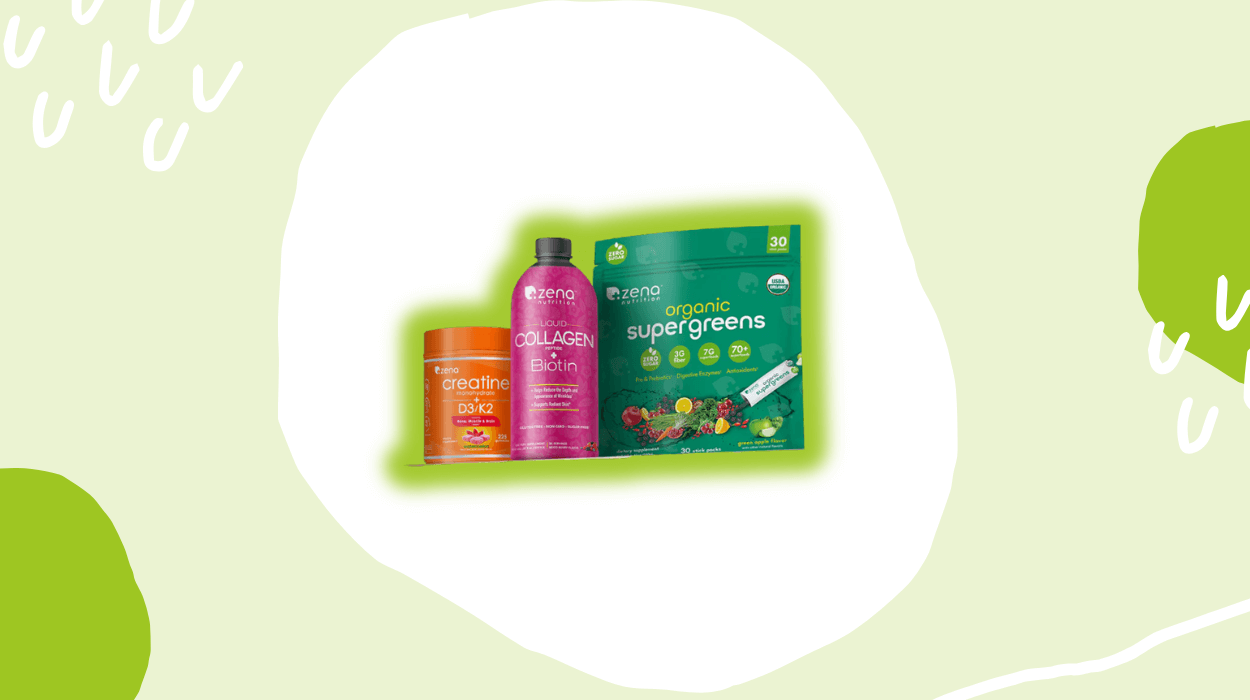

Zena Nutrition offers a range of organic greens. They come in powders, capsules, gummies, and liquid formats, offering compatibility across different consumption preferences. Its formulations maintain a focus on targeting common nutrient intake gaps, alongside providing support for energy metabolism, immunity, cardiovascular health, and cognitive health.
This review will examine the brand’s formulation approach, range of offerings, associated brand advantages, and potential limitations. It also compares Zena Nutrition with similar brands that offer greens powders and functional nutrition support formulations.
Zena Nutrition is a U.S.-based brand that focuses on supporting daily nutrition goals and metabolism. The brand’s core offering, called Organic Supergreens, is described as USDA Organic certified, zero-sugar, and comprising over 70 superfoods. It is also available in diverse formats like stickpacks, capsules, and tubs.
The brand’s catalog further includes Creatine Gummies with D3 and K2, Liquid Collagen + Biotin, and Zena Supergreens + Energy + Hydration. The manufacturers state that all products are made in the United States using globally sourced ingredients and manufactured in cGMP-certified facilities. According to its official website, all products undergo independent third-party laboratory testing to screen for safety, potency, quality, and presence of contaminants.
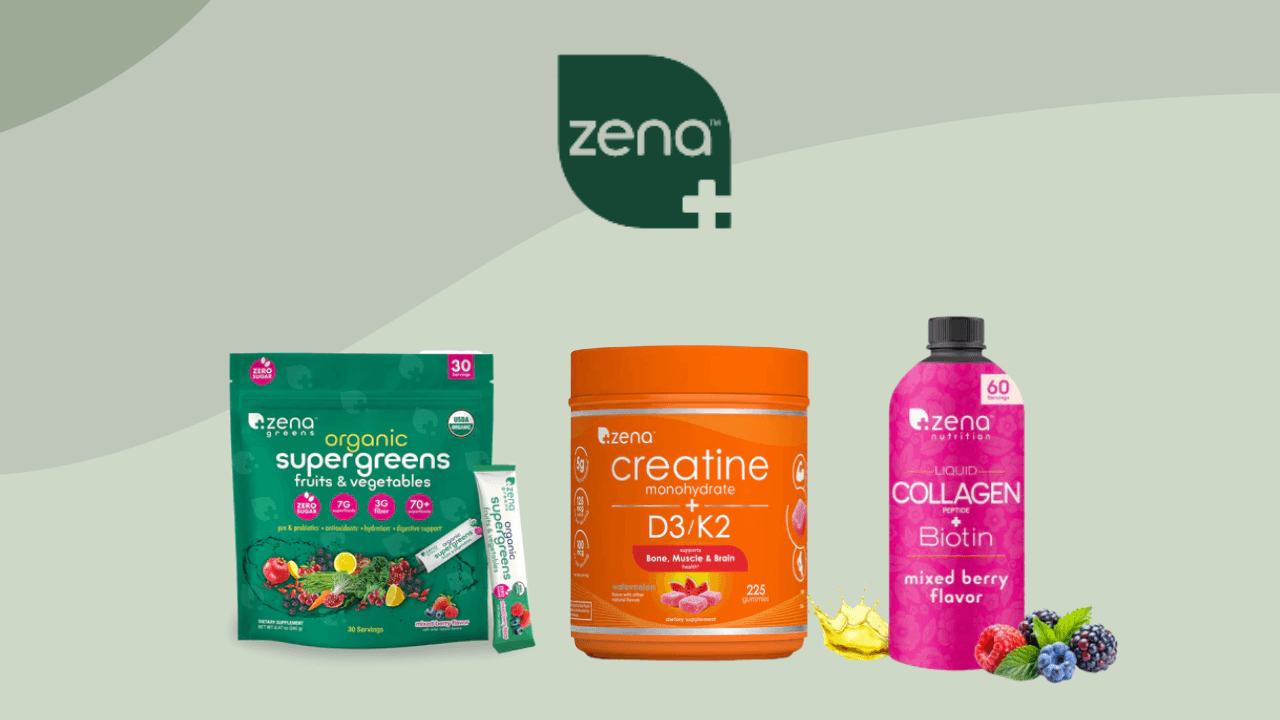
Supergreens Stickpack contains a mix of plant-based ingredients, fiber, probiotics, digestive enzymes, and mushroom extracts. It contains organic greens like spirulina, kale, wheat grass, and other plant powders that supply vitamins, minerals, phytonutrients, and antioxidants.
The powder also includes around 3 grams of dietary fiber per stick, which may help support normal digestion and bowel regularity by adding bulk to stool and promoting beneficial gut bacteria growth.
Organic spirulina powder in the formula is a blue-green algae that contains protein, iron, and antioxidant compounds like phycocyanin. These compounds might lower oxidative stress and support immune cell activity. Kale powder provides vitamins A, C, and K along with polyphenols that could help protect skin and cells from free radical damage. The formulation also features pea protein powder with amino acids that the body utilizes to maintain muscle tissue, enzymes, and structural proteins.
Supergreens Stickpack also includes fruit powders like grape, pomegranate, and cranberry. They contain polyphenols and anthocyanins that could support vascular health and help lower inflammation by neutralizing reactive oxygen species. The makers further added a mushroom blend in the formula, which includes shiitake, cordyceps, lion’s mane, and chaga mushrooms. Such mushroom compounds provide beta-glucans that interact with immune receptors in the gut and help regulate immune responses.
Liquid Collagen + Biotin intends to support skin elasticity, hair strength, and nail integrity while also helping fade the appearance of wrinkles. According to its official website, the liquid contains 2500mcg of Verisol® bioactive collagen peptides and 5000mcg of biotin per 2-teaspoon (10 ml) serving.
Verisol® collagen peptides are broken down into amino acids like glycine, proline, and hydroxyproline, which the body uses as building blocks to support the strength of connective tissues, including skin, joints, and hair structures. Collagen peptides also stimulate fibroblast cells in the skin to increase collagen and elastin production, which may improve skin elasticity and reduce wrinkle depth.
The inclusion of biotin (vitamin B7) acts as a coenzyme for metabolic reactions involved in fatty acid synthesis, amino acid metabolism, and keratin production. Biotin availability could support normal keratin infrastructure, which may improve nail strength and hair thickness.
Supergreens + Energy + Hydration pairs plant-based greens, natural caffeine sources, a hydration blend, and antioxidant ingredients. The greens blend includes organic chlorella, cabbage, moringa, parsley, and sea buckthorn. Such plant ingredients provide phytonutrients, chlorophyll, vitamins, and antioxidants that might reduce oxidative stress and support immune and metabolic function.
The formulation contains an energy blend comprising green coffee bean, green tea, and yerba mate. Such ingredients naturally provide caffeine along with compounds like chlorogenic acids and catechins. Caffeine works by blocking adenosine receptors in brain, which reduces fatigue signals and increases alertness.
Supergreens + Energy + Hydration also contains a mix of coconut water powder, sodium chloride, potassium chloride, green bell pepper, and celery. Sodium and potassium are essential electrolytes that regulate fluid balance, nerve signaling, and muscle contraction. Coconut water powder provides added minerals that help maintain intracellular hydration, which is important for supporting physical performance and cellular metabolism.
Creatine Monohydrate + D3/K2 gummies pair micronized creatine with vitamins D3 and K2 to support muscle function, bone health, and cognitive function. Creatine in the formulation works by increasing phosphocreatine stores in muscle cells, which helps support the regeneration of ATP (adenosine triphosphate), which may help improve strength, power output, and muscle performance.
Vitamin D3 could help the body absorb calcium from the intestine and support muscle contraction, immune function, and bone health. The gummies further include vitamin K2 that activates osteocalcin and matrix Gla protein, which bind calcium into bone tissue and minimize calcium buildup in arteries and soft tissues. Such mechanisms may support bone mineralization, which could support connective tissue health and joint function.
Zena Nutrition states its Supergreens formulations are compatible with multiple dietary preferences. Product pages state that the blends are gluten-free, dairy-free, soy-free, non-GMO, and sugar-free. The formulations also exclude eggs and gelatin, supporting a vegan, plant-based composition.
The brand explains its gluten-free standards in further detail. For instance, the brand states that wheatgrass and barley grass are harvested before the grain sprouts, which prevents gluten formation. It also claims that 100% of the finished formulation is tested to confirm it meets FDA gluten-free standards of less than 20 ppm.
The brand positions its offerings as compatible with plant-based, low-sugar, and allergen-conscious routines. Clear labeling further reduces the need to review every ingredient when avoiding gluten, dairy, soy, added sugars, or animal-derived components.
Zena Nutrition distributes its products through multiple retail channels beyond its official website. The brand’s product lines, including Supergreens tubs and single-serve stick packs, are available directly through its official website. Verified listings also show availability on retail outlets like Walmart, Vitacost, Costco, and The Vitamin Shoppe.
A multichannel distribution approach could expand the brand’s reach while supporting both online and national retail access. This may increase flexibility and convenience, especially if you are looking to evaluate products in-hand or prefer to shop in-person.
Zena Nutrition does not provide clear probiotic potency breakdowns across its Supergreens product lines. The brand does not list colony-forming unit counts for each probiotic strain, and does not confirm whether the stated potency is guaranteed through the expiration date.
This gap reduces transparency around the probiotic blend. Without strain-specific counts, it is not possible to determine whether each strain appears at commonly studied levels or in smaller amounts within the total formula. Assessing strain strength and long-term viability becomes less straightforward without detailed disclosure, which may lower confidence in the consistency and efficacy of probiotic blends in the brand’s formulations.
AG1 and Zena Nutrition both offer daily greens products intended to simplify daily nutrition routines. However, the brands have some nuances in terms of their core positioning, range of offerings, testing standards, and their approaches to sustainability.
AG1 keeps its identity on supporting foundation nutrition, presenting a small, focused lineup intended to replace multiple capsules and powders with a single daily drink mix. Zena Nutrition also emphasizes routine simplification, but its portfolio expands into multiple product categories covering organic greens, collagen, and performance-oriented formats.
Product structure highlights another point of difference between the brands. AG1 organizes its offerings across the Daily Health and Sleep Support categories. The Daily Health lineup includes AG1 Next Gen in pouch and travel pack formats, AG Omega3, and AG Vitamin D3+K2 liquid drops. Its Sleep Support line features a single AGZ Nightly Sleep Support product. Bundles like the Day and Night Bundle, Full Foundation Stack, and Home & Away Pack further extend its lineup.
Meanwhile, Zena Nutrition structures its catalog around the Organic Supergreens formulation, available across tubs, stickpacks, and capsule formats. Beyond this, the brand also offers Zena Supergreens + Energy + Hydration, Creatine Gummies with D3 & K2, and Liquid Collagen Peptides + Biotin.
Quality frameworks further distinguish the two brands. AG1 holds NSF Certified for Sport® certification, which includes annual facility audits, toxicology review, and testing for more than 280 banned substances. As per its official website, each batch is tested for microbial contaminants, heavy metals, allergens, residual solvents, pesticides, and label accuracy, with botanical identity verified through Alkemist Labs and sensory testing performed for taste and consistency. Meanwhile, Zena Nutrition states that its products are made in cGMP-certified facilities and undergo independent third-party laboratory testing for safety, purity, and quality.
When comparing Supergreen Tonik and Zena Nutrition, both offer daily greens for targeting common nutritional needs. However, the brands differ in their formulation philosophy, breadth of offerings, quality frameworks, testing standards, and accessibility.
Developed by Human Tonik LLC, Supergreen Tonik focuses on its comprehensive 7-in-1 greens formula intended to support energy levels, immunity, cognitive performance, sleep, and fitness goals. Meanwhile, Zena Nutrition positions itself around making nutrition simple and enjoyable for everyday life through its range of organic greens formulations and related products.
In terms of product range, there are some differences between the brands. Supergreen Tonik keeps its portfolio around a Greens powder available in Mint and Berry flavors. The brand offers bundle-based purchasing options, including one-month, three-month, and six-month supplies. Meanwhile, Zena Nutrition offers multiple product categories, with its core Organic Supergreens product available in capsules, tubs, and stickpacks. Beyond this, the brand further extends its lineup with Liquid Collagen Peptides + Biotin and Creatine Gummies with Vitamin D3 and K2.
At the formulation level, Supergreen Tonik highlights a structured mix of 38 plant-based superfoods, adaptogens, vitamins, and minerals. The brand’s Supergreen Tonik powder features spirulina, chlorella, moringa, kale, spinach, and barley grass alongside adaptogens like ashwagandha, bacopa, rhodiola, and L-theanine. It also features added immune-support nutrients like garlic, dandelion, olive leaf extracts, and vitamins A, B12, C, D, E, and K. Meanwhile, Zena Organic Supergreens contains more than 70 superfoods within a mix that includes organic fruits, vegetables, digestive enzymes, fiber, hydration components, and a mushroom complex. Ingredients like organic spirulina, wheat grass, kale, chlorella, garlic, moringa, parsley, açaí juice powder, and pomegranate juice powder are included.
Supergreen Tonik presents itself as a premium, science-focused greens brand built around transparency, comprehensive nutrient coverage, and single-category functional focus. Meanwhile, Zena Nutrition operates as a broader nutrition support brand emphasizing organic certification, convenience, and accessible nutrition support across multiple product formats.
In evaluating Zena Nutrition, we analyzed its operational background and presence across independent review forums. Publicly available information about the brand’s operational history remains limited, which makes it difficult to establish a clear long-term track record.
Independent review visibility also remains limited. Currently, there is no active presence of the brand across major third-party review platforms like the Better Business Bureau (BBB), ThingTesting, and Trustpilot. As a result, publicly accessible complaint histories, verified ratings, and dispute-resolution patterns are not available through these sources.
Based on the limited public history and lack of independent review coverage, the brand’s reputation appears to be still developing. At this stage, the brand’s credibility cannot be considered fully established and remains in an early growth phase.
To evaluate Zena Nutrition, we analyzed verified Amazon feedback across two of the brand’s core products to identify common themes around taste, perceived results, convenience, and recurring concerns.
Liquid Collagen Peptides + Biotin holds a 4.4 out of 5 score from more than 2,200 reviews. Positive feedback focused on visible beauty-related outcomes, particularly stronger nails, smoother skin, and improved hair appearance after consistent use. Many consumers described the liquid format as convenient compared with powders or pills. However, a few users disliked the taste or smell, describing it as syrup-like or slightly grainy.
The Supergreens + Energy + Hydration product carries a 4.3 out of 5 rating based on 1,800+ reviews. Positive feedback highlighted better taste compared with typical greens powders, with many users describing the berry flavors as more palatable. Several users also noted increased energy, improved mood, and convenience from portable stick packs. However, some users expressed that the berry flavor was overly sweet when mixed with water, and preferred blending it into smoothies instead.
Based on the available feedback, it appears that most users appreciate the brand’s offerings for their convenience, flavor profile, and perceived benefits. However, recurring comments around taste preferences and occasional value considerations indicate that experiences vary based on expectations and personal preferences.
Zena Nutrition emphasizes daily nutrition support through a mix of plant ingredients, probiotics, and digestive enzymes across its Organic Supergreens line. These offerings are intended to help fill in common nutrition gaps, not as a replacement for whole foods and nutrient-dense meals.
However, the brand’s product efficacy and safety claims are based on testimonials rather than published clinical research on its finished formulations. While the brand highlights global ingredient sourcing, the potential for cross-contact risks with allergens may add further transparency and sensitivity considerations.
When considering the brand’s offerings for your needs, it’s essential to take tolerance and variability in response considerations into account. It is also important to note that personal experiences and outcomes with the brand’s offerings may vary based on diet quality, hydration status, frequency of use, and lifestyle factors (such as exercise and sleep schedule).

Contact us at [email protected] or follow @leafsnap on Twitter! View our Privacy Policy.