


VSL3 is a microbiome-focused brand built around probiotic formulations to support gut microbiome balance, digestion, and immunity. The brand highlights that its formulations are based on published probiotic research rather than lifestyle or trend-driven framing. Its product lines emphasize multi-strain formulations, high colony-forming unit (CFU) counts, and viability of probiotic strains. However, are the brand’s offerings compatible for daily use?
This review examines the brand’s scientific positioning, formulation structure, clinical heritage, and range of offerings. It also explores the associated advantages and potential brand limitations.
As per the official site, VSL3 focuses on developing probiotic formulations that support in managing complex digestive needs and everyday gut and vaginal health.
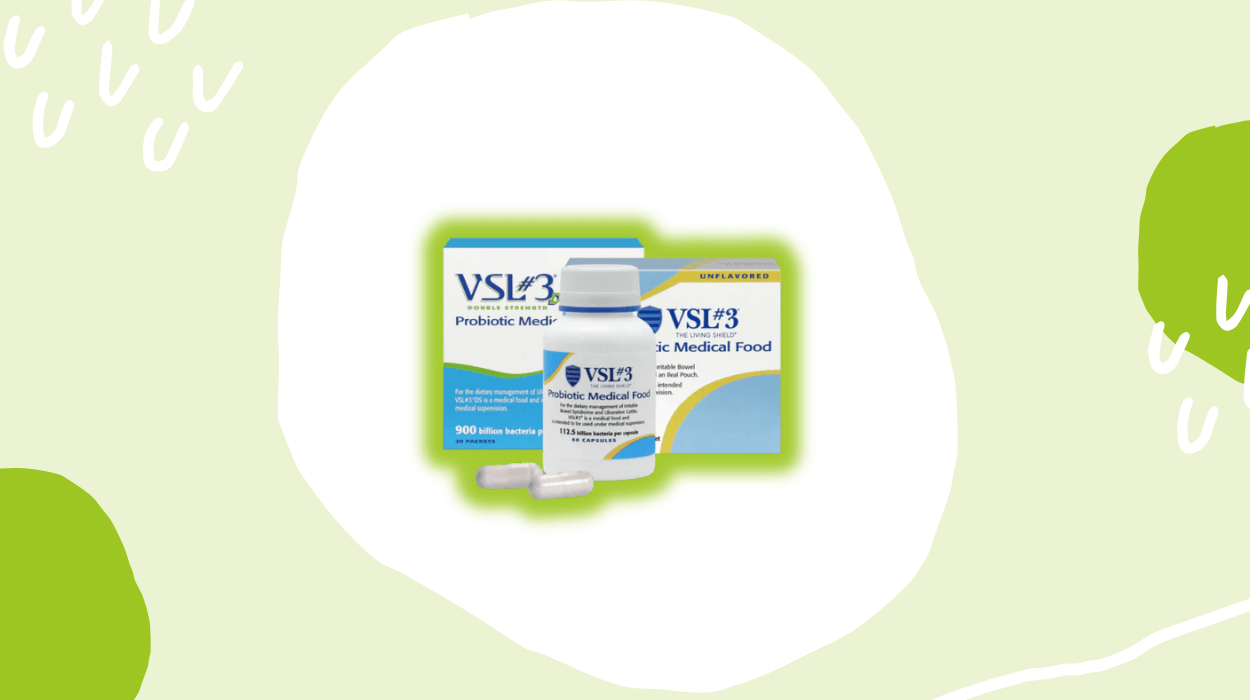
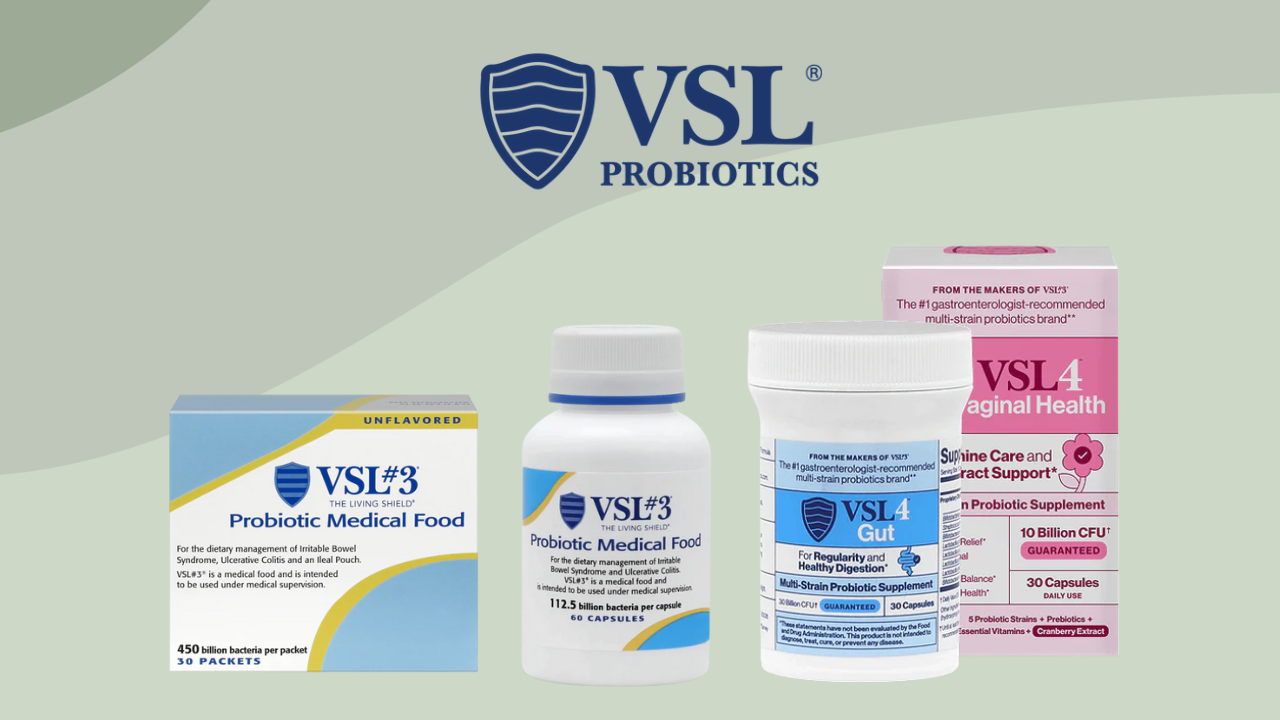
The brand’s offerings are spread across two primary product lines. It features VSL3®, which is positioned as a probiotic medical food line that intends to support gut health and provide symptomatic relief from gastrointestinal concerns like IBS, colitis, and pouchitis. Offerings under this line comprise Capsules with 112.5 billion CFUs of probiotics, Powder with 450 billion CFUs, and DS Powder with 900 billion CFUs of probiotics.
The brand also extends into VSL4®, a shelf-stable probiotic supplement line developed for everyday use, which may support digestion, immunity, and bowel regularity. Offerings under this line include Gut Capsules with 30 billion CFUs of probiotic strains and a Vaginal Health formulation to support vaginal microbiome balance.
According to its official website, the brand’s offerings are dairy-free, gluten-free, soy-free, and non-GMO. The manufacturer further emphasizes verified potency, with product servings ranging up to 900 billion CFUs of live bacteria, and states that labeled counts are maintained through expiration.
VSL3 Powder is formulated to support gut microbiome balance, with the makers claiming that it may assist in the dietary management of conditions like Iritable Bowel Syndrome (IBS), pouchitis, and ulcerative colitis.
The formulation contains strains like Streptococcus thermophilus, which contribute to carbohydrate fermentation and support lactose digestion by producing beta-galactosidase enzymes. Such mechanisms may support the gut and regularity. Bifidobacterium strains like breve are also included in the formula, which support the breakdown of complex carbohydrates and produce acetate and other metabolites that support epithelial barrier integrity.
VSL3 Powder also includes Lactobacillus acidophilus strain, which contributes to lactic acid production and lowers local pH. Such activity could support microbial balance and improve bile acid metabolism and digestive enzyme activity. The makers further include Lactobacillus plantarum to support healthy inflammatory responses and mucosal barrier stability.
VSL3 Capsules may help support fermentation processes, promote gut barrier integrity, and reduce gut inflammation. According to its official site, one capsule provides 112.5 billion CFUs of probiotic strains to support digestion and gastrointestinal comfort. The product is stored and distributed under refrigerated conditions to help maintain bacterial viability through the stated shelf life when handled as directed.
Lactobacillus paracasei strains in the formula contribute to lactic acid production and influence the intestinal pH environment, which may support microbial balance and digestive enzyme activity. The makers also included Lactobacillus helveticus strains that participate in protein and peptide metabolism, which could influence gut signaling and epithelial function.
VSL3 Capsules also include Bifidobacterium lactis to support short-chain fatty acid production, particularly acetate. These metabolites contribute to epithelial energy supply and help reinforce tight junction integrity, which could support intestinal permeability and stool consistency.
According to its official website, VSL3 DS Powder is formulated to offer support for specific gastrointestinal conditions, particularly ulcerative colitis and pouchitis. The formulation contains probiotic strains drawn from bacterial genera, including Lactobacillus, Bifidobacterium, and Streptococcus strains. Bifidobacterium strains serve as an energy source for intestinal epithelial cells and help reinforce tight junction proteins that regulate intestinal permeability. Such effects may help maintain controlled immune responses within the gut. Lactobacillus strains contribute to lactic acid production, which lowers local intestinal pH and influences microbial competition. This environment may support liver function and digestive enzyme activity. Streptococcus strains contribute to carbohydrate metabolism and enzymatic activity within the intestinal tract, which could support stool consistency and intestinal comfort.
VSL3 is structured around a single, fixed multi-strain formulation rather than a rotating set of blends. The brand maintains one defined eight-strain probiotic formulation approach across its entire product lines instead of introducing multiple variations for different positioning. Following the 2016 split, when the original De Simone formulation became Visbiome, the current VSL3 line continued with a consistent strain architecture across delivery formats.
Operational standards highlight this consistency. Refrigeration requirements, clear genus and species strain disclosure, and defined potency through expiration point to a controlled and structured approach embedded at the company level. This could reduce uncertainty about what the brand represents and how its products are built. Choosing the brand could mean selecting a single, established strain framework rather than navigating multiple blends or reformulated options.
VSL3 claims to be backed by clinical studies and highlights its identity as closely tied to an established body of peer-reviewed research. The brand links its identity to studies indexed in sources like PubMed that examine its defined eight-strain probiotic CFUs across gastrointestinal contexts, including IBS and ulcerative colitis. Such research history covers multiple years and reflects sustained academic and clinical interest rather than short-term product testing.
The presence of peer-reviewed discussion indicates that the formulation category has been examined within clinical settings beyond marketing claims. Past classification as a medical food further signals integration into clinical dialogue and regulatory contexts rather than purely lifestyle positioning. A formulation strategy that has been repeatedly evaluated and discussed over time may support clearer conversations with healthcare providers and more informed long-term planning.
Public access to detailed testing documentation for VSL3 offerings is limited. The brand does not release batch-specific Certificates of Analysis, third-party microbial potency verification reports, or strain-level genetic identification records like whole-genome sequencing confirmation. Published stability data showing CFU retention over time under defined storage conditions are also not made available.
Environmental and handling-related testing information is also absent. Temperature excursion studies, accelerated stability modeling, and stress-testing datasets are not accessible through the brand’s official site. Without these materials, independent review of labeled potency, strain identity, or stability performance at the lot level is not possible. Such a lack of transparency means there is no direct way to confirm CFU counts at manufacture versus expiration, evaluate strain authentication methods, or assess how well potency is maintained under refrigeration and real-world conditions.
When comparing the brands, Visbiome and VSL3 differ primarily in their regulatory positioning, product scope, quality framework standards, and pricing structure. Visbiome traces its origins to its founding in 2015 by pharmaceutical industry veterans Marc Tewey and Yamil Hernández, with a stated mission to continue Professor De Simone’s research legacy. Its messaging consistently highlights physician-guided use and clinical intensity rather than lifestyle framing. Meanwhile, Actial Nutrition, Inc., operates VSL3, positioning the brand as a probiotic platform that deliberately distinguishes between clinical dietary management and everyday supplementation.
Visbiome’s lineup is tightly focused around condition-specific dosing formats derived from the same core formulation. Its products are organized under gut health and pediatric health categories, with core offerings like the Visbiome GI Care capsules, Advanced GI Care powder, Extra Strength GI Care powder, and Visbiome GI Care Kids powder. Meanwhile, VSL3 separates its offerings into the VSL3® medical food line and the VSL4® supplement line. As part of its VSL3® line, it offers Capsules, Powder, and DS Powder, while the VSL4® lineup features formulations like Vaginal Health and Gut Capsules.
In terms of pricing structure, there are some differences between the brands. For instance, offerings from Visbiome are typically priced at around $65–$195 as part of a one-time purchase. Meanwhile, the VSL3 brand’s VSL3 offerings are priced at around $55–$145, while the offerings under VSL4 range are priced between $25–$35.
Seed and VSL3 both offer probiotic formulations to support gut and digestive health. However, the brands have some nuances in terms of their core philosophies, formulation standards, breadth of offerings, and accessibility. The brand Seed presents itself as a microbiome support brand that extends beyond providing conventional formulations. Its positioning revolves around formulating synbiotics and related products rather than limiting its identity to digestive support alone. Meanwhile, VSL3 positions itself around both clinical microbiome research and supporting everyday wellness. The brand deliberately separates product lines intended for dietary management of gastrointestinal conditions from those formulated for routine gut and vaginal health support.
In terms of product range, Seed offers its flagship DS 01® Daily Synbiotic built around the ViaCap® capsule, which is intended to protect probiotic strains from stomach acid while releasing live bacteria in the colon and delivering prebiotics earlier in digestion. Beyond this, the brand also extends its lineup with offerings like DM 02™ Daily Multivitamin, AM–02™ Focus + Energy, PDS–08® Pediatric Synbiotic, and VS-01™ Vaginal Synbiotic.
Meanwhile, VSL3 builds its core clinical identity around the VSL3® lineup, which combines eight complementary probiotic strains across three genera, including formats like DS Powder, Capsules, and Powder. Such offerings are intended for the management of conditions such as IBS, colitis, and pouchitis. The brand also extends into the VSL4 lineup with offerings like the Gut Capsules and Vaginal Health.
Scientific validation and quality controls are central to both brands, but are emphasized differently. Seed places a strong focus on strain level validation, with all probiotic strains deposited in recognized culture banks, subjected to whole genome sequencing, and measured using Active Fluorescent Units rather than CFU counts alone. Manufacturing standards extend beyond baseline U.S. requirements, including cGMP, HACCP, EFSA, FOSHU, and California Proposition 65 compliance. In contrast, VSL3 highlights published clinical and scientific research supporting its formulations, verified potency through expiration, and ingredient exclusions such as dairy, gluten, GMOs, and soy.
Sustainability standards further differentiate the brands. Seed integrates environmental responsibility as a core pillar by using refillable glass jars, compostable or recyclable packaging systems, post-consumer recycled materials, and biodegradable shipping components. Meanwhile, VSL3 places less emphasis on packaging innovation and environmental systems, focusing instead on product stability, storage guidance, and maintaining potency across refrigerated and shelf-stable product formats.
In evaluating the brand, we analyzed authentic customer feedback shared on Amazon for the brand’s two core offerings to understand how they perform in real-world use, with close attention to reported effectiveness, tolerance, and fulfillment.
VSL3 Capsules carry a 4.6 out of 5 score based on 3,000+ reviews across Amazon. Feedback points to strong digestive support, particularly for consumers dealing with bloating, gas, irregular bowel movements, and gut sensitivity. Many users described noticeable improvements in gut comfort, ease of use, and fast shipping timelines. However, a few users expressed dissatisfaction with the cost and refrigeration requirements, which they found inconvenient to manage consistently.
On Amazon, VSL3 Powder also holds a 4.6 out of 5, which is based on 300+ reviews. Reviews frequently highlighted its neutral taste and smooth mixability, especially when added to cold liquids or smoothies. Many users noted gradual but meaningful improvements in digestive comfort and bowel regularity. However, some users questioned the pricing of the product for its value, while a few users noted that the product did not work as expected.
Based on the available feedback, it appears that many users appreciated the brand’s VSL3 offerings across both formats. However, recurring concerns around premium pricing and storage requirements indicate areas of improvement for the brand.
While assessing VSL3, we analyzed the brand’s background, operational consistency, and ratings across independent review platforms.
On TenereTeam, the brand carries a 4.2 out of 5 score based on more than 1,900 ratings. Reviews frequently highlighted the brand’s use of high probiotic concentration across products, use of multiple bacterial strains, and its generally acceptable tolerability profile. However, negative reviews focused on worsened gastrointestinal symptoms, alongside no noticeable improvement in symptoms like abdominal pain or bloating with the brand’s products. Beyond TenereTeam, VSL3 has minimal information across independent review forums like the Better Business Bureau, ThingTesting, and ConsumerAffairs.
VSL3 operates a high-potency probiotic brand structured around condition-specific gut support, alongside complementing general digestive health needs. However, the brand’s medically oriented focus may limit the relevance of its offerings if you have no gut concerns.
High CFU formulations from the brand might also raise the likelihood of experiencing short-term digestive effects, like gas, bloating, or abdominal discomfort, particularly during initial use. The brand’s high-potency formulations also require refrigeration as their potency may decline if storage conditions are not strictly maintained, which adds handling and logistical constraints.
Before considering the brand’s offerings, it is important to note that probiotic response differs based on baseline microbiome composition, diet, concurrent medications, and adherence.

Contact us at [email protected] or follow @leafsnap on Twitter! View our Privacy Policy.