


Kineon offers at-home options aimed at supporting joint comfort, mobility, and physical recovery. It focuses on technology-driven approaches that allow you to manage ongoing joint and muscle concerns outside of clinical settings.
The brand’s product range includes a wearable device that could provide targeted support to joints, particularly the knees. Its offerings may help manage chronic joint discomfort, stiffness, or mobility limitations related to physical activity or aging.
This review will examine Kineon’s product offerings in detail, assess reported consumer experiences, and outline the brand’s practical limitations. It will also evaluate its broader brand reputation to provide a balanced understanding of how the company is positioned within the recovery market.
As per the official website, Kineon is a recovery-oriented health brand that focuses on at-home pain management, joint support, and mobility improvement through light-based therapy and complementary recovery tools.
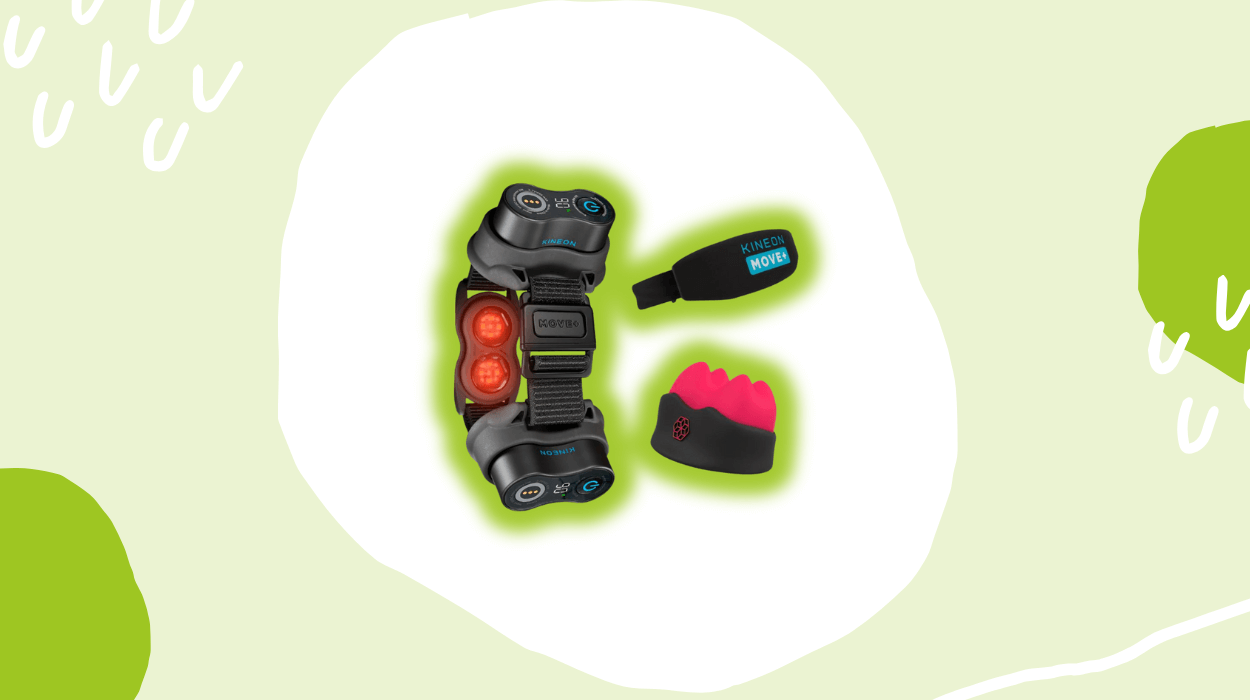
The brand primarily operates within the wearable recovery and pain relief device category. Its core product, the MOVE+ Pro, combines 660 nm red light LEDs with 808 nm near-infrared laser technology.
According to the official website, Kineon also offers RELIEF+, a non-powered trigger point and myofascial release tool designed to apply concentrated pressure to muscle knots and areas of stiffness. It also provides Extender Straps 2.0, which are intended to improve device fit and usability across different body parts.
Kineon also combines digital guidance tools, such as the Pain Quiz. This self-assessment may help you identify affected areas and better understand the nature of their discomfort.
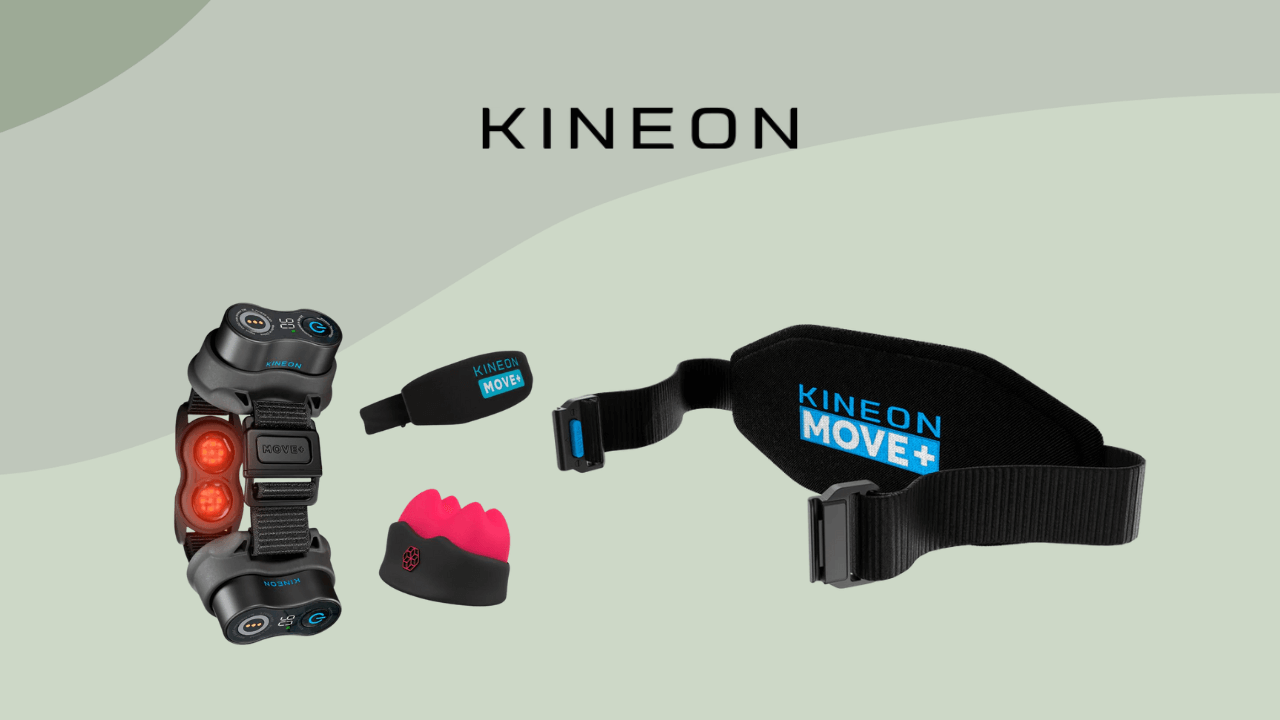
Relief+ is an ergonomic myofascial release tool designed to apply controlled, localized pressure to areas of muscle tightness and fascial restriction. It offers mechanical pressure and tissue loading, which influences how muscle fibers and connective tissue respond to stress. The rigid, durable construction allows consistent force to be transferred into deeper tissue layers without deformation, making pressure predictable and repeatable.
As per the official website, its four-hump design concentrates pressure over a smaller surface area, increasing mechanical load on tight muscle bands and trigger points. This pressure may help disrupt adhesions within the fascia that surrounds and links muscles. When fascia becomes dehydrated or overstressed, it can stiffen and limit movement.
The brand states that RELIEF+ can be used across multiple muscle groups, including the glutes, lower back, hamstrings, calves, quads, shoulders, upper back, traps, and feet. Its compact size makes it suitable for both large muscles that tolerate deeper pressure and smaller areas like the plantar fascia, where precise force is more effective.
Move+ Pro may provide controlled red and near-infrared wavelengths to joints and surrounding tissues. It uses a modular configuration, with three modules per unit and two emission areas per module, allowing light to be delivered across a defined area with consistent output.
The device combines deep red light at 660 nm and near-infrared light at 808 nm, each influencing tissue at different depths. Red light at 660 nm is primarily absorbed by superficial tissues such as skin, connective tissue, and the outer layers of muscle. This wavelength interacts with cytochrome c oxidase in mitochondria, which can increase the efficiency of ATP production.
Near-infrared light used in this device at 808 nm penetrates more deeply, reaching joints, tendons, ligaments, and deeper muscle layers. As these tissues have lower blood supply and slower turnover, deeper penetration is important for influencing healing responses. Near-infrared photons can reduce oxidative stress by improving mitochondrial respiration and modulating nitric oxide signaling, which may support blood vessel dilation and nutrient delivery.
Extender Straps 2.0 are designed as an accessory to support the correct positioning of the MOVE+ Pro LED device during light therapy sessions. The straps could help maintain consistent contact between the device and the targeted area. This consistency is important in light-based support, where procedure effectiveness depends on stable distance, angle, and exposure time.
The extendable design allows the device to be secured around different body regions, including larger or harder-to-reach areas such as the back, shoulders, hips, and abdominal area. The strap may promote a proper fit, which could help distribute the weight evenly, minimizing localized pressure that could alter blood flow or cause discomfort during longer sessions.
Kineon was founded in 2019 by CEO Forrest Smith alongside co-founder Tom Sanderson. The brand’s origin is closely tied to Smith’s experience with chronic knee pain following an MCL tear. According to the company, existing recovery options felt overly generic and insufficiently targeted to joint-specific needs, which prompted the founders to pursue a more personalized option. Both founders remained closely involved during the early stages of development, taking part in hands-on prototyping and real-world testing. Insights gathered from repeated use led to meaningful design changes over time. While the initial concept focused solely on knee support, it later evolved into a modular, wraparound system capable of adapting to multiple joints. The brand positions this transition as a response to practical testing outcomes rather than a planned commercial expansion.
Founder involvement also influenced key technical decisions. Kineon opted for a hybrid light configuration across its modules, combining medical-grade Class 1 VCSEL lasers at 808 nm with 660 nm LEDs. The company states that this setup is intended to balance deeper tissue penetration with broader surface coverage, distinguishing it from lower-cost, LED-only designs commonly used in consumer light therapy devices. This founder-led approach may allow the support to be more targeted, easier to adjust to your needs, and more consistent in day-to-day use.
Kineon positions its scientific claims around established research on photobiomodulation and red light therapy. However, when you look for independent validation, there are few widely available, peer-reviewed studies that evaluate Kineon’s specific device.
You may also find limited published research comparing Kineon directly with in-clinic options or competing joint-care devices. Long-term outcome data tied specifically to Kineon’s modular, wearable system are not broadly available in independent scientific journals. This lack of device-specific evidence can affect how you assess credibility, particularly if you expect peer-reviewed research linked to the exact product you are considering at a premium price. Without stronger independent studies, the scientific support may feel incomplete, which can slow acceptance among evidence-focused users and clinical audiences.
Joovv and Kineon both operate within the red and near-infrared light therapy category, but they differ significantly in scope, product architecture, technological emphasis, and intended outcomes. As per their official website, Joovv presents itself as a broad, wellness-oriented light therapy platform, whereas Kineon offers targeted options focused on pain relief, joint health, and mobility improvement.
In terms of scope and application, Joovv adopts a systemic, whole-body approach to light therapy. Its product lineup ranges from portable handheld devices such as the Go 2.0 to modular and full-body systems, including the Mini 3.0, Solo 3.0, Half-Max, Duo, Max, Quad, and Elite. This structure allows you to move from localized exposure to full-body support within the same ecosystem. Kineon, in comparison, maintains a narrower and more focused portfolio. Its core product, the MOVE+ Pro, is designed specifically for targeted joint and muscle support, supported by additional products such as RELIEF+, extender straps, and joint-support formulas rather than scalable body-coverage systems.
The underlying technology further distinguishes the two brands. Joovv offers devices that use LED-based red light at 660nm and near-infrared light at 850nm. They are engineered to provide even light distribution across the surface and moderately deep tissue. The brand consistently links these wavelengths to cellular health, mitochondrial energy production, and overall physiological balance. On the other hand, Kineon features a device that combines 660nm red LED light with 808nm near-infrared medical-grade laser technology, positioning this hybrid approach as capable of deeper and more precise penetration into joints, muscles, and dense connective tissue.
Design philosophy and user setup also reflect different priorities. Joovv emphasizes a patented modular design that supports expansion and customization through mounts, stands, door systems, and add-on panels. This makes its devices suitable for dedicated home installations and long-term system building. Meanwhile, Kineon’s devices are designed to be wearable or strap-based, intended to remain fixed on specific body parts during procedure sessions. The focus is on targeted application and ease of use rather than spatial installation or modular growth.
Joovv focuses on long-term fitness and cellular optimization, while Kineon focuses on targeted pain relief and mobility outcomes using a combined LED and laser approach.
DNAVibe positions its product lineup around regenerative support and recovery across a wide range of use cases. The brand emphasizes general wellness, circulation support, stress relief, and performance recovery rather than condition-specific outcomes. Kineon, on the other hand, focuses primarily on joint pain and mobility with its products MOVE+ and MOVE+ Pro, which may help with pain reduction, inflammation control, and improved joint function.
The technological approaches of the two brands differ in both intensity and design philosophy. DNAVibe relies on low-power, precisely tuned red and near-infrared light combined with additional signaling methods such as micro-vibration and magnetic pulse therapy in models like the Jazz Band Live Pro and Jazz Band Splash. The brand consistently highlights non-thermal operation and avoidance of tissue overheating. Meanwhile, Kineon offers MOVE+ and MOVE+ Pro, which instead use a combination of LED and medical-grade laser technology, specifically referencing 660 nm red light and 808 nm near-infrared laser wavelengths, with an emphasis on deeper tissue and joint penetration.
The brands also frame their biological rationale differently. DNAVibe describes its Jazz Band devices in terms of supporting cellular signaling processes. It claims that its offerings may support RNA activity, ATP production, circulation, and oxygen delivery. Kineon focuses more narrowly on mitochondrial activation, increased blood flow, and inflammation reduction, linking these mechanisms directly to pain relief and mobility outcomes.
Product design and usage context further distinguish the two brands. DNAVibe offers bands that are flexible, silicone-based wearables designed to wrap around multiple body areas and to be used before activity, during movement, and during recovery or relaxation. Its Jazz Band Splash extends this design into water-based environments through full submersibility. On the other hand, Kineon’s devices use strap-mounted modular components intended primarily for joints such as knees, shoulders, hips, and ankles, and are generally framed around defined sessions rather than continuous wear.
In terms of pricing, the two brands occupy clearly different ranges based on the shared information. DNAVibe’s Jazz Band lineup is positioned in a lower-to-mid price bracket, with the Jazz Band Light priced at around $159, the Jazz Band Live Pro at $289, and the Jazz Band Splash at $369. Kineon’s pricing sits notably higher, with the MOVE+ Pro listed around $699 at full price and discounted offers commonly shown around $499, alongside bundled options that extend beyond this range. DNAVibe focuses on offering products that are accessible for ongoing, everyday recovery use, while Kineon promotes laser-assisted, joint health-focused support.
Our evaluation of Kineon is based on Trustpilot reviews published primarily between 2025 and early 2026, during which the brand holds a 4.1 rating from more than 400 customer reviews. Many users claimed the Move+ and Move+ Pro devices supported pain management, recovery, and mobility across areas such as knees, shoulders, tendons, and post-surgical rehabilitation. Several customers highlighted that improvements were gradual, often becoming noticeable after one to three weeks of consistent daily use rather than after a single session.
Numerous users mentioned experiencing positive outcomes, specifically when the device was integrated into long-term routines for chronic joint pain, arthritis, tendinopathy, or athletic recovery. Several highlighted the portability and convenience of the device, noting that it could be worn during work, travel, or light activity.
Many customers also emphasized experiencing fast response times, clear troubleshooting guidance, and replacement of faulty modules, including batteries, clips, and light units. At the same time, a few highlighted recurring concerns related to product durability. Many users mentioned experiencing battery drain when the device was left unused for several days, charging inconsistencies, or broken components such as light holders and straps.
Based on these reviews, Kineon appears to provide support for joint and muscle issues. However, while many experience meaningful improvements and responsive support, the brand’s premium positioning also brings higher expectations around hardware reliability and long-term durability.
Kineon focuses on devices aimed at supporting joint comfort and mobility, especially for knee-related use. Although the brand is not BBB accredited, it currently holds an A- rating. BBB data shows a few complaints over the past years, related to product returns and refund processing rather than safety concerns, billing disputes, or unresolved financial issues.
However, the complaints show a recurring pattern of delayed or inconsistent communication during the return initiation phase. While outcomes were resolved, these concerns highlight potential gaps in customer support workflows.
Kineon emphasizes convenience, routine use, and self-managed joint care. The brand’s scientific foundation, however, is largely indirect. It cites general photobiomodulation research instead of publishing independent, peer-reviewed studies specific to its own devices.
While existing literature suggests that red and near-infrared light may influence inflammatory signaling and mitochondrial function, these findings do not directly establish the effectiveness, durability, or comparative performance of Kineon’s products.
It is essential to view Kineon’s offerings as a supportive tool rather than a therapeutic substitute. The system is intended to assist with comfort and mobility alongside normal activity, not to diagnose joint conditions, repair structural damage, or replace medical care or physical therapy.
When considering the brand and its devices, it is essential to check whether you have known light sensitivity, circulatory issues, or unresolved joint injuries. You should also avoid using the device in areas with unexplained pain, sudden swelling, or suspected structural injury unless a qualified professional advises you to do so.

Contact us at [email protected] or follow @leafsnap on Twitter! View our Privacy Policy.