
Recess is a functional drink brand that focuses on products formulated to support stress management, mood balance, and alcohol reduction. The brand offers ready-to-drink and mix-in options that could promote calm and mental regulation. Its product range includes hemp-infused sparkling waters, magnesium drink mixes, and mocktail-style options, available in multiple flavors and formats.
In this review, we will explore Recess’s product offerings in detail, examine its key advantages and potential limitations. We will also review its consumer feedback to understand how its products perform in real-world use.
Recess offers products formulated with functional ingredients and organized into multiple distinct categories. The brand organizes its lineup across clearly defined product categories based on use moments.
The core Recess line features sparkling water infused with hemp extract and adaptogens, available in flavors such as blackberry chai, black cherry, and pomegranate hibiscus. This range is positioned for everyday wind-down moments, focusing on easing the day rather than creating a heavy or sedating effect.
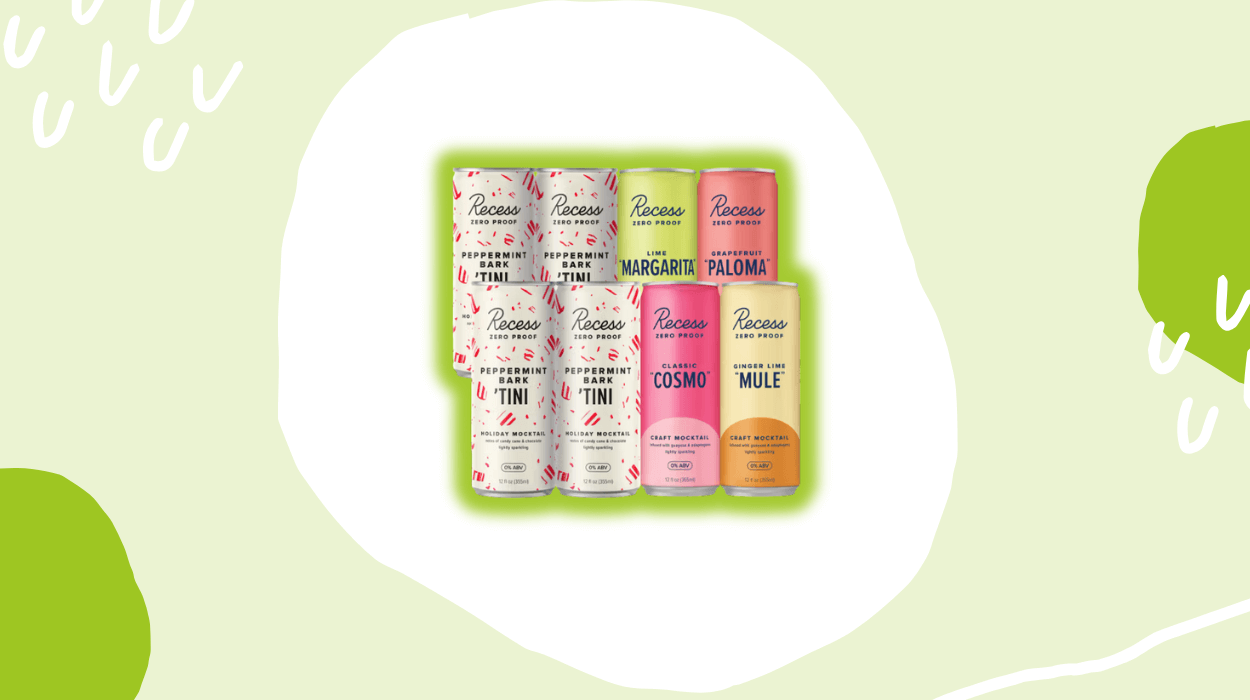
As per the official website, the brand offers Recess Zero Proof, a line featuring options that are designed to mirror familiar cocktail-style flavors and formats. This category includes seasonal releases, limited-edition flavors such as Peppermint Bark ’tini, and multiple sampler packs intended for social and celebratory moments. Meanwhile, the Recess Mood category follows a more targeted formulation approach. These sparkling waters combine magnesium with adaptogens and are positioned for unwind-focused occasions.
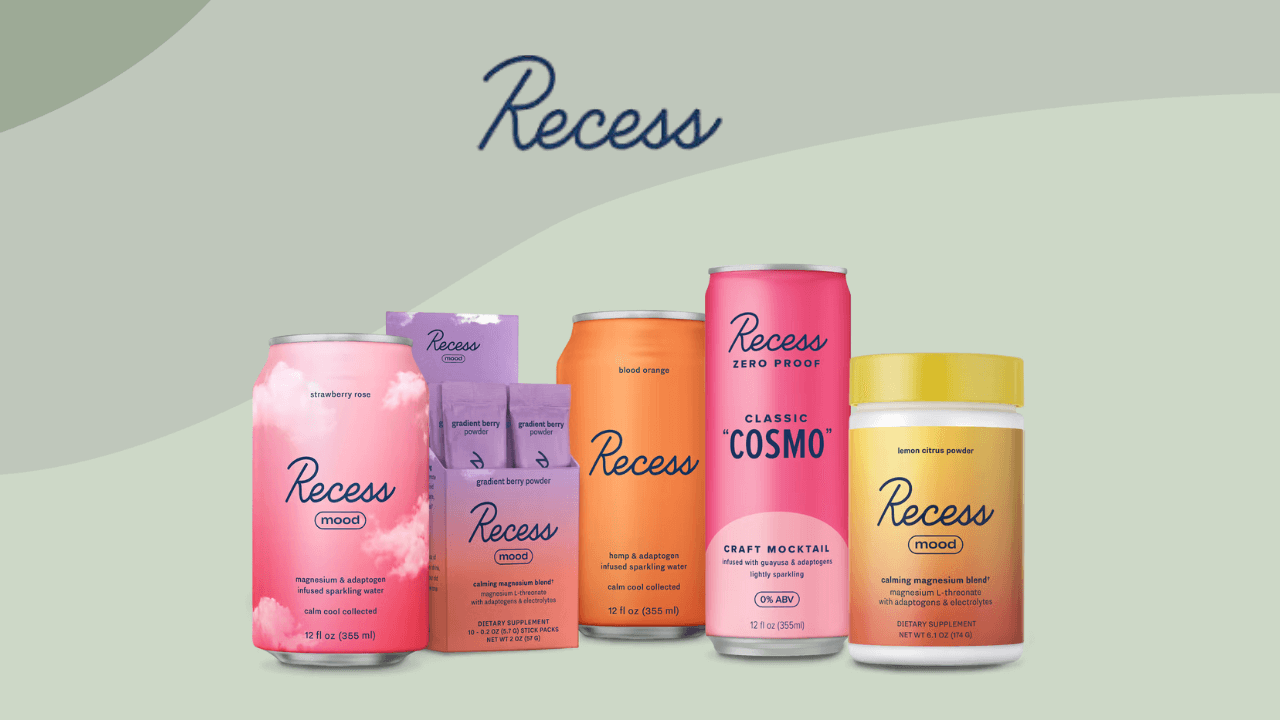
Recess Mood combines magnesium L-threonate, L-theanine, and lemon balm. These drinks contain adaptogens that may interact with nervous system signaling and mood-related regulation. These are available in strawberry rose, tropical bliss, raspberry lemon, peach ginger, blood orange, orange vanilla, lime citrus, grapefruit tangerine, and black cherry options.
As per the official website, these drinks contain magnesium L-threonate, which is a form of magnesium developed for higher brain uptake. Magnesium functions as a regulator of neuronal excitability by modulating NMDA receptor activity and calcium influx in nerve cells. It might help maintain stable neural communication, particularly in pathways involved in cognitive demand and stress-related signaling.
The drinks also combine L-theanine, which interacts with glutamate receptors and influences the balance between excitatory and inhibitory neurotransmission. It could also promote a state of mental calm without suppression of alertness.
The makers also added lemon balm to Mood, which may help maintain inhibitory neurotransmitter availability, contributing to nervous system equilibrium during periods of mental strain. The Mood range is also available in the original Mood sampler, the new Mood sampler, the Paradise sampler, and the greatest hits sampler.
Recess Zero Proof is an alcohol-free formulation developed to replicate the structure and experience of cocktail-style formats without the addition of ethanol. The makers claim that their drink offers flavored options that mirror familiar mixed-drink profiles while relying on plant-based ingredients.
The Zero Proof range includes classic cosmo, grapefruit paloma, watermelon mojito, lime margarita, island spritz, and ginger lime mule. Peppermint bark tini is also available as a limited edition flavor.
The makers added guayusa in this range, which contains caffeine alongside polyphenols, theobromine, and L-theanine–like compounds. It provides stimulant activity through adenosine receptor antagonism, similar to other caffeine sources, while its accompanying compounds may influence the rate and perception of stimulation.
Zero Proof also has lemon balm, which may interact with inhibitory neurotransmitter pathways. It contains rosmarinic acid and related phytochemicals that may affect GABA metabolism by limiting the activity of enzymes responsible for GABA breakdown. This could support nervous system regulation that counterbalances excitatory signaling. Zero Proof is also available as Zero Proof sampler, the happy hour sampler, and the holiday party sampler.
Recess Mood Powders are formulated as a powdered mix intended for flexible use across different liquid bases. The formulation combines magnesium, adaptogenic compounds, and electrolytes, with the structure focused on supporting nervous system signaling and hydration-related balance rather than stimulation.
Mood Powders are available in stick packs and tubs. Options include unflavored, gradient berry, and lemon citrus varieties, along with 6-count and 15-count sampler packs. Across formats, the ingredient framework remains consistent, with variation limited primarily to flavor and serving size.
Magnesium in this powder may support neural signaling and electrolyte regulation. It could help regulate calcium movement across nerve cell membranes and influence NMDA receptor activity, which is involved in excitatory neurotransmission. Magnesium might also support stable communication between neurons, particularly during periods of cognitive or physiological stress.
According to the official website, electrolytes in Mood Powders are added to support fluid balance and electrical signaling within the nervous system. Sodium, potassium, and related ions help maintain membrane potential in neurons, allowing nerve impulses to transmit efficiently. Proper electrolyte balance also influences hydration status, which can affect cognitive performance, concentration, and perceived mental fatigue.
Recess does not publish clinical trials on its finished drinks. The brand does not share human studies evaluating its exact formulas, including the Mood line blends that combine L-theanine, magnesium, and electrolytes in a single 12-ounce can. There is no proprietary research showing how these ingredients interact at Recess’s specific dosages or within a carbonated drink format.
Instead, the brand relies on general research on individual ingredients. L-theanine and magnesium have primarily been studied in isolation, often in capsule form and across different dosage ranges. These studies do not assess Recess products as consumed, nor do they examine outcomes related to regular or long-term intake in drink form. This means product expectations are shaped by ingredient-level research rather than validation of the finished drinks.
Recess offers a fixed lineup of drinks with standardized formulas and set flavor profiles. Its offerings come in a pre-defined format, whether from the Mood line or the Zero Proof cocktail range. Its products contain set dosages, for example, magnesium L-threonate and L-theanine in Mood formulations, with no tools to adjust ingredient amounts, functional emphasis (e.g., calm versus focus), or strength. Flavor options are also preset, such as Peach Ginger or Blood Orange, with no build-your-own blends or personalization features beyond choosing between existing variants. While different drink types are positioned around calm or focus, all options remain preset. If flexibility or personalized functionality matters to you, this limited level of customization may feel restrictive.
As per its official website, Hiyo offers options intended to replace traditional drinking moments, especially during social settings and dry month routines. Meanwhile, Recess takes a broader framing, presenting its offerings as support for balance and moderation, with use cases extending to daytime stress management.
Hiyo maintains a relatively narrow and uniform product range. Its catalog centers on ready-to-drink cans offered in Blackberry Lemon, Passion Fruit Tangerine, Pineapple Coconut, Peach Mango, Strawberry Guava, and Watermelon Lime flavors, along with Classic Pack and Tropical Pack. Recess, in comparison, operates across several distinct product lines. These include Recess Mood (magnesium + adaptogen drinks), Recess Zero Proof (cocktail-style alternatives such as Lime Margarita, Grapefruit Paloma, Watermelon Mojito, and Ginger Lime Mule. Recess Mood Powders are available as stick packs and tubs in Lemon Citrus, Gradient Berry, and Unflavored options.
The ingredient approach between the two brands reflects different priorities. Hiyo formulates around a multi-ingredient botanical blend that includes ashwagandha, L-theanine, lion’s mane, lemon balm, passion flower, and ginger. Each ingredient is presented with a defined role, such as stress response support, mood stability, mental clarity, relaxation, and digestive comfort. Recess centers its formulations more on magnesium, including Magtein®, alongside adaptogens and electrolytes, with hemp included in select product lines such as Core Recess offerings. Its ingredient communication focuses more on calm and balance rather than layered functional outcomes.
Flavor direction further separates the two. Hiyo’s range leans toward fruit-forward and tropical profiles designed to stand alone without mimicking specific cocktails. Recess combines both fruit flavors and structured cocktail-style profiles, supporting its Zero Proof line as an alternative for traditional moments.
Distribution strategy reflects another contrast. Hiyo operates through direct-to-consumer sales supported by subscription options with delivery intervals of 15, 30, 45, or 60 days, along with recurring discounts and free shipping. In addition to online ordering, the brand highlights retail placement across multiple national and specialty chains, including Costco e-commerce, Whole Foods Market, Target, Sprouts Farmers Market, and The Vitamin Shoppe. Recess, in comparison, places a stronger emphasis on its direct platform and subscription model while also noting availability through select national retailers such as Target.
Hiyo functions as a brand built around a single core concept with flavor-based variation. On the other hand, Recess operates with broader format diversity, including drinks, powders, and mocktail-style products.
Kin Euphorics presents its drinks as mood-focused functionals meant to support different emotional states throughout the day. Its lineup includes products such as High Rhode, Lightwave, Kin Bloom, Dream Light, Actual Sunshine, Luna Morada, and Kin Spritz, each linked to a specific use theme like social settings, relaxation, or nighttime routines. Recess takes a more everyday approach, focusing on calm, balance rather than mood exploration.
The product formats also show clear differences. Kin Euphorics offers canned drinks, bottled options, and mixable formats, along with bundles like the Full Kin Kit and Sleep/Social Duo that group products by intended use. On the other hand, Recess focuses more on ready-to-drink sparkling drinks and powders, including Recess Mood cans, Recess Zero Proof mocktails, and Recess Mood Powders sold in stick packs and tubs. Its samplers, such as the Greatest Hits Sampler and Zero Proof Sampler, are organized by flavor and occasion.
Ingredient structure separates the two brands further. Kin Euphorics builds its formulas around adaptogens, nootropics, and botanicals, and clearly explains each group. For example, Lightwave and Dream Light include reishi mushroom, passionflower, L-tryptophan, and melatonin. High Rhode and Kin Spritz include rhodiola rosea, 5-HTP, and GABA, while Kin Bloom uses schisandra, damiana, and L-theanine. Recess uses a simpler ingredient model that centers on magnesium, adaptogens, hemp-derived ingredients, and electrolytes, depending on the product line, without detailed breakdowns of neurotransmitter-related compounds.
Sleep positioning is another difference. Kin Euphorics includes melatonin in Dream Light, which places the product clearly in a nighttime category. Recess does not use melatonin and instead promotes relaxation in a general sense through products like Recess Mood, which combines magnesium and adaptogens without tying use to sleep hormones.
Kin Euphorics uses tools like Find Your Kin, quizzes, and curated bundles to guide selection based on mood or use case. Recess relies more on sampler packs, flavor variety, and wide retail access, including availability at Target.
Kin Euphorics follows a more complex, ingredient-driven model built around mood-specific products. In comparison, Recess takes a more straightforward approach, using familiar drink formats such as sparkling waters, mocktails, and powders to support calm in everyday life.
To evaluate Recess, customer reviews posted mainly between late 2025 and January 2026 on Amazon were examined to understand how people describe real-world use, consistency, and overall satisfaction.
The brand’s Mood Magnesium & Adaptogen Drink holds an average rating of 4.3 stars, which is based on 5,000+ reviews. Many users describe using the product during evenings or after work. Flavor feedback appears generally favorable, with orange vanilla, raspberry lemon, strawberry rose, and peach ginger referenced most often. Some customers note appreciation for the lack of common sweeteners found in similar products. Perceived calming effects, however, vary across users. While some report feeling more relaxed, others indicate no noticeable change beyond taste.
Meanwhile, the Recess Zero Proof Craft Mocktails show an average rating of 4.1 based on around 65 reviews. Users have praised the flavors inspired by margaritas, palomas, cosmos, and mule-style profiles. At the same time, flavor acceptance is less uniform. Peppermint varieties generate divided responses, and a few users express dissatisfaction with the taste across the line.
Across both product types, price plays a major role in how customers judge the brand. Many customers mention the high cost or recent price increases. For some, this affects how often they repurchase, suggesting that long-term use depends on whether the experience feels worth the ongoing expense.
This feedback suggests that while many users find the brand’s offerings enjoyable and appreciate the flavor profiles, ongoing concerns related to pricing point to a more cautious long-term view of the brand.
Recess was reviewed for its focus on calm, balance, and mental downtime rather than stimulation or performance. Its product range includes sparkling drinks, mood-focused formulations, powders, and zero-proof mocktail options.
Brand credibility was assessed through publicly available consumer feedback. At the time of writing this review, Recess is not listed with the Better Business Bureau and does not have a BBB rating or complaint history.
Our evaluation indicates that the brand maintains visibility and recognition within its category, though the absence of a BBB profile limits the availability of formal complaint data. This suggests that Recess is still developing its long-term public record.
Recess features sparkling drinks, mood-focused options, and zero-proof alternatives. However, it lacks clinical testing on the final formulas. The ingredient combinations and amounts remain fixed, which limits flexibility and makes individual response dependent on personal tolerance and absorption. Without product-level studies, outcomes cannot be directly tied to the drinks themselves.
Recess offers convenience, consistent formats, and a wide range of flavors, but it does not allow control over dosage or ingredient ratios. When considering the brand, taking some precautions might be helpful. Regular consumption may increase total magnesium intake, which can cause digestive discomfort in some people. Sensitivity to botanical ingredients can vary, and using multiple functional drinks in a short period may raise overall intake beyond what feels comfortable.
Recess provides an organized and accessible approach to functional drinks, but relies on general ingredient research, fixed formulations, and limited product-specific evidence.

Contact us at [email protected] or follow @leafsnap on Twitter! View our Privacy Policy.