
Invader Coffee operates in the specialty coffee segment, with a focus on roasted coffee products positioned around bold identity and everyday performance. The brand claims to serve those looking for smooth, less acidic coffee blends while aligning with values such as ethical sourcing and veteran ownership.
As part of its lineup, the brand offers whole bean coffee, K-Cups, and branded merchandise. Its coffee offerings are organized by roast type and blend, offering convenience in navigation.
This review will examine the brand’s product range, roasting approach, sourcing claims, and flavor positioning. It also analyzes how Invader Coffee compares with other specialty and values-driven coffee brands.
According to its official website, Invader Coffee is a veteran-owned coffee brand based in Austin, Texas. The brand positions its approach around controlled roasting methods, quality inspection, and direct sourcing practices rather than broad product expansion.
The manufacturer highlights the use of air-roasted coffee beans, a method described as used by a small percentage of global coffee producers. Air roasting allows heated air to circulate evenly around each bean while separating and removing chaff during the roast rather than allowing it to burn against the beans. The process is presented as a way to reduce bitterness and acidity while maintaining consistent batch outcomes.
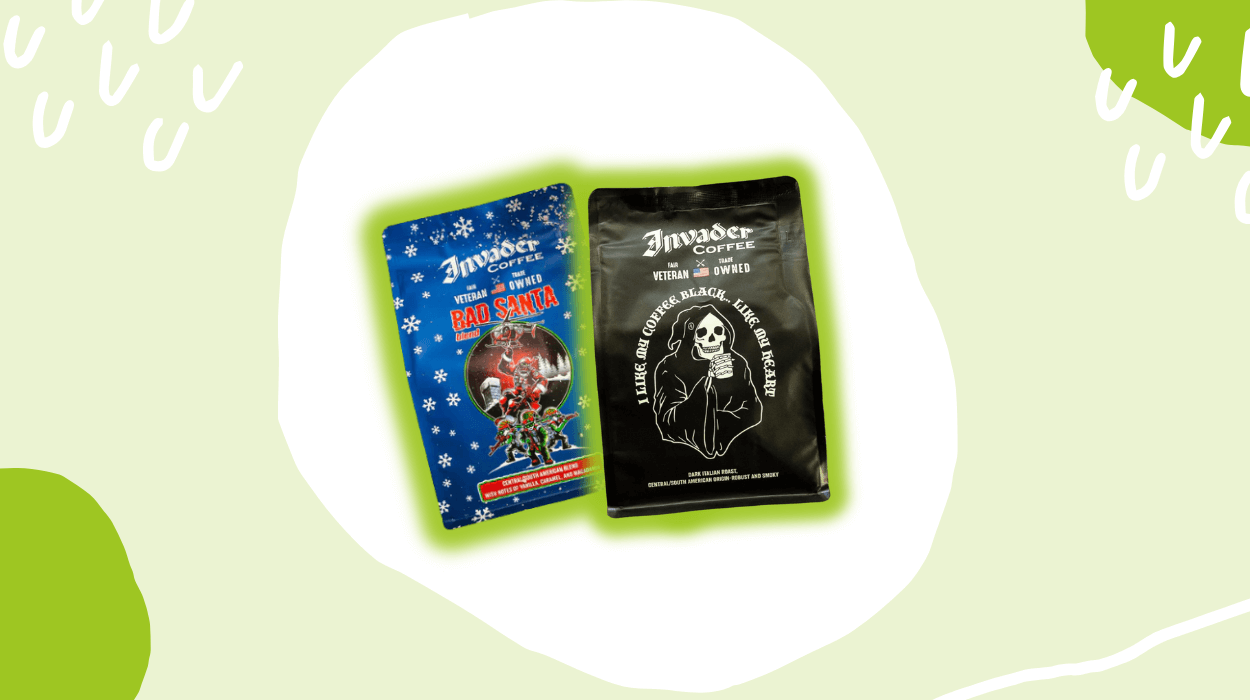
Some featured coffee offerings from the brand include the Authentic Mexican Chocolate Blend, Original Blend, TMACS Organic Blend, Bad Santa Coffee Blend, FSU General Mattis Tribute Blend, and Black Heart Blend. A program allowing you to purchase coffee intended for deployed military members is also part of the brand’s catalog.
As per the manufacturer, the brand sources coffee beans from fair trade farms and states a commitment to using organic coffee where applicable. It emphasizes batch-level quality control, drawing comparisons to structured inspection processes rather than high-volume production.
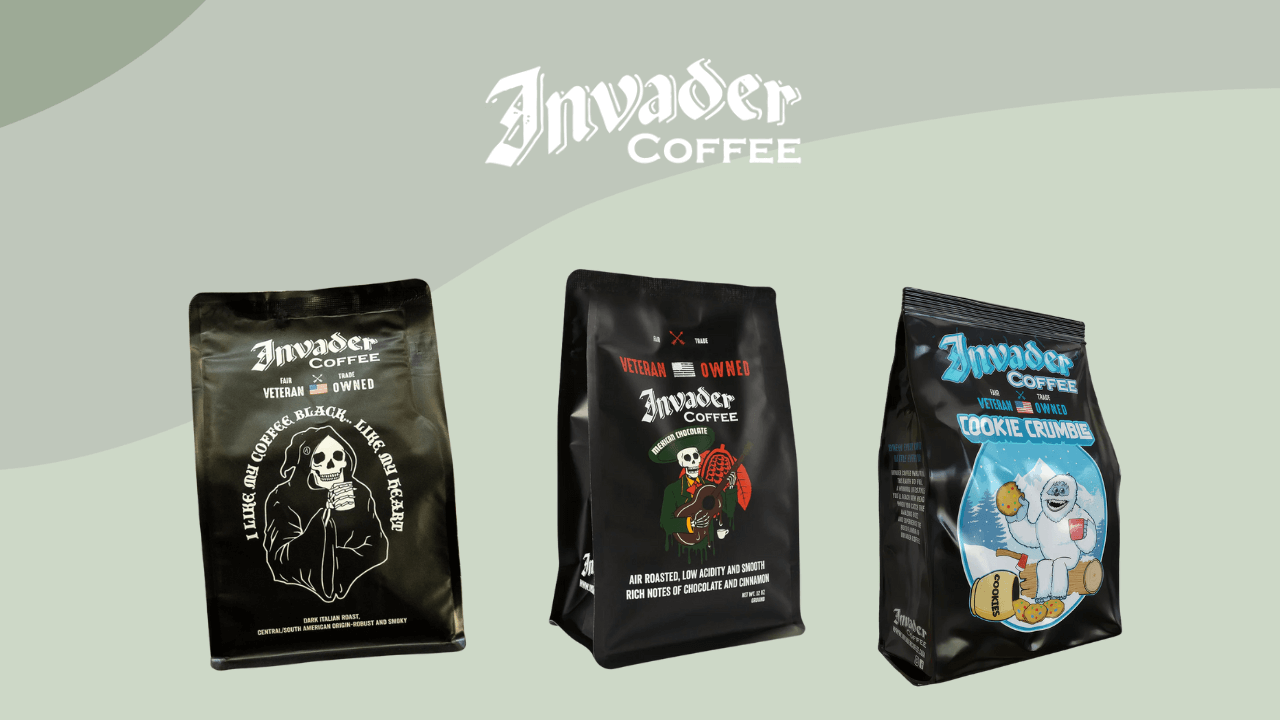
Authentic Mexican Chocolate Blend is a medium-bodied flavored coffee mix, which aims to replicate the traditional profile of Mexican chocolate–style coffee without added sugar, carbohydrates, or alcohol content. The blend pairs Arabica coffee with natural flavor notes of dark chocolate, cinnamon, and vanilla, producing a balanced cup.
Coffee polyphenols and chlorogenic acids in the blend provide antioxidant activity that helps counter oxidative stress produced during normal metabolic processes. These compounds could promote alertness and focus by blocking adenosine receptors. Inclusion of added cinnamon contributes aromatic compounds that may enhance perceived sweetness and warmth without sugar content.
As per the official website, TMACS Organic Blend is a French dark roast made from 100% Fair Trade and organic Ethiopian and Indonesian coffee beans. Ethiopian coffee beans typically contribute brighter fruit-driven acids and aromatic compounds, while Indonesian beans add heavier body, earthiness, and deeper cocoa-like tones.
Dark-roasted coffee retains bioactive compounds such as caffeine, trigonelline, and melanoidins formed during roasting. Melanoidins, created during the Maillard reaction in darker roasts, contribute antioxidant activity and may support gut health by acting as dietary fiber–like compounds.
As per the manufacturers, Original Blend is built around a carefully balanced mix of organic Central and South American Arabica beans. These regions are known for producing coffees with moderate acidity, smooth mouthfeel, and naturally balanced flavor chemistry.
The Arabica coffee beans feature naturally occurring caffeine, chlorogenic acids, and polyphenols that could support alertness and antioxidant activity. Air-roasting method used by the brand converts some chlorogenic acids into flavor-stable compounds, contributing to smoother digestion and reduced acidity than darker or unevenly roasted coffees. As a result, the Original Blend provides a medium-bodied cup with notes of dark chocolate, cacao butter, orange zest, and a light caramel finish.
FSU General Mattis Tribute Blend is a limited-supply dark roast built around certified organic, fair-trade coffee beans. Its dark roast profile may slightly reduce caffeine content compared to lighter roasts, but enhances the formation of melanoidins, which are compounds linked to antioxidant activity and gut-friendly effects. Such effects may translate to a steady stimulation without sharp spikes. Flavor-wise, the blend finishes smooth with notes of berries, semi-sweet chocolate, and brown sugar, reflecting a balance between natural fruit acids and caramelized sugars.
Black Heart Blend is the brand’s darkest Italian roast, made with certified organic, free-trade coffee beans sourced from Central and South America. While dark roasts, such as Black Heart Blend, typically contain slightly less caffeine content than lighter roasts, they often feel stronger due to their heavier body and smoky profile.
Black Heart Blend has a flavor profile resembling deep notes of bittersweet chocolate, carbon, and molasses, with a dense mouthfeel and lingering finish.
Bad Santa Coffee Blend is a seasonal offering from Invader Coffee, which offers a medium roast with naturally low acidity and a smooth profile.
As per its official site, the blend pairs flavor notes of caramel, vanilla, and macadamia nut, creating a balanced cup that leans creamy and mildly sweet without becoming heavy or bitter.
Medium-roasted coffee retains a meaningful level of polyphenols and antioxidants while avoiding the sharp acidity often associated with lighter roasts. The lower acidity might be gentle on digestion, while still providing the alertness and metabolic stimulation linked to caffeine and chlorogenic acid activity.
Invader Coffee grounds its brand identity in a military-inspired operating philosophy shaped by Marine veteran ownership. Founded by Marine veteran Wes Whitlock in 2016 in Austin, Texas, the company consistently references service-driven values such as discipline, accountability, and execution.
Brand language frequently uses military quality-control analogies, including the idea that “every detail matters,” to describe how coffee is sourced, roasted, and released. This framing positions quality as a non-negotiable standard rather than a marketing claim.
The military influence is applied to process and decision-making, not just visuals or tone. Invader Coffee emphasizes meticulous quality control, repeatable air-roasting methods, and a rejection of unnecessary additives or hype, aligning with a no-nonsense mindset associated with military training. The brand highlights consistency and reliability as outcomes of this approach, drawing parallels between operational rigor in service contexts and disciplined coffee production.
This philosophy is reflected across the product lineup. Core offerings such as Original Blend and Black Heart Blend are framed as dependable, everyday coffees built for consistency. Flavored options like Whiskey Blend and Mexican Chocolate Blend are positioned within the same standards-driven framework, adding variety without departing from the brand’s emphasis on control and repeatability.
Products such as TMACS Organic Blend extend the approach into certified organic sourcing, while tribute or themed releases like the FSU General Mattis Tribute Blend and Bad Santa Coffee Blend maintain explicit ties to military culture and service-related storytelling.
Invader Coffee presents itself as an independently operated coffee brand, explicitly stating that it operates without outside partners or investors. Founder Wes Whitlock has described this structure as intentional, allowing the company to retain full control over sourcing, roasting, and quality standards.
This independence is positioned as a way to prioritize quality, consistency, and transparency over rapid scale or volume-driven growth, avoiding the influence of external stakeholders on product or process decisions.
This independent operating model is directly reflected in how Invader Coffee develops and maintains its product lineup. The brand emphasizes air roasting as a core technical choice, describing it as enabling even heat distribution, cleaner chaff removal, lower perceived acidity, and tighter batch control.
These process claims are applied across core products such as Original Blend and Black Heart Blend, which are framed as dependable, low-acid everyday coffees.
Specialty offerings like Whiskey Blend and Mexican Chocolate Blend are developed within the same air-roasting framework, adding flavor profiles without deviating from the brand’s quality standards.
TMACS Organic Blend extends this approach to certified organic beans, while tribute and themed releases such as the FSU General Mattis Tribute Blend and Bad Santa Coffee Blend demonstrate the brand’s ability to introduce limited or mission-driven products without external approval constraints.
The brand also references sourcing from fair trade farms, aligning ethical procurement claims with its independent sourcing decisions, even though detailed certification disclosures are not always emphasized.
Invader Coffee’s positioning resonates strongly with military communities and consumers who value service-oriented brands, but it also situates Invader Coffee within a clearly defined niche rather than the broader specialty coffee mainstream.
From a market perspective, this focus shapes how the products are perceived and discovered. Coffees such as Original Blend, Whiskey Blend, Mexican Chocolate Blend, and TMACS Organic Blend are presented with an emphasis on consistency, approachability, and brand story. While quality and roasting practices are highlighted, the brand places less visible emphasis on detailed origin transparency, roast scoring, or competitive tasting benchmarks that often drive recognition within café culture and third-wave specialty circles.
Industry visibility further reflects this niche positioning. There is no prominent evidence of Invader Coffee receiving widely recognized accolades such as Roaster of the Year, Cup of Excellence recognition, or placements in major specialty coffee competitions. This does not indicate a lack of quality, but it does reinforce Invader Coffee’s role as a values-driven, veteran-owned brand with concentrated appeal.
Invader Coffee’s public recognition is primarily centered on its veteran-owned status and brand-led messaging rather than on independent validation from established specialty coffee institutions. Reviews of publicly available records show no prominent third-party awards, competition placements, or formal Q-grader scorings associated with the brand. Programs such as Roaster of the Year, Cup of Excellence affiliations, or widely cited specialty coffee competitions do not list Invader Coffee among recognized participants or recipients.
This absence of external accolades applies across the product lineup, including Original Blend, FSU General Mattis Tribute Blend, Black Heart Blend, and Bad Santa Coffee Blend. While these blends are promoted based on internal quality standards, air-roasting methods, and brand ethos, they are not accompanied by independently published tasting scores, certifications, or competition results that allow objective comparison within the specialty coffee landscape.
Within the industry, third-party recognition often serves as a standardized signal of quality, craftsmanship, and sourcing excellence, particularly for consumers who rely on benchmarks when evaluating specialty roasters.
Black Rifle Coffee Company operates as a specialty coffee brand that blends retail coffee production with a visible cultural and identity-driven positioning.
Founded in 2014 by former US Army Green Beret Evan Hafer, the brand frames its mission around supporting military veterans, first responders, and those who identify with American values.
The coffee portfolio at Black Rifle Coffee Company is broad and segmented, covering light, medium, and dark roasts across whole bean, ground, single-serve coffee rounds, bulk formats, and ready-to-drink products.
Some featured coffee blends from the brand include options such as the Just Black Roast, Freedom Roast, Beyond Black Roast, Murdered Out Roast, AK Espresso Roast, Silencer Smooth Roast, and Tactisquatch Roast. Flavored options such as Vanilla, Hazelnut, Maple Pecan, and Pumpkin Spice address seasonal and preference-based demand.
Subscriptions are a major pillar of the business, with the Coffee Club allowing customization of grind, roast, quantity, and delivery frequency, alongside benefits such as free shipping and loyalty rewards.
For more engagement, the Exclusive Coffee Subscription focuses on limited-run micro lots sourced from specific regions like Panama’s Volcancito area, with disclosures around varietal, processing method, altitude, and cupping score.
Production and sourcing at Black Rifle Coffee Company are positioned as vertically integrated and scale-driven. As per its official site, the brand sources coffee beans from established coffee growing regions, including Brazil, Guatemala, and Panama, which are then roasted in the company’s Manchester (Tennessee) facility using large cast iron drum roasters. The emphasis is on consistency, frequent roasting schedules, nitrogen-flushed packaging, and freshness preservation rather than small batch or minimalist specialty practices.
Invader Coffee approaches the speciality coffee market from a more restrained and process-focused perspective. Based in Austin, Texas, the brand is veteran-owned and operated, emphasizing discipline, quality control, and straightforward execution over lifestyle storytelling or media expansion.
The brand’s product catalog is organized primarily by roast style rather than extensive flavor experimentation, with offerings in whole bean, ground, and K-Cup formats. Some signature coffee blends from the brand include options such as the Original Blend, Black Heart Blend, Authentic Mexican Chocolate Blend, Bad Santa Coffee Blend, TMACS Organic Blend, and Cookie Crumble Blend.
Unlike Black Rifle Coffee Company, Invader Coffee does not rely heavily on subscription programs or loyalty ecosystems, instead offering a money-back guarantee to reduce purchase risk and reinforce confidence in consistency.
A defining differentiator for Invader is its exclusive use of air roasting rather than traditional drum roasting. The brand highlights the air roasting method, which removes chaff during the roasting process, associated with lower bitterness and reduced perceived acidity. This technical choice is presented as a functional quality decision rather than a branding device, supported by additional controls such as pre-roast inspection to remove defective beans. Sourcing is described as fair trade aligned and global, but without deep emphasis on single origin storytelling, cupping scores, or experimental processing.
Founded in 2018, Blackout Coffee Co. operates as a vertically integrated specialty coffee brand based in Florida. The brand’s identity is built around tight operational control, rapid fulfillment, and an explicitly stated cultural and political alignment.
As per its official website, sourcing, roasting, packaging, and shipping are handled in-house, allowing most orders to ship within 24 to 48 hours of roasting.
The brand’s product catalog is wide and segmented, with strong emphasis on variety across both flavored and non-flavored coffees. Core non-flavored roasts include Morning Reaper, Brewtal Awakening, 2A Medium Roast, 1776 Dark Roast, Pitch Black Espresso, Smooth Finish Light Roast, Low Voltage Decaf, and Covert OP Cold Brew. Flavored coffee represents a substantial portion of the brand’s lineup, featuring a large rotating selection such as Cinnamon French Toast, Blueberry Crumble, Jamaican Me Crazy, Chocolate Cherry, Double Dark Chocolate, Coconut Caramel Mocha, Highlander Grogg, and seasonal releases including Pumpkin Spice, Peppermint Mocha, Candy Cane, and Eggnog.
Blackout Coffee Co.’s roasting operations rely on small-batch drum roasting, with quality messaging centered on speed, freshness, and internal logistics rather than a proprietary roasting technology.
The brand extends beyond whole bean and ground coffee into pods, subscriptions, and bulk formats. Subscription programs such as Roaster’s Choice of the Month and Flavor Infused Coffee of the Month emphasize novelty and consistent fulfillment over customization.
Based in Austin, Texas, Invader Coffee is a veteran-owned brand positioned around restraint, discipline, and process-driven quality. Veteran ownership is expressed through operational values such as consistency, cleanliness, and reliability, with less emphasis on political alignment or lifestyle branding.
The brand’s product lineup is narrower and organized primarily by roast profile rather than flavor experimentation. Some core offerings from the brand include the TMACS Organic Blend, Original Blend, Bad Santa Coffee Blend, Authentic Mexican Chocolate Blend, Black Heart Blend, and themed releases such as the FSU General Mattis Tribute Blend and Shadow Blend. Seasonal rotation and novelty flavors play a smaller role, with greater emphasis on repeatable, familiar profiles designed for daily use.
A defining operational distinction lies in roasting methodology. Invader Coffee exclusively uses air roasting, a process that removes chaff during roasting and is positioned as producing smoother coffee with reduced bitterness and lower perceived acidity. Such a technical approach is reinforced through additional quality controls, including pre-roast inspection to remove defective beans.
Both brands occupy similar mid-range specialty pricing segments, but their value propositions differ. Blackout Coffee Co. emphasizes speed, catalog breadth, standardized pricing, subscription structures, and explicit ideological identity supported by in-house operational control. Invader Coffee emphasizes roasting method, smoothness, and disciplined consistency through air roasting, with a narrower product focus and limited reliance on branding ecosystems or recurring programs.
To evaluate Invader Coffee, we looked at its background and presence across independent review forums, with emphasis on brand credibility, customer sentiment consistency, and visibility across channels.
On TenereTeam, the brand holds a 5 out of 5 score, which is based on more than 1,400 user ratings. Feedback on the platform is positive and centers on perceived coffee quality, smooth taste profile linked to air roasting, and satisfaction with order fulfillment. Its positioning as a veteran-owned company appears to resonate strongly with reviewers and contributes positively to trust and goodwill.
However, our evaluation also considers the breadth of third-party validation. Outside of TenereTeam, the brand maintains only a limited availability on major review platforms such as Trustpilot, Better Business Bureau, and ConsumerAffairs. This does not indicate negative sentiment, but it does mean that independent feedback is more concentrated on a single coupon-and-review platform rather than spread across multiple consumer review ecosystems. As a result, public-facing criticism, dispute records, or service-related complaints are difficult to assess at scale.
In evaluating Invader Coffee, we looked through real user feedback of the brand’s offerings on Yelp, where the brand currently holds a 3.8 out of 5 rating based on a limited number of reviews.
Many reviewers emphasize the freshness of the coffee, distinct roast profiles, and reliable shipping timelines, with online customers noting turnaround times of a week or less. Users frequently highlighted specific blends such as Bad Santa, Mexican Chocolate, and the standard roast as standout options that delivered smooth texture and layered flavor. In-person experiences, particularly at the Austin location, tend to focus on atmosphere and staff interaction rather than café-style service.
Several reviewers praise the veteran-owned aspect of the brand, describing it as a meaningful reason for continued support. Negative feedback appeared less frequently but highlighted operational clarity and comfort concerns. A few users reported confusion around store hours, arriving to find the location closed despite online listings indicating otherwise.
Our evaluation of the brand’s user feedback suggests that the brand is widely appreciated for its coffee quality, freshness, and veteran driven identity. However, areas such as clearer communication around hours and expectations for the physical space remain points where experiences diverge.
Invader Coffee operates as a veteran-owned specialty coffee brand built around air-roasted production and a mission-driven identity. The veteran-led identity is consistently integrated across the brand. Military-themed blends, apparel, and visual language reinforce a service-based culture.
The brand’s coffee offerings may be particularly helpful if you prefer smoother, lower-acidity coffee blends. Its air-roasting approach may reflect an emphasis on controlled quality rather than high-volume output.
However, before opting for Invader Coffee, it's essential to consider how well the brand fits long-term habits rather than short-term convenience. Reliance on subscriptions may be useful, but changes in blend availability or shipping timelines might affect consistency. Flavor profiles tend to lean bold, which may not be compatible if you prefer lighter or neutral taste preferences.

Contact us at [email protected] or follow @leafsnap on Twitter! View our Privacy Policy.