



BistroMD is a doctor-founded meal delivery service built around structured, nutritionally balanced eating for weight management and long-term consistency.
You receive fully prepared meals designed by registered dietitians and prepared by chefs, removing the need for meal planning, grocery shopping, or portion calculations.
The brand’s model centers on calorie control and balanced macronutrients. Its service offers a rotating weekly menu with more than 100 options across breakfast, lunch, and dinner.
In this review, we examine BistroMD’s meal programs and offerings in detail, assess the brand’s positioning and credibility within the prepared meal delivery space. We will also analyze consumer reviews and feedback to understand how the service performs in real-world use.
As per the official website, BistroMD is centered on dietitian-designed nutrition and structured eating plans. Its model combines culinary preparation with specified nutritional standards, allowing meals to fit into a consistent, repeatable routine rather than ad-hoc food choices.
BistroMD covers a wide range of meals and lifestyle categories through clearly defined programs. These include Signature, Diabetic, Heart Healthy, Gluten Free, Keto Flex, Menopause, Vegan, Postpartum, and GLP-1–aligned programs.
The makers state that each program follows specific nutritional parameters, such as controlled net carbohydrates for diabetic meals, reduced sodium and saturated fat for heart-healthy options, and lower-carbohydrate targets for Keto Flex.
Programs like Menopause and GLP-1 are designed around changing metabolic and hormonal needs, reflecting a more targeted approach than a single standard menu.
According to the official website, BistroMD’s menu covers breakfast, lunch, dinner, and snacks, with more than 150 rotating meals available each week.
The selection includes familiar comfort dishes and globally inspired recipes such as chicken parmesan, Indian-inspired butter chicken, salmon with pesto, pork entrées, casseroles, pasta-based meals, and plant-forward options.
Meals are prepared in small batches using recognizable ingredients, then flash frozen and delivered in insulated packaging. You can customize meals, swap categories, add snacks, adjust delivery frequency, or skip weeks directly from your account.
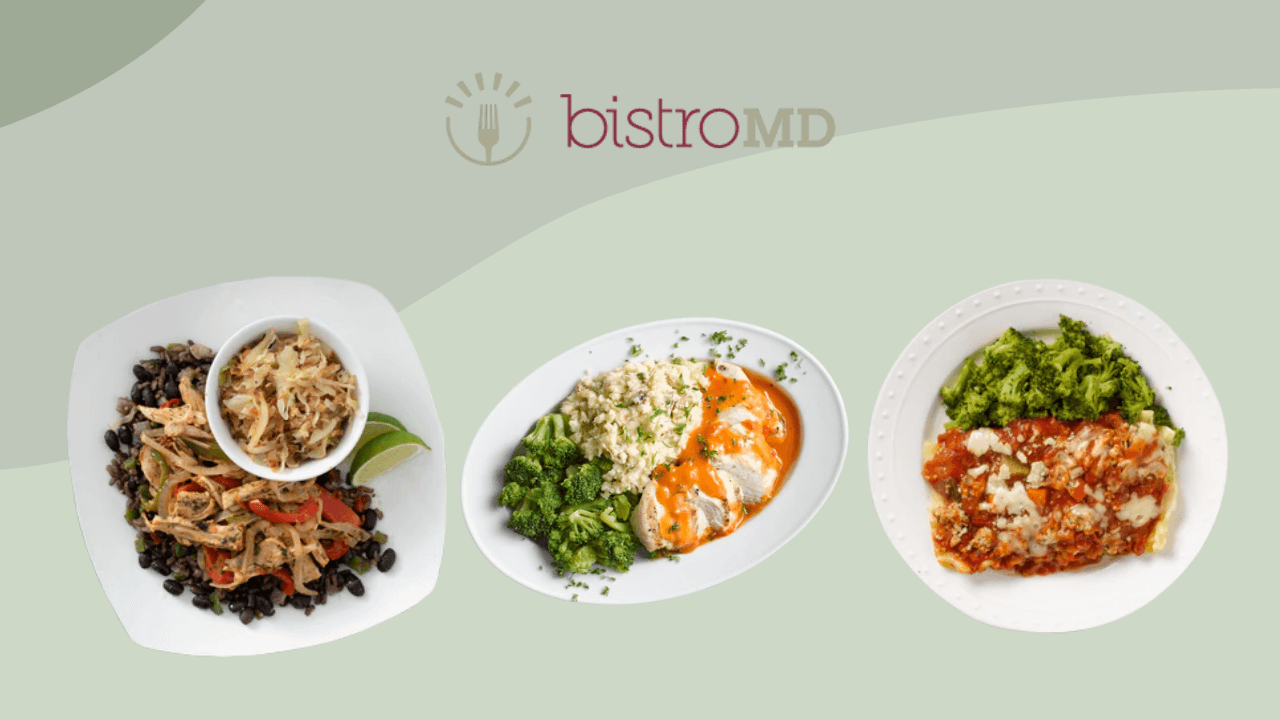
The Gluten Free Program is built around meals that exclude wheat, rye, and barley while relying on whole-food ingredients rather than synthetic gluten replacements. Instead of using refined gluten-free starches or additives to mimic texture, the meals center on naturally gluten-free proteins, vegetables, fruits, and grains.
The menu includes defined dishes such as the Italian Style Omelet for breakfast, Orange Chicken for lunch, and Pork Tenderloin with Mushroom Marsala for dinner.
Protein forms the foundation of the program, contributing roughly 40% of total daily calories. Ingredients such as eggs, chicken, pork, and fish supply complete proteins that provide all essential amino acids. These amino acids may aid in muscle protein synthesis and help preserve lean mass during calorie-controlled eating.
Carbohydrates in the Gluten Free Program primarily come from vegetables, fruits, and naturally gluten-free starches rather than refined wheat-based products. These sources provide dietary fiber, which supports gut motility and helps moderate post-meal glucose absorption. Fiber also feeds beneficial gut bacteria, producing short-chain fatty acids that play a role in intestinal barrier function and metabolic signaling.
The Signature Program is designed around a wide rotation of chef-prepared meals that follow consistent calorie, macronutrient, sodium, and added sugar targets rather than a single dietary restriction.
Across the menu, dishes such as Chicken Egg Roll Bowl with Cauliflower Fried Rice, Green Chile Pork with Southwest Salsa, and Tuscan-Inspired Chicken illustrate how familiar meal formats are adapted to meet defined nutritional thresholds.
As per the official website, the meals in this program contain roughly 25–30 grams of protein per serving from sources such as chicken breast, lean beef, pork, salmon, and plant-based proteins like tofu and quinoa.
Protein supplies essential amino acids required for muscle protein synthesis, tissue repair, and enzyme production. It could also increase thermogenesis and influence satiety hormones such as GLP-1 and cholecystokinin, which can help regulate hunger during calorie-controlled eating. Meals like Grilled Salmon with Creamy Pesto and Chicken Piccata reflect this protein-based structure.
Fats make up the remaining portion of calories in the meals, such as Meatloaf with Honey Bourbon Glaze or BBQ Beef & Cheddar Sliders from the Signature Program, sourced from ingredients such as olive oil, nuts, seeds, avocado, cheese, and naturally occurring fats in meats and fish. These fats support cell membrane integrity, hormone synthesis, and absorption of fat-soluble vitamins.
As per the official website, the Keto Flex Program includes a low- to moderate-carbohydrate range that prioritizes protein, fiber, and controlled fat intake rather than extreme carbohydrate elimination.
Instead of removing entire food groups, the ingredient structure balances lean proteins, vegetables, modest portions of starches, and healthy fats to create meals that fit within defined calorie and net-carb targets. Menu examples such as Artichoke, Spinach, and Roasted Red Pepper Frittata, Shepherd’s Pie, and Pork Tenderloin with Mushroom Marsala.
The meals in this program contain 15–20 grams of net carbs per meal, but they are not fully eliminated. Ingredients such as spinach, artichokes, mushrooms, peppers, and modest portions of starches provide glucose for cellular energy while limiting sharp blood sugar spikes.
The Heart Healthy Program includes various meal options that cover cardiovascular nutrition, with specific limits on sodium, saturated fat, and added sugars. The ingredients emphasize lean proteins, vegetables, legumes, whole grains, and unsaturated fats, with most meals prepared using olive oil rather than butter or hydrogenated fats.
As per the official website, the program features meals such as Chicken with Romesco Sauce & Potatoes, Beef & Noodles with Red Wine Demi-Glace, and Chicken Supreme Pizza Bowl.
Meals such as Grilled Salmon with Creamy Pesto combine fatty acids like EPA and DHA, which are involved in modulating inflammatory pathways, improving endothelial function, and supporting favorable lipid profiles. Research says that limiting saturated fat to less than 6% of your daily calorie intake can help reduce hepatic cholesterol synthesis and circulating LDL concentrations over time.
According to the brand, sodium is carefully controlled in the meals under this program, typically kept at or below 600 milligrams per meal, which is particularly relevant if you are sensitive to salt-related blood pressure changes. Lower sodium intake helps reduce fluid retention and vascular resistance, supporting healthier blood pressure regulation.
The BistroMD highlights that its Menopause Program supports metabolic and hormonal changes that commonly occur during perimenopause and menopause. This program focuses on higher protein intake, controlled carbohydrates, fiber-rich plant foods, and unsaturated fats, while keeping added sugars low. It features meals such as Grilled Chicken with Buffalo Sauce, Chicken Pad Thai, and Merlot Chicken Meatballs with Orzo Pasta.
According to the official website, the dishes such as Chicken Pad Thai, Beef & Noodles with Red Wine Demi-Glaze, and Cheezy Black Bean Sliders with Buffalo Cauliflower in this program provide fiber that slows glucose absorption and supports more stable blood sugar levels. This is particularly relevant during menopause, when insulin sensitivity often declines, increasing the risk of fat storage and energy fluctuations.
The Diabetic Friendly Program may support blood sugar management through controlled carbohydrate intake, consistent protein levels, and fiber-rich ingredients. It features meals such as Mediterranean-Inspired Chicken Bowl, Chicken with Lemon Peppercorn Sauce, and Pork Tenderloin with Country Style Gravy and Mashed Potatoes.
The brand highlights that added sugars in this program are kept low, typically at 5 grams or less per meal, to reduce rapid glucose fluctuations. Combined with consistent calorie control, moderate sodium levels, and repeatable meal structures, the Diabetic Friendly Program relies on ingredient balance and glycemic load management rather than restriction. This approach supports predictable blood sugar responses across meals while allowing a wide rotation of options such as Chicken Supreme Pizza Bowl and Tuscan-Inspired Chicken within a structured eating pattern.
The Postpartum Program may support recovery, nutrient repletion, and sustained energy during the postpartum period. It offers meal options such as Chicken, Rice & Cheddar Casserole, Thai-Style Coconut Chicken, and Beef & Noodles with Red Wine Demi-Glaze.
The makers highlight that the Postpartum Program can support tissue repair, wound healing, immune function, and hormone production following pregnancy and childbirth. Amino acids such as leucine also play a role in stimulating muscle protein synthesis, which is relevant as the body recovers from the metabolic demands of pregnancy and delivery. Meals like Chicken Florentine Cannelloni and BBQ Beef & Cheddar Sliders illustrate this protein-forward structure within portion-controlled formats.
Carbohydrates are included in moderate amounts, generally limited to about 25 grams of net carbs per meal on average, and are sourced from whole grains, vegetables, legumes, and starchy vegetables. Dishes such as Butternut Squash Lasagna with Chicken, Beef Burrito Bowl, and Mushroom Ravioli with Lentil Sauce provide glucose needed for daily energy demands, particularly important if you are breastfeeding.
As per the official website, the Vegan Program is structured around fully plant-based meals that exclude dairy, eggs, meat, and fish while prioritizing whole-food ingredients and controlled portions. It combines legumes, tofu, whole grains, vegetables, nuts, seeds, and plant oils, with an emphasis on providing more protein and fiber.
The brand’s Vegan Program features meals like Sesame Tofu with Rice Noodles & Szechuan Green Beans, Harissa Chickpea Power Bowl, and Vegan Bolognese Pasta with Tofu Ricotta.
The meals under this program provide an average about 13 grams of protein and ranging from 6 to 20 grams depending on the dish. Protein sources include tofu, chickpeas, lentils, black beans, butter beans, quinoa, and other legumes.
While most plant proteins are not complete on their own, combining ingredients such as legumes and grains, as seen in meals like Mediterranean Quinoa Salad or Roasted Tofu and Ancient Grain Salad Bowl, helps create complementary amino acid profiles that better support daily protein needs.
Fats in the Vegan Program average about 10 grams per meal and come primarily from plant-based sources such as nuts, seeds, peanut sauces, coconut-based curries, and cooking oils. Meals like Vegetable Red Curry with Tofu and Gochujang Tofu with Sweet Potato Noodle Japchae demonstrate how fats contribute to satiety and flavor while remaining portion-controlled. Unsaturated fats support cell membrane structure and aid in the absorption of fat-soluble vitamins, which is particularly relevant in plant-based diets that rely on vegetables as primary nutrient sources.
The BistroMD GLP-1 Program is structured around meals designed to align with the physiological effects commonly associated with GLP-1–based options, including reduced appetite, delayed gastric emptying, and altered glucose regulation. This program features meals such as Chicken with Creamy Wine Sauce, Barramundi Seabass with Sweet Coconut Pineapple Sauce, and Hickory Smoked BBQ Pork with Broccoli.
The protein content in these meals may support muscle protein synthesis, preserve resting metabolic rate, and contribute to satiety signaling through hormones such as peptide YY and GLP-1 itself.
As per the official website, meals in this GLP-1 Program may help slow gastric emptying and glucose absorption, which supports more stable glycemic responses.
BistroMD was founded by Dr. Caroline Cederquist, a board-certified physician specializing in bariatric and metabolic medicine, and her medical background is positioned as the foundation of the platform’s design. Brand materials and third-party reviews alike describe the brand as a physician-developed program rooted in the concept of using structured nutrition as part of weight management and metabolic care.
Dr. Cederquist’s clinical experience in medical weight management is directly linked to how BistroMD structures its meals and programs.
The brand emphasizes that menus, portion sizes, calorie ranges, and macronutrient distributions are not culinary-driven alone, but are designed using principles commonly applied in supervised weight management settings.
BistroMD further highlights that its programs are doctor-designed and dietitian-approved, with registered dietitians involved in menu development, nutritional education, and ongoing support, strengthening a multidisciplinary clinical framework.
This doctor-led philosophy is applied consistently across the platform’s programs. Its core offerings, such as the Signature Program, are positioned as physician-designed weight management plans built around controlled calories and defined macronutrient ratios.
Specialized options like the Gluten Free Program, Heart Healthy Program, and Diabetic Friendly Program apply similar medical logic while combining additional constraints such as sodium awareness or carbohydrate management. Lifecycle-specific offerings, including the Menopause Program and Postpartum Program, are framed around physiological stages that may influence metabolism, insulin response, and nutritional needs.
BistroMD presents its meal plans as convenient, dietitian and doctor-designed programs, but the total cost to customers extends beyond the advertised per-meal pricing due to recurring delivery fees. While the base price covers prepared meals under plans such as the Signature Program, Keto Flex Program, Heart Healthy Program, Menopause Program, and Diabetic Friendly Program, shipping charges add a meaningful additional expense to each order.
According to the brand’s own policies, standard shipping is charged at a flat rate of $19.95 per delivery, with free or reduced shipping generally limited to introductory promotions. Independent reviews and pricing comparisons consistently note that once promotional offers expire, this recurring shipping fee is applied weekly.
When combined with BistroMD’s typical per-serving prices, often cited in the range of approximately 11 to 15 USD before shipping, the overall cost rises noticeably compared with other frozen meal services or meal kit providers that offer lower or bundled delivery fees.
Jenny Craig and BistroMD both operate within the structured meal-delivery weight management space, but they differ in how they approach nutrition planning, customization, and long-term use. As per its official website, Jenny Craig emphasizes calorie-controlled, portion-managed meals designed to simplify daily food decisions.
Most offerings remain under 300 calories and are bundled into preset plans such as “14 Breakfasts and 14 Entrées,” with optional additions like desserts. The menu focuses on familiar, comfort-style options adapted for portion control, including options such as Orange Chicken, Chicken Margherita Pasta, Meatloaf & Vegetable Medley, Pepperoni Pizza, and Blueberry Pancakes & Sausage. It also has dessert options like Chocolate Lava Cake, New York Style Cheesecake, and Chocolate Walnut Brownie. The overall experience is designed around routine and consistency, supported by curated menus, optional customization, and an app for active members.
On the other hand, BistroMD takes a more nutrition-driven and condition-specific approach, positioning its meals as dietitian-designed rather than strictly calorie-focused. Its offerings are organized across targeted programs such as heart-healthy, diabetic-friendly, keto flex, menopause, vegan, and gluten-free plans.
The menu features chef-prepared meals with broader culinary influence, including Indian-Inspired Butter Chicken, Herbed Chicken Parmesan, Chicken Lasagna with Garden Marinara, Chicken Egg Roll Bowl with Cauliflower Fried Rice, and Barramundi Seabass with Sweet Coconut Pineapple Sauce. Instead of highlighting a fixed calorie limit, BistroMD emphasizes macronutrient balance, muscle maintenance, and sustained energy.
The two brands also differ in how customization is handled. Jenny Craig allows greater flexibility in selecting individual breakfasts, entrées, snacks, and bars, making it easier to combine options such as muffins, snack bars, and popcorn alongside core meals.
BistroMD offers less emphasis on standalone snacks but provides clearer nutritional alignment, with each meal labeled for compatibility across multiple dietary programs.
Jenny Craig prioritizes simplicity, familiarity, and calorie control, while BistroMD focuses on nutrition science, targeted planning, and chef-prepared meals aligned with specific fitness considerations.
Factor provides fresh meals that arrive fully cooked and are typically reheated in about two minutes, aligning with a short turnaround, week-to-week consumption model. Meanwhile, BistroMD ships frozen meals packaged with dry ice, designed for freezer storage and reheating in five minutes or less, which supports longer storage and less frequent reliance on weekly deliveries.
Menu composition reflects different design philosophies. Factor provides 100 to 112 rotating meals per week, allowing individual meal selection across categories such as High Protein, Calorie Smart, Keto, and Vegan + Veggie. Examples include Parmesan & Sun-Dried Tomato Chicken Penne with Green Beans & Pearl Onions, Tuscan Pesto Baked Salmon with White Beans and Spinach, and Turkey & Mushroom Cheddar Melt with Potatoes. It also has other premium options like Truffle Butter Filet Mignon with Potato-Leek Mash or Garlic Herb Filet Mignon & Shrimp with Yukon Mash. This structure prioritizes variety and optional premium upgrades rather than adherence to a fixed program.
BistroMD organizes its offerings around structured programs. Plans such as Signature, Heart Healthy, Diabetic, Keto Flex, and Menopause guide meal selection according to defined nutritional parameters. Within these programs, you can choose from 150+ dietitian-designed meals per week, including dishes such as Grilled Chicken with Mediterranean Vegetables, Beef Tenderloin with Red Wine Sauce, Salmon with Dill Mustard Sauce, Turkey Breast with Cranberry Chutney, and Shrimp with Lemon Cream Sauce. Meal choices are constrained by program-specific limits for sodium, carbohydrates, or saturated fat.
Personalization also differs in execution. Factor allows direct weekly meal selection, with the option to skip deliveries and add items from 70+ add-ons such as Pancakes and Cheddar Scrambled Eggs, Santa Fe Chicken Salad, egg bites, protein shakes, juices, and additional proteins. BistroMD focuses on plan-based customization, where dietitians build menus while still allowing ingredient preferences, meal swaps, and snack additions without deviating from the selected program’s nutritional framework. These ebrands emphasize dietitian involvement, though with different emphasis. Factor presents nutrition through macronutrient-labeled meals, such as Smoky Gouda Chicken with Cauliflower or Korean-Style Salmon with Gochujang Sauce, highlighting attributes like high protein, low carb, fiber-filled, or sodium-smart. BistroMD positions nutrition as a guided system, where meals such as Heart-Healthy Chicken with Roasted Vegetables or Diabetic-Friendly Lean Beef with Broccoli are intended to reduce the need for calorie counting or independent planning.
Factor extends beyond meals through Factor Form supplements, including Daily Greens, Whey Protein, and Hydration Boost, offered as single-serve additions aligned with a food-first approach. BistroMD remains focused on meal-based programs and does not offer standalone supplement products.
Factor operates as a flexible, fresh-meal service that emphasizes short preparation time, weekly variety, and optional premium selections. On the other hand, BistroMD functions as a program-driven meal service, prioritizing structured nutritional plans, frozen storage, and dietitian-managed menus.
Our evaluation of BistroMD draws from Trustpilot reviews published between 2023 and 2025, where the brand holds a 1.9 rating based on more than 600 customer reviews.
Many users describe the meals as bland, overly processed, or similar to low-cost frozen options, often citing rubbery textures, poor seasoning, tough meats, and inconsistent preparation.
Portion sizes are frequently viewed as small relative to the price, leading some customers to question overall value when compared with other meal delivery services or retail alternatives.
Several customers report delayed or missed deliveries, thawed or spoiled meals upon arrival, incorrect substitutions, and, in some cases, complete non-delivery despite charges being processed. Users often mention unanswered phone calls, delayed or generic email responses, and cancellation processes that feel unclear or difficult to complete, which contributes to frustration and diminished trust.
There are, however, some customers who report more favorable experiences, particularly those using BistroMD for structured weight management or condition-specific plans such as diabetic or low-sodium programs. These users tend to highlight convenience, portion control, and observable progress toward personal fitness goals. Several consumers claimed a supportive response, mentioning that customer service representatives were helpful and responsive, suggesting that service quality may be inconsistent rather than uniformly poor.
This feedback indicates that while BistroMD’s program structure and nutritional intent may resonate with certain users, especially those seeking controlled meal plans, execution remains a key weakness. Inconsistent food quality, fulfillment challenges, pricing concerns, and uneven customer support dominate the broader review experiences.
BistroMD focuses on physician-designed, calorie-controlled meal programs intended to support weight management and structured dietary planning. Its subscription-based model delivers pre-prepared breakfasts, lunches, dinners, and snacks, positioning the brand as a fitness-oriented meal planning service rather than a general food delivery platform.
The brand currently holds a B+ rating on the Better Business Bureau and is not BBB accredited. The BBB complaint history over the past years shows recurring concerns related to subscription management, billing authorization, delivery timing, thawed or damaged meals, and limited access to customer support. Many of these complaints are marked as resolved, often after refunds, credits, or subscription cancellations were issued, indicating that the company typically responds once issues are formally escalated.
Our evaluation suggests that BistroMD offers a well-defined nutritional program backed by years of market presence, but operational reliability has been inconsistent for some customers. While the brand demonstrates accountability through complaint resolution, the frequency of similar issues points to ongoing challenges in logistics execution and communication.
BistroMD functions as a structured, nutrition-led meal delivery platform built around clinically informed meal planning rather than casual frozen meal convenience. It highlights its physician-led foundation, supported by registered dietitians, which applies established nutrition science to reduce decision fatigue and promote consistency.
However, the brand’s costs rise notably after introductory discounts due to standard per-meal pricing and recurring delivery fees. The rigid, program-driven design may also feel restrictive if you prefer flexible portions, broader flavor variety, or lower-cost options.
It is essential to understand that its calorie-controlled meals may not suit higher energy needs, intensive training, or certain medical conditions without professional input. If you are managing diabetes, cardiovascular concerns, or GLP-1, you should review meal composition carefully.

Contact us at [email protected] or follow @leafsnap on Twitter! View our Privacy Policy.