



AlterMe is a personalized fitness and wellness brand that offers professional guidance based on real data rather than generic workout or diet programs. The platform collects and evaluates genetics, daily habits, and biometric tracking data to frame customized wellness plans, which may help support weight management goals, physical performance, sleep, and stress balance.
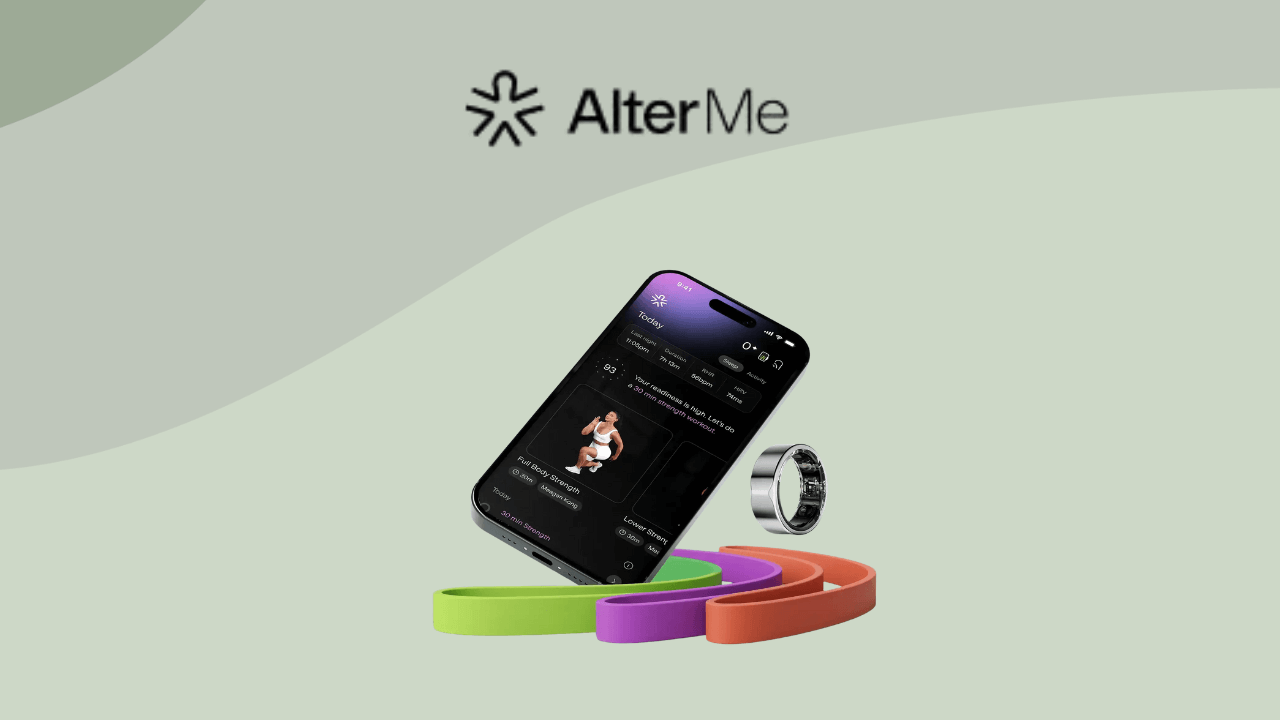
The platform provides access to at-home DNA test kits, wearable smart rings, and a mobile app that brings everything together. The DNA test is used to uncover genetic insights related to fitness and nutrition, while the ring tracks daily metrics such as activity and sleep.
In this review, we look at the platform’s full setup, including how it uses DNA insights, its offerings, and the usability/transparency of its services. The review also explores the real user experiences with the brand’s services.
As per the official site, AlterMe is built around the idea that weight management, movement, recovery, and nutrition can work best when aligned with individual biology rather than generalized plans.
The brand’s core offering is an integrated system that combines an at-home DNA health and fitness assessment, a biometric wearable ring, and a mobile app that delivers daily guidance. Its DNA test analyzes specific polymorphisms linked to traits such as metabolism, exercise response, sleep quality, stress resilience, and weight-loss tendencies.
The genetic foundation is paired with ongoing biometric tracking through the AlterMe ring, which monitors sleep stages, heart rate variability, movement, and recovery to generate a daily readiness score. Based on these details, the app dynamically adjusts workouts, recovery sessions, and activity recommendations so that training intensity and volume reflect how the body is actually responding.
DNA Fitness & Health Report may evaluate biological predispositions related to exercise response, metabolism, recovery, sleep, and weight regulation using an at-home DNA collection process.
As per its official website, the analysis examines 60 specific genetic polymorphisms selected for their established associations with physical performance, nutrient metabolism, recovery capacity, and sleep physiology. These markers are interpreted into 13 key traits that collectively describe how you are biologically inclined to respond to different forms of exercise, caloric intake, macronutrient distribution, stress, and rest.
Within the exercise domain , genetic variants are assessed for their influence on aerobic versus strength-based training responsiveness, muscular efficiency, and fatigue resistance. Recovery-related markers may provide details regarding the inflammatory response, tissue repair tendencies, and stress resilience, which might affect training frequency and intensity tolerance.
Nutritional traits can help evaluate genetic influences on carbohydrate and fat metabolism, satiety signaling, and nutrient utilization efficiency. Sleep-related markers offer information on circadian rhythm tendencies and recovery efficiency, which play a role in hormonal balance, appetite regulation, and physical restoration.
AlterMe Program aligns physical activity, recovery, and nutrition strategies with your underlying biology using genetic data, biometric monitoring, and continuous behavioral inputs. Its foundation is a comprehensive DNA analysis conducted through a cheek swab processed in a CLIA-certified laboratory. Such analysis evaluates genetic markers associated with metabolism, fat storage tendencies, exercise responsiveness, recovery speed, sleep physiology, and nutrient processing.
As part of the program, biometric data collection is done through the AlterMe Ring, which continuously monitors sleep duration and quality, heart rate, heart rate variability, stress markers, and daily movement patterns. These metrics provide real-time insight into autonomic balance, recovery status, and physiological readiness.
The program delivers dynamic workout recommendations that adapt to fluctuations in sleep quality, stress load, and recovery capacity. Rather than replacing existing routines, the AlterMe Program intends to optimize activities you already enjoy by adjusting volume, intensity, and frequency in accordance with biological readiness.
Nutritional guidance is provided through an AI-powered nutrition coach that uses photo-based meal logging to reduce tracking burden. Meals are analyzed in the context of genetic predispositions related to macronutrient handling and metabolic efficiency, as well as current activity and recovery data.
Progress tracking within the AlterMe Program includes periodic assessments and a 3D body scan capable of monitoring changes in fat mass, lean mass distribution, and posture with a level of precision intended to exceed standard scale-based measurements.
Alterme positions its wellness platform around the integration of genetic predispositions and ongoing physiological feedback, framing personalization as an evolving process rather than a one time assessment.
The program begins with a cheek swab DNA test processed through a CLIA certified laboratory, which evaluates traits related to carbohydrate and fat metabolism, inflammatory response, stress sensitivity, muscle recovery, and exercise performance. These genetic markers are used to establish an individualized baseline for nutrition planning, training structure, and recovery needs.
What distinguishes Alterme’s approach is the addition of continuous biometric monitoring through its wearable ecosystem, including the AlterMe Ring, also referred to as the Signal Ring. This device tracks metrics such as heart rate, heart rate variability, resting heart rate, sleep stages and quality, activity levels, stress indicators, recovery signals, and blood oxygen saturation.
By collecting real time data, the platform can assess daily readiness and physiological strain, allowing recommendations to shift based on how the body is responding rather than relying solely on static DNA insights.
Alterme further layers personalization through AI driven nutrition tracking. You can log meals by taking photos, with the system estimating calories and macronutrient composition and comparing intake against DNA informed targets. As the AI learns from user behavior, tracking becomes faster and more tailored, reducing reliance on manual data entry while maintaining relevance to individual goals.
AlterMe’s genetic analysis is built around a defined panel of 60 single-nucleotide polymorphisms (SNPs) that target areas such as metabolism, fitness response, nutrient utilization, macronutrient sensitivity, recovery, body composition, and exercise preference. This focused approach can highlight individual genetic tendencies. Still, it does not incorporate polygenic risk scoring, which evaluates the combined influence of thousands of genetic variants to estimate risk for complex, multifactorial conditions.
Many fitness and metabolic outcomes, including obesity, insulin resistance, cardiovascular risk, and type 2 diabetes, are shaped by polygenic interactions alongside environmental and lifestyle factors. Polygenic risk models are designed to produce population-calibrated, probabilistic risk estimates rather than isolated marker interpretations. As AlterMe relies on selected SNPs instead of large-scale variant aggregation, its insights remain primarily educational and directional rather than predictive at a population level.
While AlterMe provides personalized lifestyle recommendations related to diet, exercise type, and recovery, it does not offer stratified risk categories or comprehensive genetic risk profiles commonly used in research and preventive health contexts.
Genebase and AlterMe function in the personalized health and fitness technology space, using genetic data as a foundation for tailoring decisions around nutrition, exercise, and lifestyle. However, the brands differ in terms of their core positioning, range of service offerings, product ecosystem, and subscription options.
Genebase is positioned as a DNA testing and genomics platform that delivers genetic insights across health, disease risk, ancestry, sexual health, fitness, nutrition, lifestyle, and behavioral traits.
The brand’s origins in laboratory work associated with legal and forensic DNA testing shape an identity centered on technical credibility, controlled data handling, and modular access to insights through a proprietary digital platform.
As part of its Fitness and Nutrition range, the brand presents DNA-based assessments that identify genetic predispositions related to exercise response, weight management tendencies, and nutrient processing. These include curated tests for fitness response and weight loss traits, along with targeted screenings for lactose intolerance, caffeine sensitivity, alcohol intolerance, and genetic markers associated with celiac disease. The results are interpreted to explain how genetics may influence metabolism, recovery patterns, dietary tolerance, and training response.
Beyond the Fitness and Nutrition range, the brand also provides a separate testing ecosystem across categories like Relationship Tests, Health and Diseases, Ancestry, Sexual Health, Lifestyle, and Behavior and Traits.
Genebase stores Fitness and Nutrition results from a single non-invasive cheek swab within its proprietary digital platform, allowing genetic data to be reused across multiple applications over time. Web-based resources help interpret results in the context of diet planning, exercise optimization, and weight management.
Meanwhile, AlterMe positions itself as a personalized health and fitness platform that integrates genetic analysis with biometric tracking and adaptive programming. Rather than considering DNA as a static report, AlterMe frames genetics as one component within a system that continuously adjusts based on sleep, stress, recovery, and real-world constraints.
The brand’s core offering centers on a DNA Health and Fitness Assessment that analyzes 60 specific genetic polymorphisms (like physical performance, nutrient metabolism, and sleep physiology), which are interpreted into 13 key traits. These markers help directly inform personalized fitness programming and nutrition guidance, shaping macronutrient ranges, calorie targets, and preferred training modalities, and serving as a foundational layer for an ongoing adaptive system rather than a standalone explanation.
Genebase emphasizes quality and credibility through laboratory standards such as CLIA certification, CAP accreditation, automated sequencing and genotyping, and dual-testing protocols.
On the other hand, AlterMe highlights credibility through development by experts in sports science, sleep medicine, performance psychology, and clinical medicine, paired with certified genetic analysis and a privacy-conscious focus on health- and fitness-relevant markers.
Living DNA operates as a UK-based personal genomics company with a primary focus on ancestry analysis, complemented by optional wellbeing insights delivered through DNA testing. The brand’s identity is shaped by principles of privacy, accessibility, and scientific credibility, supported by in-house analysis systems and secure digital delivery.
Meanwhile, AlterMe positions itself as a personalized health and fitness platform built around the integration of genetic analysis, biometric tracking, and adaptive lifestyle programming. Rather than treating DNA as a static information source, the brand frames genetics as one component within a continuously evolving system that responds to daily readiness, sleep quality, stress levels, and behavioral consistency.
Living DNA’s product lineup is anchored in ancestry testing, with kits designed to deliver highly granular regional breakdowns. Core offerings include the Starter Kit and Full Ancestry Kit, along with variants that add Neanderthal ancestry reporting or extended haplogroup detail. The platform emphasizes depth in specific regions, particularly African ancestry and the British Isles, positioning itself toward those seeking detailed historical and geographic lineage rather than broad continental estimates.
Beyond ancestry, the brand extends into wellbeing through separate DNA Fitness Testing and DNA Nutrition Testing. Fitness testing examines genetic factors related to oxygen flow, endurance trainability, strength potential, recovery speed, blood vessel response.
Nutrition testing analyzes genetic responses linked to vitamin D, vitamin C, vitamin B12, vitamin A, omega-3 processing, lactose tolerance, and carbohydrate/sugar metabolism. These reports are positioned as explanatory insights into how genetics may influence lifestyle outcomes rather than prescriptive diet or training plans.
AlterMe’s offering centers on its DNA Health and Fitness Assessment, which analyzes a defined set of genetic polymorphisms relevant to exercise response, recovery tendencies, nutritional needs, sleep characteristics, and stress resilience. Rather than sequencing the full genome, the analysis is targeted to traits that directly inform fitness programming and nutrition guidance.
The AlterMe brand extends personalization through its proprietary wearable ring, which tracks sleep stages, heart rate variability, movement, and recovery metrics. Such biometrics help generate a daily readiness score that directly influences workout intensity, recovery emphasis, and session selection within the mobile app. Recovery is considered as a core pillar, supported by guided breathwork, stretching, meditation, and mindfulness sessions aimed at nervous system regulation.
To evaluate AlterMe, we looked at its background and presence across independent review platforms. On the Better Business Bureau, the brand holds a D+ rating.
Reviews and complaints on the BBB platform emphasize dissatisfaction with cancellation handling, continued billing after attempted cancellations, disputes over payment plans, and frustration with customer service communication. A few described difficulty obtaining refunds within the stated trial period and confusion around policy enforcement, contributing to a pattern of trust concerns reflected in the BBB score.
Meanwhile, ConsumerAffairs provides the brand with a 3.8 out of 5 rating based on 65+ reviews. Positive feedback highlights the DNA-based personalization model, wearable technology, fitness mirror experience, and coaching support.
Many reviewers report improved awareness of sleep, stress, and activity patterns, along with appreciation for tailored workouts and nutrition guidance. However, a few users shared service-related concerns, including billing disputes, cancellation challenges, and disagreements over refund eligibility.
While ConsumerAffairs reviews highlight responsive staff and supportive coaching, the BBB records suggest that customer experiences can vary.
The brand’s strong user engagement and satisfaction highlight the brand’s personalized fitness model. However, it also highlights recurring concerns related to billing transparency and cancellation processes.
In evaluating the brand, we analyzed verified reviews across Reddit discussions and threads, which highlighted a mixed response to the brand and its offerings.
One user who purchased the DNA kit described frustration with being required to schedule a 30-minute phone consultation. Many users viewed this requirement as unnecessary and intrusive. A common concern in the reviews was that the DNA insights felt generic, vague, or overly similar across users, leading some to question the scientific depth or personalization of the results.
However, Reddit feedback is not negative. Many users of the AlterMe system describe meaningful weight management progress, appreciation for readiness scores, personalized workout structure, strength-training integration, and recovery guidance.
Other users praised features such as meal suggestions, AI nutrition tools, HSA/FSA eligibility, waived membership fees when actively working out, and responsiveness to user feedback on app updates. However, criticisms appear around technical instability, frequent updates causing workout delays, freezing apps, and damaged hardware on arrival.
The brand’s user feedback on Reddit suggests that the brand has generated curiosity and engagement but struggles with trust, transparency, and consistency. While some users find value in the ecosystem and report favorable progress, many share discomfort with mandatory consultations and questionable personalization of DNA insights.
AlterMe operates as a DNA-personalized fitness platform that pairs genetic insights, wearable tracking devices, and adaptive programming to support weight management and metabolic health goals.
The brand’s programs highlight a unified ecosystem that brings together DNA analysis, biometric data, exercise routines, recovery guidance, and nutrition planning. Daily recommendations adjust based on progress and lifestyle inputs, positioning the platform as a way to reduce reliance on generalized fitness plans and manual decision-making.
However, the brand’s methodological details of its testing and fitness assessment are not fully explained. It provides limited clarity on the scope of genetic testing, the scientific rationale behind outcome claims, or the presence of independent studies validating effectiveness of the programs.
Moreover, engagement with the platform requires ongoing participation and consistent use of the wearable device, along with the need to provide accurate self-reported inputs. Such considerations should be kept in mind before opting for the brand’s services.

Contact us at [email protected] or follow @leafsnap on Twitter! View our Privacy Policy.