
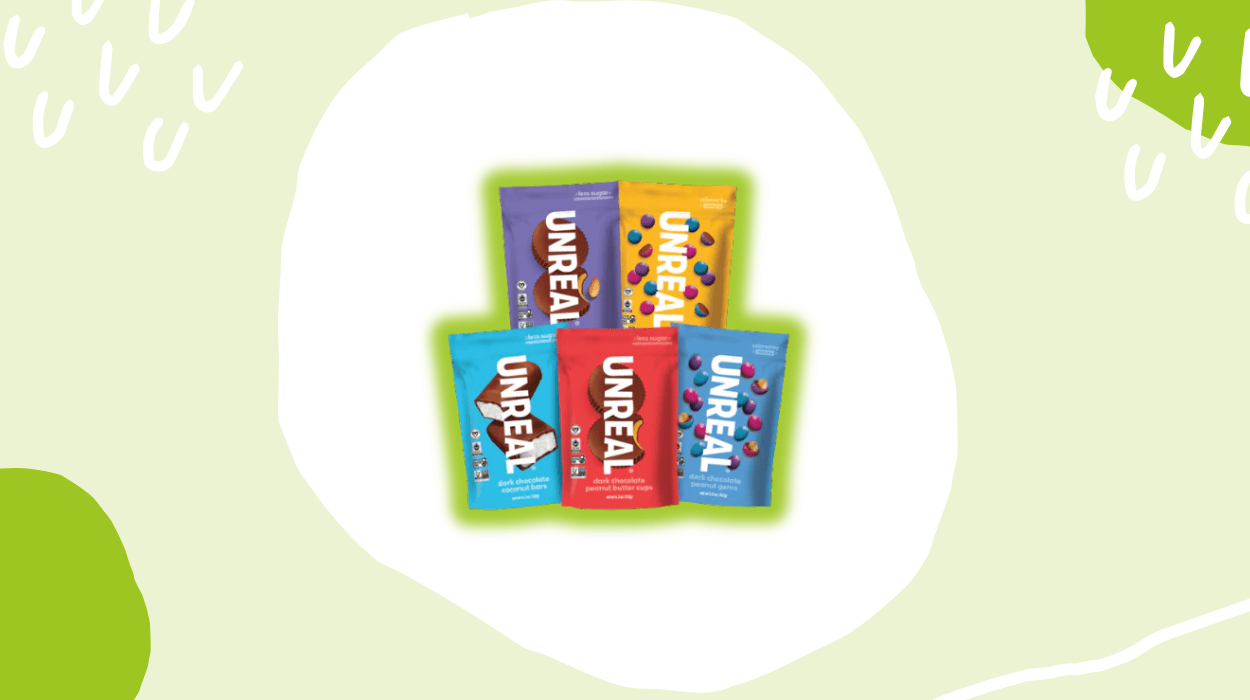

Unreal Snacks offers chocolate-based snacks, formulated with reduced sugar and artificial additives without shifting away from familiar candy formats.
The brand positions its offerings as a healthy substitute for conventional chocolate products, which are often laden with processed ingredients, added sugars, and harmful additives. Its lineup features chocolate bars, nut clusters, cups, gems, and covered snacks, with recurring emphasis on gluten-free, soy-free, and Fair Trade–certified ingredients.
In this review, we cover everything you need to know about the brand, including its formulation approach, ingredient transparency standards, associated advantages, and potential limitations. It also compares Unreal Snacks with other similar brands along with real user experiences.
Unreal Snacks is a U.S.-based confectionery brand that functions in the packaged chocolate and snack category. Some featured offerings from the brand include the Dark Chocolate Peanut Butter Cups, Dark Chocolate Almond Butter Cups, Milk Chocolate Gems, Dark Chocolate Crispy Quinoa Gems, and Dark Chocolate Covered Almonds. Seasonal and limited offerings include options such as Halloween Dark Chocolate Coconut Bars and Halloween Dark Chocolate Peanut Butter Cups.
The manufacturer states that sweetness is added to the products through cane sugar rather than sugar alcohols or artificial sweeteners. All offerings remain free from soy ingredients, although they may be manufactured in shared facilities. The brand also highlights the use of Fair Trade-certified cocoa and sustainably sourced and RSPO-certified palm oil.
As per its official website, manufacturing takes place in the United States and Canada, and products are distributed through both online channels and major national retailers, including Target, Walmart, and Costco.
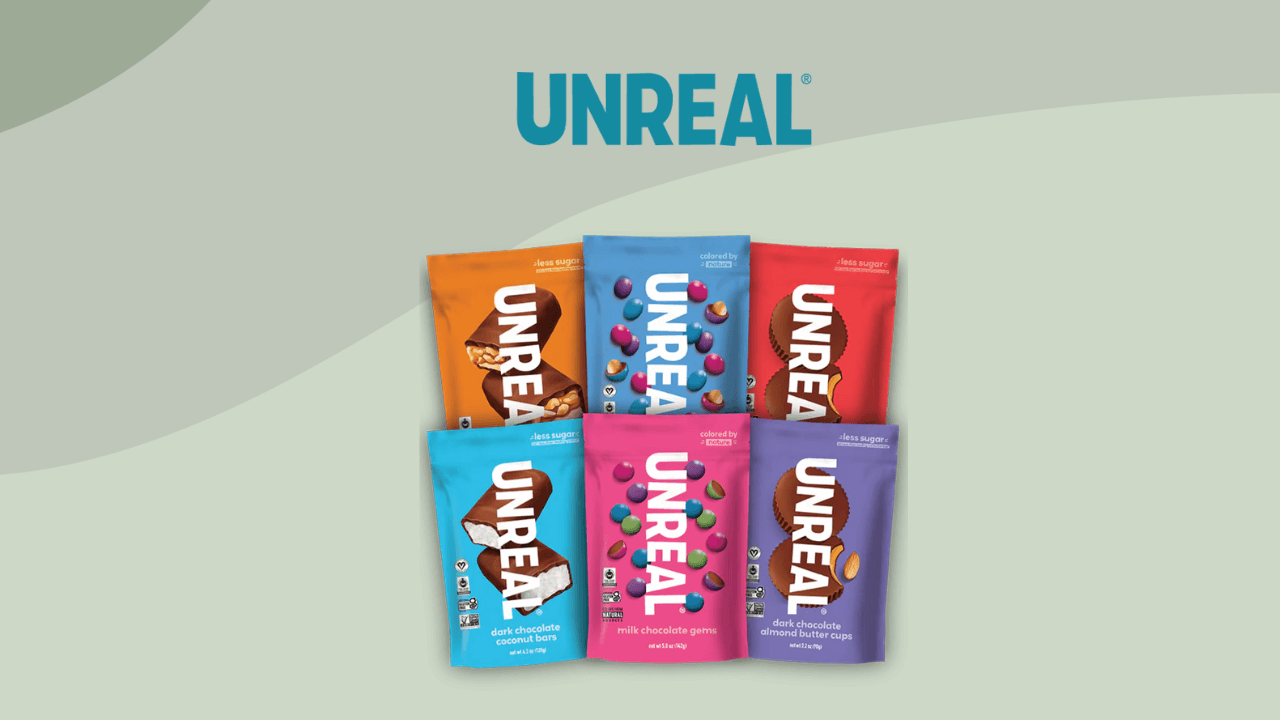
Nut Butter Cups are available in three options, including the Dark Chocolate Peanut Butter Cups, Dark Chocolate Almond Butter Cups, and Halloween Dark Chocolate Peanut Butter Cups (a limited edition seasonal pack).
The Nut Butter offerings feature organic peanuts and peanut flour that provide the primary fat and protein matrix. Peanut-derived fats and proteins slow gastric emptying, which may reduce rapid glucose absorption after consumption. Dark chocolate made from cocoa liquor and cocoa butter supplies polyphenols and structural fat in the products. Cocoa polyphenols in dark chocolate are associated with antioxidant activity and endothelial support. Nut Butter Cups range also features blue agave inulin that acts as a fermentable prebiotic fiber, potentially increasing fiber content and helping slow carbohydrate digestion.
As per the official website, the Chocolate Gems range includes offerings like the Dark Chocolate Peanut Gems, Milk Chocolate Gems, and Dark Chocolate Crispy Quinoa Gems. Such offerings are available in Everyday, Value, and select Grab & Go sizes depending on the product. These variants have naturally colored candy shells and are claimed to be free of artificial dyes, soy ingredients, and sugar alcohols.
Dark Chocolate Peanut Gems pair roasted peanuts with dark chocolate and a naturally colored candy shell. Peanuts contribute unsaturated fats and plant protein that slow carbohydrate digestion and promote satiety. Gum acacia functions as a soluble fiber, supporting gut microbial fermentation and helping stabilize post-snack glucose absorption. Milk Chocolate Gems are built on creamy milk chocolate made with grass-fed, rBST-free milk, paired with inulin and gum acacia. Dairy proteins contribute to slower gastric emptying and prolonged fullness.
Meanwhile, the Dark Chocolate Crispy Quinoa Gems feature quinoa crisp, delivering a light crunch. Quinoa starches digest more gradually than refined carbohydrates, which could help support satiety and suppress food cravings.
The Chocolate Bars range includes products like the Dark Chocolate Caramel Peanut Nougat Bars, Dark Chocolate Coconut Bars, and the seasonal Halloween Dark Chocolate Coconut Bars.
Dark Chocolate Caramel Peanut Nougat Bars pair cassava syrup, peanuts, dark chocolate, and a protein-fortified nougat layer made with pea protein and grass-fed whey. Cassava syrup provides a less refined carbohydrate source that could function as a healthier option and is said to be fructose-free. Added pea and whey proteins increase satiety signaling through amino-acid–driven release of peptide YY and GLP-1, thereby supporting appetite control.
Dark Chocolate Coconut Bars and Halloween Dark Chocolate Coconut Bars contain coconut, cassava syrup, and dark chocolate. Coconut supplies medium-chain triglycerides (MCTs), which are metabolized more rapidly than long-chain fats and preferentially used for energy rather than storage.
The Chocolate Covered Snacks range focuses on classic salty-sweet snack formats reformulated with grain-free bases. According to the official website, the range features offerings like the Dark Chocolate Covered Pretzels, Milk Chocolate Covered Pretzels, and Dark Chocolate Covered Almonds.
Dark Chocolate Covered Pretzels use a grain-free pretzel made from cassava flour, potato starch, avocado oil, hemp heart flour, and flaxseed. Cassava flour provides a neutral, gluten-free carbohydrate base that is easier to digest, especially if you have sensitivity to wheat proteins. Flaxseed and hemp heart flour add dietary fiber and plant omega-3 fats that slow carbohydrate absorption and support gut motility. Dark Chocolate Covered Almonds contain roasted almonds coated in dark chocolate, with no waxy shell or added fillers. Almonds supply monounsaturated fats, magnesium, and plant protein, which collectively improve insulin sensitivity and prolong fullness by delaying gastric emptying.
Unreal Snacks traces its origin to a practical frustration with conventional candy rather than an abstract nutrition concept. Founded by Michael Bronner alongside his sons Nicky and Kristopher Bronner, the brand points to a family experience around Halloween candy that raised questions about why familiar treats relied so heavily on artificial colors, corn syrup, preservatives, and high sugar levels.
Such an origin helps explain why the focus remains on recreating familiar products like peanut butter cups, chocolate-coated snacks, and bars rather than positioning the products as alternative health snacks. The brand claims its goal has always been to keep taste expectations intact while simplifying ingredient lists and lowering sugar content.
After an early phase of rapid growth, the business reset its lineup and operations before relaunching with clearer internal standards. Since 2016, CEO Kevin McCarthy has led the company with a stated focus on preserving the founder’s original intent while improving quality, availability, and reliability. This continuity suggests that core product principles have remained stable even as the brand expanded into more stores and snack formats.
Unreal Snacks claims to follow a values-first approach in which ingredient standards, sourcing practices, and dietary considerations are considered as core requirements rather than optional features. Such values are communicated clearly and consistently at the point of purchase. The brand highlights statements such as Fair Trade ingredients, reduced sugar levels, and the absence of artificial additives directly on packaging and product pages, aiming to make its standards easy to understand without requiring additional research.
The brand claims that all of its chocolate products use Fair Trade Certified cocoa. Such a certification is positioned as supporting minimum pricing for farmers, safer labor conditions, and environmental stewardship. Where applicable, the brand uses organic ingredients such as organic cane sugar, cassava syrup, and peanuts, aligning with preferences for reduced reliance on synthetic agricultural inputs.
Dietary inclusivity is presented as another foundational value. The manufacturer claims that many products are certified gluten-free by the GFCO (<10 ppm gluten), with prominent packaging displaying the same. Moreover, the brand emphasizes the exclusion of artificial colors and flavors, corn syrup, hydrogenated oils, soy ingredients, and sugar alcohols, framing these exclusions as default practices rather than premium features.
Unreal Snacks has established clear credibility within the chocolate and candy formats, where its positioning is most developed. Products such as Dark Chocolate Peanut Butter Cups, Milk Chocolate Gems, and nougat bars are associated with lower sugar levels than conventional candy, simpler ingredient lists, and the absence of artificial colors or flavors. Recognition in this category is driven primarily by taste familiarity paired with cleaner formulations rather than by claims tied to functional nutrition or performance outcomes.
Reviews and media coverage commonly describe the brand’s offerings as a better version of traditional candy, with trust built on maintaining flavor expectations while reducing added sugar and artificial inputs. From a nutritional perspective, improvements remain ingredient-focused, emphasizing what is removed rather than positioning around effects like energy support, satiety, or metabolic impact.
Expansion beyond candy is relatively recent and modest in scope. Snack-style additions introduced in 2024, such as chocolate-covered pretzels and almonds, marked the first move outside confectionery after more than a decade focused on candy. They represent a small share of the overall lineup and lean toward indulgent sweet–salty combinations rather than clearly defined nutrition-driven roles.
Formulations in these newer categories typically do not emphasize protein density, fiber contribution, or evidence-linked benefits such as fullness, recovery, or sustained energy. As a result, authority remains concentrated within candy rather than extending convincingly across multiple snack categories for Unreal Snacks.
When comparing the brands, both Alter Eco and Unreal Snacks function within the chocolate and confectionery space. However, the brands' approaches to product development, sourcing priorities, quality standards, and accessibility differ markedly.
Founded in 2005 by Mathieu Senard and Edouard Rollet, Alter Eco positions itself as an organic food brand built around regenerative agriculture, environmental accountability, and fair trade systems. The brand's identity frames chocolate not primarily as indulgence but as a means for repairing food systems and supporting long-term ecological outcomes. Meanwhile, Unreal Snacks positions itself as a reformulated candy brand focused on unjunking familiar treats by lowering sugar and removing artificial ingredients while preserving the emotional appeal and flavor profiles of conventional confectionery.
In terms of product range, the brands have some differences in scope and framing. Alter Eco’s lineup covers organic dark chocolate bars, chocolate truffles, truffle thins, and organic granola with no added sugar, all anchored in high-cacao formulations. Chocolate bars include flavor options such as Super Blackout, Total Blackout, Classic Blackout, Mint Blackout, Raspberry Blackout, Almond Blackout, Burnt Caramel, and Sea Salt. Truffle offerings come in multiple flavor options, including Salted Caramel, Mint Crème, Silk Velvet, and Superdark. As part of its granola range, the brand offers flavor options such as Almond Butter, Cashew Butter, Dark Chocolate, and Cinnamon Raisin.
Unreal Snacks focuses more narrowly on candy-style formats, including Dark Chocolate Peanut Butter Cups, Dark Chocolate Caramel Peanut Nougat Bars, Dark Chocolate Coconut Bars, Dark Chocolate Peanut Gems, Milk Chocolate Gems, and Dark Chocolate Almond Butter Cups. The brand also offers products like the Dark Chocolate Covered Pretzels, Milk Chocolate Covered Pretzels, Dark Chocolate Covered Almonds, and Dark Chocolate Crispy Quinoa Gems. Its lineup further extends into curated bundles such as the Complete Variety Pack and Vegan Variety Pack.
Ingredient and certification standards represent another point of contrast. Alter Eco emphasizes full organic certification under the USDA National Organic Program, Fair for Life Fair Trade certification through Ecocert, non-GMO standards, and production free from additives, gluten, and soy ingredients. Packaging strategies prioritize compostable, recyclable, or post-consumer recycled materials, including TÜV AUSTRIA-certified home compostable truffle wrappers made from tree fiber and non-toxic inks. Meanwhile, Unreal Snacks emphasizes the absence of artificial dyes, flavors, and preservatives, and sources Fair Trade Certified cocoa across its product line. Many offerings from the brand are Certified Gluten Free under a stringent threshold of under 10 ppm, seven of eleven core products are Certified Vegan, and the brand holds Kosher certifications.
Distribution strategies also differ in their scope. Alter Eco distributes widely through natural and specialty retailers, including Whole Foods Market, Sprouts Farmers Market, Natural Grocers, Wegmans, Thrive Market, iHerb, and Vitacost, supported by national distributors like UNFI and KeHE. Similarly, Unreal Snacks has expanded into mass retail channels, including Amazon, Costco, Target, Walmart, and Publix, alongside direct-to-consumer build-your-own boxes and subscription savings.
Hu Kitchen and Unreal Snacks both position themselves in the better-for-you chocolate space. However, the brands approach ingredient philosophy, sourcing, formulation philosophy, and accessibility from notably different angles.
Founded in 2012 by co-founders Jordan Brown, Jason Karp, and Jessica Karp, Hu Kitchen positions itself as an organic chocolate brand defined by strict ingredient exclusion and simplicity. Meanwhile, Unreal Snacks traces its origin to a family-driven motivation, where children questioning artificial ingredients and excessive sugar in candy prompted a reformulation-focused mission. The brand’s formulation approach prioritizes sugar reduction and the removal of artificial ingredients while preserving the nostalgic taste and formats associated with mainstream confectionery.
Product portfolios reflect a contrast in intent and scope between the brands. Hu Kitchen offers a structured range of dark chocolate bars, milk chocolate bars, dark chocolate bites, baking chocolate, and dark chocolate gems. These offerings are available across diverse flavor profiles, including options such as Hazelnut Butter, Salty Dark Chocolate, Cashew Butter, Vanilla Crunch, Hazelnut Coffee, Almond Crunch, and Simple Dark Chocolate. Functional extensions like Dark Chocolate Baking Chips and Semi-Sweet Baking Chips reinforce the brand’s positioning within everyday home use rather than seasonal or novelty snacking.
Unreal Snacks emphasizes candy-style formats across its offerings, available across formats like nut butter cups, chocolate bars, chocolate-covered snacks, and chocolate gems. Some signature offerings from the brand include the Dark Chocolate Covered Pretzels, Milk Chocolate Gems, Dark Chocolate Almond Butter Cups, Dark Chocolate Caramel Peanut Nougat Bars, Dark Chocolate Peanut Gems, and Dark Chocolate Coconut Almonds. Beyond singular options, the brand also offers bundle offerings such as the Vegan Variety Pack and the Complete Variety Pack.
Ingredient philosophy is also a point of contrast between the brands. Hu Kitchen enforces a strict avoidance of refined sugars, sugar alcohols, emulsifiers, lecithins, palm oil, soy, gluten, and cane sugar across its offerings. All Hu chocolate products are described as USDA Organic, Non-GMO Project Verified, and Certified Fairtrade. Meanwhile, Unreal Snacks emphasizes the removal of artificial dyes, flavors, and preservatives, uses real cane sugar instead of sugar alcohols or artificial sweeteners, and avoids soy ingredients. Certification is more selective, with many products Certified Gluten Free under a 10 ppm threshold, most dark chocolate items Non-GMO Project Verified, and Kosher certification through OK Kosher and OU Kosher.
Our evaluation of Unreal Snacks is based on Amazon reviews based two key offerings. The Dark Chocolate Peanut Butter Cups maintain a 4.3 out of 5 score based on 1,300+ Amazon reviews. Many users praised the taste, describing the dark chocolate as rich and not overly sweet. Texture feedback is mixed. Some users described the peanut butter filling as smooth and creamy at room temperature, while others described it as feeling dry, chalky, or less creamy than expected. Freshness and meltability are recurring concerns, with some users expressing concerns about cups arriving melted, misshapen, or stale, particularly during warmer months.
On Amazon, Dark Chocolate Caramel Peanut Nougat Bars carry a 4.0 out of 5 score based on 275+ Amazon reviews, reflecting broader variability in experience. Positive reviews frequently highlighted the flavor balance, lower sugar content, and the product’s ability to satisfy sweet cravings without excessive sweetness. However, shipping-related issues are reported by some users, with repeated reports of melted, overheated, chalky, or stale bars. Some users noted that while the flavor remained acceptable, the visual quality and mouthfeel of the bars suffered after heat exposure.
Our evaluation of the Amazon reviews for the brand’s offerings suggested that most users liked the taste and reduced sugar formulations. However, criticisms focused on the melting of products, receipt of stale formulations, and perceived overpricing in relation to portion size.
In evaluating Unreal Snacks, we looked at its operational history and presence across independent review forums to assess how the brand is perceived based on third-party consumer feedback rather than brand-led claims.
On ThingTesting, the brand holds a 4.4 out of 5 rating, based on 170+ consumer reviews, indicating a generally favorable response among users. Users frequently emphasized taste satisfaction relative to conventional candy, ingredient simplicity, and reduced sugar formulations. Many users praised the brand’s dark chocolate peanut butter cups, coconut bars, and chocolate-covered pretzels. However, recurring concerns were reported around premium pricing and a relatively small portion size relative to cost.
Across TenereTeam, the brand carries a 4.7 out of 5 rating, though the score is derived from a limited number of reviews. Many users highlighted ingredient transparency, fair-trade chocolate sourcing, and the absence of artificial sweeteners or dyes. However, some users described price sensitivity as a consistent limitation.
Based on the available data, the brand’s reputation is shaped primarily by product quality and ingredient philosophy, with consumer trust appearing strongest around formulation transparency and ethical sourcing. However, the criticisms are centered around pricing and value perception.
Unreal Snacks focuses on reducing sugar content and eliminating artificial additives from familiar chocolate and candy products. Broad retail availability and consistent packaging cues reinforce the brand’s role as a mainstream alternative within the candy segment rather than a functional or nutrition-led snack brand.
However, the brand’s product lines maintain limited expansion beyond candy formats, and the available newer product formats do not emphasize evidence-linked benefits such as improved satiety or sustained energy. The brand’s offerings also lack transparency around third-party lab testing or detailed sourcing verification.
It is also essential to remember that your experiences and responses to the products might vary based on needs, portion tolerance, and storage conditions. Not all products are vegan, and some rely on dairy-based ingredients that may not suit all preferences. Such considerations should be kept in mind before exploring the brand.

Contact us at [email protected] or follow @leafsnap on Twitter! View our Privacy Policy.