
Moon Juice focuses on combining nutritional formulations to support everyday fitness. It has expanded into a broader product line that includes functional powders, drink mixes, and skincare. The brand is built around adaptogens, mushrooms, and other bioactive compounds. It claims to address concerns such as stress, low energy, sleep issues, mood balance, hydration, and skin maintenance.
In this review, we will explore what Moon Juice offers in terms of product range and the limitations you should be aware of. We will also provide a closer look at real consumer experiences to help you understand how the brand performs in everyday use.
Moon Juice offers a wide portfolio of products across formulas and skincare, built around its Source, Dose, Form™ standard. This framework focuses on using traceable ingredients, clinically relevant doses, and bioavailable forms that your body can absorb and utilize efficiently.
As per the official website, Moond Juice features a personalized quiz that may recommend products and skincare based on your goals. These recommendations are tied to daily habits and routines.
Ingredient sourcing and quality control are emphasized through 100% traceability and extensive third-party testing for identity, purity, potency, microbiological content, heavy metals, pesticides, and residual solvents. The brand also states that it avoids endangered plants and works with partners who support local farming communities. Its product range covers multiple formats like powders, capsules, drink mixes, and liquid options for daily use, along with skincare products such as moisturizers, exfoliators, and serums. The brand also offers targeted bundles or stacks, including options for sleep, cortisol control, nootropic support, and AM/PM magnesium routines.
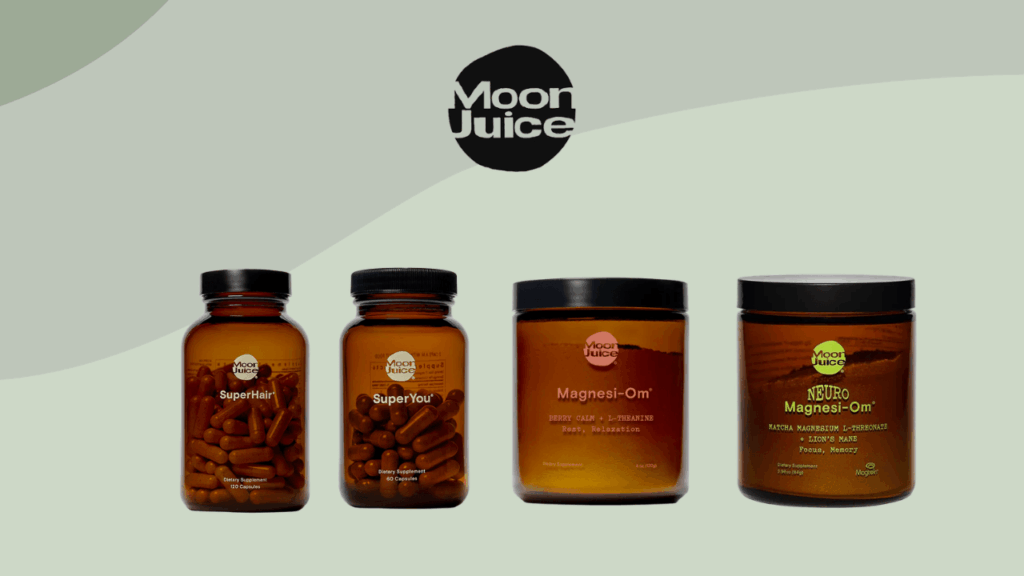
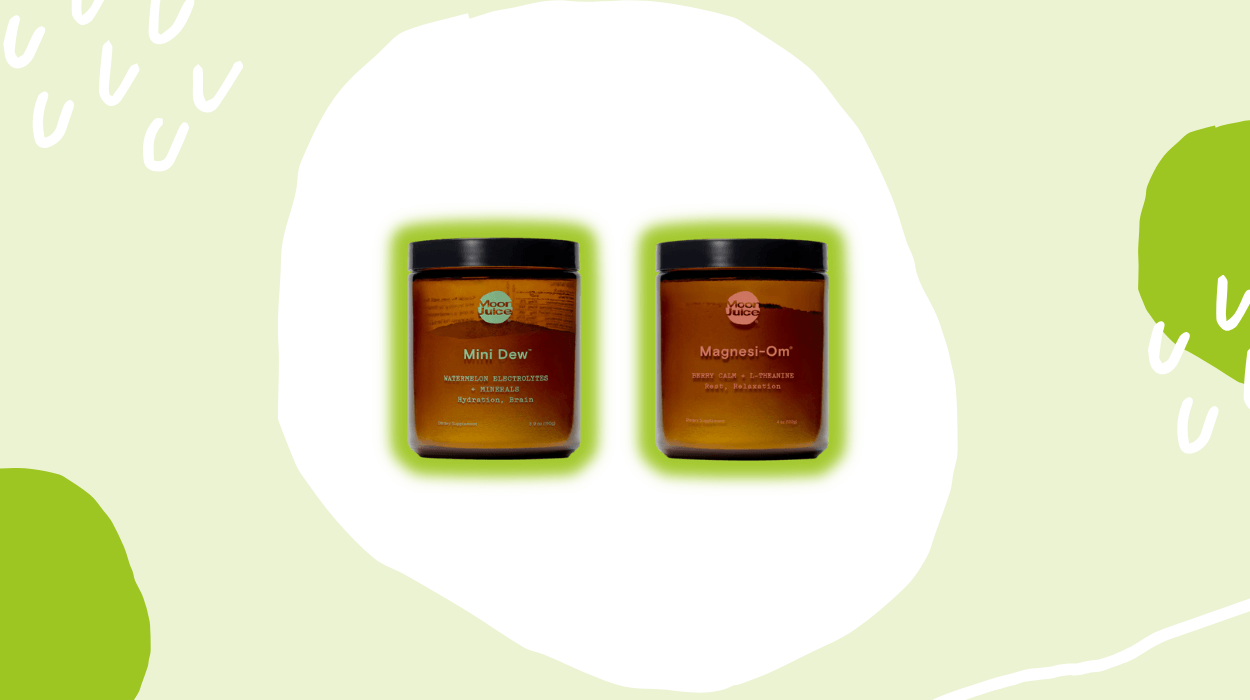
Magnesi-Om may support better brain function and cognitive balance. It could also help with digestive regularity and mild bloating, including symptoms that may occur around PMS. L-theanine in this formula works on brain signaling pathways by influencing neurotransmitters such as GABA, dopamine, and serotonin. This may help you maintain a calmer mental state without causing drowsiness, which can support focus and reduce mental overstimulation during daily activities.
Magnesi-Om combines the magnesium chelate blend, which includes gluconate, citrate, and acetyl taurinate. These compounds may support smoother bowel movements and also support nerve signaling that could regulate excitability in the brain.
As per the official website, Collagen Protect supports skin hydration, elasticity, and fine lines, while also helping maintain your body’s natural collagen production. The formula has sodium hyaluronate, which might help your skin stay hydrated and plump. It could also support the skin barrier and may reduce the visibility of fine lines that become more noticeable when skin is dry or depleted.
Collagen Protect also contains rice bran solubles (tocotrienols), which can penetrate more efficiently into skin layers and help protect cells from oxidative stress. They may support the preservation of existing collagen and contribute to improved skin elasticity.
Sleepy Magnesi-Om may support better sleep, improve your sleep quality, and promote relaxation, without the next-day grogginess. The formula includes magnesium bisglycinate and magnesium gluconate, which can help calm the nervous system and relax muscles.
Magnesium helps regulate neurotransmitters involved in sleep, including GABA, which slows down nerve activity and prepares your body for rest. The bisglycinate form has calming properties and may support deeper, more restful sleep.
The makers also added Herbatonin® (plant melatonin) in this formula, which could help regulate your circadian rhythm. It may help reduce the time it takes for you to fall asleep and improve overall sleep consistency by supporting the natural sleep-wake cycle.
As per the official website, SuperHair supports hair thickness and follicle health by addressing internal factors like stress and hormone balance that can influence hair growth. Ashwagandha in this formula may help regulate your body’s stress response by helping balance cortisol levels. It might also help reduce oxidative stress that may weaken hair follicles over time.
The formula also includes saw palmetto and pumpkin seed, both of which are associated with managing levels of dihydrotestosterone. These ingredients may work by limiting the conversion of testosterone into DHT, helping reduce its impact on hair follicles. They may contribute to maintaining hair density and promoting the appearance of thicker strands by supporting a more balanced scalp environment.
SuperYou could support better energy levels, mood balance, and mental focus, while also helping protect the body from oxidative stress. The makers added ashwagandha in this formula, which might help your body adapt to physical and mental stress by regulating cortisol levels. It could also support nervous system balance, which can contribute to sustained focus without overstimulation.
According to the official website, SuperYou contains amla, which might help neutralize free radicals that can damage cells and contribute to fatigue and cognitive strain over time. It could also help maintain consistent energy and support vitality by supporting cellular health and reducing oxidative stress. The formula contains shatavari, which can support hormonal balance and help the body cope with physical stress. This may indirectly influence energy levels and mood stability.
Ting may support energy production, metabolism, and mood balance, while also contributing to focus and short-term cognitive function. The formula contains vitamin B12 (as methylcobalamin), which converts fats, proteins, and carbohydrates into usable cellular energy (ATP). It might also support the production of serotonin, which can influence mood and mental clarity.
As per the official website, Ting also has folate (as Metafolin®, Vitamin B9), which is involved in neurotransmitter synthesis that may support mood stability and cognitive performance. The formula also has adaptogenic ginseng, which contributes to brain function and mental stamina by influencing how your body responds to stress. It may help regulate energy utilization at the cellular level and support neurotransmitter activity linked to focus and memory.
According to the official website, Mini Dew supports cognitive performance and mental clarity. It may also promote better hair health, pigmentation, and cellular function. The formula contains zinc, which can influence memory, focus, and cognitive performance. It could also support DNA and protein synthesis, which are important for maintaining hair follicles and supporting collagen and elastin production.
Selenium acts as a key component of antioxidant enzymes such as glutathione peroxidase. These enzymes help protect brain cells and tissues from oxidative stress, which could contribute to mental fatigue and reduced cognitive efficiency. Selenium also supports thyroid function, which regulates metabolism and energy levels, indirectly influencing how alert and energized you feel throughout the day.
Calcium (as calcium bisglycinate) supports the body’s electrical signaling system, particularly in nerve transmission and muscle function. Calcium ions are essential for sending signals between brain cells and throughout the nervous system, which can affect focus and responsiveness. The bisglycinate form is generally better tolerated and absorbed, allowing for more consistent support of these signaling processes.
Plump Jelly could support better skin elasticity and bounce. It might help protect against oxidative stress and strengthen the skin barrier. The formula includes hydrolyzed hyaluronic acid, which may help maintain hydration and give a plumper appearance. This could support elasticity and can reduce the look of dryness-related fine lines by keeping skin more supple.
As per the official website, Plump Jelly also contains coconut oil polyglyceryl-6 esters, which help support the skin’s barrier. They might help reduce water loss while improving texture and softness. The formula could also help protect the skin from external stressors such as dryness and environmental exposure by supporting the barrier function.
The makers also added reishi mushroom extract, which contains polysaccharides and triterpenes that provide antioxidant support. It might help neutralize free radicals that can damage skin cells and contribute to loss of firmness over time. Reishi may also support the skin’s natural repair processes, which can help maintain resilience and balance.
Moon Juice states that it was founded in 2011 by Amanda Chantal Bacon. Since then, the brand has expanded into formulas, skincare, and functional products while maintaining its plant-based and adaptogenic focus. This continuity over more than a decade reflects a steady approach rather than frequent repositioning. It suggests more time spent refining formulations and improving product consistency, which may reflect clearer product positioning.
Moon Juice distributes its products through major retail partners such as Sephora, Nordstrom, Erewhon, Sprouts Farmers Market, and Thrive Market. This combination covers beauty, mass-market, and premium natural retail, indicating visibility across different customer segments.
The brand also states that it operates a direct-to-consumer channel through its website, offering global shipping and access to international regions like Canada, Australia, and the Middle East. This dual-channel model allows it to balance retail distribution with e-commerce growth, reducing reliance on a single sales channel. It also highlights a meaningful contribution from online sales, which supports scalability.
Moon Juice does not consistently provide detailed, verifiable sourcing information at the product level. While it promotes a purity-focused identity through its Source Dose Form™ framework, the brand mainly shares broad claims around traceability, third-party testing, and ethical sourcing rather than specific supplier names and batch data. This creates a gap in how much you can independently verify. Even though the brand emphasizes testing and traceability, it does not always present granular sourcing information upfront. You may not clearly see where ingredients are grown, who supplies them, or how batches differ before purchase. If you expect full transparency, this can make it harder for you to evaluate ingredient quality and feel fully confident in your purchase decision.
Gaia Herbs uses a full-spectrum extraction method that preserves the complete phytochemical profile of the plant rather than isolating individual compounds. The brand specifies that it processes whole plants without harsh solvents, relying on water and ethanol extraction, and performs HPLC analysis to confirm activity levels in final extracts. Moon Juice, on the other hand, focuses on its Source, Dose, Form approach, emphasizing bioactive and bioavailable ingredients that are easier for your body to absorb and utilize. It prioritizes clinically informed dosages and ingredient forms designed for functional outcomes such as relaxation, cognitive support, or metabolic support.
Their manufacturing and quality control approaches also show a clear contrast. Gaia Herbs maintains vertical integration, overseeing everything from cultivation at its North Carolina farm to testing in its on-site ISO-certified laboratory and final manufacturing. It conducts testing at multiple stages, including while plants are still growing, and screens for microbes and heavy metals before products are released. Meanwhile, Moon Juice relies on GMP-certified facilities and emphasizes third-party testing for bio-identity, microbiological content, residual solvents, heavy metals, and pesticides. While both brands stress quality, Gaia Herbs provides a more process-driven transparency tied to its supply chain, whereas Moon Juice focuses on validating the finished product and ensuring ingredient performance.
The structure of their product portfolios reflects two distinct approaches to wellness. Gaia Herbs organizes its offerings by immune support, liver support and cleanse, sleep, women’s health, and respiratory health. Its catalog includes formats like liquid extracts, syrups, capsules, powders, sprays, and tablets. On the other hand, Moon Juice organizes products by lifestyle benefits such as brain, energy, skin and hair, sleep, and mood. Its range includes magnesium-based powders and ingestible beauty products alongside topical skincare like moisturizers and exfoliators. Gaia Herbs delivers a more clinical, product-focused experience grounded in herbal tradition, transparency, and system-specific health support. Moon Juice creates a lifestyle-oriented experience that combines formulas, beauty, and daily rituals into a cohesive identity.
According to their official website, SunPotion sources its ingredients from regions like the mountains of China and the coasts of Australia, focusing on wildcrafted or organic botanicals that are free from chemical processing. In comparison, Moon Juice frames its identity through Intelligent Self Care and presents wellness as a system of targeted options. It centers on efficacy, highlighting source, dose, and form, with an emphasis on bioavailable ingredients and clinically relevant dosing.
This philosophical divide directly shapes how their product portfolios are structured. SunPotion organizes its catalog around tonic herbs, functional mushrooms, and adaptogens for immunity, longevity, clarity, and emotional balance. Its offerings include single-ingredient products like Ashwagandha in wildcrafted form, He Shou Wu, Astragalus, Chlorella powder, and Chaga mushroom powder. It also includes niche options like Mason Pine Pollen, Pearl Powder under its consumable beauty concept, and Bio-Active Honey, supporting its focus on raw, traditional ingredients. Moon Juice, on the other hand, structures its catalog around lifestyle benefits such as brain, sleep, energy, sex, hydration, and skin and hair. It features products like SuperYou for stress management, Magnesi-Om for relaxation, and Mini Dew with electrolytes and trace minerals.
The formulation style further highlights this difference in approach. SunPotion primarily offers single-ingredient powders or minimally blended formulations, allowing you to build your own combinations. Its products are mixed, jarred, and packaged in-house at its Oklahoma facility, emphasizing small-batch control and ingredient integrity. Moon Juice, however, develops multi-ingredient formulations designed for synergy and convenience. Its products often combine ashwagandha, rhodiola, schisandra, and shatavari with minerals, vitamins, or functional compounds to create targeted effects.
When comparing pricing, both brands operate in the premium segment, but the structure behind their pricing differs. SunPotion products typically range from about $23 for travel-size options to around $73 for specialty products like White Dragon Matcha, with many core adaptogens such as Ashwagandha, Reishi, Cordyceps, and He Shou Wu priced between $53 and $59. This reflects its focus on wildcrafted sourcing, organic quality, and in-house small-batch production. In comparison, Moon Juice products generally range from about $26 to $89. Its powders range around $38, Magnesi-Om variants between $44 and $89, and skincare products between $42 and $58.
Accessibility and user experience further separate the two. SunPotion encourages you to discover products and create your own ritual, which assumes some familiarity with adaptogens and traditional herbal systems. Its structure requires you to understand ingredients and how to combine them. Meanwhile, Moon Juice simplifies this process through clearly defined benefit categories and a personalized quiz that recommends products and skincare based on your goals. This makes it more approachable if you prefer guided choices and ready-to-use solutions. SunPotion focuses on a slower, more intentional approach, where you build your routine using foundational herbs and engage in daily rituals. Moon Juice aligns with a more functional and convenience-driven approach, offering pre-formulated products designed to fit into a structured routine.
We evaluated Moon Juice based on its brand age, background, and customer trust indicators, including BBB rating, complaint patterns, and user reviews. The brand holds a B- rating on BBB and is not accredited, with limited review volume. The feedback consistently highlights unauthorized recurring charges and poor responsiveness. Users have shared difficulty canceling subscriptions, a lack of accessible customer support, login or account issues, and unexpected shipments or charges, indicating operational friction rather than product dissatisfaction.
Moon Juice appears to be well-positioned in the wellness space but shows inconsistencies in execution, particularly in the post-purchase experience. While it may align with current needs, the reported issues around subscriptions, billing, and support suggest you may need to approach purchases with caution and maintain closer control over transactions.
To evaluate Moon Juice, we analyzed real customer feedback across its key products like Mini Dew, Ting, and Sleepy Magnesi-Om on Amazon. The brand’s Mini Dew has received a 3.9 rating based on 300+ reviews. Some users mentioned it helped them prevent dehydration during workouts or time spent in the sun, especially when plain water was not enough. The customers also appreciated the zero-sugar and zero-caffeine aspect, along with the added brain-support ingredients. However, there are also some cases where users did not notice any meaningful change in hydration or energy levels. While a few consider it cheaper than bottled hydration drinks over time, many still feel the upfront cost is high for the experience they get.
Ting holds a 4.4 rating based on 271 reviews. Users mentioned it as a reliable, caffeine-free energy option that does not cause crashes or stomach discomfort. Some report feeling more alert and focused throughout the day. Meanwhile, many users report that the powder absorbs moisture quickly and clumps or hardens in the jar. In a few cases, part of the product became unusable due to solidification.
Sleepy Magnesi-Om holds a 3.9 rating based on 32 reviews. Several users describe significant improvements in sleep, including falling asleep faster, staying asleep longer, and feeling more rested the next day. However, not everyone had the same experience. Many users report no improvement in sleep at all, and there are also reports of needing to take more than the suggested serving to feel any effect. Some customers also mentioned experiencing side effects like bloating and stomach discomfort. Issues like receiving the wrong flavor are also reported, which affects the satisfaction.
Based on this feedback, Moon Juice appears to offer functional blends with noticeable benefits for some users. However, results are not consistent across all products or users. Taste issues, sensitivity to ingredients, and higher pricing can impact your experience.
Moon Juice highlights traceable ingredients and bioavailable forms. The brand also claims to support goal-based selection through its personalization quiz and varied product formats.
At the same time, limited product-level transparency remains a constraint. While the brand emphasizes testing and ingredient quality, it does not consistently provide detailed sourcing data or batch-specific verification.
Claims related to bioavailability or adaptogenic effects may not always be supported by clearly disclosed evidence, and outcomes can vary depending on dosage, extract standardization, and individual response.
When considering the brand and its offerings, it is important to review ingredient forms, check dosing against studied ranges, and be mindful of potential interactions when using multiple blends. You may also want to assess cumulative intake when combining several products from the brand, as overlapping ingredients can increase total exposure beyond intended levels.
Moon Juice offers a structured, routine-focused approach with diverse formats and guided selection. However, limited transparency and a lack of detailed scientific substantiation at the product level remain key limitations you may need to consider before making a decision.

Contact us at [email protected] or follow @leafsnap on Twitter! View our Privacy Policy.