



Modify Health is a meal delivery service that offers fully prepared meals across multiple considerations, including Low FODMAP, Mediterranean, diabetes-friendly, and plant-based diets.
The meals provided by the brand are said to be made by chefs and registered dietitians, designed for quick heating with minimal preparation. Beyond meals, the brand also includes access to virtual dietitian support along with flexibility in meal selection, delivery frequency, and cancellation.
In this review, we examine the brand’s range of meal offerings while also covering their quality, dietary compatibility, customization options, and service experience. The review also explores how Modify Health compares with other similar meal delivery services.
ModifyHealth is a U.S.-based brand that claims to provide meals along with virtual nutrition support. Its offerings are claimed to be compatible with your needs if you are looking for structured, nutrition-based programs that support dietary adherence.
Meals are delivered nationwide across all 50 U.S. states and arrive ready to heat and eat, typically requiring about two minutes of preparation.
The service operates through flexible weekly subscriptions with no long-term commitments, allowing plans to be changed, paused, or canceled as needed. Ordering, plan selection, and account management are handled digitally, with added phone support available for enrollment and assistance.
ModifyHealth offers multiple clinically aligned meal plans, each structured around established dietary frameworks. These include the Low-FODMAP Menu, Mediterranean Menu, Gluten-free Menu, Diabetes-friendly Menu, Heart-friendly Menu, and GLP-1 Support Menu.
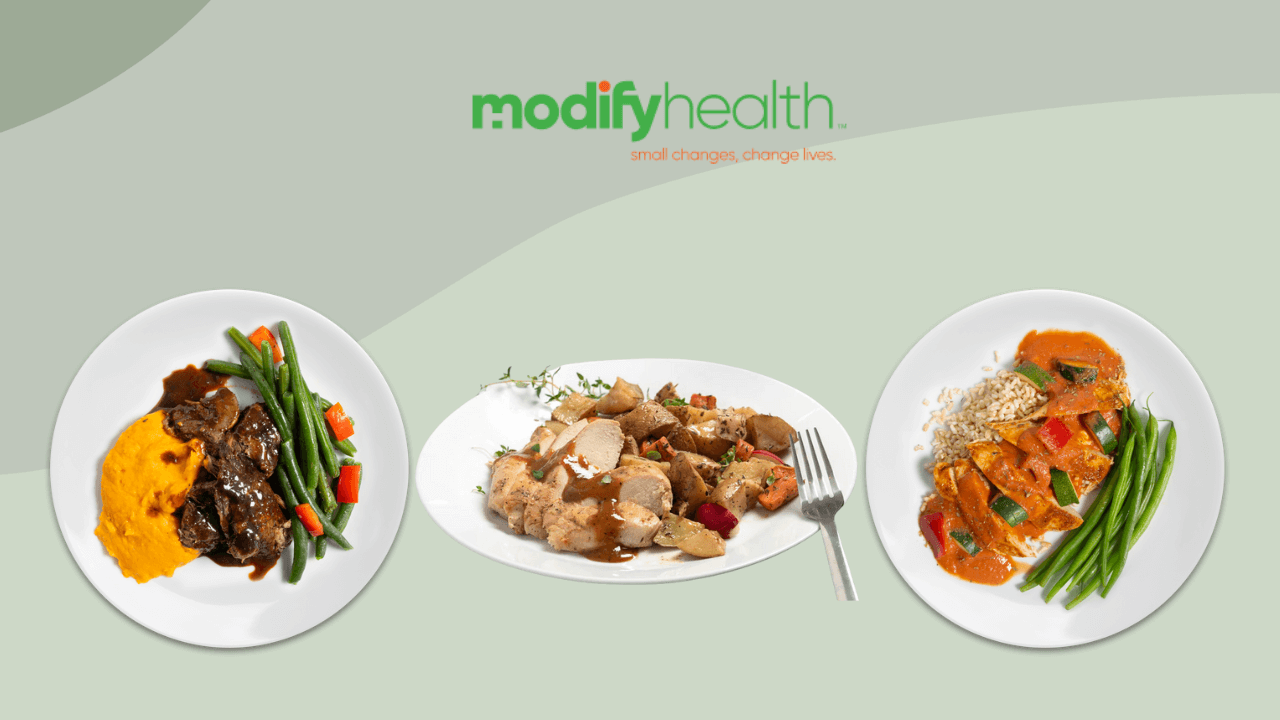
Across menus, featured meals include dishes such as Blackened Shrimp and Grits with Zucchini and Peppers, Braised Beef along with Brown Butter Mashed Sweet Potatoes and Herbed Green Beans, Chicken Paprikash with Zucchini, Rice & Green Beans, and Maple Glazed Chicken with Roasted Vegetables.
Beyond meal delivery, the brand integrates virtual dietitian services as a central component of its model. Registered dietitian nutritionists provide scheduled video or phone consultations, follow-up sessions, and on-demand support through a dietitian hotline. Dietitian services are in-network with major insurers, including UnitedHealthcare, Cigna, Blue Cross Blue Shield, Aetna, and Medicare. Services are positioned as HIPAA-compliant, with secure handling of personal health information.
The Low-FODMAP Meal Plan from ModifyHealth features convenient, ready-to-eat meals that align with established low FODMAP dietary standards. The plan allows selection of weekly low FODMAP breakfasts and entrées, with the flexibility to skip weekly deliveries or cancel as needed.
As per the official website, all meals under the Low-FODMAP meal plans are formulated according to guidelines developed by Monash University and are Monash Low FODMAP Certified™ and gluten-free. These certification confirms that both ingredients and portion sizes remain below defined thresholds for fermentable oligosaccharides, disaccharides, monosaccharides, and polyols. Limiting these compounds may help suppress the physiological triggers associated with bloating, abdominal pain, and altered bowel habits.
The weekly rotating menu maintains low FODMAP compliance across a wide range of entrées and breakfasts. It includes options such as Blackened Shrimp and Grits with Zucchini and Peppers, Jerk-Style Chicken with Coconut Rice, Chicken Paprikash with Zucchini, Paprika Salmon with Herb-Roasted Potatoes and Green Beans, and Savory Pot Roast with Thyme and Rosemary.
The low-FODMAP diet plan provides exposure to low fermentable carbohydrates, which help stabilize gut motility and luminal pressure. Such effects may help support more predictable digestive responses, while minimizing discomfort associated with Irritable Bowel Syndrome (IBS), IBD, Small Intestinal Bacterial Overgrowth (SIBO), and Celiac Disease.
The Mediterranean Meal Plan provides nutritionally tailored meals aligned with Mediterranean and DASH dietary patterns. All Mediterranean menu options are built around nutrient-dense vegetables, whole grains, legumes, and healthy fats, including extra virgin olive oil, with all recipes containing 30 grams of fat or less per meal. Such a macronutrient structure may support steady digestion, improved lipid handling, and reduced post-meal metabolic stress.
As per its official site, the weekly rotating menu features options such as the Buffalo Cauliflower with Ranch Seasoned Potatoes, Chicken Florentine with Green Beans and Peppers, Mahi Mahi with Romesco Sauce, and Sweet and Spicy Tofu and Vegetable Stir Fry.
Emphasis on fiber-rich carbohydrates and unsaturated fats in the Mediterranean meal plan could support improved insulin sensitivity, bile acid metabolism, and gut microbial diversity. These are vital biological pathways associated with a positive impact on cardiometabolic and liver health. Mediterranean and DASH-style eating patterns are further associated with improved endothelial function, reduced systemic inflammation, and more favorable cholesterol profiles.
ModifyHealth’s Diabetes-Friendly meal plans are intended to support healthy blood sugar levels, insulin sensitivity, and glucose response. Recipes emphasize balanced portions of carbohydrates and protein, using whole-food carbohydrate sources to moderate post-meal glucose responses.
As per the official website, all meals in the Diabetes-Friendly plan are developed by dietitians and follow dietary guidelines established by the American Diabetes Association. The plan is designed to support specific dietary requirements, especially if you have Type 2 Diabetes or high blood pressure.
Some recipes provided under the Diabetes-Friendly meal plan include options such as the Peruvian-Style Chicken with Black Beans and Cilantro Rice, Three Bean Chili with Cornbread Casserole, Yellow Curry Chicken and Vegetables with Forbidden Rice, Black Bean Burger with Roasted Red Bell Pepper Sauce, and Coconut Curry Tofu with Bok Choy.
As per its official website, the Gluten-Free Meal Plan features recipes that are prepared in a gluten-free facility and follow guidelines established by the U.S. Food and Drug Administration for gluten-free labeling.
Meals in the range exclude the use of rye, barley, and wheat derivatives that typically contain gluten-forming proteins. Such an approach is particularly beneficial if you have gluten sensitivity or celiac disease, as even minimal gluten exposure might trigger immune-mediated intestinal injury, increased intestinal permeability, and nutrient malabsorption.
Gluten-Free meal plan includes various gluten-free recipes, including options like the Mahi Mahi with Romesco Sauce, Roasted Potatoes and Herb Green Beans, Mushroom Chicken Marsala with Cauliflower Mash and Maple Glazed Carrots, and Balsamic Maple Brussels Sprouts and Carrots. Whole-food carbohydrate sources such as rice and potatoes provide energy while supporting digestion. Protein content in the meals comes from sources like beans, chicken, and turkey, all of which contribute to satiety and glycemic balance.
Heart-Friendly menu from ModifyHealth features recipes that may support cardiovascular health and heart function. According to its official website, all meal options feature 700mg or less of sodium and less than 6 grams of saturated fat per meal, which follows the nutritional guidelines set by the American Heart Association.
The meals are formulated with decreased sodium content that may help reduce plasma volume expansion and vascular resistance, thereby supporting more stable blood pressure levels. These options contain cauliflower, zucchini, and green beans, lean protein sources like chicken, and whole-food carbohydrates like rice and potatoes.
Vegetables like zucchini and cauliflower supply fiber, potassium, polyphenols, and antioxidants that could reduce oxidative stress, improve endothelial function (the ability of blood vessels to dilate), and support cardiovascular health. Soluble fiber from plant foods could bind cholesterol in the gut, thereby reducing LDL (“bad”) cholesterol absorption and serum LDL levels.
As part of the Heart-Friendly segment, weekly rotating options include recipes such as Romesco Baked Chicken with Lemon-Basil Broccoli and Zucchini, Savory Shrimp and Rice, Sweet and Spicy Tofu and Vegetable Stir Fry, White Bean and Chicken Chili, Greek Chicken and Rice, and Three Bean Chili with Cornbread Casserole.
Other recipes in the range include options such as the Herbed Chicken with Wild Rice and Green Beans, Kale Pesto Pasta, Paprika Salmon with Herb-Roasted Potatoes and Green Beans, and Black Bean Burger with Roasted Red Bell Pepper Sauce.
As per the official website, the Carb-Conscious menu contains recipes structured around a low-carbohydrate profile, with each meal containing less than 35g of net carbs to support blood glucose control and metabolic health. These meals contain carbohydrates sourced from carrots, green beans, and red peppers, alongside starchy components from potatoes, sweet potatoes, and brown rice.
Complex carbohydrates in vegetables and legumes contain fiber and micronutrients that could slow gastric emptying and glucose absorption, which may help maintain stable post-meal blood sugar levels and insulin responses. Inclusion of starchy carbs like potatoes and rice in the menu offers glycogen precursors to support energy levels without overwhelming glucose loads.
As per the official website, some featured recipes in the Carb-Conscious menu include options such as Chicken Florentine with Green Beans and Peppers, Pesto Mahi Mahi with Creamed Spinach and Italian Herb Green Beans, Greek Chicken and Rice, Breakfast Vegetable Scramble, Garden Beef Frittata, and Kale and Tomato Frittata.
The GLP-1 Support menu from ModifyHealth intends to complement the weight management programs that involve the use of GLP-1 receptor agonists. GLP-1 agonists work by slowing gastric emptying, suppressing appetite, and potentially enhancing insulin secretion in response to meals. The meal plan aligns with these mechanisms by prioritizing lean protein and high-fiber foods, which further promote satiety, reduce post-meal glucose spikes, and support smoother digestion.
Recipes in the GLP-1 Support menu contain starchy vegetables and tubers, including sweet potatoes, Tuscan potatoes, and butternut squash. These ingredients contribute complex carbohydrates with slower digestibility that could support digestion and gut health.
Alongside these carbohydrates, the primary protein sources across the menu include eggs, chicken, beef, and fish such as mahi mahi. These provide complete amino acid profiles that could support muscle protein synthesis. Increased protein intake helps stimulate satiety hormones like peptide YY, which could reduce postprandial hunger and might help preserve lean muscle mass during periods of calorie restriction.
Some weekly recipes in the GLP-1 Support range include options such as Garden Beef Frittata, Ranchero Egg Scramble with Chicken, Romesco Baked Chicken with Lemon-Basil Broccoli and Zucchini, and Smoked Chicken with Butternut Squash Sauce and Tuscan Potatoes.
ModifyHealth claims its care delivery model is organized around licensed Registered Dietitian Nutritionists (RDNs), positioning professional nutrition expertise as the central driver of planning, guidance, and follow-through support.
According to the official website, RDNs lead virtual intake evaluations that review medical history, reported symptoms, and health goals before developing individualized nutrition strategies.
The company also highlights identifiable clinical leadership to support its dietitian-led positioning. Madison Reeder, RD, is identified as Director of Clinical Operations, overseeing telehealth nutrition programs and chronic care initiatives, particularly as insurance partnerships expand.
Jennifer Bean, RD, serves in a Clinical Nutrition Manager role, supporting nutrition education and program execution. While the brand does not publish a comprehensive public roster of clinicians, these roles illustrate the presence of credentialed RDN leadership embedded within operations.
RDNs provide ongoing coaching through scheduled telehealth visits and secure messaging, allowing nutrition plans to be refined based on adherence, tolerance, and evolving clinical needs.
ModifyHealth states that registered dietitian services are covered by most major commercial insurance plans, such as Cigna, UnitedHealthcare, and Aetna, allowing virtual nutrition counseling to be accessed as a reimbursable healthcare service. The structure is presented as reducing cost barriers and supporting continued engagement with nutrition care when eligibility criteria are met.
Alignment with Medicare and Medicaid programs is also described, particularly through food-as-medicine initiatives focused on chronic condition management. Participation occurs through health plans and pilot programs that provide access to medically tailored meals and dietitian services for conditions such as diabetes, cardiovascular disease, and gastrointestinal disorders.
Within state-level efforts like California’s Medi-Cal CalAIM program, medically tailored meals are covered as part of care coordination strategies intended to reduce preventable hospital use. Access is further extended through partnership-based models that address food insecurity. While SNAP or WIC benefits are not administered directly, collaboration occurs within a broader ecosystem that includes partners able to accept those benefits or subsidize meals through Medicaid-supported programs. Such a structure allows prescribed nutrition support to be delivered while remaining within program-specific eligibility and regulatory requirements.
ModifyHealth claims its nutrition model is based on a food-as-medicine philosophy, positioning meals as a deliberate component of clinical care rather than a convenience-focused meal service.
The brand frames its plans as clinically guided nutrition pathways rather than lifestyle diets. Approaches such as Low-FODMAP are aligned with gastrointestinal care for conditions like IBS and SIBO, including adherence to recognized clinical guidance. Mediterranean menus are positioned within cardiovascular and metabolic health strategies, while Diabetes-Friendly and Carb-Conscious menus are structured to support glycemic and blood pressure management.
ModifyHealth claims this approach extends beyond meeting basic macronutrient targets. RDNs define standards grounded in medical nutrition therapy, while chefs focus on preparation techniques, flavor balance, and texture to support long-term adherence.
ModifyHealth applies standardized nutrition protocols that closely follow established clinical guidelines, prioritizing consistency and therapeutic accuracy over broad individual customization. Meals are designed to comply with Monash University Low-FODMAP standards commonly used in gastroenterology for managing IBS and related functional gastrointestinal disorders. Such protocols require strict control of fermentable carbohydrates during elimination phases, and the brand structures its meals to meet these limits without placing measurement or interpretation responsibility on you.
Many plans also follow fixed baselines, such as gluten-free formulations and controlled sodium levels, aligning with cardiovascular and diabetes nutrition guidance and supporting those with overlapping conditions like celiac disease or hypertension. This standardized structure may limit flexibility for certain use cases. Athletes managing precise macronutrient targets, those with uncommon food allergies or strong cultural dietary preferences, and those with complex conditions that extend beyond common gastrointestinal or metabolic needs may find the plans less adaptable. The emphasis on fixed clinical parameters may not fully accommodate performance-driven nutrition goals or highly individualized dietary requirements.
Over longer use, particularly during reintroduction or maintenance phases, the lack of tailored adjustments may affect adherence or perceived effectiveness. Compared with more personalized nutrition approaches that evolve with symptoms, lifestyle changes, or recovery progress, ModifyHealth’s protocol-driven model may feel restrictive.
When comparing Epicured and Modify Health, both brands operate in the medically oriented meal delivery space. However, they differ meaningfully in how narrowly they define their clinical focus, how meals are structured within care pathways, and how nutrition support is delivered alongside food.
Epicured is built around a specialized digestive health support positioning, with its entire menu engineered specifically for tackling discomfort from gastrointestinal conditions such as IBS, IBD, Crohn’s disease, colitis, SIBO, GERD, and celiac-related sensitivities.
The brand anchors itself almost exclusively to the Low FODMAP diet, explicitly targeting the elimination phase of the protocol as its core use case. All meals are positioned as dietitian-approved, low FODMAP, and gluten-free. The brand’s navigation pages comprise added filters for vegan, vegetarian, pescatarian, dairy-free, low histamine, and low sodium, intended for more reactive digestive profiles.
The Epicured brand emphasizes a large catalog of clearly named, complete dishes designed to feel familiar while remaining clinically compliant. It provides entrées such as Vietnamese Rice Noodles, Beef Stew with Rosemary Whipped Potatoes, Grilled Sesame-Crusted Salmon, Lasagna Alessandra, Chicken Pomodoro Lasagna, Tikka Masala, and Pad Thai.
As part of its lunch segment, the brand provides options such as the Chicken Hawker Lettuce Wraps, Beef Teriyaki Wrap, Falafel Wrap, and Chicken Burrito, alongside breakfast options like Buckwheat Pancakes with Strawberries and Brie, Power Breakfast Quinoa Bowl, Spinach Scrambled Eggs, and Vanilla Coconut Chia Seed Pudding. Epicured’s Elimination Program formalizes this structure further by delivering full daily meal coverage for two to eight weeks, including breakfast, lunch, snack, dinner, and dessert.
Modify Health takes a broader, multi-condition approach that positions food as one component within a wider clinical nutrition ecosystem. Instead of centering on a single protocol, the platform offers multiple condition-aligned programs, including Low-FODMAP, Mediterranean, Gluten-Free, Diabetes-Friendly, Heart-Friendly, Carb-Conscious, and GLP-1 Support menus.
While its Low-FODMAP program aligns with Monash University standards and can support elimination-style use, it sits alongside other dietary frameworks tied to cardiometabolic health, glycemic control, and weight management goals.
The meal catalog reflects a wider clinical scope. Menus across different categories feature options such as Blackened Shrimp and Grits with Zucchini and Peppers, Braised Beef with Brown Butter, Rice and Green Beans, Paprika Salmon with Herb-Roasted Potatoes and Green Beans, and Greek Chicken and Rice. Breakfast options feature offerings like Blueberry Rice Porridge with Almonds, Garden Beef Frittata, and Ranchero Egg Scramble with Chicken.
A key structural difference lies in clinical support integration. Epicured embeds clinical oversight primarily at the menu-development level, emphasizing collaboration with dietitians and gastroenterology specialists during recipe design, but does not position live dietitian care as a core service layer.
Meanwhile, Modify Health integrates optional virtual registered dietitian counseling as a central pillar of the platform, with services that are in-network with major insurers and often available with little or no out-of-pocket cost.
In our assessment of ModifyHealth, we looked at its background and standing across reputed review forums, with the evaluation centered on brand reputation, visibility across third-party platforms, and consistency of reported customer sentiment.
On TenereTeam, the brand holds a 5.0 out of 5 score based on more than 2,300 ratings, reflecting a mostly positive reputation. Reviews on the platform emphasized the ease of ordering, plan flexibility, and alignment with medically guided dietary frameworks, such as low-FODMAP and Mediterranean patterns.
The absence of visible complaints on TenereTeam suggests a generally stable perception of the brand among users who engage with it for structured, health-focused meal delivery.
The brand maintains limited visibility across larger consumer review forums, including ConsumerAffairs and Reviews.io. This narrower footprint reduces exposure to high-volume complaint tracking while also limiting independent verification from platforms typically associated with dispute resolution or long-term service evaluation.
Our evaluation of ModifyHealth is based on Trustpilot review patterns and reflects real customer experiences with food quality, portions, packaging, ordering structure, and delivery reliability. Trustpilot rated the brand with a 4.0 out of 5 score based on over 270 reviews shared.
Many users described the meals as tasty, visually appealing, and aligned with specific nutritional needs, particularly for digestive conditions, IBS, and type 2 diabetes. Several users noted the meals arriving frozen and well-preserved. Convenience was another recurring theme, with some customers appreciating the ease of reheating and suitability of meals for workdays or periods when cooking was difficult.
Some users described servings as small or light, often comparing them to traditional TV dinners. A few users noted the need to supplement meals with additional foods such as yogurt, vegetables, or side dishes to improve satiety, especially for higher-calorie needs or active lifestyles. Taste consistency also varied, with some meals being described as flavorful while others were reported as watery, bland, or unevenly cooked, particularly potatoes and vegetables.
Some users expressed frustration with the black plastic trays and tightly sealed film lids, describing them as difficult to peel after heating and sometimes requiring scissors. While some users acknowledged that packaging preserved freshness well, usability and waste remained recurring pain points.
Based on such reviews, the consumer feedback highlights strong satisfaction for users prioritizing medically aligned, convenient meals. However, recurring concerns around portion size, packaging usability, and subscription flexibility reflect areas of improvement for the brand.
ModifyHealth offers a structured, clinically guided approach to meal delivery that remains centered on digestive support and metabolic needs. Optional virtual dietitian access further positions the brand’s alignment with medically informed eating.
The brand offers more than 60 prepared meals, which emphasize dietary consistency and ingredient control over variety or bold flavor profiles. Such a focus may support routine adherence but might feel limiting outside specific dietary frameworks.
Before opting for ModifyHealth, expectations around menu repetition, portion sizing, and flavor restraint are worth considering. The service is designed to support specific eating patterns, not experimentation or customization beyond plan selection.

Contact us at [email protected] or follow @leafsnap on Twitter! View our Privacy Policy.