



LifeMD provides virtual healthcare services, including access to consultations with licensed clinicians, personalized care programs, and prescription delivery. It also offers insurance coverage and structured membership-based access to its services.
The platform positions itself as providing a means to tackle common access challenges, such as scheduling delays and the need for convenient care management.
In this review, we examine the platform’s range of services, how its digital care model functions, and the scope of its support ecosystem. The review also analyzes how LifeMD compares with other telehealth platforms in terms of services and accessibility.
LifeMD is a U.S.-based telehealth platform that provides access to services across areas like weight management, mental health support, women’s health, cardiovascular health, and urgent care.
To avail the services, you are required to complete an online intake form, which is then followed by a virtual consultation with a licensed clinician. Ongoing care services then typically include prescription management or periodic check-ins when needed. In cases where testing is required, the brand makes arrangements for lab work through national diagnostic partners or through home collection options, depending on the situation.
According to its official website, the platform’s clinical network references board-certified physicians and nurse practitioners, such as Dr. Anthony Puopolo, Dr. David Culpepper, and Dr. Doug. They hold backgrounds in internal medicine, family medicine, and virtual care. Clinical decisions are described as based on individual evaluations and current medical standards instead of fixed or automated protocols.
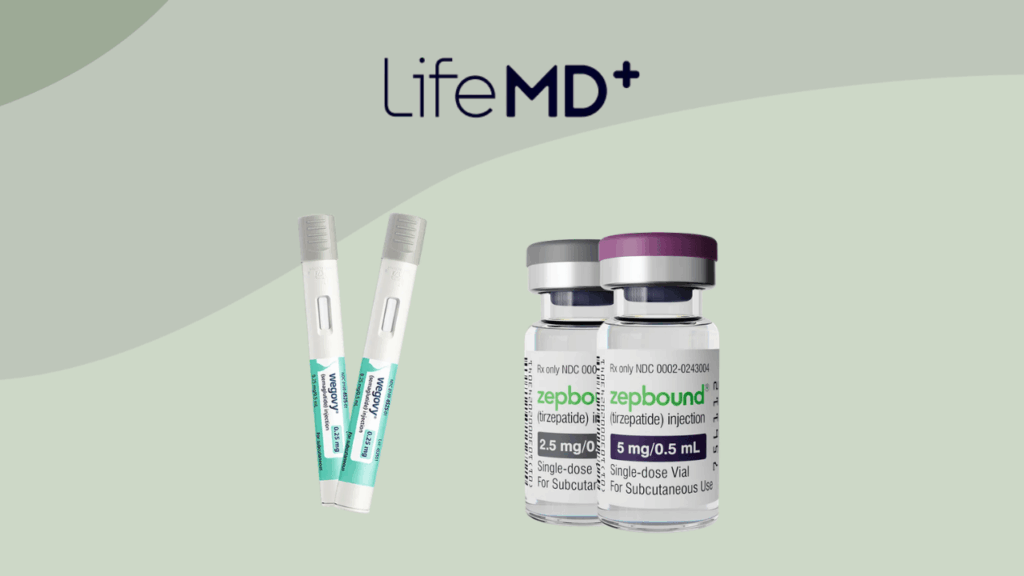
LifeMD structures its weight management services as a virtual care program that pairs medical review and ongoing clinical check-ins within a single digital care pathway. The service focuses on identifying metabolic factors linked with excessive weight, including blood sugar patterns, hormone activity, and lifestyle habits that affect energy balance.
The process begins with an online intake that reviews your health history, weight patterns, and goals, followed by a clinician review to determine eligibility for prescriptions. Care then continues through medication access, progress tracking, and scheduled virtual follow-ups to review metabolic markers.
Medications included in the weight management segment may work by acting on hormone pathways. These medications interact with receptors in the pancreas, brain, and digestive tract, which could increase insulin release when blood sugar rises and lower glucagon activity that may otherwise raise blood sugar levels. They also slow the rate of stomach emptying, which could prolong fullness, suppress cravings, and contribute to a decreased calorie intake. Such mechanisms could help contribute to your weight management goals.
LifeMD’s pricing structure shows limits in upfront cost transparency. The platform promotes a starting price of around $19 per month, but this fee mainly applies to basic platform access rather than the full scope of services. Total costs may increase depending on the level of care, including laboratory services and prescription-related expenses.
The platform emphasizes low initial pricing, while additional costs depend on selected services. Although these details are typically disclosed within the terms and service documentation, they are not always clearly visible during early pricing review. A pricing structure where costs vary based on care requirements could make it harder to estimate monthly or long-term expenses in advance, especially when care needs change over time, potentially reducing cost clarity.
LifeMD’s care model shows limits in consultation consistency due to its reliance on a distributed provider network. The platform operates through affiliated professional corporations that employ licensed physicians and healthcare providers. This structure may reduce the brand’s ability to fully standardize how every consultation is delivered across the network.
Consultation quality may vary because each interaction depends on the individual provider assigned to the virtual visit. Differences may appear in consultation length, communication approach, and depth of explanation. While the platform states that it uses credential verification and basic quality review processes, this structure does not ensure uniform consultation experiences across all providers. Such variability could make it harder to anticipate the level of interaction during each online consultation, particularly when ongoing medical guidance is expected.
LifeMD’s inclusion of compounded medications in some programs introduces regulatory differences. The platform offers access to customized versions of medications that are prepared in compounding pharmacies, which do not undergo pre-approval for safety, effectiveness, or manufacturing consistency in the same way as approved/brand-name medications. Differences in regulatory review and manufacturing consistency may also influence how confident you feel about long-term medication use if clear regulatory standardization is an important consideration for you.
When comparing Ivim Health and LifeMD, both offer virtual services and personalized programs across different categories. However, their positioning reflects clear differences in specialization, service breadth, and pricing structure.
Ivim Health presents itself as a virtual integrative platform focused primarily on weight management, hormone support, and cardiometabolic health through a membership-driven structure. Meanwhile, LifeMD operates as a broader multi-service virtual provider that segments its services across weight management and women’s health categories.
Differences also appear in how each platform presents its organizational background. Ivim Health traces its founding to 2021, established by Taylor Kantor together with Anthony Kantor and Kelly Kantor. Meanwhile, LifeMD places less emphasis on a founder narrative and instead highlights its clinical leadership structure. The brand references professionals like Dr. Anthony Puopolo, Dina Whiteaker, and Sherri Richardson as part of its clinical care team.
Ivim Health emphasizes continuous engagement through recurring check-ins, lifestyle coaching, nutrition planning, and access to certified health coaches as part of its service model. On the other hand, LifeMD structures its services around condition-specific programs supported by clinician consultations, laboratory coordination, and follow-up messaging.
Membership structure and pricing also highlight some differences. Ivim Health generally structures membership starting at about $75 per month for program participation, with medication costs billed separately. Membership benefits include clinician access, health coaching, and app-based progress tracking tools. Meanwhile, LifeMD uses a more tiered pricing structure, offering a base membership (LifeMD Plus) starting around $19 per month for general care access. The platform maintains a separate pricing layer for other services, such as urgent care visits beginning around $49, weight management program memberships starting around $75 per month, and women’s health programs starting at around $79 per month.
Technology integration shows both similarities and practical differences. Ivim Health relies heavily on its mobile application for progress tracking, adherence monitoring, scheduling, and clinician communication as part of a continuous adjustment model. LifeMD also operates a mobile platform supporting appointment scheduling, laboratory result access, prescription coordination, and provider messaging, although its digital tools appear structured to support multiple service lines rather than a single continuous monitoring workflow.
Product integration also differentiates the platforms. Ivim Health integrates physician-formulated supplements, such as digestive support products, NMN formulations, collagen products, and prebiotic fiber gummies. These are positioned as optional additions alongside its programs. Meanwhile, LifeMD does not present a comparable in-house product catalog within its core service structure.
Operational scale indicates another distinction. Ivim Health claims to maintain a provider network exceeding 90 clinicians and also references corporate wellness initiatives focused on cardiometabolic health for employer groups. Meanwhile, LifeMD describes a nationwide provider network of board-certified physicians and nurse practitioners licensed across all 50 states.
Ro and LifeMD both are built around online consultations, prescription coordination, and ongoing care management. However, their structures reflect differences in technology integration, service breadth, support ecosystem, and accessibility.
In terms of service range, Ro structures its services across categories like weight management, sexual health, fertility, haircare, skincare, and daily health. This reflects a service portfolio that pairs clinical programs with products and testing kits. Meanwhile, LifeMD organizes its services around care categories such as primary care, urgent care, weight management, mental health, women’s health, and cardiovascular health.
Ro places notable emphasis on sexual wellness services, providing access to consultations for prescription medications like sildenafil and tadalafil, along with non-prescription offerings like Ro Sparks and Daily Rise Gummies. The platform also offers access to fertility testing resources such as hormone panels and ovulation tracking kits. On the other hand, LifeMD does not extend into a similar sexual health range.
Technology infrastructure represents another point of distinction. Ro highlights its internally developed Ro Operating System, which integrates online intake, clinician documentation, pharmacy workflows, and laboratory coordination into a centralized technology framework. Meanwhile, LifeMD also relies on digital resources, including a mobile application that supports scheduling, laboratory result review, clinician messaging, and prescription coordination.
Provider structure also differs in presentation. Ro highlights clinical leadership, including names like Melynda Barnes, Raoul Manalac, and Nitin Vaswani. The platform also lists affiliations with organizations like the Alliance for Safe Online Pharmacies, the American Telemedicine Association, and LegitScript. Meanwhile, LifeMD emphasizes a nationwide network of board-certified physicians and nurse practitioners, including Anthony Puopolo, David Culpepper, Kim Calloway, and Doug Lucas.
Ro pairs specific programs, pharmacy coordination, and digital infrastructure within a vertically integrated care delivery model. LifeMD, meanwhile, combines primary plan access, specialty programs, laboratory coordination, and membership-based service tiers.
LifeMD keeps its services around remote consultations, digital evaluations, prescription coordination, and ongoing care interactions. Centralized access to multiple care categories and same-day virtual consultations may promote convenience. However, its virtual care model is not compatible with complex health concerns or issues that may require in-person evaluation.
Medication fulfillment is closely tied to the platform’s integrated pharmacy network and affiliated preparation facilities. Some of these prescriptions are made in compounded pharmacies, which lack the testing and quality standards offered by recognized/branded pharmacies.
As with most virtual care services, LifeMD’s suitability for your needs depends upon factors like condition severity, ongoing membership costs, location-based service availability, and program access that depends on clinical review. Careful review of program terms, pharmacy sourcing details, and consultation scope helps set realistic expectations before enrollment.

Contact us at [email protected] or follow @leafsnap on Twitter! View our Privacy Policy.