
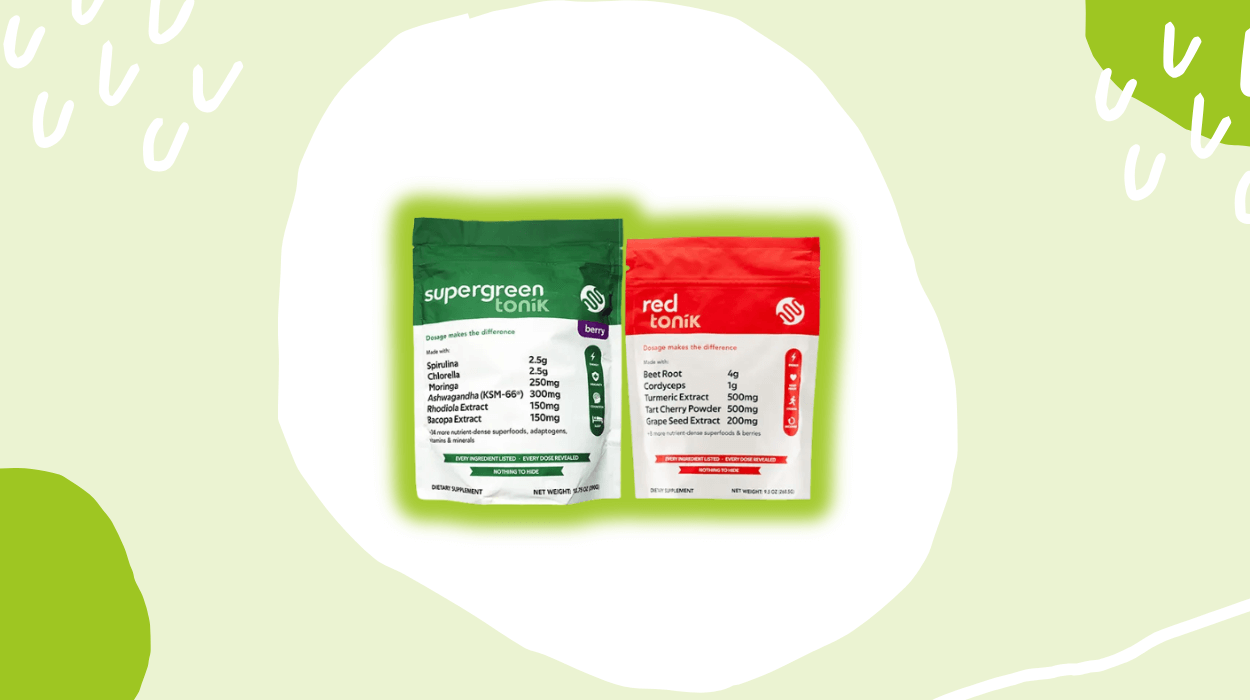

Human Tonik centers its identity around tackling common concerns in the nutraceutical space, particularly the use of proprietary blends, processed ingredients, and unclear labeling.
The brand’s product lineup highlights powdered greens and red tonik formulations, which could support diverse metabolic and fitness needs. It also emphasizes transparent ingredient labels, USA-based manufacturing, and plant-based formulation standards.
In this review, we examine how the brand positions itself within the market, with attention to ingredient transparency, advantages, range of offerings, limitations, and real user experiences.
Founded by Adam Wright, Human Tonik is a U.S.-based nutrition brand focused on daily nutritional support through various formulations. The brand’s offerings intend to support different fitness goals, including energy levels, digestion, immunity support, and digestive health.
The core product model centers on powdered formulations designed to be mixed with cold water without the need for blenders or additional equipment. Some signature offerings from the brand include the Supergreen Tonik v2, Red Tonik, and the Greens & Reds bundle. Supergreen Tonik v2 is described as a plant-based greens formulation intended to contribute to daily micronutrient intake, while Red Tonik features beets, berries, and other plant compounds commonly associated with circulation and cardiovascular support.
According to its official website, all products from the brand are labeled as vegan, non-GMO, and caffeine-free. The manufacturer states that all products are made and tested in the USA and undergo third-party testing, including testing through Eurofins, to verify composition and quality.
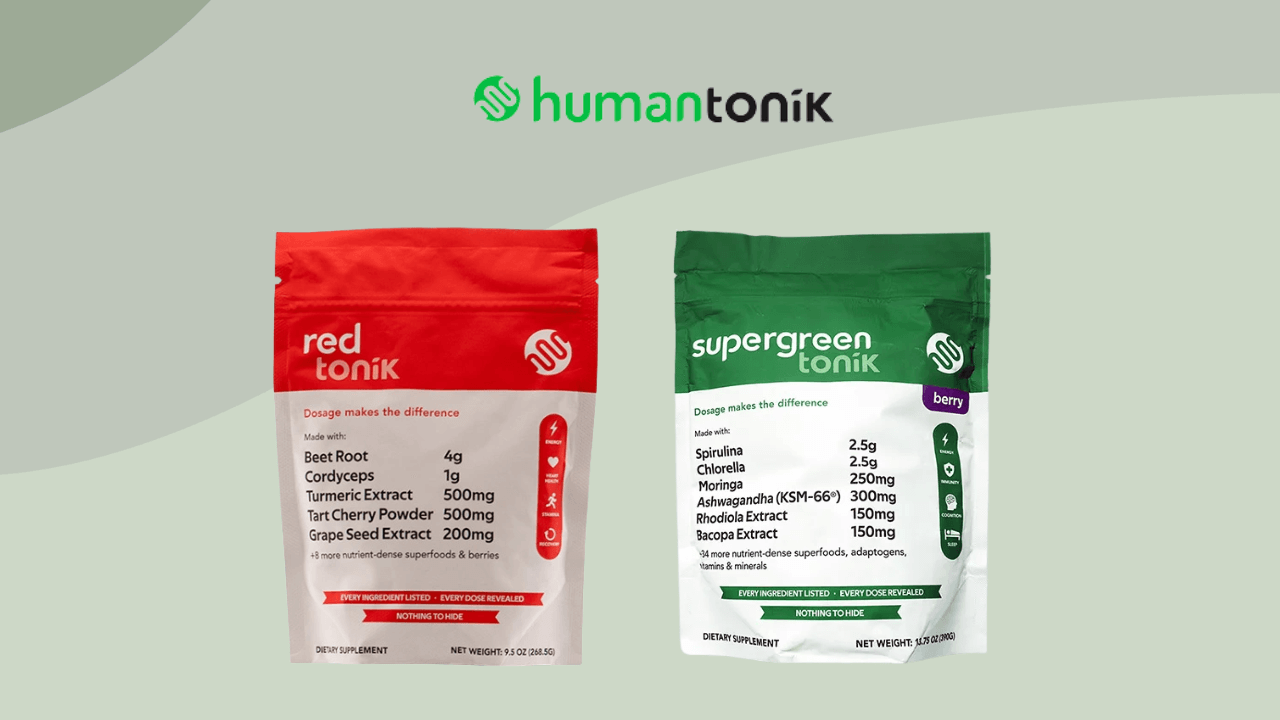
Red Tonik features a caffeine-free powdered formula to support physical performance by supporting improved blood circulation, cellular energy production, oxidative balance, and recovery signaling. As per its official website, one scoop (8.95g) of the powder features 25 calories, 6g of total carbohydrates, and 1g of total sugars.
At the core of the formulation is beetroot, which supplies dietary nitrates that convert into nitric oxide in the body. Nitric oxide helps relax the smooth muscle lining of blood vessels, allowing them to widen and potentially improve circulation. The process could enhance oxygen and nutrient delivery to muscles and organs, supporting endurance and reducing cardiovascular strain.
Cordyceps mushroom in the formula supports energy at the cellular level by improving mitochondrial efficiency and ATP production. Such effects may promote sustained stamina and reduce fatigue without overstimulating the nervous system. The manufacturers added pomegranate, grape seed extract, and cranberry to Red Tonik. Inclusion of such ingredients provides polyphenols that could help preserve endothelial function by reducing oxidative stress on blood vessel walls.
Tart cherry extract contains anthocyanins that help inhibit inflammatory enzymes associated with muscle soreness and tissue stress, thereby supporting faster recovery after physical activity. The addition of turmeric could modulate inflammatory signaling pathways such as NF-κB, helping reduce chronic low-grade inflammation that might interfere with recovery, circulation, and joint comfort.
Supergreen Tonik v2 is formulated as a greens and adaptogen powder, intended to support daily energy needs, immune resilience, cognitive performance, and sleep quality. As per its official site, one scoop (11.5g) of powder contains 35 calories, 3g of protein, and 6g of total carbohydrates.
The formulation comprises greens and algae complex that may support cellular energy production, detoxification processes, and nutrient density. Spirulina contributes phycocyanin, iron, and B vitamins that could support mitochondrial ATP production and oxygen utilization, helping sustain energy. Chlorella in the greens blend adds chlorophyll and beta-glucans that bind metabolic waste in the gut and support innate immune signaling through macrophage activation. Kale and spinach provide glucosinolates, magnesium, folate, and dietary nitrates, which help support antioxidant enzyme activity and neuromuscular function.
Supergreen Tonik v2 features a targeted adaptogen and nootropic blend to provide cognitive support and stress regulation. Ashwagandha KSM-66® could help influence the hypothalamic-pituitary-adrenal axis, reducing excessive cortisol output associated with chronic stress, which supports emotional balance, sleep quality, and recovery. L-theanine in the blend may promote alpha brain wave activity, creating a calm yet alert mental state while balancing excitatory neurotransmitter signaling. The makers included eleuthero, which could enhance stress endurance and mental stamina by supporting cellular oxygen uptake and fatigue resistance.
Immune balance and inflammatory control are supported through botanicals that influence both defense signaling and recovery processes. For instance, dandelion leaf supports liver bile flow and digestion, helping reduce toxin recirculation that may otherwise burden immune function. Supergreen Tonik v2 also contains olive leaf extract that provides oleuropein, which could support antimicrobial defense and help lower oxidative stress while supporting endothelial health.
Greens & Reds is a combined daily nutrition stack from Human Tonik that offers the Supergreen Tonik V2 and Red Tonik to support energy levels, cardiovascular performance, immune resilience, and cognitive health.
Supergreen Tonik V2 functions as the nutritional foundation of the stack. Its concentrated greens, algae, adaptogens, and micronutrients support cellular energy production by improving mitochondrial efficiency, oxygen utilization, and enzymatic activity involved in ATP synthesis. The formulation may also help improve the body’s stress resilience, support sleep quality, contribute to daily nutrient needs, and support immunity.
Red Tonik focuses on supporting blood circulation, oxygen delivery, and cardiovascular efficiency. Polyphenol-rich compounds in the formula, such as tart cherry, grape seed extract, and resveratrol, provide antioxidant protection that helps neutralize exercise- and stress-induced free radicals while supporting vascular integrity.
Human Tonik operates with a founder-led brand approach in which the company’s purpose, product philosophy, and communication are shaped by direct personal experience. The brand was founded in 2019 by Adam Wright, a former competitive triathlete who developed chronic fatigue syndrome (CFS) after years of intensive endurance training.
According to the brand’s origin narrative, Wright experienced prolonged fatigue, cognitive fog, reduced recovery capacity, and recurrent illness. These experiences highlight the brand’s focus on foundational, nutrient-dense formulations, with an emphasis on scientifically considered dosing and a deliberate move away from stimulant-driven or short-term performance claims.
The founder's influence is reflected consistently across brand messaging, product framing, and educational content. Human Tonik adopts a measured tone that sets realistic expectations around gradual support and positions its products as part of a longer-term nutritional strategy rather than immediate approaches.
Human Tonik positions quality around independent verification, prioritizing externally validated standards rather than relying solely on internal claims. Its offerings are described as being reviewed through third-party laboratory testing conducted by Eurofins, a globally recognized analytical testing organization. These evaluations focus on confirming material integrity, formulation consistency, label alignment, and screening for commonly monitored impurities.
The company follows a multi-stage verification approach, with assessments carried out at both the ingredient level and the finished product stage. Such a process is intended to support consistency throughout production instead of depending on a single final check.
Beyond laboratory review, manufacturing is stated to take place in U.S.-based facilities that operate under GMP guidelines. These standards emphasize documented quality systems, ingredient traceability, standardized production procedures, and ongoing oversight to support consistent execution at every stage.
Human Tonik features a small, clearly defined group of endorsers in its brand communications, including a registered dietitian nutritionist (Brenda Peralta), an athlete (James Pattman), and performance coaches such as Peter Gierlach and Jay Sutaria. These individuals contribute applied perspectives related to training, performance, and everyday use, helping illustrate how the products may fit into active lifestyles.
However, the scope of these endorsements remains relatively narrow. The featured experts are primarily practitioners, coaches, or athletes rather than representatives of broader scientific authority, such as academic researchers, clinical specialists, or leaders in nutrition or gastrointestinal research. Their involvement appears focused on practical application and performance context rather than on generating or evaluating peer-reviewed scientific evidence.
In a similar product segment, brands that emphasize stronger scientific positioning often highlight advisory boards, institutional affiliations, or collaborations with research organizations to signal rigorous, multi-disciplinary oversight.
When comparing the brands, Nested Naturals and Human Tonik occupy adjacent but distinctly different positions within the nutrition formulation space, with one emphasizing breadth across foundational categories and the other concentrating narrowly on greens-based performance nutrition.
Nested Naturals operates as a plant-based nutrition brand, structuring its offerings around key areas such as sleep, stress support, digestion, cognitive health, and micronutrient replenishment. Meanwhile, Human Tonik operates in the premium greens and performance nutrition category, positioning itself in opposition to mainstream greens powders by centering its identity on full-label transparency, science-aligned dosing, and the avoidance of formulations commonly associated with proprietary blends.
In terms of product range, there are some differences between the brands. Nested Naturals maintains a relatively tight but still multi-category portfolio that includes offerings such as the Super Greens powder, Magnesium Glycinate, 5-HTP Supplement, Choline Bitartrate, and Luna Gummies Sleep. Flagship products like Super Greens come in Pineapple Mango flavor, combining organic greens, fiber, probiotics, and digestive enzymes. Sleep-focused products emphasize non-habit-forming formulations with melatonin-free options available for both adults and children.
Human Tonik takes the opposite approach by intentionally limiting its lineup to three core offerings, namely the Supergreen Tonik V2, Red Tonik, and a bundled Greens & Reds option. Supergreen Tonik V2 is framed as a daily foundational greens formula supporting general nutrition coverage, cognitive support, and energy consistency. Red Tonik narrows its focus to supporting circulation, nitric oxide support, and cardiovascular-related performance.
Formulation philosophy and disclosure practices also represent a point of contrast between the brands. Nested Naturals emphasizes ingredient restraint, avoidance of proprietary blends, and clear explanation of ingredient roles. The brand highlights vegan, non-GMO, gluten-free, and cruelty-free attributes across most of its range and states that common allergens such as gluten, dairy, soy, eggs, nuts, and corn are intentionally avoided where possible.
Human Tonik also stresses third-party testing, explicitly naming Eurofins as its testing partner, but places even heavier weight on full-label transparency by listing exact ingredient quantities for all formulations and repeatedly positioning this practice as a corrective to industry norms. Products are positioned as vegan, non-GMO, caffeine-free, and free from common allergens such as dairy and soy.
Bloom Nutrition and Human Tonik represent two different interpretations of what daily greens and nutrition support formulations should look like, with contrast beginning at brand intent and extending through product architecture, messaging priorities, and consumer engagement strategies.
Founder influence functions differently across the two brands. Co-founded by Mari Llewellyn, Bloom Nutrition operates as a lifestyle-oriented nutrition brand shaped explicitly around enjoyment, routine integration, and accessibility. The brand emphasizes a female-founded and female-oriented brand identity. Meanwhile, Human Tonik’s founder narrative centers on Adam Wright’s BSc in Sports Science and his experience managing Chronic Fatigue Syndrome, informing a focus on cognitive support, energy stability, and long-term daily use rather than stimulation or novelty.
The scope and structure of each product ecosystem represent a point of contrast. Bloom Nutrition maintains an expansive and highly diversified catalog covering greens, beauty, fitness, energy, hormone-related support, and beverage-adjacent products. Some signature offerings from the brand include the Greens & Superfoods Powder, available in a wide range of flavors, including mango, strawberry kiwi, berry, peach, pineapple, and coconut. Alternative delivery formats extend this core offering into Supergreens Gummies.
Beyond greens, the brand also offers other products, including the Colostrum & Collagen Peptides, High Energy Pre-Workout, Creatine Monohydrate, and Whey Isolate Protein. The brand also provides ready-to-drink products as part of its Bloom Pop™ Prebiotic Soda lineup, which is available in multiple flavors such as Winter Pomberry, Shirley Temple, Strawberry Cream, Raspberry Lemonade, Watermelon Lime, and Classic Orange.
Meanwhile, Human Tonik deliberately limits its product lineup, which features options such as the Red Tonik, Supergreen Tonik V2, and the Greens & Reds bundle. Such offerings are positioned for daily use without branching into adjacent fitness or lifestyle categories. The brand does not pursue the product breadth of Bloom. Instead, it concentrates entirely on powdered greens formulations intended to be mixed with cold water, with no gummies, ready-to-drink beverages, or accessory formats.
Formulation philosophy and communication style mark another clear divide. Bloom Nutrition emphasizes flavor appeal, smooth texture, and consistency of use, with benefits framed around digestion, bloating, energy, hormone balance, and fitness support. Human Tonik emphasizes full-label transparency and science-aligned dosing, listing all ingredients with exact quantities and repeatedly highlighting avoidance of proprietary blends as a core differentiator. Third-party testing is explicitly referenced through Eurofins, and products are positioned as vegan, non-GMO, caffeine-free, and free from common allergens such as dairy and soy.
To evaluate Human Tonik, we looked at its operational history and standing across reputable review forums.
On TenereTeam, the brand holds a 4.5 out of 5 score based on a limited number of reviews. Feedback on this platform focused on perceived ingredient quality, formulation transparency, and user satisfaction with the brand’s superfood powder concept. However, the small sample size limits how representative these ratings are for the broader consumer experience. As of now, the brand maintains a minimal presence on other review platforms such as Trustpilot, Better Business Bureau, and ConsumerAffairs.
In evaluating Human Tonik, we assessed the available user feedback for two core products from the brand on Amazon, which reflected real consumer experiences tied to taste experience, perceived effectiveness, and digestive tolerance.
Supergreen Tonik v2 maintains a 3.8 out of 5 score based on 110+ Amazon reviews. Many users experienced improved energy levels, reduced grogginess, and better focus after regular use of the product. Mixability was frequently described as smooth, with several users noting no gritty texture and good blending in water or smoothies. Taste feedback is sharply divided. A few users found the berry flavor mild and easy to drink, while others described it as overly sweet, artificial, or unpleasant. Digestive tolerance is another recurring issue, as some users experienced stomach irritation, rapid bowel movement, or general gut discomfort that led them to discontinue use.
On Amazon, Red Tonik has a 3.4 out of 5 score based on 30+ reviews, reflecting greater variability in user satisfaction. Positive reviews commonly highlighted the ingredient profile, transparency of labeling, and suitability for smoothies. Some users characterized the flavor as overly sweet, artificial, or difficult to consume, especially considering the price. Pricing concerns were frequent, with many describing the product as expensive.
Based on the collected feedback, powdered tonics from the brand delivered inconsistent experiences. Satisfaction remained higher among users who tolerated the formulas well and integrated the powders into smoothies rather than drinking them plain. Reported dissatisfaction is linked to taste variances, digestive discomfort, and pricing.
Human Tonik positions itself as a research-informed nutrition brand focused on stimulant-free daily support through powdered greens and reds formulations. The brand’s approach emphasizes micronutrient density, convenience, vegan-friendly labeling, and third-party testing practices.
While individual ingredients are supported by established scientific literature, there are no publicly available clinical trials conducted on the finished products from the brand itself. As a result, outcomes may vary depending on individual physiology, gut tolerance, baseline nutrient status, and consistency of use.
It's essential that before opting for Human Tonik, you should review ingredient lists for potential sensitivities, maintain realistic expectations around the outcomes, and consider dietary preferences. Doing so may help determine whether the brand’s offerings are compatible with your needs.

Contact us at [email protected] or follow @leafsnap on Twitter! View our Privacy Policy.