



HLTH Code is focused on supporting metabolic health, blood sugar stability, and nutrient density. The core offerings in the brand’s lineup feature powdered complete-meal blends in both original and plant-based formats. Such offerings are positioned to support steady energy levels, macronutrient balance, lean muscle maintenance, and sustained focus.
The brand positions its offerings as complete, science-informed meal replacements intended to simplify daily nutrition without relying on highly processed convenience foods.
In this review, we explore the brand’s core background and formulation philosophy, alongside the range of products, associated brand advantages, and potential limitations.
HLTH Code is a nutrition brand built around the idea that metabolic health improves when diets prioritize adequate protein, healthy fats, and restrained carbohydrate intake.
The brand centers its identity around formulations developed by Dr. Ben Bikman, a metabolic scientist known for research on insulin resistance and energy regulation.
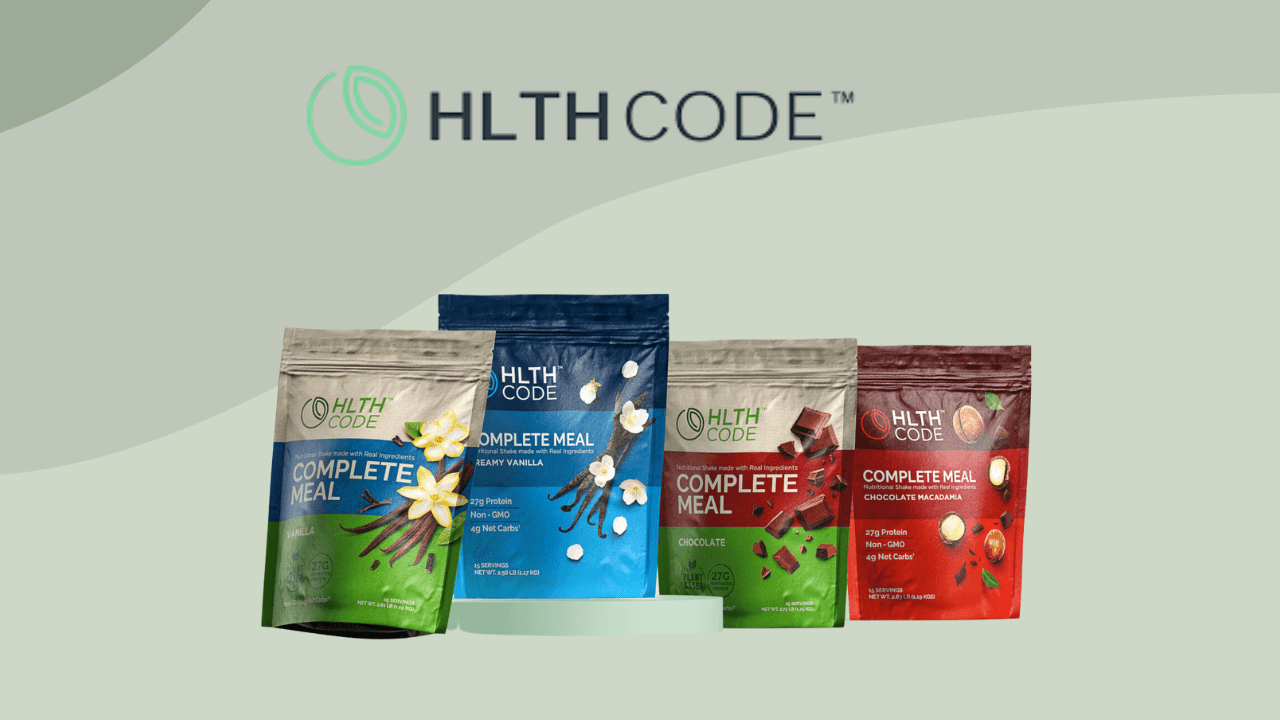
At the core of the brand’s offering is the 15 Complete Meals / Bag Original, a powdered shake intended to function as a full meal rather than a snack or protein supplement. The product is formulated to deliver a high-protein, high-fat, low-carbohydrate nutritional profile aligned with ketogenic and low-glycemic dietary patterns. The original formula is available in Chocolate Macadamia and Creamy Vanilla flavors. Beyond the original variant, the brand also offers a Plant-Based variant of the 15 Complete Meals / Bag, which uses a proprietary fermented plant protein created through mushroom mycelial fermentation.
The brand’s product lineup also includes a Berberine formulation, which could help support blood sugar metabolism, lipid metabolism, and cardiovascular support. Flavor Fusions are also offered as a multi-flavor bundle including Cookies & Cream, Strawberry, and Salted Caramel flavors.
As per the makers, the brand emphasizes domestic production and regulatory compliance. Products are manufactured in the United States at cGMP-certified facilities registered with the FDA. The brand highlights non-GMO sourcing, the absence of artificial colors, flavors, and sweeteners, and batch testing for quality and purity.
Berberine from HLTH Code is formulated to support metabolic and cardiovascular health using berberine HCL sourced from Berberis aristata, paired with turmeric and broccoli seed extract to improve absorption.
The berberine HCL in the formulation could activate AMP-activated protein kinase (AMPK), a regulator of cellular energy balance. When AMPK is activated, cells become more efficient at taking up glucose and using it for energy, insulin sensitivity improves, and metabolism is boosted. It might also help lower fasting blood glucose, improve HbA1c levels, and support healthier cholesterol and triglyceride levels. Such effects may support cardiovascular and metabolic health.
Berberine also works through the digestive system. It may slow the breakdown and absorption of carbohydrates in the intestine, which helps reduce post-meal blood sugar spikes. It also influences gut bacteria in ways that improve metabolic signaling between the gut and the rest of the body. The combined gut and cellular action could help support healthy digestion and metabolism.
Curcumin from turmeric and compounds from broccoli seed extract help support cellular uptake and reduce rapid breakdown in the gut and liver. It may allow more berberine to reach active tissues such as the muscles, liver, and fat cells, where it can exert its metabolic effects.
As per the official website, Complete Meal Shake by HLTH Code features an equivalent of 15 complete meals per bag, which comes in Original and Plant-Based variants.
The Original Variant comes in Creamy Vanilla and Chocolate Macadamia flavors, while the Plant-Based variant comes in Vanilla and Chocolate flavors. Complete Meals Shake is built to function as a nutritionally complete meal replacement that supports metabolic health rather than focusing only on calorie reduction.
Complete Meal Shake Original combines whey protein, egg whites, and hydrolyzed grass-fed collagen to deliver 27 grams of protein per 2 scoop (79.5g) serving. Whey supplies leucine and other essential amino acids that activate muscle protein synthesis through the mTOR pathway, which supports muscle repair and promotes post-exercise recovery. Egg white protein is among the most efficiently absorbed protein sources, while collagen peptides contribute glycine and proline that could support connective tissue, joints, and structural integrity.
Fats in the formulation are sourced from coconut, olive oil, avocado, MCT oil, flaxseed, and cocoa butter. These sources provide short-, medium-, and long-chain fatty acids that could support mitochondrial energy production and metabolic flexibility.
The carbohydrate in Complete Meal Shake Original is kept low, featuring around 4 grams of net carbs per serving and no added sugar content. Such a low-glycemic structure may help limit insulin spikes that may otherwise trigger hunger and energy crashes. Sweetness comes from monk fruit and stevia, which do not typically raise blood glucose levels. Gut support is covered through digestive enzymes, probiotics, and fiber. Enzymes help break down protein, fat, and carbohydrates for better absorption, while probiotics and fiber help support fermentation in the colon.
Plant-Based version of Complete Meal Shake follows the same metabolic framework using fermented plant proteins. Proprietary mycelial fermentation improves digestibility, reduces anti-nutrients, and raises protein quality scores closer to those of animal-based proteins.
The formulation also contains around 25 vitamins and minerals, including vitamins A, C, D, E, and K, alongside minerals like magnesium, iron, phosphorus, selenium, copper, zinc, and iodine. Such nutrients may support energy, metabolic signaling, immune-support pathways, and cellular function.
Flavor Fusions Variety 3pk is intended to add taste variety without changing the nutritional makeup of the core meal shakes. The bundle contains three flavors, including Cookies & Cream, Strawberry, and Salted Caramel, with 30 servings of each. Flavor rotation stays consistent while protein, fat, fiber, and micronutrient intake remain unchanged.
The Flavor Fusions pack does not add any calories, macronutrients, or active compounds, which means the formulation does not compete with protein absorption, fat metabolism, or micronutrient uptake. Flavor Fusions Variety 3pk is sugar-free, low-glycemic, and keto-compatible, so it does not raise insulin or interfere with fat-adapted or glucose-controlled metabolic states.
HLTH Code positions its Complete Meal Shakes around carbohydrate-restricted and ketogenic eating patterns rather than general nutrition guidelines.
As per its official website, one serving of Complete Meal Shake Original is described as containing roughly 4 grams of net carbohydrates, derived from about 13 grams of total carbohydrates minus 9 grams of fiber.
The macronutrient profile of the brand’s core offerings is framed as fat-forward. For instance, around 27 grams of fat account for close to 60% of total calories, while 27 grams of protein contribute about 27% of total calories. Such a high-fat, moderate-protein ratio aligns with ketogenic frameworks that prioritize fat-based energy substrates over glucose. Such formulations are presented as containing no added sugars and avoiding artificial sweeteners, instead relying on low-glycemic options such as monk fruit and stevia. Educational and FAQ content consistently describe the brand’s core products as keto-friendly and compatible with daily carbohydrate targets used in low-carb routines. The alignment reflects a deliberate formulation choice that emphasizes fat metabolism and carbohydrate minimization.
HLTH Code maintains a tightly focused, shake-centric portfolio built around a small set of closely related products. The core lineup revolves around the Complete Meal shake, offered in multiple flavors and formats, including plant-based versions, bulk food-storage-style containers, and the Flavor Fusions Variety 3-pack.
Outside of shakes, the only clearly distinct product is a Berberine formulation, which is positioned around supporting metabolic health markers such as glucose regulation and insulin sensitivity. While this adds depth within a metabolic framework, the portfolio does not extend into other food formats such as solid meals, bars, snacks, or condition-specific nutrition products. As a result, format diversity remains limited, with most offerings centered on a single consumption style.
HLTH Code’s scientific framing draws on established principles of metabolic physiology, but there is limited independent, product-specific research evaluating its finished formulations.
Reviews of publicly available literature and clinical trial databases do not indicate third-party randomized controlled trials that directly study HLTH Code Complete Meal shakes or the brand’s recommended usage patterns for outcomes such as fasting glucose, insulin sensitivity, lipid markers, or body composition.
Much of the supporting evidence referenced is ingredient-level rather than formulation-specific. Berberine, for example, has been evaluated in multiple independent trials and meta-analyses showing effects on glucose regulation, insulin sensitivity, and lipid profiles, sometimes compared with metformin at certain doses. Such findings apply to generic berberine preparations, not to the brand’s specific products, which may differ in dose, formulation, and bioavailability.
Educational materials feature founder-led metabolic explanations and professional commentary that help explain mechanisms but do not replace controlled outcome data. Reported experiences around satiety, energy, or weight change are subjective and influenced by broader lifestyle factors, which limit their usefulness for objective comparison.
When comparing the brands, both Orgain and HLTH Code operate within the nutrition and meal replacement space, offering powdered and ready-to-mix formats designed to support structured daily nutrition needs. However, the brands differ in their core positioning, portfolio breadth, nutritional philosophy, and distribution strategy.
Founded in 2008 by Andrew Abraham, Orgain reflects a physician-led perspective that emphasizes simplicity, ingredient sourcing, and broad usability. It is positioned as an accessible nutrition brand built around organic and clean label principles intended for regular use across a wide range of dietary preferences. Meanwhile, Benjamin Bikman co-founded HLTH Code, positioning it around support for metabolic health, particularly for supporting healthy insulin levels and low-carbohydrate eating patterns.
In terms of product range, Orgain maintains a notably broader portfolio. Its offerings cover ready-to-drink nutritional shakes, plant-based and whey protein powders, collagen peptides, and kid-focused products.
Some signature offerings from Orgain include products such as Organic Nutritional Shake, Organic Protein Powder Plant Based, Clean Protein Shake, Collagen Peptides, Sport Protein Powder, and Orgain Simple Organic Protein Powder. These products vary in calorie density, protein source, and intended daily role.
Meanwhile, HLTH Code operates with a narrower and more focused lineup. Its product catalog centers primarily on complete meal replacement powders, along with limited extensions such as Berberine formulation. The brand’s featured offerings include the Complete Meal Shake Original, which is available in Chocolate Macadamia and Creamy Vanilla flavors. The product also comes in a Plant-Based variant, available in Vanilla and Chocolate flavors. Beyond this, the brand also offers a Flavor Fusions Variety 3pk.
Quality, manufacturing, and safety standards represent another point of distinction. Orgain places visible emphasis on formal quality frameworks, including USDA Organic certification across many products and manufacturing practices aligned with current Good Manufacturing Practices. The brand also communicates allergen control procedures, sanitation standards, and references third-party testing for ingredient integrity and safety benchmarks. Meanwhile, HLTH Code communicates quality primarily through formulation intent and macronutrient accuracy. The brand emphasizes non-GMO positioning, USA-based production in cGMP-certified and FDA-compliant facilities, and exclusion of artificial ingredients.
Garden of Life positions itself as a nutrition brand built around whole food-based nutrition, ingredient traceability, and third-party verification. In terms of product range, the brand’s offering covers vitamins, minerals, probiotics, enzymes, protein powders, collagen, herbals, superfoods, and sports nutrition.
Some featured offerings from the brand include the Dr Formulated Probiotics Once Daily Women’s, Dr Formulated Probiotics Once Daily Men’s, Vitamin Code Raw Vitamin C, Vitamin Code Raw Calcium, Vitamin Code Raw Zinc, and Vitamin Code Raw Iron. The brand also offers products such as the Organics Women’s Once Daily, Organics Men’s Once Daily, and SPORT Organic Plant-Based Protein Powder Vanilla.
Garden of Life also places strong emphasis on quality, manufacturing, and safety standards through a wide range of third-party certifications. Its official materials reference multiple quality certifications across select product lines, such as USDA Organic, Non-GMO Project Verified, Certified B Corp, NSF Gluten Free, Informed Choice, and NSF Certified for Sport. These certifications are positioned as external validation of sourcing practices, manufacturing controls, and sustainability commitments.
In terms of accessibility, Garden of Life products are available through its official website and Amazon. They are also available through major physical retail chains, including Kroger, Target, Walmart, CVS, and Walgreens, reflecting a broad omnichannel distribution approach.
Meanwhile, HLTH Code presents itself as a focused nutrition brand built around a clearly defined metabolic framework. The brand is built around prioritizing protein and healthy fats while limiting carbohydrate intake, with this perspective directly shaping formulation choices and positioning.
In terms of product scope, HLTH Code maintains a deliberately narrow catalog compared to Garden of Life. Rather than covering multiple formulations, its offerings are centered primarily on complete meal formulations, with limited extensions beyond this core focus. Some signature offerings from the brand include the Complete Meal Shake Original and Complete Meal Shake Plant-Based, alongside Flavor Fusions Variety 3pk and a Berberine formulation. The concentrated lineup reflects an emphasis on simplified nutrition through all-in-one meal formats rather than broad category expansion.
When addressing quality and manufacturing, the brand emphasizes formulation logic, macronutrient composition, and ingredient transparency. HLTH Code’s official site highlights protein-forward formulations, low-carbohydrate profiles, and the absence of added sugars. It also reflects USA-based manufacturing that is conducted in FDA-compliant and cGMP-certified facilities.
From an accessibility and distribution perspective, the brand follows a more limited, online-focused model. Its products are available through the official website and Amazon, with no mention of placement in large physical retail chains.
In evaluating HLTH Code, we looked at its background and presence across independent review forums, focusing specifically on brand reputation signals such as consumer trust, review depth, and consistency of feedback.
On TenereTeam, the brand holds a 4.1 out of 5 rating based on a limited number of reviews. Users mention ingredient philosophy and perceived quality, with many consumers highlighting satisfaction with the idea of a metabolically focused meal replacement.
Beyond TenereTeam, the brand shows minimal visibility across major independent review platforms such as Trustpilot, Better Business Bureau, and Reviews.io. The absence of reviews on these platforms means there is insufficient external validation to assess how the brand performs when customers encounter issues related to taste preferences, digestion, subscriptions, refunds, or delivery.
Our evaluation of HLTH Code is based on the combined review patterns we analyzed across Amazon and Reddit.
The Complete Meal Replacement Shake Chocolate maintains a 4.3 out of 5 score based on more than 450 reviews across Amazon. Many consumers described the shake as filling enough to replace a full meal, with sustained energy and reduced snacking for several hours. Flavor feedback is generally considered pleasant and less artificial than competing meal replacement powders, with chocolate receiving stronger approval than vanilla. Some users found that mixability improved noticeably when the shake was prepared with milk or in a blender instead of water. However, a few users experienced lingering aftertaste, stomach discomfort, or heaviness after consuming the shake.
Reddit discussions focused less on taste or convenience and more on nutritional composition, particularly the high saturated fat content driven by coconut oil. Some users questioned why the brand relied heavily on saturated fat compared to other meal replacement brands that emphasize unsaturated fats. Concerns centered on how a single serving could approach or exceed commonly cited daily saturated fat recommendations if used for multiple meals. Pricing was also discussed, with some users calculating cost per calorie and noting that long-term use was expensive compared to alternatives.
Our evaluation of the brand’s reviews suggests that its offerings are well-received among users prioritizing satiety, low-carb structure, and flavor quality. However, concerns around high saturated fat content, digestive tolerance at full servings, limited flavor variety, and premium pricing appear consistently across platforms.
HLTH Code focuses on supporting keto, low-carb, and metabolic support eating patterns. The brand offers both animal-based and plant-based versions of complete meal shakes, which may support routine-driven use rather than casual or flexible eating. Its offerings are formulated around protein utilization, fat-driven satiety, and low net carbohydrate intake.
However, the brand’s lineup is primarily limited to meal replacement powders, with a small portfolio of flavors. There are no adjacent formats such as bars, snacks, or ready-to-drink options, which reduce variety within the brand.
Before opting for the brand’s offerings, it is advisable to consider factors like tolerance for repetitive formats, comfort with high-fat meals, and reliance on online purchasing for ongoing supply. Moreover, expectations around clinical validation should remain grounded in ingredient-level evidence rather than formulation-specific trials.

Contact us at [email protected] or follow @leafsnap on Twitter! View our Privacy Policy.