

Hiyo is a non-alcoholic brand that offers sparkling social drinks designed to help you reduce or replace traditional drinking habits. Its approach focuses on providing an option that fits into social settings while allowing you to stay clear-headed.
The brand’s product range mainly includes ready-to-drink canned seltzers in fruit-forward flavors. It states that its drinks may help you feel slightly relaxed or uplifted, similar to the ease people look for when drinking, but without causing intoxication.
In this review, we will explore what Hiyo offers across its product range and where it may stand out or fall short. We will also compare it with similar brands in the functional drink space.
Founded in 2019 by Evan Quinn, George Youmans, and Cygne Cooper, Hiyo offers ready-to-drink options that aim to provide a mild calming or uplifting effect. The brand highlights that its core product line consists of organic canned social tonics formulated with a blend of adaptogens, nootropics, and botanicals. It mentions that each can contains around 1.7 grams of functional ingredients, including ashwagandha, lion’s mane mushroom, L-theanine, lemon balm, passion flower, and ginger. These combinations are designed to create a subtle, feel-good effect that the brand refers to as the float, offering a different kind of social drinking experience.
The brand keeps its lineup focused but varied through flavors and bundles. It currently offers six flavors, which are available as single-flavor packs or curated bundles, typically sold in 12, 24, or 48 can formats. The brand also provides subscription options with flexible delivery intervals.
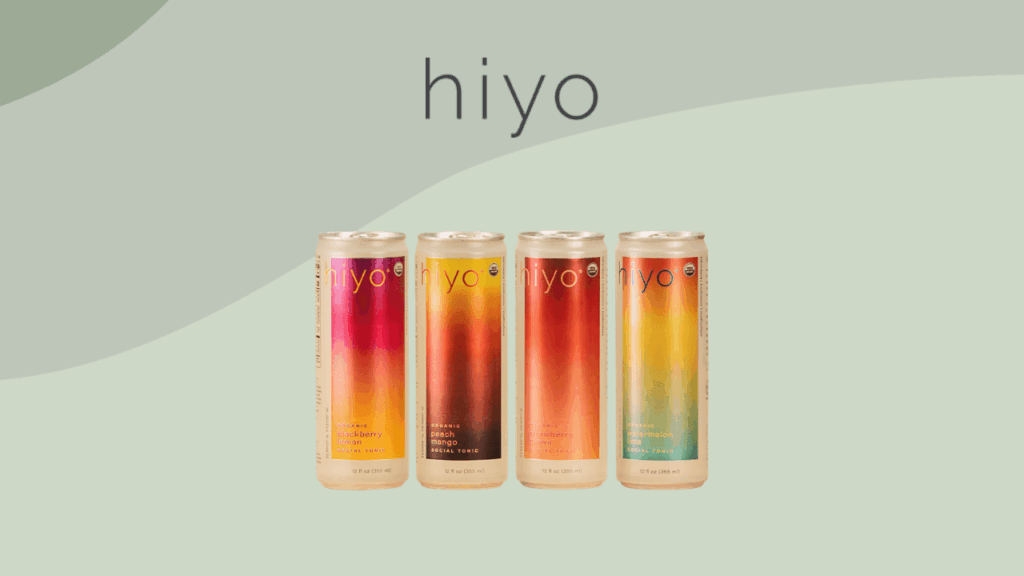
Hiyo Non-Alcoholic Drinks may support mood, relaxation, and social consumption through a range of sparkling drinks formulated with adaptogens, nootropics, and botanical ingredients. They contain a mixture of plant-derived compounds that may influence stress response, cognitive function, and mental state.
The makers have added a combination of adaptogens and nootropic compounds, including ashwagandha extract, passion flower extract, and lemon balm extract, which are commonly associated with stress modulation and calming effects. L-theanine is also included and is generally linked to relaxation and attention regulation without strong sedative effects. Lion’s mane mushroom extract has been used in products such as Strawberry Guava and Peach Mango for its potential benefits with cognitive support.
Products like Blackberry Lemon and Watermelon Lime contain ingredients such as ginger extract, which are commonly associated with digestion and circulation. Gum acacia is included as a stabilizer and may also function as a source of soluble fiber, which could influence texture and digestive processes.
Hiyo operates with limited functional versatility, relying on a single core formulation that remains consistent across its entire flavor lineup instead of offering distinct variants for different use cases. The brand positions itself as a non-alcoholic social tonic, focusing on relaxation, mood support, and mindful drinking occasions. This keeps its use centered around social and lifestyle contexts rather than extending into performance-driven areas like energy, hydration, or cognitive support that are commonly seen in broader drink categories.
This limitation makes its products more suited to specific situations, such as replacing alcohol in social settings, rather than functioning as an all-purpose option throughout your day. If you are looking for support in areas like hydration, energy, or focus, you may need to rely on additional products, which can reduce overall convenience if you prefer a single, multi-functional option.
Hiyo offers limited flexibility when it comes to flavor-specific sampling, as its model prioritizes multi-can bundles, variety packs, and subscription options over smaller trial sizes. Instead of consistently offering single-can or flavor-specific purchases, the brand often requires you to commit to larger quantities, such as 12-can mixed packs.
This bundle-first approach reduces entry-level accessibility, especially for new users who want to try a specific flavor before committing. While retail expansion into stores like Target introduces some single-can availability, this option remains inconsistent compared to the brand’s primary online purchasing model.
This setup can make the first purchase feel like a higher upfront commitment, particularly when ordering online. You may need to choose a variety pack without knowing which flavors suit your preference, which increases the chances of unused product. If single cans are not easily available in nearby stores, testing the product casually becomes less convenient compared to brands that offer lower-commitment trial options.
Recess operates across several distinct product lines, including Recess Mood sparkling water infused with magnesium and adaptogens, and hemp-infused sparkling water. It also features Zero Proof mocktails and Mood Powders that combine magnesium, adaptogens, and electrolytes in stick packs such as 6-count, 15-count, and flavored options like gradient berry. On the other hand, Hiyo keeps its offering concentrated around canned functional seltzers, primarily available in bundles like the classic pack and tropical pack, with fixed flavor combinations including blackberry lemon, pineapple coconut, and passion fruit tangerine.
Their ingredient strategies show a contrast in how each brand builds functionality. Recess varies its ingredient profile depending on the product line, using magnesium L-threonate in its Mood range as a brain-focused form of magnesium. It layers these with supporting ingredients like L-theanine to ease tension, lemon balm to support equilibrium, and passion flower to balance mood fluctuations. In comparison, Hiyo uses a consistent formulation across all its cans, combining ashwagandha, lion’s mane mushroom, lemon balm, passion flower, and ginger root, and specifies that each can contains 1.7 grams of these functional ingredients.
Format flexibility is another area where the contrast becomes clear. Recess allows you to choose between ready-to-drink cans and powder stick packs that can be added to any drink. On the other hand, Hiyo limits its format to pre-mixed cans, with purchasing options structured around 12-pack, 24-pack, and 48-pack sizes, where the price per can decreases from around $3.19 to $2.77 as volume increases. Recess also extends further into alcohol-free alternatives through its Zero Proof line, which is specifically crafted to mimic the taste and feel of familiar cocktails, offering options like sampler packs and individual flavors inspired by classic drinks. Meanwhile, Hiyo states that its drinks do not replicate cocktail formats and instead focus on fruit-forward tonic profiles.
Kin Euphorics centers its identity around mood-driven formulations, with products like Lightwave, Kin Spritz, Kin Bloom, and Dream Light associated with soothing serenity. These products are grouped into categories such as gently caffeinated and caffeine-free, reinforcing a functional segmentation based on desired mental states. In comparison, Hiyo frames itself as an organic social tonic designed to replace traditional drinking experiences, offering fruit-forward options like blackberry lemon, peach mango, strawberry guava, and watermelon lime. The brand states that each can is positioned to deliver a mild, uplifting sensation, which is meant to replicate the relaxed and social ease people typically seek from alcohol.
Their product structures and pricing models further highlight these contrasts. Kin Euphorics offers individual products typically priced at $39, along with a 16-pack variety bundle priced at $69. It also encourages exploration through bundles, subscriptions, and a guided quiz that helps you find your ideal product. Hiyo, on the other hand, organizes its offerings around pack sizes and flavor variety, with 12-pack, 24-pack, and 48-pack options priced at approximately $44.99 per 12-pack and decreasing per-can costs down to about $2.77 in larger bundles. It also offers curated packs like the classic pack and tropical pack, each including multiple flavors to encourage sampling within a consistent format.
Kin Euphorics references adaptogens and nootropics as the foundation of its formulations but does not specify ingredient quantities, focusing instead on the experiential outcome of each blend. Meanwhile, Hiyo provides more measurable detail, stating that each can contains 1.7 grams of functional ingredients and explicitly naming components such as ashwagandha, lion’s mane mushroom, lemon balm, passion flower, ginger root, and green tea. The brands also diverge in how they expect you to use their products. Kin Euphorics leans into individual routines and self-guided discovery, offering both caffeinated and non-caffeinated options and tools like a quiz to match products to your preferences. Hiyo, in comparison, emphasizes shared experiences and social settings, positioning its drinks as something you can bring to gatherings, dinners, or casual hangouts.
We evaluated Hiyo’s brand reputation using publicly available information from Thingtesting, where the company has received a 3.4 out of 5 rating based on 60+ reviews. Customer feedback has included some positive themes that have contributed to the brand image. These have included appreciation for flavor profiles, low sugar formulation, and positioning as a non-alcoholic alternative.
However, there are some recurring concerns reported, such as inconsistent product effectiveness and physical side effects, such as headaches, bloating, and stomach discomfort. There have also been mentions of flavor inconsistency and aftertaste preferences, particularly related to sweeteners.
Hiyo’s brand reputation has reflected a moderate rating with mixed feedback. Recurring concerns around effectiveness, side effects, and value perception have indicated areas where the brand reliability could be strengthened.
We evaluated the real user experiences of Hiyo using publicly available customer feedback from Amazon. The brand’s Blackberry Lemon and Peach Mango drinks are often noted as enjoyable and easy to consume. Blackberry Lemon shows 4.2 out of 5 from 140+ ratings, and Peach Mango is rated 4.1 out of 5 from 120+ ratings. The carbonation level is commonly described as balanced, contributing to a clean drinking experience. Some users report experiencing a mild sense of relaxation, while others describe it as calming without being intoxicating. However, a noticeable portion of users report feeling no effects at all, suggesting that the functional claims tied to adaptogens and nootropics may vary.
Pricing emerges as one of the most consistent concerns across all variants. Many users describe the products as expensive for a sparkling drink. There are also occasional concerns related to product experience and delivery. A few also mention issues such as receiving the wrong flavor, residue settling at the bottom of the can, or dissatisfaction with sweetness levels due to added sugars.
Hiyo centers on ready-to-drink cans formulated with adaptogens, nootropics, and botanicals. However, the brand uses a single base formulation across all flavors, which reduces functional variety if more targeted effects are preferred. The bundle-first purchasing model and limited single-can availability further reduce flexibility.
The brand may suit you if you are looking for a structured option that supports a mild shift in mood within social routines. However, if you prefer stronger or more consistent functional outcomes, greater product flexibility, or easier trial access, the current offering may feel restrictive.
You should also be aware of practical considerations, such as potential interactions of ashwagandha with certain medications or conditions, sensitivity to L-theanine when combined with caffeine, and occasional digestive discomfort reported by some users. The brand offers a focused but narrow experience, with limited customization and a higher cost that you need to weigh before exploring the brand.

Contact us at [email protected] or follow @leafsnap on Twitter! View our Privacy Policy.