


Factor is focused on delivering fresh, ready-to-eat meals that could support specific performance goals. The company offers a rotating weekly menu of keto, high-protein, calorie-smart, low-carb, GLP-1 support, fiber-focused, and flexitarian plans. It claims to address common challenges such as time constraints, inconsistent dietary adherence, portion control, and difficulty maintaining specialized eating plans.
This review will evaluate the brand’s menu quality, ingredient standards, nutritional positioning, and subscription flexibility. It will also assess strengths and limitations, including long-term sustainability within the prepared meal delivery market.
Factor is a U.S.-based subscription meal delivery service providing fresh, ready-to-eat meals structured around defined nutrition goals. Meals are fully prepared, refrigerated (not frozen), and designed to be heated in approximately two minutes. Deliveries arrive in insulated, recyclable packaging.
The platform features 100+ rotating menu items per week, including breakfast, lunch, dinner, smoothies, snacks, desserts, and add-ons. Core categories include High Protein, Calorie Smart, Keto, Low Carb, GLP-1 Support, Fiber Filled, Flexitarian, Chef’s Choice, and Vegan + Veggie options.
Factor also provides nutrition coaching with registered dietitians. You can book a phone session in which you could be guided for meal planning alignment, weight management, sports nutrition, and lifestyle adjustments through registered dieticians. The brand also promotes sustainability initiatives, including sourcing 100% renewable electricity for production facilities and offices.
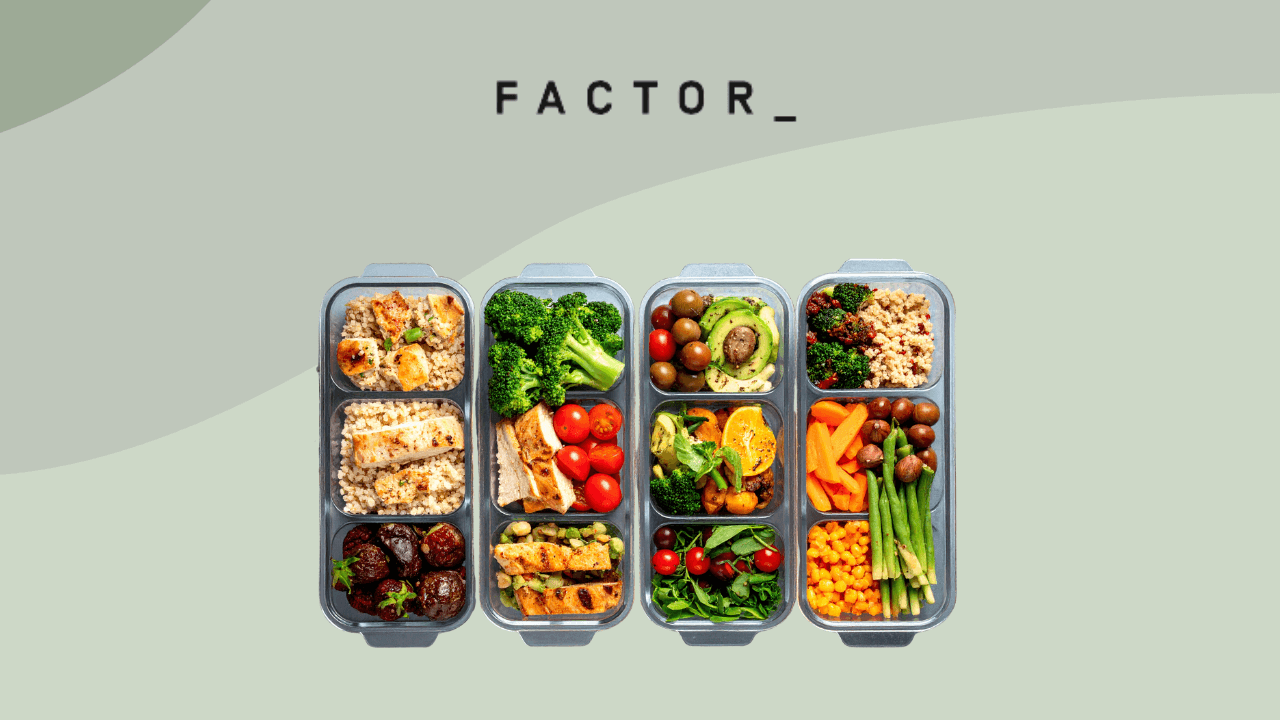
Factor’s Ready-To-Eat Meals are pre-cooked, refrigerated meals delivered through a recurring weekly subscription. The meals arrive fresh in insulated packaging and are designed to be reheated prior to consumption, typically in a microwave. The company states that meals can be heated and ready to eat in approximately two minutes. No preparation, cooking, or assembly is required.
The weekly menu rotates by delivery window and, according to the company, may include over 100 meal options in a given week. Each dish is preassembled with fixed ingredients and portion sizes. Examples listed on the menu include protein-based entrées such as chicken-based bowls, beef burgers, and salmon dishes paired with vegetables, grains, or starches. Meals are labeled using predefined dietary tags that correspond to stated macronutrient thresholds.
The High Protein category includes meals containing 30 grams of protein or more per serving. From a physiological standpoint, dietary protein supplies essential amino acids required for muscle protein synthesis, tissue repair, and enzyme production.
Meals labeled calorie smart are structured at approximately 550 kilocalories or less per serving, aligning with energy-controlled dietary patterns often used in weight management. Keto meals are formulated at approximately 15 grams of net carbohydrates or less per serving, which reflects carbohydrate levels typically associated with ketogenic dietary approaches that aim to shift metabolism toward greater fat utilization and ketone production.
Low-carb and carb-conscious meals generally contain reduced total carbohydrate levels (approximately 35 grams or less in the carb-conscious category). Reduced carbohydrate intake can influence postprandial blood glucose responses depending on total intake and metabolic factors.
The brand’s fiber-filled meals contain approximately 6 grams of fiber or more per serving. Dietary fiber contributes to digestive function, supports satiety, and plays a role in glycemic regulation and gut microbiota activity.
Ready-to-eat meals that are labeled as gluten-free are made without gluten-containing ingredients, which can be relevant for those with celiac disease or gluten sensitivity. Vegan and vegetarian categories exclude animal-derived proteins either entirely (vegan) or partially (vegetarian), aligning with plant-based dietary patterns that rely on legumes, grains, vegetables, nuts, and seeds for macronutrient intake.
For each meal, the brand provides published calorie counts, macronutrient breakdowns (protein, carbohydrates, fats), ingredient lists, and allergen disclosures through its website and mobile application. Some of the options you can explore on the site, from the readymade meals and addons include:
| Ready-Made Meals | Add-Ons |
|---|---|
| Tangy Southern Chicken with Red Potatoes & Creamed Corn | 12-Piece Egg Bite Bundle (Smoky Bacon, Broccoli Cheddar, Chicken Chorizo) |
| Shredded Chicken Taco Bowl with Corn Salsa & Cilantro Crema | Protein Waffle & Egg Bite Bundles |
| Smoky BBQ Chicken Breast with Potato Mash, Creamed Corn & Peppers | Pancake Assortments (20g+ protein per serving) |
| Thai Yellow Curry Chicken & Ginger Rice with Broccoli, Carrots & Chili-Lime Peanuts | Juice Variety Bundles and Smoothies |
Factor positions its service as an integrated nutrition ecosystem beyond standalone meal subscriptions. It delivers fully cooked, refrigerated meals ready to heat and eat, organized into categories like Calorie Smart, Protein Smart, Keto, Carb Conscious, Fiber Smart, GLP-1 Metabolic Health, Flexitarian, and Vegan + Veggie. Listings include calorie totals, macros, ingredients, and allergens via website or app. Add-ons cover breakfasts, protein shakes, smoothies, cold-pressed juices, wellness shots, snacks, and extra proteins. Centralized dashboard handles meal selection, scheduling, skips, pauses, and cancellations. This setup simplifies healthy eating by providing one-stop access to macro-customized meals, tracking, add-ons, and expert advice, reducing decision fatigue and supporting consistent nutrition goals without multiple services.
Factor describes its meal development process as a structured collaboration between chefs and Registered Dietitians (RDs/RDNs). Recipes are created by culinary teams and reviewed against macro-based nutritional standards established by dietitians prior to weekly menu publication. This review functions as an internal quality control step before meals enter rotation. Dietitians define quantitative thresholds for each dietary category.
According to the brand, Calorie Smart meals contain ≤550 kcal per serving, while the Protein Smart meals provide ≥30g protein. Its Keto meals are structured at ≤15g net carbs, Carb Conscious meals contain ≤35g total carbs, and Fiber Smart meals provide ≥8g fiber.
Additional categories include GLP-1 Metabolic Health, Flexitarian, and Vegan + Veggie. These numerical targets guide formulation and final approval decisions. The company states it evaluates ingredients under internal standards, reporting >500 reviewed and >160 excluded (e.g., artificial additives). Each meal listing includes calorie counts, macronutrient breakdowns, full ingredient panels, and allergen disclosures via website and app. This may provide clarity when tracking calories, protein, carbs, or fiber. Published thresholds cut guesswork, letting you align meals with goals without manual macro calculations.
Factor limits its coaching component to a single complimentary 20-minute phone session with a registered dietitian, positioned as general nutrition guidance and meal-selection support rather than an ongoing advisory program. Standard subscriptions do not prominently feature recurring sessions, structured follow-up plans, longitudinal progress tracking, individualized macro calculations based on laboratory data, or tiered coaching memberships in available materials. There are no published disease-specific protocols, individualized diagnostic assessments, or continuous case management structures integrated into the meal plan subscription. This means the coaching element functions primarily as onboarding assistance or high-level Q&A rather than sustained accountability or performance optimization. If your goal requires iterative macro recalibration, structured weight-management oversight, or long-term metabolic monitoring, the single-session format limits personalization depth beyond initial guidance.
Factor and FlexPro Meals operate within the ready-to-eat meal delivery sector, but their architecture, operational focus, and ecosystem breadth reflect different strategic orientations.
FlexPro positions itself as a performance-oriented, chef-prepared, high-protein convenience brand centered on speed, macro balance, and fitness support. It emphasizes rapid fulfillment alongside rotating weekly menus that reference 30+ to 35+ meals and approximately 50+ chef-curated recipes.
Meals range from roughly 310 to 730 calories and typically provide between 30 and 50 grams of protein, reinforcing a protein-dominant identity. The company also extends into a Protein Bakery line featuring high-protein, low-sugar desserts such as Cookies & Cream Cheesecake, Amish Bonfire Cheesecake, and Triple Chocolate Chipwreck, and offers a Custom Protein Box. Some meals are described as fortified with collagen, magnesium, and potassium, though dosage transparency is not specified in the provided material.
Factor, by contrast, structures its entire offering around defined macronutrient thresholds and a formalized subscription infrastructure. Weekly menus may exceed 100 options, with up to 107 meals. Full macronutrient breakdowns, ingredient lists, and allergen disclosures are available per meal.
In terms of target focus and approach, FlexPro concentrates on high-protein meals without cooking. Its differentiation relies heavily on speed of delivery, protein density, indulgent yet goal-aligned desserts, and flexible plan adjustments, including skipping or pausing subscriptions. Factor, in contrast, highlights a dietitian-vetted culinary system in which registered dietitians establish nutritional standards and review recipes, and it offers a complimentary 20-minute one-on-one session with a registered dietitian.
However, neither brand indicates adaptive macro recalculation, longitudinal coaching programs, or algorithmic personalization based on user biometrics. Personalization for both appears limited to meal selection within predefined categories or portion preferences rather than ongoing coaching infrastructure.
Regarding app functionality and subscription management, Factor explicitly describes digital account controls that allow you to skip weeks, pause deliveries, adjust box size, update payment details, change delivery dates where available, and cancel through an online dashboard or mobile app. FlexPro references subscription flexibility but places greater marketing emphasis on shipping speed rather than app-centric management tools.
From a breadth-of-services standpoint, FlexPro’s ecosystem breadth appears to be narrower, centered on high-protein entrées and dessert-style protein products, with supplement integration occurring within meals. Factor presents a wider ecosystem that has meals, beverages, breakfast options, wellness shots, and standalone products.
Sustainability and operational disclosures also differ in scope. FlexPro references recyclable packaging sleeves, in-house kitchen production, surplus food donations, and an aspiration toward 100% sustainable packaging, though quantified impact metrics are not detailed in the provided material. Factor states that it sources 100% renewable electricity for production sites and offices, offsets 100% of delivery emissions, aligns seafood sourcing with Monterey Bay Aquarium Seafood Watch recommendations, and offers Fair Trade Certified™ barramundi. These disclosures indicate a more quantified ESG reporting structure.
While both brands operate within the same prepared-meal category and emphasize convenience and ready-to-heat functionality, they differentiate through focus and breadth as FlexPro leans into performance identity and rapid delivery as core value propositions, and Factor emphasizes systematic nutrition categorization, institutional review processes, and a broader integrated platform.
Trifecta Nutrition and Factor both operate as U.S.-based, subscription, ready-to-eat, refrigerated meal delivery services that provide access to weekly boxes. They both eliminate cooking while maintaining dietary structure, but their strategic orientation diverges in macro control, medical positioning, personalization depth, and ecosystem expansion.
Trifecta Nutrition organizes its plans into clean-label, goal-oriented formats, including Clean Eating, Paleo, Keto, Whole30 Approved, Vegan, Vegetarian, and Classic menus designed for balanced macronutrient intake and dietary compliance. Factor, on the other hand, structures its selections across practical, dietitian-reviewed categories such as Calorie Smart, Chef's Choice, Keto, High Protein, Carb Conscious, GLP-1 Balance, Fiber Filled, and Flexitarian, allowing you to align your weekly meals to calorie goals, macro emphasis, or specific dietary needs without complex personalization.
Trifecta also advertises HSA/FSA-eligible medically tailored meal pathways. Qualification requires a Letter of Medical Necessity signed by a licensed provider specifying diagnosis and duration. These meal structures emphasize carbohydrate consistency, higher fiber, and moderated sodium in alignment with metabolic and cardiovascular management principles. Factor, by contrast, explicitly states that its meals are not intended to diagnose, prevent, or promote HSA/FSA eligibility.
The ecosystem breadth also differs. Trifecta’s ecosystem remains concentrated on meals, macro tracking, coaching integration, and sustainability initiatives rather than supplement retail expansion. Factor, meanwhile, has also expanded beyond entrées into breakfasts, smoothies, juices, protein shakes, wellness shots, products, and more.
Both brands claim to provide refrigerated meals, digital dashboards, and flexible subscription management. Strategically, however, Trifecta positions itself as a macro-driven, medically adaptable performance nutrition system with app-integrated accountability and potential reimbursement pathways, whereas Factor positions itself as a high-variety, dietitian-reviewed convenience platform organized around categorical diet filters, add-on expansion, and formulations.
As part of our evaluation, we reviewed Factor on the Better Business Bureau platform. The company is not BBB accredited, yet it currently holds an A+ rating. Despite this, the complaint volume is substantial. Several complaints have been filed within the past years, and the brand carries an average of 1.13 out of 5 stars based on 500+ customer reviews.
Complaint patterns highlight subscription billing and cancellation disputes, including reports of charges after attempted cancellations and difficulty navigating cancellation workflows. Some state they entered payment information before fully reviewing meal selections and were subsequently billed even when they believed they had cancelled within stated deadlines.
Delivery and fulfilment issues are also common. Reported concerns include missed shipments, carrier delays, boxes marked delivered but not received, and damaged packaging. Some complainants report receiving credits instead of direct refunds, while others state that reimbursement occurred only after escalation through third-party payment disputes. Food quality concerns and allergy-related dissatisfaction appear in the record but are secondary compared to billing-related friction.
As per the details on BBB, the brand appears to have recurring friction in subscription management, cancellation clarity, and fulfilment reliability, which may materially influence its overall reputation.
To assess real customer sentiment toward Factor, we analyzed publicly available reviews on Trustpilot. The company holds a TrustScore of 3.5 out of 5 based on 91,455+ reviews. Customers frequently describe the meals as flavorful, protein-forward, and easy to prepare in minutes. Many cite alignment with high-protein or low-carbohydrate dietary preferences and emphasize time savings for busy professionals, older adults, or single households. However, recurring concerns involve portion size and menu variety. Vegetable portions, particularly broccoli, green beans, and mixed sides, are frequently described as small. Despite these critiques, users generally characterize the service as enjoyable but not without room for improvement.
Some people have also shared on the platform that they experienced variability in meal execution. Reported issues include overcooked rice, undercooked pasta, dry seafood, or inconsistent side preparation. Some mention unclear heating instructions or packaging labeling. Allergen labeling concerns appear in isolated cases, including reports of gluten-containing ingredients not being clearly emphasized for sensitive consumers.
Shipping-related complaints, including late deliveries, boxes left in incorrect locations, damaged packaging, and melted ice packs, are also shared by the users. Many users have also mentioned unfavorable experiences regarding subscription and billing friction, including unexpected renewals, difficulty cancelling, or meals shipped without deliberate menu confirmation. The user sentiment toward Factor reflects mixed feedback, with taste, protein content, and convenience being appreciated, and occasional subscription friction remaining areas of concern.
Factor functions as a convenience-first, subscription-based meal delivery service built around structured macro categories rather than individualized nutrition planning. Its model prioritizes speed, predefined calorie and protein thresholds, and simplified adherence to common dietary frameworks. The service is designed for efficiency, such as fully prepared meals, rotating menus, and centralized subscription management, which can reduce decision fatigue and cooking time. However, personalization remains limited to category selection. Individual meals cannot be modified, portion sizes are fixed, and nutrition coaching does not extend beyond general guidance.
The brand may support time efficiency through its structured meal options, as they do not require cooking. However, if you require ingredient-level customization, precise macro calibration, or ongoing nutrition oversight, you may find the framework restrictive.

Contact us at [email protected] or follow @leafsnap on Twitter! View our Privacy Policy.