

Enclave Bioactives provides products that may support digestive balance, microbiome health, detoxification, and metabolic support. The brand’s portfolio includes targeted options formulated for specific areas such as gut support, liver function, and internal cleansing. Its offerings are framed to help you maintain digestive comfort, encourage microbial balance, and assist natural detox pathways as part of a broader fitness routine.
In this review, we will analyze Enclave Bioactives by examining its product lineup, the positioning, and potential advantages of the brand. We will also evaluate the areas where its approach may have limitations, and what consumer experiences and reviews suggest about real-world use.
As per the official website, Enclave Bioactives is focused on microbiome-centered health, developing formulations that blend modern clinical research with plant-based bioactive ingredients. The brand positions the microbiome as the foundation of whole-body support, linking it to digestion, immunity, metabolism, energy, mood, and cognitive balance.
The brand organizes its portfolio around targeted categories, which include Gut Balance and Liver and Nerve Health, with dedicated product options such as Gut Health Balance, Liver Detox, and Nerve Support.
The makers highlight that the brand’s ingredient profile features a wide range of plant-derived and functional compounds, including licorice root extract, berberine, resveratrol, quercetin, chicory root inulin, silymarin, artichoke leaf extract, bromelain, CoQ10, zinc, alpha-lipoic acid, lycopene, pumpkin seed oil, curcumin, and others. The brand also promotes clean-label attributes such as vegan, non-GMO, gluten-free, and free from synthetic additives.
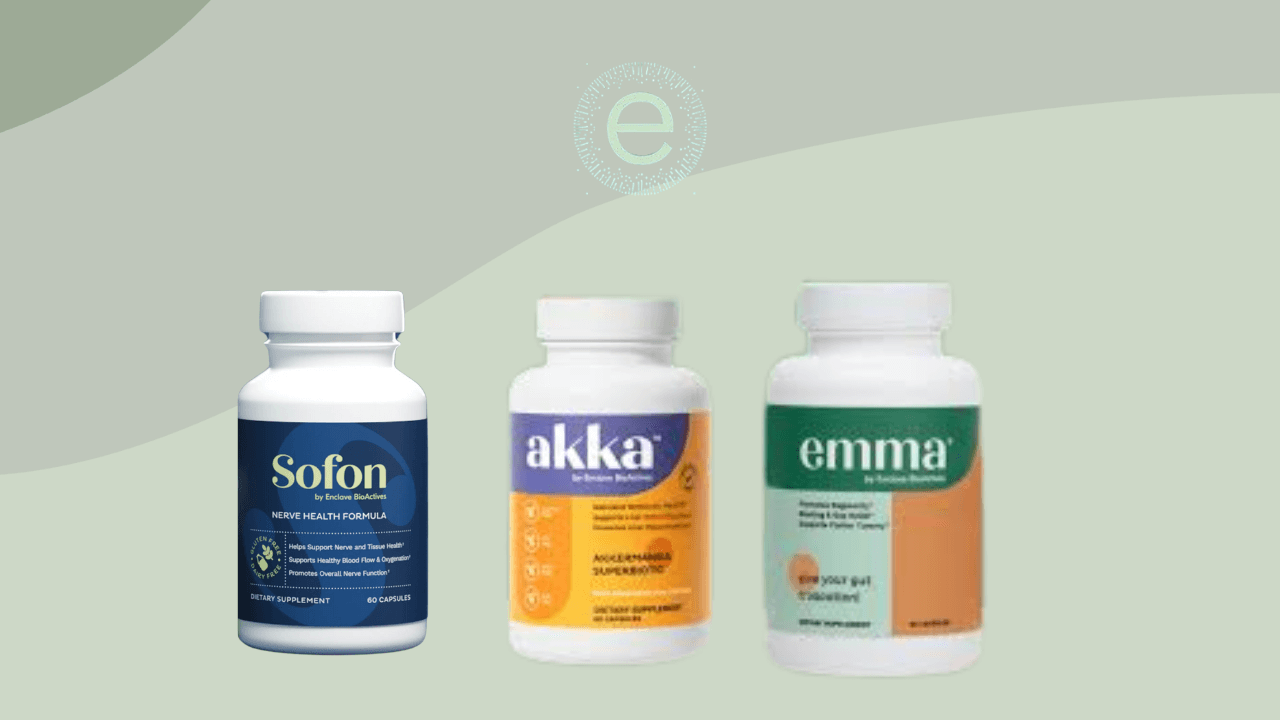
Emma may support better digestion, bowel regularity, and microbial balance in the gut. The blend focuses on processes related to motility, gas formation, intestinal muscle activity, and the interaction between gut bacteria and the intestinal lining.
The formula includes deglycyrrhizinated Licorice (DGL), which may help support the integrity of the stomach and intestinal lining by influencing mucus production and protective barrier function. This activity could help reduce irritation in the upper digestive tract.
As per the official website, quercetin in Emma might influence inflammatory signaling in the gut environment. It could also help support the intestinal barrier and regulate responses that contribute to sensitivity, discomfort, or bloating associated with diet and microbial interactions.
The formula also combines star anise, which may influence smooth-muscle activity in the gastrointestinal tract, potentially contributing to relaxation of intestinal spasms and more comfortable stool passage during peristalsis.
According to the official website, Akka is formulated to support processes related to liver function, cellular protection, and metabolic balance. The blend combines probiotic and plant-based bioactives that may influence bile flow, lipid metabolism, oxidative stress pathways, and interactions between the gut microbiome and the liver.
The formula includes Akkermansia that can modulate glucose and lipid pathways, which may indirectly influence fat accumulation patterns in the liver. It may also play a role in gut-liver communication through the microbiome axis by interacting with intestinal lining cells.
Akka also combines silymarin, which may influence liver cell membrane stability and support cellular regeneration processes by interacting with free-radical activity and protein synthesis pathways. The formula also has resveratrol, which could support metabolic balance and cellular resilience in liver tissue, particularly in cases involving oxidative stress or fat accumulation.
Sofon might support nerve integrity, tissue repair, circulation, and cellular resilience. The formula focuses on peripheral nerve signaling, oxidative stress, inflammatory pathways, and nutrient support that may be relevant in situations involving nerve discomfort or sensitivity.
As per the official website, Sofon features green-lipped mussel extract that contains omega-3 fatty acids, glycosaminoglycans, and lipid mediators, which may influence inflammatory signaling. These compounds may interact with cytokine pathways and neuronal cell membranes, which can affect how nerves respond to strain, pressure, or irritation.
The makers also added vitamin D to this formula, which could support cellular growth, immune signaling, and neuromuscular function. It might also interact with calcium balance and mitochondrial activity in nerve cells, processes that are relevant to conduction, repair, and tissue recovery following strain or injury.
Sofon also combines zinc, which supports enzymatic reactions, including those related to DNA synthesis, cellular repair, and antioxidant defense. It might promote myelin integrity, neurotransmitter regulation, and protein stabilization within nerve and support tissues. Its role in immune modulation and oxidative balance may also help maintain a stable environment around peripheral nerves.
Enclave Bioactives claims to structure its brand strategy around the human microbiome as a central factor in digestive and long-term health, rather than focusing on gut concerns as short-term or isolated issues.
The brand claims to frame gut health primarily in terms of microbial balance and composition, presenting the microbiome as a foundational system involved in digestion, nutrient processing, and broader physiological stability. This approach is reflected in how Enclave Bioactives claims to describe and differentiate its formulations. Its products, such as Akka and Emma, are claimed to be designed to support gut flora balance and intestinal function through microbiome-aligned mechanisms. The brand claims its ingredient strategies focus on supporting beneficial bacterial populations, addressing factors associated with digestive imbalance, and encouraging regular waste movement.
Enclave Bioactives has limited recognition as a standalone brand within the broader supplement landscape. The company’s establishment year is not prominently disclosed in public brand materials, which makes it harder for you to evaluate how long the brand has been operating or to place it within a longer market timeline. In categories where longevity often signals trust and stability, the absence of a clearly stated founding date can contribute to lower brand-level familiarity.
Brand visibility appears concentrated in direct-response marketing and product-specific funnels rather than in sustained brand-building channels. Aside from limited listings at select specialty retailers such as GNC, Enclave Bioactives does not show consistent shelf presence across major national chains. It also lacks recurring exposure in mainstream media or widely referenced supplement rankings that typically help establish household recognition.
Consumer awareness further reflects this dynamic. Discussions and reviews tend to focus on individual products such as Emma Relief and Elimipure rather than on Enclave Bioactives as the parent company. Discovery is largely driven by product-level advertising and landing pages, which can fragment recognition and slow the accumulation of brand equity over time.
Enclave Bioactives has limited publicly visible oversight from independent third parties that typically assess supplement brands for quality, transparency, and operational standards. There is no clear evidence that the brand participates in voluntary verification programs or independent audits from recognized organizations that evaluate areas such as ingredient sourcing, batch consistency, manufacturing controls, or formulation integrity beyond baseline regulatory compliance.
While products in the United States are regulated at a foundational level, Enclave Bioactives does not prominently display verification badges, audit summaries, or publicly accessible quality reports such as NSF, USP, Informed Choice, or similar frameworks, limiting insight into how its internal standards are independently assessed.
Available third-party accountability signals are indirect rather than structured. Public evaluations primarily appear in the form of consumer complaints associated with affiliated brands, such as Emma Relief listings with the Better Business Bureau, which reflects a moderate assessment without indicating comprehensive certification or audit-based validation. These sources provide partial context but do not substitute for formal, brand-level oversight of manufacturing or quality systems.
Pendulum and Enclave Bioactives both position themselves around microbiome-centered support, but they differ in scientific orientation, product focus, and how their formulations are presented to consumers.
As per its official website, Pendulum adopts a clinically focused, probiotic-driven approach. Its portfolio centers on targeted microbiome formulations such as Metabolic Daily (4-in-1 Daily Probiotic), Akkermansia (Gut Lining Support and Immune Function), Glucose Control, and Polyphenol Booster. These products are described as doctor-formulated by PhD scientists and linked to institutions such as Johns Hopkins, Harvard, Berkeley, and Stanford. The brand highlights elements such as proprietary strains, clinical partnerships, oxygen-free manufacturing, and healthcare-provider engagement, positioning Pendulum as a science-led probiotic company with medical alignment. Its messaging supports outcomes related to gut health, metabolism, mood, energy, gut-lining integrity, and Type 2 diabetes nutritional management, with Glucose Control presented as a key differentiator. Enclave Bioactives takes a broader, bioactive-nutrient and natural-ingredient-led approach grounded in microbiome balance. Its product ecosystem covers multiple categories, including Gut Health Balance, Liver Detox, and Nerve Support (Sofon). Instead of probiotic strains, the formulations emphasize plant-based and functional compounds such as berberine, resveratrol, quercetin, silymarin, bromelain, CoQ10, pumpkin seed oil, alpha-lipoic acid, licorice root extract, chicory root inulin, and lycopene. The brand frames its methodology through concepts such as Molecular Synergy, Advanced Formulation, and Precision Dosing, while also highlighting standards such as vegan, non-GMO, and clean ingredient selection. Its positioning reflects science-informed formulation guided by microbiome research, but with a stronger emphasis on holistic lifestyle support and natural bioactives across body systems.
Pendulum maintains a narrower, highly specialized range centered on probiotic therapeutics, particularly Metabolic Daily, Akkermansia, Glucose Control, Polyphenol Booster, and the Metabolic Daily Bundle. Enclave Bioactives maintains a wider category spread that extends beyond digestion into areas such as liver function and nerve health, while still connecting these to microbiome-related balance.
Pendulum is a clinically anchored, probiotic-specific brand built around proprietary strains and medical-grade positioning, whereas Enclave Bioactives presents itself as a multi-category brand centered on natural bioactives and microbiome-aligned ingredient synergy.
Seed emphasizes clinically proven daily essentials supported by microbiome research and delivery technology, while Enclave Bioactives highlights nature-based bioactive formulations designed for targeted functional areas such as gut health, liver function, and nerve support.
As per its official website, Seed offers a structured lineup built around daily fitness maintenance and microbiome support. Its key offerings include the DS-01® Daily Synbiotic, positioned as a digestive health probiotic that supports regularity and bloating relief using 24 targeted probiotic strains and a novel prebiotic. The brand highlights ViaCap® Technology, described as a dual capsule system where the outer capsule protects probiotics through digestion and delivers prebiotics, and the inner capsule delivers live strains to the colon. Its other core supplements include DM-02™ Daily Multivitamin, AM-02™ Focus + Energy, PM-02™ Sleep + Restore, the Daily Essentials Duo, and specialized products such as PDS-08® Pediatric Synbiotic and VS-01™ Vaginal Synbiotic. On the other hand, Enclave Bioactives organizes its catalog around functional categories that address specific fitness areas. These include Nerve Support, Liver Detox, and Gut Health Balance, with product families such as Emma, Akka, and Sofon. Its ingredient profile combines a wide range of plant-based and bioactive compounds, including berberine, resveratrol, silymarin, CoQ10, alpha-lipoic acid, bromelain, licorice root extract, and vitamin B-complex nutrients.
Seed primarily focuses on consistent, everyday microbiome maintenance through structured essentials such as synbiotics, multivitamins, and lifestyle-integrated supplements available through subscription programs. Meanwhile, Enclave Bioactives prioritizes target-specific or concern-focused formulations, particularly for digestive balance, nerve function, and detox support, supported by botanical and bioactive-rich ingredient systems.
We evaluated Enclave Bioactives by reviewing its brand focus, product positioning, available background information, and visibility across independent review and accreditation platforms.
The brand presents itself as a science-oriented company centered on microbiome health, gut support, and cellular wellness formulations. Its offerings emphasize bioactive ingredient–based supplements intended to support areas such as digestion, metabolic balance, immune function, and overall microbiome performance.
We also examined the brand’s presence on platforms such as the Better Business Bureau, Yelp, and TenereTeam, where it is currently not listed, meaning there is no centralized record of accreditation status, complaint handling, or dispute-resolution history in those environments. This results in fewer third-party trust indicators at the brand level, although the absence of such listings is relatively common among newer or digitally focused companies and does not, by itself, suggest negative practices.
Our evaluation reflects a brand that does not present obvious areas of concern, while also operating with limited independent reputation data at this stage. Reviewing product-specific feedback, understanding policies related to returns and guarantees, and monitoring how the brand’s external presence evolves may support more confident purchase decisions.
Our evaluation of Enclave Bioactives is based on customer feedback shared on Amazon during 2024–2025. Across these recent reviews, many users reported noticeable improvements in areas such as digestion, bloating, liver comfort, and nerve-related discomfort, while others described slower progress or limited results.
The brand’s Emma holds a 3.9 rating based on 7,311 reviews. Users commonly highlighted relief from constipation, reduced bloating, improved regularity, and better energy levels over several weeks of use. Some customers mentioned combining the supplement with dietary or lifestyle changes and felt that results became more noticeable over time. At the same time, a few users reported little change or slower progress, and some raised questions around verification and expectations, indicating that experiences can differ significantly from person to person.
We also considered reviews for AKKA Premium Liver Cleanse Detox and Repair, which carries a 4.2 rating based on 574 reviews. Many customers described improvements such as better bile flow, reduced abdominal discomfort, positive shifts in liver enzyme readings, or gradual weight-related changes during extended use. However, there were also some reports of adverse reactions, as well as comments about price differences across retailers. These insights suggest that while some users perceive meaningful benefits, careful use and medical guidance are especially important with liver-support supplements.
For the Nerve Support Supplement, which has a 3.6 rating based on 67 reviews, users noted gradual relief and felt the product helped over time, while others did not notice a clear improvement or questioned its value relative to the cost. Several customers also emphasized that longer-term use may be necessary before results become apparent, showing that outcomes may depend on symptom severity and individual responsiveness.
Our evaluation indicates that Enclave Bioactives appeals to users seeking targeted options and experience-based results rather than quick fixes. The reviews suggest that many customers do benefit from the products, but outcomes are highly individualized, making realistic expectations, consistency, and consultation with a healthcare professional important parts of the decision-making process.
Enclave Bioactives presents itself as a microbiome-focused brand that develops formulations around plant-derived bioactive compounds. The brand aligns its positioning with scientific literature that links microbial balance, cellular signaling, and metabolic regulation to outcomes like immune resilience, digestive stability, mood support, and cognitive performance.
At the same time, it provides limited visibility into third-party testing, independent certifications, and product-specific clinical validation, which makes it harder to assess manufacturing transparency, long-term safety assurance, and outcome-based evidence compared with more established supplement companies. Much of the scientific framing remains conceptual or mechanistic instead of being supported by controlled studies on individual products, creating a gap between research-aligned positioning and verifiable proof.
It is essential to review ingredient dosages, allergen disclosures, and interaction risks, particularly if you have metabolic, gastrointestinal, or neurological conditions. Consider discussing use with a doctor, avoid combining multiple microbiome-targeted supplements without guidance, and discontinue use if you experience unexpected digestive, mood, or nerve-related symptoms.

Contact us at [email protected] or follow @leafsnap on Twitter! View our Privacy Policy.