

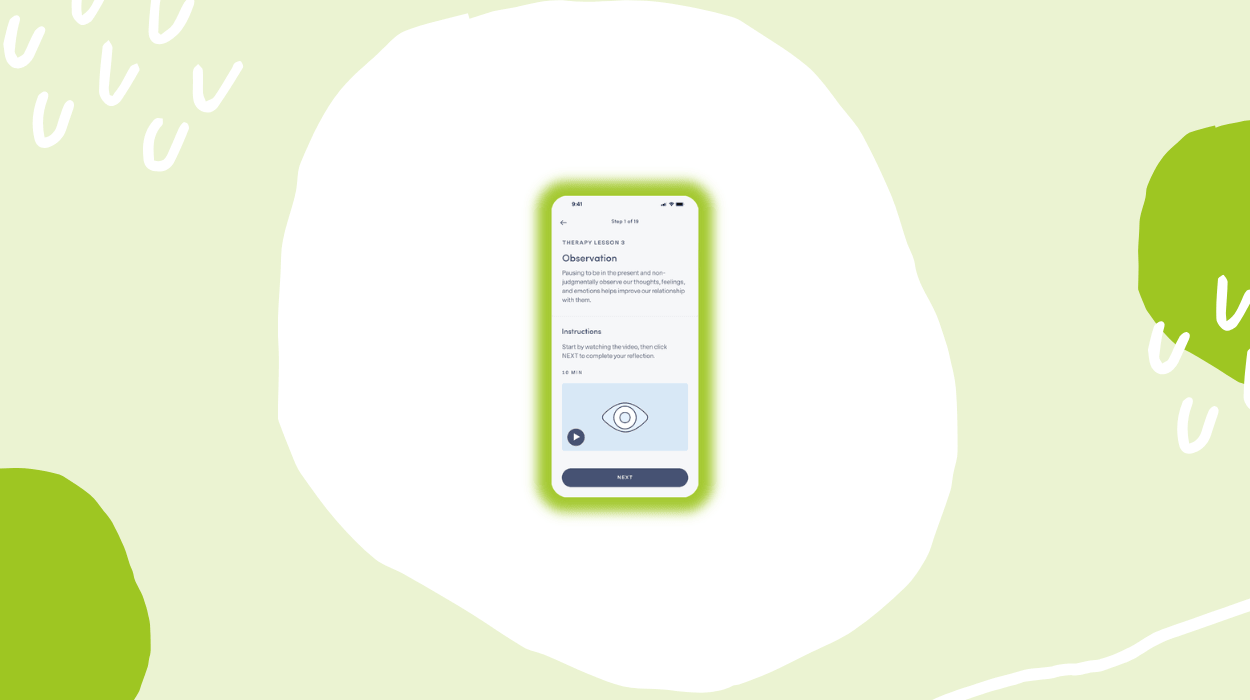

Brightside Health is a U.S.-based tele-mental health platform that provides fully online support for a range of mental health concerns. The platform connects you with licensed therapists and psychiatric providers, allowing everything to be accessed remotely without in-person visits.
The brand offers a combination of psychiatry and therapy services, giving you the option to engage in structured talk therapy, medication support, or a combination of both, depending on your needs.
In this review, we will explore what Brightside Health offers across its service categories and where it stands out in terms of accessibility and personalization. We will also analyze its limitations that may affect your experience.
Brightside Health provides personalized, structured support for a wide range of emotional and behavioral concerns.
The brand’s scope primarily covers anxiety and depression, but it also highlights support for managing insomnia, PTSD, bipolar disorder, OCD, panic disorder, postpartum depression, and phobias. Its process begins with a free assessment that evaluates your symptoms and helps match you with a plan, followed by one-on-one video sessions and continuous communication with a dedicated provider.
As per the official website, the platform’s core categories include psychiatry, therapy, and combined care programs. Its psychiatry services involve prescription-based support guided by the analysis of over 100+ personal data points to identify suitable options, while therapy programs combine cognitive and behavioral approaches with structured, self-guided skill-building exercises.
Brightside Health emphasizes accessibility by accepting major insurance providers such as Aetna, Cigna, UnitedHealthcare, Medicare, and Medicaid. The platform is HIPAA-compliant and uses encryption for data in transit and at rest, along with secure communication protocols.
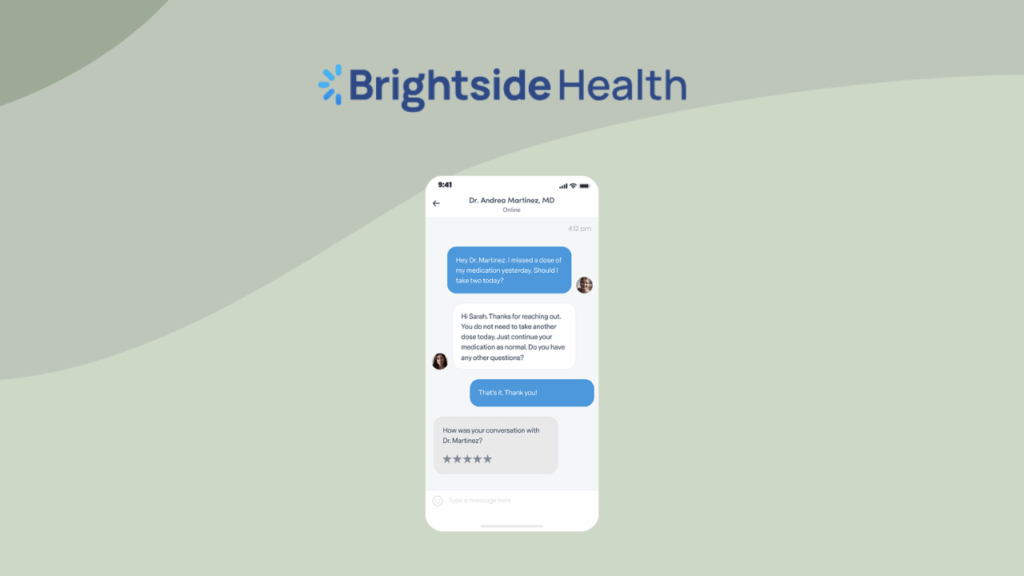
The Psychiatry service from Brightside Health focuses on medication management for mental health conditions. This service provides guidance on ways to manage anxiety, depression, and related disorders.
The company states that care begins with a free assessment, where detailed information about your symptoms, medical history, and goals is collected. This data is used to match you with a psychiatric provider and inform medication decisions.
A central component of the service is its PrecisionRx system, which the brand describes as an AI-supported prescribing tool. This system is intended to assist providers by predicting which medications may work best based on user profiles.
Once a plan is established, prescriptions are sent directly to your preferred pharmacy, and ongoing care includes regular follow-ups and symptom monitoring.
The Therapy service from Brightside Health connects you with a licensed therapist for ongoing, personalized mental health support. According to the company, this service addresses conditions such as anxiety, depression, and related challenges through a combination of guided sessions, skill-building, and continuous engagement.
Brightside states that the process begins with a brief assessment to understand your symptoms, history, and goals. Based on this information, you are matched with a therapist suited to your needs, who remains your provider throughout your care.
The service comprises weekly live video sessions, where you and your therapist discuss current concerns, track progress, and adjust your approach as needed. In addition to these sessions, Brightside offers messaging support, allowing you to reach out between appointments for guidance or clarification. The program also includes a progress tracking component, where your symptoms and improvements are monitored over time.
The company’s scope of services includes a broad range of conditions across varying levels of severity, including panic disorder, PTSD, OCD, insomnia, bipolar disorder, and different forms of depression.
The Combined Psychiatry + Therapy option includes both medication management and structured therapy within a single care plan. The program combines prescribing with ongoing behavioral support, rather than offering these services separately.
The brand claims that the therapy program offers a combination of guided sessions and self-directed work as a way to reinforce progress over time and maintain improvements beyond active treatment. Care is available for individuals aged 13 and older, including a focus on teen mental health. Under this service, the brand offers support for psychiatric evaluation, which is required for suitability for medication use, along with evidence-based CBT.
Brightside Health presents its model as team-based, where psychiatric prescribers and licensed therapists collaborate within a shared clinical platform. Instead of separating evaluation, diagnosis, medication support, and psychotherapy across different providers or systems, these elements are coordinated within a single structure.
According to the company, you receive a personalized plan developed jointly by a psychiatric clinician, such as a psychiatrist, psychiatric nurse practitioner, or other qualified prescriber, along with a licensed therapist. They establish shared goals related to symptoms, functioning, and safety, often using standardized measures like PHQ-9 or GAD-7. These goals are not static, as the plan is adjusted over time based on how your scores and overall progress change.
Progress tracking is also built into the platform through regular digital assessments and in-app check-ins, allowing both providers to monitor updates consistently. This shared visibility helps ensure that any adjustments are informed by the same set of data.
The company also states that this coordinated approach extends to its higher-acuity programs. These offerings typically involve multiple providers, structured weekly schedules, and a combination of single and group sessions, along with closer monitoring of symptoms and safety.
This model emphasizes convenience and coordination by bringing therapy and medication support into one place. Since providers work from the same data and progress measures, changes to your plan can be made with a more aligned understanding of how you are doing.
Brightside Health describes its approach as data-driven, where providers review your symptom severity, clinical history, and response patterns. This information is used to guide decisions more precisely, rather than relying solely on standard prescribing practices.
According to the company, this model is applied during both initial evaluations and follow-up visits. First appointments are typically longer, around 60 minutes, allowing providers to assess your condition in detail and recommend medications based on the collected data. Adjustments are then made over time as your symptoms and functioning evolve.
Both prescribers and therapists have access to the same set of measurements, which supports coordinated decision-making instead of isolated adjustments. Brightside also highlights leadership from Dr. Mimi Winsberg, its Chief Medical Officer and co-founder, who has contributed to shaping this precision-focused, data-oriented model.
The approach aims to create a more personalized and consistent plan over time, with changes guided by how you respond rather than relying heavily on trial and error.
Brightside Health works with many major insurers, but coverage varies by plan. You need to verify your eligibility during sign-up, as not all plans under a listed insurer are accepted. Approval depends on factors such as your plan type (for example, PPO vs. others), your state, and specific plan rules. Some Medicare and Medicaid options also remain limited or are only available in certain regions.
Even if your insurance is accepted, your coverage may still differ. You might be responsible for copays, deductibles, or coinsurance, and certain services may not be fully covered. While Brightside submits claims on your behalf, your final cost depends on how your insurer processes the claim, not the initial estimate. Coverage is not guaranteed simply because your insurer is listed. You should review your specific plan details in advance and be prepared for potential cost variations, including copays, deductibles, and coinsurance.
Cerebral claims to focus on evidence-based therapy and medication management, covering multiple service categories such as individual therapy, couples therapy, child and teen therapy, and psychiatry. Its scope includes anxiety, depression, ADHD, and bipolar disorder, and combines lifestyle recommendations alongside clinical guidance. Brightside Health, in comparison, narrows its scope to anxiety and depression but expands depth within those areas by addressing a full spectrum of severity, from mild symptoms to complex cases like PTSD, OCD, insomnia, postpartum depression, and PMDD. It also introduces structured programs such as its Suicide Prevention Program based on the Collaborative Assessment and Management of Suicidality framework, as well as Intensive Outpatient Programming.
As per their official website, Cerebral emphasizes scale and flexibility in provider access, offering a network of over 600 trained and certified clinicians across 65+ specialties and 35 therapy modalities. You can browse clinician profiles, view real-time availability, and book sessions directly, with some appointments available within 24 hours or even the same day, depending on location and capacity. On the other hand, Brightside Health takes a more streamlined approach by assigning you a dedicated provider after an initial assessment, ensuring that you work with the same professional throughout your experience. This creates a consistent, single point of contact model rather than Cerebral’s multi-provider flexibility.
Cerebral allows you to actively choose your therapist or prescriber based on factors like specialty, gender, and schedule, and even offers a free 15-minute consultation with a care coordinator to help you get started. Meanwhile, Brightside replaces this choice-driven model with a structured intake process that begins with a free assessment and generates a personalized plan. Its psychiatry services rely on analyzing more than 100 data points to determine which medication is likely to be most effective and tolerable.
Medication management is another area where the differences become more specific. Cerebral combines its Cerebral Rx system, where prescription costs can be included in out-of-pocket plans, and medications are shipped directly to you with free and fast delivery. You can also track refills, receive reminders, and manage prescriptions within your account. In comparison, Brightside also provides psychiatry services and prescriptions when appropriate, but focuses more on optimizing outcomes through its data-driven model rather than offering bundled pharmacy services or shipping infrastructure.
Pricing and accessibility models differ structurally between Cerebral and Brightside. Cerebral offers defined subscription pricing, including an out-of-pocket medication plan at $180 every three months that covers prescriptions via its pharmacy. It accepts major insurance providers, resulting in lower copays (typically reduced from self-pay rates, though exact averages like $30 per session are not officially specified). Brightside provides a free initial assessment before recommending a plan, with self-pay costs starting at $95/month for psychiatry (plus pharmacy copay), $299/month for therapy (covering four sessions plus messaging), or $349/month for combined care. It enhances accessibility by accepting major insurance providers as well as Medicare and Medicaid, where available.
LifeStance Health and Brightside Health differ in how you access their services. As per its official website, LifeStance Health allows you to get matched with a provider and then choose between in-person visits or telehealth appointments. It emphasizes flexibility in format and location, along with a structured provider directory to help you search by city or ZIP code. In comparison, Brightside Health is designed as a fully virtual experience, where you start with a free assessment and receive a personalized plan before booking, with appointments available in as little as 24–48 hours.
The way you interact with providers also highlights a clear difference in scale versus continuity. LifeStance Health gives you access to a large and diverse range of psychiatrists, psychologists, and licensed therapists, allowing you to select providers based on specialty, availability, or insurance compatibility. However, your experience may involve multiple clinicians depending on your needs. On the other hand, Brightside Health instead assigns you a dedicated provider who remains your single point of contact, offering consistent 1:1 support from start to finish along with unlimited access for communication. This creates a more continuous and structured engagement model compared to LifeStance’s broader but less centralized approach.
LifeStance Health supports a wide spectrum of mental health conditions, including depression, generalized anxiety disorder, ADHD, and personality disorders, along with services like psychological testing, neuropsychological evaluations, and TMS therapy. Meanwhile, Brightside Health concentrates more specifically on anxiety and depression-related conditions, including panic disorder, PTSD, OCD, insomnia, bipolar disorder, postpartum depression, PMDD, and seasonal affective disorder. However, it extends into higher-acuity support through offerings like Crisis Care.
Accessibility and insurance integration also differ in how they are presented. LifeStance Health strongly emphasizes affordability through insurance. It claims to accept more than 290 plans, including Aetna, Cigna (Evernorth), Kaiser Permanente, Optum, UnitedHealthcare, Medicare, and Medicaid, with most copays typically ranging from $27 to $47 based on recent six-month data, though deductibles and coinsurance may apply. On the other hand, Brightside Health also accepts major insurers such as Aetna, Cigna, UnitedHealthcare, Blue Cross Blue Shield, Medicare, and Medicaid. It focuses more on accessibility through free assessments, flexible plan options, and simplified onboarding rather than specific copay ranges.
We have evaluated the brand reputation for Brightside Health based on publicly available data from the Better Business Bureau. The platform currently has a rating of A-. The records have shown several complaints over the past years, with many complaints closed within the last few months. Common concerns shared across these complaints have included billing and pricing transparency issues, unexpected or duplicate charges, insurance verification problems, and difficulties with cancellations or refunds.
Brightside Health has demonstrated efforts to resolve issues. However, inconsistencies in billing and insurance-related communication, improved system reliability for billing and account management, complaint handling, and operational clarity have indicated areas where the brand reputation could be strengthened.
We evaluated publicly available customer feedback from Trustpilot, where Brightside Health has a TrustScore of 4.0 out of 5 from 1,200+ reviews. Customer feedback consistently highlights the quality of care provided by therapists, psychiatrists, and nurse practitioners. Many also describe providers as compassionate, empathetic, and attentive, noting that therapy sessions feel personalized and supportive. Several users also report meaningful improvements in their mental health over time, particularly for anxiety and depression.
Customers often describe the brand’s app as easy to use, with straightforward scheduling, quick appointment availability, and helpful reminders. Some users also mention fast access to prescriptions and the ability to coordinate with local pharmacies as a positive aspect of the service.
However, some report unexpected charges, high costs, or confusion around insurance coverage. Complaints include being billed before understanding full costs, difficulties obtaining refunds, and charges related to missed or rescheduled appointments.
Service consistency and customer support also receive mixed reviews. While many users describe smooth and responsive experiences, others report issues such as missed appointments, providers not showing up, or sudden therapist changes without clear communication.
These reviews indicate that the service works well for many but may require improvements in operational clarity and consistency to deliver a more uniformly dependable experience.
Brightside Health guides you through a defined process that includes an initial assessment, provider assignment, and ongoing plan adjustments based on standardized symptom tracking.
At the same time, the model places less emphasis on flexibility. You may have limited control over provider selection, and pricing clarity can depend on insurance verification during onboarding. Coverage, eligibility, and availability vary by plan and location, which can affect overall access and cost.
There are also some practical limitations to consider. Measurement-based care relies on self-reported data, which may not fully capture personal complexities. The platform’s focused scope may not be suitable for more severe or specialized psychiatric needs, and the fully virtual format may not meet preferences for in-person or hybrid care.
Before starting, it is important to verify insurance details, understand plan-specific costs, and assess whether a structured, fully remote model aligns with your preferences. Brightside Health offers a coordinated and data-informed approach to care, but with limited flexibility, reliance on insurance, and a narrower scope.

Contact us at [email protected] or follow @leafsnap on Twitter! View our Privacy Policy.