
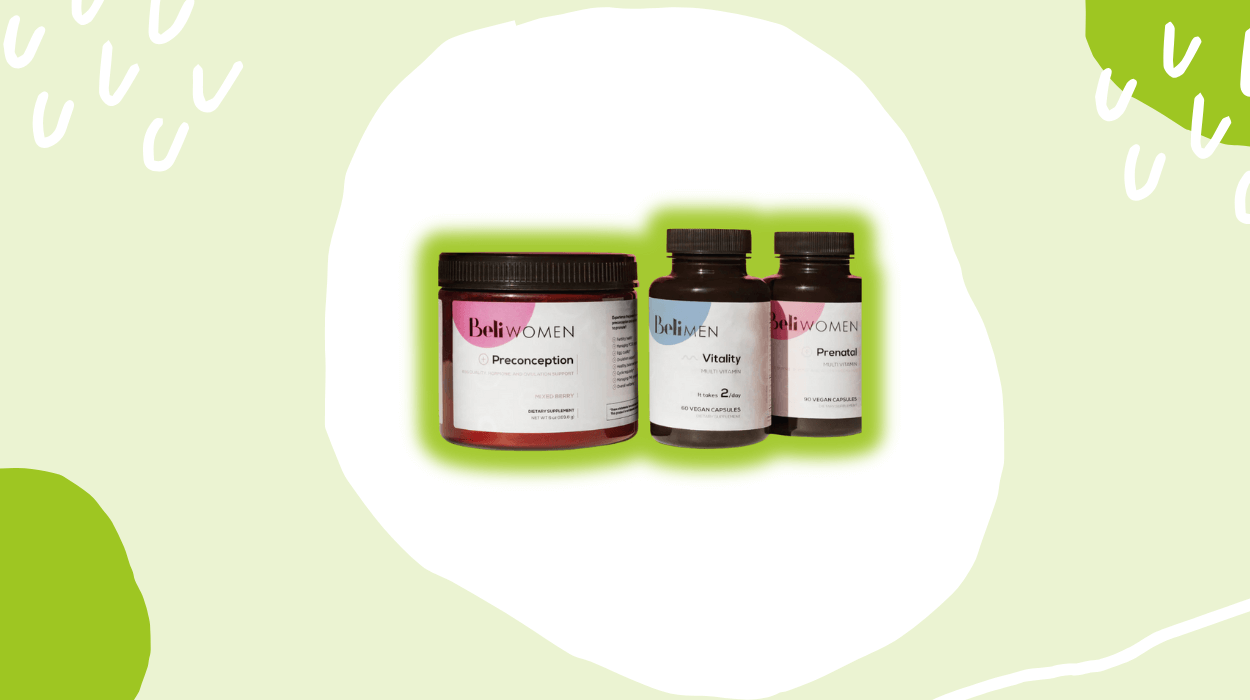

Beli is a fertility and prenatal nutrition brand offering targeted, science-informed supplements for both men and women throughout preconception, pregnancy, postpartum, and breastfeeding.
The company highlights fertility as an ongoing process rather than a single point in time, providing daily formulations designed to support hormone balance, sperm quality, egg health, and reproductive wellness. Its product lineup includes prenatals, a breastfeeding-support formula, and at-home fertility tests.
This review will assess the brand’s underlying philosophy, evaluate how its formulas align with current fertility and prenatal nutrition science, and examine the role of its men’s, women’s, and couple-oriented offerings. It will also outline the brand’s strengths and limitations, supported by real user feedback across the different stages of the fertility and pregnancy journey.
As per the official site, Beli is built around supporting through every stage of the reproductive journey. It emphasizes that reproductive health is shaped by daily nutrient intake and frames its supplements as a small but meaningful habit that helps establish a strong foundation for long-term wellness. Its formulas contain highly activated, bioavailable ingredients at optimized levels to improve absorption and ensure nutrients can perform their intended roles.
All products are claimed to be manufactured in the United States in an FDA-registered and cGMP-compliant facility. The brand also highlights that its key offerings, such as the Vitality for Men and the Women’s Prenatal, hold the Clean Label Project Purity Award.
As per the official site, Beli’s core message is that while many aspects of fertility and pregnancy are outside personal control, nutrition is not, and daily intake directly influences the cells the body continually creates and renews.
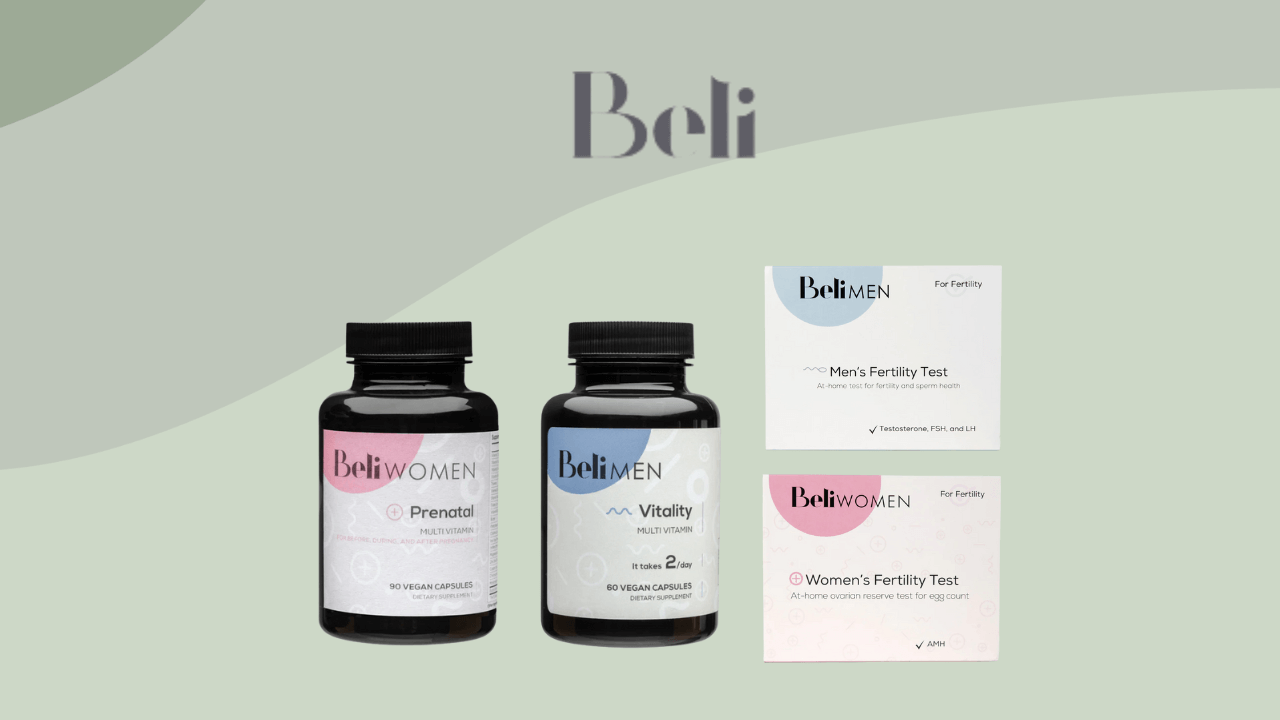
The product line covers women, men, couples, and at-home testing. Women’s formulas include Prenatal for Women, designed for use throughout pregnancy. The men’s category centers on Vitality for Men, a men’s prenatal formulated to support sperm health and male reproductive function. For couples, the Bundle for Couples pairs both prenatals into a single subscription that renews every 29 days.
The brand also offers Men’s Fertility Test and Women’s Fertility Test. Additional products include Breastfeeding Lactation Boost, a monthly subscription option designed to support the breastfeeding stage.
Beli Vitality for Men may support sperm health throughout the full 72-day development cycle, with the brand stating that it targets sperm quality, motility, morphology, DNA integrity, production, maturation, hormonal balance, and normal testosterone levels. It is said to be based on the principle that male nutrient status directly affects conception outcomes and contributes half of a baby’s genetic material.
The formula uses nutrients that act on core biological processes in spermatogenesis. L-carnitine tartrate supports mitochondrial ATP generation, which is critical for sperm motility because the midpiece of the sperm tail depends on efficient energy production. L-arginine HCl supports nitric-oxide pathways that may influence blood flow to reproductive tissues and might play a role in sperm development.
Coenzyme Q10 in this vitality product supports mitochondrial energy transfer and provides antioxidant protection that may help limit oxidative damage to sperm. Taurine in the mix contributes to membrane stability and osmotic regulation, which are factors critical for maintaining sperm viability. These compounds may work in combination with vitamins and minerals that influence cell division, chromatin packaging, and endocrine balance across the maturation cycle.
To support DNA integrity and antioxidant defense, the product includes vitamin C, vitamin E, selenium, and zinc, ingredients the brand associates with oxidative protection and reproductive function.
Vitamin D3 is included for hormonal balance and support of normal testosterone levels. Methylated B-vitamins, such as vitamin B6, L-5-MTHF folate, and methylcobalamin B12, participate in methylation and DNA-synthesis pathways required for healthy sperm formation. Shilajit extract is added by the makers for its role in supporting energy metabolism and male reproductive hormone activity.
Prenatal for Women is marketed as a stage-specific prenatal that could meet the demands of preconception, pregnancy, postpartum recovery, and breastfeeding. The formulation is structured to provide continuous micronutrient support across the entire reproductive timeline, helping prepare your body before conception, sustaining maternal and fetal needs through all trimesters, and restoring nutrient reserves after birth while supporting lactation.
The formula is built around nutrient pathways directly involved in fertility, fetal development, and maternal physiological load. The prenatal may provide additional support for hormone balance, ovulation quality, and egg development through B-vitamin status, methylated folate, and chelated minerals. These nutrients participate in methylation, cellular energy production, and reproductive-axis signaling, all of which are sensitive to micronutrient availability.
The formula also supports foundational processes required for healthy fetal growth. The inclusion of choline targets neural tube formation, early brain development, and cell-membrane integrity.
Methylated folate (L-5-MTHF) may aid in DNA synthesis and methylation, which accelerate rapidly during embryogenesis. Bioactive B vitamins may support mitochondrial ATP production, helping maintain maternal energy and reduce the fatigue associated with gestational metabolic load.
The minerals that the makers add include Ferrochel iron and TRAACS minerals to improve absorption and reduce gastrointestinal irritation. This may support red blood cell production, thyroid function, skeletal development, immune resilience, and hormonal balance.
Other minerals such as magnesium, zinc, iodine, copper, and selenium are included in bioavailable forms to help regulate maternal metabolism, fetal organogenesis, and provide potential support for structural tissue development.
Choline, B vitamins, and mineral cofactors may also support hormone recalibration, cellular repair, and breastmilk quality, highlighting that maternal micronutrient levels directly influence lactation. The formula may work to support healthy conception, fetal neural and structural development, maternal energy and immune function, and postpartum restoration.
Beli Bundle for Couples is a preconception supplement system that may support fertility for both partners. The bundle pairs the Men’s Prenatal Multi-Vitamin with the Women’s Prenatal Multi-Vitamin, creating a plan that targets egg quality, sperm health, hormonal balance, and early developmental support.
The men’s formulation focuses on producing strong, functional sperm by supporting count, morphology, motility, mitochondrial energy output, DNA protection, and reproductive health. It may influence the multi-stage spermatogenesis process, helping support maturation, membrane stability, and antioxidant defense.
The women’s formulation is designed to support egg health, hormonal balance, ovulation, and fetal development across all stages. One of its main nutrients is 400 mg of choline, which plays a role in fetal brain development, cellular growth, and structural integrity during early pregnancy.
The Women’s Fertility Test is presented as an at-home assessment designed to evaluate ovarian reserve and broader hormonal patterns by measuring AMH alongside additional reproductive hormones. AMH serves as the core indicator because it reflects the number of developing follicles in the ovaries, offering a general sense of how egg supply compares to age-based norms.
The test may help you understand your reproductive status, whether planning to conceive soon, considering egg freezing, or simply wanting more information for long-term family planning. The brand highlights that those with cycle irregularities, PCOS-like symptoms, endometriosis, or other hormonal concerns may find this data especially useful. The process emphasizes privacy, convenience, and straightforward execution.
A kit is shipped to you, a sample is collected at home following detailed instructions, and the prepaid mailer is used to return the sample for analysis. Results are then provided through a secure online dashboard, where you receive explanations of each hormone and general context for how these levels relate to fertility considerations. The platform provides broad recommendations to support decision-making but does not replace medical consultation.
The Men’s Fertility Test may provide direct insight into the hormonal factors that influence sperm production and reproductive health. The test measures testosterone, FSH, and LH, the three hormones that play central roles in the sperm-development cycle and in the regulation of male reproductive function.
Testosterone reflects androgen status and sexual health, and FSH participates in sperm formation within the testes. The LH hormone may influence testosterone production through the Leydig cells. These markers offer a high-level view of sperm potential, hormonal balance, and possible disruptions that may affect fertility.
Beli frames its fertility approach around coordinated, evidence-guided nutrition for both partners, offering targeted support through two core products, such as the Women’s Preconception and Prenatal Multivitamin and Vitality for Men.
The women’s formula includes bioavailable, methylated folate (not folic acid), choline, vitamin D, iron-supportive nutrients, and a broad spectrum of minerals and vitamins that may help address egg quality, early fetal development, immune function, and common nutrient gaps before and during pregnancy.
The men’s formula focuses on sperm health, containing ingredients such as zinc, CoQ10, L-carnitine, vitamin B12, and clinically supported Ayurvedic adaptogens like shilajit, which are associated with supporting sperm count, motility, morphology, cellular energy, and testosterone levels. This means you and your partner can receive structured nutritional support rather than a single-sided plan, covering critical nutrients tied to fertility and early pregnancy stages. While nutrient benefits are supported by scientific research and clinical studies, individual results may vary, and supplements are part of holistic reproductive wellness. Beli's emphasis on bioavailability and independent testing provides clarity on nutrient absorption and efficacy, supporting informed reproductive health choices.
Beli defines its vegan positioning through strict formulation standards applied across its main products, including the Women’s Preconception and Prenatal Multivitamin and Vitality for Men. The brand uses plant-based nutrient sources, such as methylated folate instead of animal-derived folic acid carriers and vegan forms of vitamin D3, while avoiding ingredients like gelatin, lanolin, fish oil, or animal-derived enzymes.
All formulas exclude major allergens (gluten, soy, dairy, nuts), synthetic dyes, artificial preservatives, and unnecessary binders. This approach ensures that the entire fertility lineup adheres to a consistent vegan and allergen-conscious standard.
This could mean you’re getting supplements that meet vegan criteria down to the component level, with third-party verification confirming purity and accurate dosing of key nutrients such as folate, choline, vitamin D, zinc, CoQ10, and L-carnitine. The batches are checked for contaminants, potency, and label accuracy, giving you clearer insight into the quality of the plant-based ingredients you’re taking.
BeliBaby primarily uses a subscription-first purchasing model for most products, including Beli Women’s Preconception, Prenatal, Men’s Vitality, and Women’s Multi supplements. The subscription is set to auto-renew every 29 days, with the first payment charged at checkout and subsequent payments processed automatically every 29 days to trigger the next shipment.
You can cancel, skip, or adjust your subscription schedule by logging into your account or contacting customer support. However, this process can be less straightforward than a one-time purchase checkout. This subscription system applies across Beli’s core fertility and prenatal products, emphasizing recurring deliveries rather than single-purchase convenience. Thus, ordering its products generally commits you to an automatically renewing cycle unless you actively manage your subscription. This setup ensures a consistent supply of daily-use supplements but offers less purchasing flexibility for those preferring one-time or intermittent orders.
Certain products, such as the Prenatal Multivitamin, Preconception Supplement, and Breastfeeding Lactation Boost, are also available on third-party sites such as Amazon. However, it is safer to buy directly from its official website, which may ensure product quality and authenticity.
Beli positions itself as a science-driven fertility and prenatal brand, yet its evidence base is built primarily on ingredient-level research rather than long-term clinical trials on its full formulations. Core components found in Women’s Preconception, Prenatal, Men’s Vitality, and Women’s Multi, including methylated folate, choline, zinc, CoQ10, vitamin D3, and antioxidant blends, are individually supported by general studies.
However, much of that research involves short study periods, small participant groups, or dosages that differ from what appears in Beli’s proprietary combinations.
The brand cites broad findings on egg quality, sperm parameters, neural tube support, and early pregnancy nutrition, but there are no independent multi-month or multi-year trials demonstrating that Beli’s complete formulas achieve those outcomes when taken as packaged.
Beli’s credibility rests on established nutritional science rather than clinical evidence specific to its products. No peer-reviewed studies are tracking users across multiple reproductive cycles, no long-term safety or micronutrient balance trials on its full blends, and no head-to-head comparisons against other prenatal or fertility supplements.
The lack of formulation-specific, long-duration testing creates a gap between ingredient research and verified real-world outcomes, which may matter if you prefer products supported by independent, long-term clinical validation.
WeNatal positions itself as a science-driven fertility and prenatal brand built to support couples throughout preconception, pregnancy, and postpartum. Its entire identity centers on clinician involvement and a deep advisory bench, with formulations presented as developed by leading doctors and nutrition specialists and backed by an extensive medical advisory team. The brand’s advisory bench includes Kathie Swift, Lisa Dreher, Dr. Mark Hyman, Dr. Afrouz Demeri, Kelly LeVeque, Dr. Casey Means, Dr. Ariel Moradzadeh, and Brigid Titgemeier, among others.
The brand emphasizes third-party testing, allergen-free formulations, and clinically informed dosing decisions. Its product range is structured around For Her, For Him, and Together systems, supported by targeted items such as Egg Quality+, Omega DHA+, and a Rest + Digest magnesium product.
WeNatal also highlights the use of microencapsulation for choline, methylfolate for individuals with MTHFR variants, Ferrochel iron bisglycinate for improved tolerability, and other bioavailable nutrient forms meant to address gaps in standard prenatals and enhance absorption, stability, and delivery.
Beli similarly presents as a modern fertility-forward supplement company, but its narrative focuses on smart nutrients for hormones, fertility, pregnancy, and breastfeeding, and pairs its formulations like Prenatal and Fertility for men and women with an integrated journey that includes at-home diagnostics. Its product architecture centers on men’s and women’s prenatals, couple bundles, and at-home fertility tests that measure AMH for ovarian reserve and male hormone levels such as testosterone, FSH, and LH.
Beli highlights evidence-based formulation, bioavailable ingredients, Clean Label Project recognition, third-party testing, and manufacturing in FDA-registered, cGMP-compliant facilities. The brand mentions methylated folate, TRAACS minerals, attention to choline sufficiency for neural development, gentler iron forms, and mint-essence capsules designed to be easier on the stomach. It combines testing, supplementation, and user-friendly education to create a practical, consumer-facing fertility experience.
Their product ranges and formats highlight some differences. WeNatal emphasizes targeted prenatal and fertility supplements for both partners, plus specialized add-ons that prioritize optimized nutrient chemistry, advanced delivery technology, and detailed formulation disclosure.
Beli’s catalog, while similarly structured around men’s and women’s prenatals and couple bundles, foregrounds convenience through at-home fertility tests and capsule formats. WeNatal focuses on nutrient optimization, microencapsulation, and clinical refinement, whereas Beli focuses on a combined testing-plus-supplement pathway that emphasizes practicality and ease of use.
Their approaches to science, testing, and formulation highlight the same patterned contrast. WeNatal explicitly details its bioavailability strategies, including methylfolate for efficient folate metabolism, microencapsulated choline for stability and improved uptake, and Ferrochel iron bisglycinate to reduce gastrointestinal discomfort.
Beli also underscores evidence-based formulation, third-party testing, Clean Label Project awards, gentler mineral complexes such as TRAACS minerals, and recommended choline levels, but it uniquely pairs these formulations with at-home AMH and male hormone panels so you can link objective biomarker insights to targeted supplement choices. From a technical standpoint, WeNatal provides deeper formulation transparency, while Beli offers a more accessible testing-plus-supplement option aligned with everyday decision-making.
Perelel and Beli both position themselves as evidence-driven reproductive and nutrition brands, but they diverge in scope and strategic intent. The brand Perelel frames its offering as a broad, life-stage ecosystem, while Beli narrows its focus to an intensive fertility-through-postpartum pathway.
Perelel also structures its portfolio across all major hormonal and reproductive phases, which includes Trying to Conceive, the three pregnancy trimesters, Postpartum, Motherhood, Perimenopause, and Cycle Support, whereas Beli concentrates its catalog on preconception, prenatal, men’s fertility, couples’ bundles, and breastfeeding support. This difference makes Perelel a multi-stage option that may support through many phases of reproductive life, while Beli functions more as a fertility-first brand.
Perelel’s breadth includes multivitamin daily packs, targeted powders such as greens and hydration formulas, triple-support protein, probiotics, and a wide range of focused supplements, including Fertility+, Hormonal Balance, Daily Probiotic, Iron Ease, and Sleep Support.
Beli’s breadth is narrower but deeper within reproductive verticals. It includes women’s prenatals, men’s prenatal Vitality, Lactation support, and at-home fertility tests. Where Perelel expands into adjacent wellness categories, Beli concentrates vertically on reproductive biomarkers and conception-specific nutrient needs.
Perelel emphasizes stage-specific bundled routines. These include conception packs, trimester packs, postpartum bundles, and perimenopause kits designed to evolve month by month. Beli structures fewer bundles but pairs its supplements with diagnostics, lab-certified AMH testing for women and male hormone evaluations, to drive fertility actionability and personalize preconception choices. Perelel’s model focuses more on pre-assembled daily packs calibrated for each stage, while Beli’s model uses testing to support supplementation.
Perelel markets clinician-designed routines backed by a visible panel of OB/GYNs, reproductive endocrinologists, pediatricians, dietitians, and doulas, reinforcing the segmentation of each life stage with direct medical oversight. These include Dr. Banafsheh Bayati, Dr. Amber Samuel, Dr. Andy Huang, Dr. Brian Levine, Dr. Aminah Bliss, Dr. Sarah Oreck, Dr. Caitlin O’Connor, Dr. Lisa Stern, and Dr. Caryn Cassidy.
Beli leans more on modern nutritional science and reproductive research, highlighting bioavailable ingredient formats and evidence-supported nutrient doses aimed specifically at egg health, sperm health, hormone balance, and early development. Both highlight clinical rigor, but Perelel spreads that rigor across many categories, while Beli concentrates it on reproductive function with fewer details regarding its panel of experts.
Perelel foregrounds safety and testing credentials with references to third-party verification, Clean Label Project Purity Award distinctions, ISO-accredited labs, FDA-registered and cGMP manufacturing, and inclusion of clinical trial references. Beli similarly highlights third-party testing, Clean Label recognition, cGMP standards, and FDA-registered production facilities, focusing on purity, contaminant control, and bioavailability specifically tuned to fertility outcomes.
Perelel also includes functional powders such as Synbiotic Greens and Cellular Hydration, along with performance-style protein products, reflecting an approach that blends general wellness with pregnancy nutrition. Beli’s formula set is more supplement-centric, consisting primarily of capsule prenatals and will also expand into offering Prenatal Collagen, with fewer general wellness powders beyond fertility-adjacent applications.
Perelel’s product range includes both reproduction and broader hormonal health categories, including libido, stress, sleep, iron, and synbiotic gut support. Beli narrows its research focus to reproductive biomarkers and nutrients such as methylated folate, choline, and TRAACS minerals, positioning the range around optimizing conception, fetal development, and breastfeeding.
Comparing Perelel and Beli highlights that the brand Perelel presents itself as a doctor-led, stage-expansive platform for lifelong hormonal care, whereas Beli presents itself as a fertility-specialist brand built to influence conception, pregnancy nutrition, and breastfeeding support through targeted nutrients and diagnostic integration.
To evaluate actual customer experience with Beli, we analyzed publicly available feedback from Amazon, focusing on three of the brand’s most frequently purchased products.
The men’s prenatal multivitamin holds a 4.4 out of 5 rating based on 40+ global reviews. Many users report increased energy and perceived improvements in sperm quality, including positive experiences during fertility treatments.
At the same time, repeated concerns center on the product's condition upon arrival. Some customers received bottles with a strong or unusual odor or past their expiration date, which, in isolated cases, caused discomfort after use.
The women’s preconception drink mix carries a 4.2 out of 5 rating from 20+ global reviews. Users consistently describe the taste as pleasant and note that it mixes easily into daily routines.
A number of reviewers reported conceiving shortly after starting the product, while others said it was too early to judge results. Negative feedback is limited and typically reflects uncertainty about effectiveness rather than complaints about flavor, packaging, or delivery quality.
The prenatal multivitamin for pregnancy also maintains a 4.2 out of 5 rating, drawn from 10+ global reviews. Many users state that the formula is gentler than other prenatals they have tried, noting the absence of nausea, fishy aftertaste, or digestive discomfort.
The mint scent and inclusion of folate instead of folic acid are frequently mentioned as advantages. However, several customers found the smell difficult to tolerate, particularly in early pregnancy, and a small number reported gastrointestinal upset or other physical symptoms.
The Amazon reviews indicate that customer satisfaction with the brand is generally strong, especially regarding taste, tolerability, and ease of use. The most consistent opportunities for improvement involve product odor and occasional quality-control problems. The typical user experience is positive, though reliability in packaging and consistency remains an important consideration.
Beli’s brand reputation is generally positive, though external verification remains limited. The company has minimal visibility on the Better Business Bureau, leaving little formal data on complaint patterns or customer-resolution practices.
Third-party sentiment on alternative platforms is substantially stronger. On TenereTeam, the brand maintains a 4.5 out of 5 rating from 14+ reviews and 1610+ total ratings platform-wide, with users frequently praising product quality, clean ingredient standards, and a reliable purchasing experience.
Customers also mention responsive support, though some note delays in communication and a need for clearer reminders around subscription renewals. The most common critiques point to premium pricing and the need to purchase additional supplements for nutrients not included in Beli’s formulas.
The available feedback highlights a brand that is well-regarded by its customers but operates with limited independently verifiable accountability due to its low presence on major consumer-protection platforms.
Beli delivers a structured, partner-focused approach to fertility and prenatal nutrition, offering coordinated formulas rather than standalone supplements.
The brand emphasizes bioavailable nutrients, vegan formulations, and third-party testing, which may support confidence in ingredient quality and dosing accuracy. Its catalog is deliberately narrow, focused on preconception, prenatal, and early-pregnancy needs, so you can build a consistent routine without navigating unnecessary product categories.
The limitations sit primarily in the evidence base and operational model. Current support for Beli’s outcomes depends on research tied to individual nutrients rather than clinical trials on the brand’s complete formulations. No long-term studies evaluate impacts on conception rates, pregnancy outcomes, or micronutrient status across extended use. The subscription-first system also reduces purchasing flexibility, and unless managed actively, renewals default to a 29-day cycle.
Beli may be a strong fit if you want a clean-label, vegan fertility approach informed by ingredient-level science and built for both partners. However, it is important to approach the formulas with measured expectations, given the evidence gaps and subscription logistics. Monitoring your own tolerance, reviewing whether the formulations cover your complete nutrient needs, and managing subscription settings will help ensure the experience aligns with your priorities for reliability, convenience, and reproductive support.

Contact us at [email protected] or follow @leafsnap on Twitter! View our Privacy Policy.