



Aletha is a wellness brand that focuses on helping you manage muscle tension, postural strain, and everyday discomfort through targeted, non-invasive tools.
The brand centers its approach on releasing deep-seated muscle tightness that may contribute to issues such as hip, back, neck, and shoulder tension.
Its offerings may support you if you want practical, at-home options that may help improve mobility, alignment, and overall body comfort, while also encouraging better body awareness and long-term movement habits.
In this review, we will analyze Aletha’s range of products, examine where the brand’s approach may offer meaningful benefits, and outline the key limitations to keep in mind. We will also look at what users have shared through their experiences, so you can get a clearer picture of how the brand truly delivers in everyday use.
As per the official website, Aletha focuses on addressing chronic pain associated with deep muscle tension and postural misalignment. Instead of responding only to where pain appears, it emphasizes identifying underlying muscular contributors to discomfort.
The brand operates within the muscle-release and mobility tools category and specializes in precision-engineered self-therapy devices designed to replicate therapist-level pressure for home use.
According to the official site, its product lineup includes tools such as The Mark®, which targets deep hip flexor muscles, The Range® for neck and shoulder tension, and The Orbit® for gentler myofascial release across the piriformis and gluteal area. The brand also provides supportive accessories like The Band and an educational guidebook that explains pain mechanisms and the application of the Aletha method.
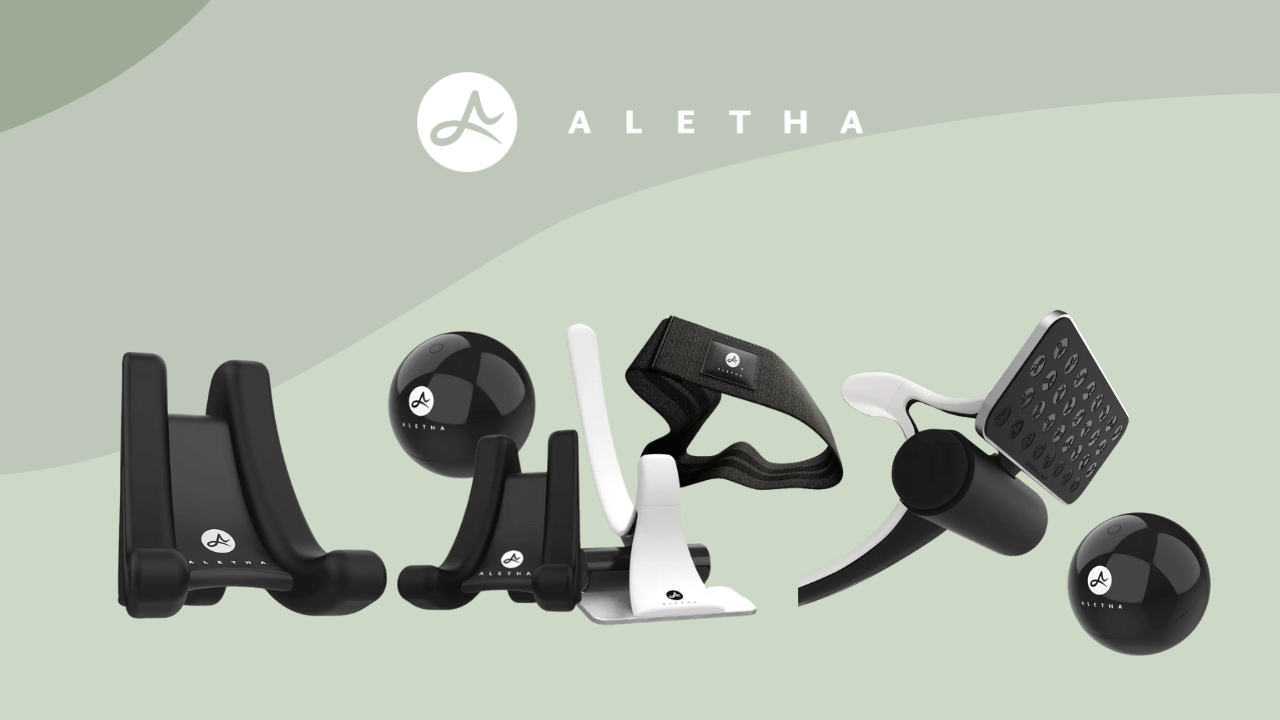
The Set combines five tools designed to address muscle tightness, mobility limits, and postural imbalances by applying targeted pressure and controlled movement to specific areas of your body. It combines Mark, which is intended for the lower back, hips, and surrounding muscle groups. The Range in this set is designed for the upper body, particularly the neck, chest, and shoulders. As per the official website, the set also has the Orbit, which focuses on the hips and deep gluteal region. Meanwhile, the Band is included to support strengthening and stability work after tissue tightness is addressed. The Book in this set provides an educational framework for understanding how muscle tightness, posture, and movement patterns interact.
The Mark Hip & Back Release System applies targeted pressure to the deep hip flexors and surrounding gluteal muscles using two complementary tools, such as the Mark Hip Hook and the Orbit. These tools are shaped to reach structures such as the iliacus and psoas on the front inner surface of the pelvis, as well as the piriformis, gluteus muscles, and deep hip rotators on the posterior side. When pressure is applied to these tissues, it can influence areas involved in hip stability, pelvic alignment, and lumbar support.
Slow and sustained pressure on myofascial tissue may stimulate sensory receptors within the fascia and muscle, which can help modulate reflexive muscle tightness and alter how tension is distributed across the hip and lower back during movement.
The Mark Hip & Back Release system is intended to address regions commonly associated with restricted hip mobility and compensatory movement patterns. Tightness in the iliacus and psoas may affect the position of the pelvis and increase stress on the lumbar spine, while tension in the glutes and deep rotators can influence gait mechanics and rotational control of the hip joint. These tools may support more balanced muscle activity and reduce localized strain on surrounding joints and soft tissues.
The materials used in the system are made from polycarbonate and acrylonitrile butadiene styrene (PC/ABS), which have impact resistance and rigidity, allowing the tools to maintain shape under load.
As per the official website, the Range is designed to apply targeted, sustained pressure to soft-tissue structures in the neck, shoulders, and upper chest, including the suboccipital muscles at the base of the skull, the upper trapezius, and the pectoralis minor. These areas play key roles in head and shoulder positioning, cervical stability, and scapular movement. When these muscles become shortened or overactive, they may contribute to forward-head posture, rounded shoulders, reduced shoulder mobility, and jaw or neck discomfort. The tool may help reduce local muscle tension and address myofascial stiffness that can restrict movement across the upper body.
The paired contact points in Range can be used to apply symmetrical pressure along both sides of the neck or shifted toward one side by adjusting head position. The base provides stability so that pressure can be sustained without continuous effort, supporting longer-duration release work, which is often used in myofascial techniques.
Areas that contact the body in Range combine thermoplastic elastomer (TPE), which provides a slightly compliant surface to moderate pressure at the skin-tissue interface and improve comfort while maintaining precision.
The Orbit may help apply broad, evenly distributed pressure across the muscles and connective tissues of the hip flexors and gluteal region. Its shape allows it to contact deeper structures on the front and back of the pelvis, including the iliacus and psoas on the inner surface of the pelvic bowl, as well as the gluteus muscles, piriformis, and deep hip rotators surrounding the back of the hip joint.
Releasing tension in the iliacus and psoas may affect the position and motion of the pelvis relative to the lumbar spine, while addressing tightness in the glutes and deep rotators may influence how the hip rotates and stabilizes during walking, standing, and transitional movements.
As per the official website, Orbit emphasizes generalized tissue compression rather than highly localized contact by distributing pressure over a wider surface compared with smaller or point-focused tools. This approach can be useful for areas where multiple overlapping muscle layers and connective tissues contribute to stiffness across a broader area of the hip and posterior pelvis.
The Orbit is constructed from durable thermoplastic polyurethane (TPU), which may help maintain structural integrity under repeated compression. Its firmness allows it to transmit pressure effectively into deeper layers of soft tissue while retaining a slight degree of surface compliance to moderate the intensity of contact at the skin and fascia interface.
Band is a loop-style resistance band intended for strengthening the hips, glutes, and core through controlled, multidirectional movements. When used around the thighs or legs, it increases external resistance during exercises such as hip abduction, lateral steps, bridges, and squats. This added resistance requires greater activation from muscles, including the gluteus medius, gluteus maximus, and deep hip stabilizers, which help control pelvic position and maintain alignment during standing, walking, and rotational movements. Engaging these muscles under load may support more balanced movement patterns, especially after soft-tissue tightness has been addressed through release work.
Resistance training with an elastic band increases mechanical tension in the working muscles, which stimulates motor unit recruitment and neuromuscular coordination. As muscles adapt to repeated loading, they can develop improved strength and endurance in the hip and core stabilizers that support the lumbar spine and pelvis.
The makers highlight that the Band provides a medium resistance range of approximately 30 to 50 pounds, which allows progressive loading without requiring external weights. Its loop design keeps tension consistent throughout the range of motion, encouraging controlled movement rather than momentum-based effort.
Aletha Health positions itself as a clinician-led brand grounded in real-world physical therapy practice rather than consumer wellness trends.
The company was founded in 2019 by Christine Koth, a licensed physical therapist with more than two decades of hands-on experience treating people with persistent musculoskeletal pain.
Koth’s professional background includes a Master of Physical Therapy (MPT) and a BS in Biochemistry from the University of Wisconsin-Madison. This dual training is central to Aletha’s stated methodology, combining clinical biomechanics with an understanding of tissue-level physiology. During her long-standing clinical practice at Holistic Physical Therapy, she reports repeatedly encountering people whose chronic pain and movement restrictions persisted despite standard therapeutic interventions.
According to the brand narrative, Koth identified unresolved deep muscle tension, particularly in muscles such as the iliacus and psoas, as an under-addressed contributor to ongoing discomfort. These observations form the conceptual foundation of Aletha Health, shaping its focus on tools designed to address tension patterns typically assessed and treated manually by clinicians rather than through surface-level approaches.
This clinician's rooted philosophy directly informs Aletha’s product design and positioning. The brand emphasizes translating physical therapy principles into self-applied tools intended for structured, repeatable use outside the clinic. Rather than promoting isolated or generic relief methods, Aletha frames its offerings as extensions of clinical assessment and logic.
Aletha Health states that its approach and tools are endorsed by a broad network of healthcare and movement professionals who integrate them into real-world practice. The brand reports support from more than 700 physical therapists, chiropractors, massage therapists, corrective exercise specialists, and athletic trainers worldwide based on clinical experience rather than promotional partnerships.
Aletha further strengthens professional credibility through formal scientific leadership. Susie Reiner, PhD, serves as Head of Science, guiding the brand’s research direction, biomechanical framework, and evidence-informed interpretation of muscle tension and movement dysfunction. Her background in exercise physiology and strength and conditioning aligns with Aletha’s emphasis on structured mechanical and neuromuscular principles rather than lifestyle wellness narratives.
Professional alignment is also reflected in Aletha’s practitioner education strategy. In 2025, the brand launched a dedicated training program for therapists, trainers, coaches, and movement specialists designed to teach the integration of Aletha techniques into existing clinical reasoning models. The course positions Aletha's tools as complementary to professional assessment rather than replacements for clinical judgment.
Aletha Health positions its product ecosystem around addressing dysfunction, tension, and neuromuscular inhibition within a relatively narrow group of deep hip and pelvic muscles.
Tools such as The Set Mark Hip Hook Range Orbit and Band are engineered primarily to target muscles, including the psoas, iliacus, quadratus lumborum, pelvic floor, adjacent stabilizers, and related hip flexors.
While these structures play a meaningful role in posture gait, and lower body stability, they represent only a limited subset of the muscular and joint systems involved in many chronic or widespread pain presentations.
Research in physical therapy and sports medicine consistently indicates that chronic low back pain, hip discomfort, and mobility limitations are often influenced by interactions across multiple systems, including gluteal strength, spinal alignment, core stability, joint integrity, and neural involvement.
Aletha’s approach may not fully address symptoms driven by disc-related pathology, joint degeneration, nerve compression, inflammatory processes, or compensatory movement patterns involving the knees, thoracic spine, or shoulders by concentrating its tools and educational framework largely on deep hip release and pelvic mechanics.
Tools such as the Mark Hip Hook and Orbit apply localized sustained pressure to deep muscles that are difficult to access through stretching alone. While this mirrors certain manual therapy techniques used in clinical environments, its effectiveness is highly dependent on accurate muscle targeting, personal anatomy, and user understanding of symptom origin. This makes the tools less adaptable for generalized pain relief or exploratory self-care compared with more versatile recovery modalities.
Aletha Health offers a product range that includes tools such as The Set Mark Hip Hook and Orbit, designed around mechanical approaches to targeted muscle release. Many of these products are FSA and HSA-eligible to hold patented design status, and are supported by clinician endorsements. These attributes support usability differentiation and professional relevance, but the brand’s overall third-party certification profile remains relatively limited when compared with widely recognized independent quality standards used by many informed consumers.
Within the fitness and recovery category, third-party certifications from organizations such as NSF International or United States Pharmacopeia are commonly used as external indicators of manufacturing rigor, material safety, and quality consistency. NSF certification typically involves ongoing compliance monitoring, facility audits, and validation of testing protocols, while USP verification reflects adherence to standards covering identity, purity, composition, and performance.
The absence of widely recognized third-party certification does not inherently suggest that Aletha tools are unsafe or ineffective. However, it does indicate that the products have not undergone external validation frameworks that many athletes, clinicians, and safety-focused consumers rely on when evaluating recovery devices. In categories involving repeated physical contact, applied pressure, or structural load, such certifications often serve as reassurance beyond brand claims.
TriggerPoint and Aletha operate in the same recovery and self-massage space, but they differ notably in their focus, positioning, and product philosophy.
As per its official website, TriggerPoint centers on supporting movement and recovery, with tools designed to enhance mobility and relieve muscle tightness associated with exercise and daily activity.
The brand emphasizes practical performance support rather than condition-specific correction. Its catalog is broad and versatile, including GRID foam rollers such as the GRID 1.0 and GRID 2.0, massage balls, handheld tools, and travel-friendly formats. These products are intended for general, full-body muscle relief and post-workout recovery.
Meanwhile, Aletha adopts a more specialized, clinically guided approach that focuses on chronic pain linked to muscle tension and alignment issues, particularly in deep hip flexors such as the iliacus and psoas.
Instead of broad recovery support, the brand positions its tools as precision options designed to address root-cause muscle dysfunction that may contribute to hip, lower-back, and pelvic discomfort. Its lineup is narrower but more targeted, featuring products such as The Mark (original Hip Hook), The Range for neck and shoulder relief, The Orbit for piriformis, glute, and psoas release, and The Set, which combines these tools with an educational guidebook.
TriggerPoint primarily appeals to athletes, fitness-focused users, and people looking to support mobility, flexibility, and muscular recovery as part of an active lifestyle. Aletha is more aligned with people managing recurring discomfort or movement limitations who are seeking targeted relief connected to alignment and muscle-tension patterns.
TriggerPoint offers versatile, performance-oriented recovery tools for everyday mobility needs, while Aletha delivers focused, precision-engineered options intended to address specific sources of tension and pain.
Roll Recovery centers its offerings around performance-oriented recovery tools and accessories designed for active people and athletes. Its catalog is broad and hardware-focused, featuring deep-tissue massage tools such as the R8™ and R8 Plus™, the R1™ Percussion device, and mobility products like the R3™ Orthopedic Foot Roller and R4™ Body Roller.
The brand also extends into recovery-focused footwear and lifestyle products, including slides, flip-flops, shoes, and apparel. The emphasis is on durability and everyday usability, supported by elements such as free shipping on qualifying orders, a 30-day satisfaction guarantee, and a one-year warranty.
Aletha, in comparison, adopts a more clinical and science-led approach, with a focus on addressing chronic pain and movement dysfunction at the root-cause level. Its product range consists of precision-engineered muscle-release tools such as The Mark® (the original Hip Hook), The Range®, and The Orbit®. These tools are designed to target specific, often-overlooked muscle groups linked to alignment, posture, and chronic tension. The brand frames its approach around concepts such as prolonged pressure, trigger-point release, and neuromuscular reset. Alongside its products, the brand also places strong emphasis on education through guides, tutorials, and structured use methodology, positioning itself as a therapeutic self-care system rather than a general recovery brand.
According to the official website, Roll Recovery covers a wider range of price points across its catalog, starting from lower-priced tools like the R3™ Orthopedic Foot Roller at around $34.99 and mid-range options such as the R4™ Body Roller at $59.99, moving up to higher-priced recovery devices like the R8™ and R8 Plus™, which range between $139 and $169. The brand also includes footwear priced between approximately $59 and $110, offering multiple entry-level and premium options. Aletha, on the other hand, is positioned more toward premium, specialized therapeutic options, with pricing ranging from around $30 for core tools to $300 for bundled sets.
Roll Recovery offers a broad range of performance-focused recovery tools, lifestyle accessories, and recovery footwear designed to support mobility and post-activity care. Meanwhile, Aletha emphasizes targeting specific muscle tension patterns linked to chronic pain and alignment issues.
Aletha appears to be a smaller wellness-focused brand offering tools for pain relief, muscle tension support, and body alignment, particularly if you are dealing with posture-related discomfort or muscle tightness.
On TenereTeam, the brand holds a 4.0 rating, which is based on a limited number of reviews, and reflects generally positive early experiences. However, the small review volume provides only a partial view of product consistency, long-term performance, and overall user satisfaction.
We also checked Aletha’s presence on the Better Business Bureau and found that the brand is not listed there. While this absence does not imply a negative assessment, it does limit the availability of third-party insights related to service quality, dispute handling, and business transparency.
The brand appears to be in a growth stage and is still developing its reputation. If you are evaluating the brand, reviewing additional trust indicators such as policy clarity, product details, and feedback across multiple platforms may help build a more complete perspective.
We evaluated Aletha by analyzing verified Amazon customer reviews from 2024 and 2025 to understand how users experienced the brand’s mobility and pain-relief tools in real-world settings.
Many customers report meaningful relief and functional support when the products are used consistently, while others highlight concerns related to pricing, durability, or post-purchase processes.
The brand’s Mark® Original Hip Hook holds a 3.4 rating based on 5+ reviews, which presents varied user experiences. Some customers emphasize solid construction, targeted deep-muscle release, and improvements in hip tightness, back discomfort, and mobility, particularly for frequent exercisers and individuals with long-term stiffness.
A few users also acknowledge the usefulness of Aletha’s instructional resources that support correct product use. However, some users highlighted concerns related to marketing claims and noted that the return process may feel less straightforward than expected. Some customers also believe that lower-priced alternatives deliver comparable results, influencing their perception of value.
On the other hand, the Hip Resistance Band carries a 4.3 rating based on 72+ reviews. Many users highlight its durability, firm resistance, and ability to maintain shape during regular workouts and strengthening exercises. However, a few users' reports mention early breakage or difficulty keeping the band in place, suggesting that product experience may vary depending on usage and fit.
These reviews indicate that Aletha's offerings are appreciated by users who seek targeted therapeutic tools and structured guidance for mobility and recovery, while also showing areas for improvement in pricing perception, consistency, and customer experience.
Aletha takes a clinically informed approach to managing muscle tension and movement-related discomfort, with a particular focus on deep hip, pelvic, and postural mechanics.
While research on self-applied pressure tools continues to evolve, studies on targeted myofascial pressure and trigger-point release suggest potential benefits for mobility, body awareness, and localized tension relief when applied correctly.
However, the brand’s tools are not intended to function as a comprehensive full-body recovery system, as their effectiveness depends on proper technique and accurate symptom interpretation, and the brand provides comparatively limited third-party clinical validation.
When considering Aletha, it is important to use the tools with care. Avoid excessive pressure, stop using the product if discomfort increases, and seek professional guidance if you have underlying conditions, nerve-related symptoms, pelvic health concerns, or uncertainty about the source of pain. The approach may support targeted relief, but its narrow scope and learning curve suggest it works best as a complementary rather than a standalone option.

Contact us at [email protected] or follow @leafsnap on Twitter! View our Privacy Policy.