
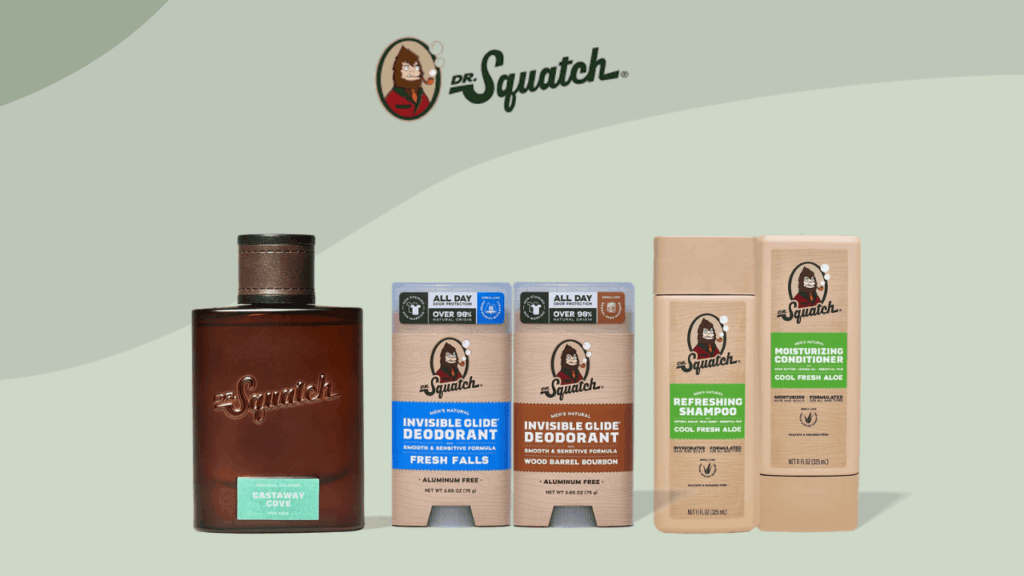
Dr. Squatch is a men’s grooming brand that focuses on offering personal care products that have naturally derived ingredients. Its product lineup covers core hygiene and personal care needs. The brand claims to address skin dryness, irritation, and sensitivity to harsh chemicals, while also focusing on scent-driven experiences inspired by nature.
In this review, we will take a closer look at Dr. Squatch’s product range and examine what sets the brand apart. We will also compare it with similar grooming brands to understand how it stands within the broader personal care market.
Founded by Jack Haldrup, Dr. Squatch began with handmade natural soap and has since expanded into a wider range of hygiene and grooming essentials.
The brand covers multiple personal care categories, allowing you to build a complete grooming routine. Its core offerings include bar soaps and body washes for cleansing, deodorants available in formats like sticks, sprays, wipes, and precision applications, along with hair care products. As per the official website, Dr. Squatch operates as a Certified B Corp, meeting higher standards for environmental and social impact.
Dr. Squatch Bar Soap is designed to remove dirt, oil, and impurities while helping maintain skin hydration through a base of natural oils and conditioning ingredients. These soaps have saponified oils of coconut, olive, and sustainably sourced palm. They undergo saponification to create the cleansing base, enabling the soap to lift dirt and excess oil from the skin. Coconut oil supports stronger cleansing, while olive oil adds mildness, and palm oil provides structural integrity and stability to the bar.
Shea butter is included as a primary moisturizing ingredient and plays a role in softening the skin while helping reduce moisture loss during cleansing. Its fatty acid profile supports skin smoothness and can help minimize the risk of excessive dryness.
Kaolin clay is also used in soaps like Alpine Sage and Fresh Falls to assist in absorbing excess oil and impurities. As a gentle clay, it contributes to a more thorough cleanse without being overly abrasive, making it suitable for maintaining balance across a range of skin types.
In some variants, such as Cool Fresh Aloe, aloe vera is added for its soothing properties. It may help calm the skin and provide light hydration, and is commonly associated with reducing irritation and supporting post-cleansing comfort.
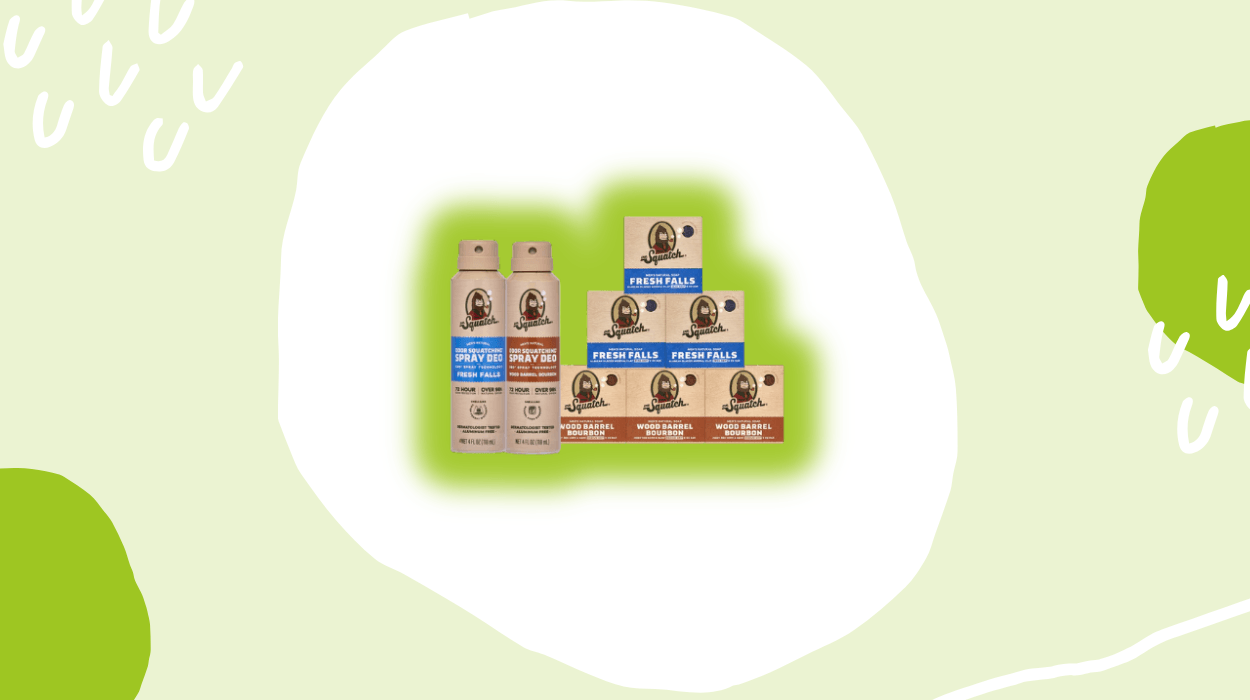
As per the official site, deodorants are formulated to manage body odor while providing a clean, refreshed feel. The brand describes it as using a natural odor-control system designed to address odor at its source, with ingredients such as arrowroot powder, charcoal powder, and postbiotics.
The formulation is built on a base of emollients and structuring agents, including caprylic/capric triglyceride, stearyl alcohol, beeswax, and shea butter. These ingredients give the deodorant its solid stick form while allowing it to glide across the skin. Lipid-based components may also help create a light barrier that reduces moisture loss and supports smooth application.
Additional oils, such as coconut oil and jojoba seed oil, are also added to products like Fresh Falls and Pine Tar. These ingredients contribute to skin conditioning and may help maintain the skin barrier.
For odor control, the makers use magnesium hydroxide and triethyl citrate, both commonly used in deodorants. Magnesium hydroxide may help neutralize odor by shifting the skin’s pH, which can influence odor-causing bacteria. Triethyl citrate is often used to limit the breakdown of sweat components that contribute to odor formation.
Cologne provides a noticeable and balanced scent through natural blends. The collection includes variants such as Woodland Pine, Rainforest Mist, Fireside Bourbon, Castaway Cove, Glacial Falls, and Midnight Birch. The formulations are composed of denatured alcohol, water, and naturally derived fragrance. Denatured alcohol acts as the primary solvent, allowing fragrance compounds to dissolve and disperse evenly when sprayed, while also evaporating quickly to release the scent. The brand states that its colognes are made with naturally derived ingredients, claiming 98–100% natural origin.
Dr. Squatch Body Wash is a men’s cleansing range formulated to wash the skin while delivering what the brand describes as a thick lather and a lasting moisturizing effect. The lineup includes variants such as Coconut Castaway, Fresh Falls, Wood Barrel Bourbon, Pine Tar, Rainforest Rapids, and Birchwood Breeze.
Across the range, the formulation combines potassium cocoate and potassium oleate, functioning as the main surfactants. These potassium salts of fatty acids work by binding to oils and impurities so they can be rinsed away.
To help offset potential dryness, the makers have also included glycerin as a key humectant. It may attract and retain moisture in the outer layer of your skin, contributing to a hydrated feel after cleansing.
Dr. Squatch Bundles include varieties, such as the Bar Soap 6-Pack, Bar Soap 9-Pack, Deodorant & Soap Set, Shower Set, Body Wash Set, Cologne 3-Pack, and Stirred Scents Set, along with smaller, trial options like the Mini Deo 3-Pack and Mini Soap & Deodorant Set. These bundles are presented as either customizable or pre-arranged selections, allowing you to explore different scents or product types while building a routine around the brand’s offerings.
Dr. Squatch is structured around repeatable scent profiles like Pine Tar, Wood Barrel Bourbon, Fresh Falls that extend across its soap, deodorant, hair care, body wash, lotion, and cologne. These are organized into high-level scent families such as heavier (woodsy, musky) and lighter (fresh, citrusy), creating a standardized decision layer based on preference. This is also supported by scent layering guidance, bundled routines, and subscription configurations, enabling consistent scent identity across multiple products. It means you can select a scent category once and extend it across your entire routine with predictable consistency, reducing decision effort and avoiding mismatch across products.
As per the official site, Dr.Squatch operates on a multi-layered compliance system combining third-party validation, disclosed partnerships, and ingredient transparency. It holds Certified B Corporation status and also maintains PETA cruelty-free certification.
The brand also highlights an ingredient exclusion framework covering substances such as parabens, phthalates, FD&C colors, and formaldehyde donors like DMDM Hydantoin. This is complemented by explicitly disclosed impact partnerships, including Eco-Soap Bank and Outdoor Outreach.
Ingredient transparency is also shared through full disclosure on product pages and a defined exclusion list. You can evaluate the brand’s ethical and safety standards using externally validated metrics and clearly defined disclosures, without independent verification across multiple sources.
Dr. Squatch’s subscription system is fixed and non-adaptive, creating a structural mismatch between delivery cadence and actual usage. Standard intervals cannot be adjusted to real consumption, while product longevity varies significantly (~2–3 weeks per bar, affected by grit level, storage, and usage frequency). This causes an accumulation risk or supply gaps, depending on your usage patterns. This subscription based model introduces ongoing management friction, requiring manual actions such as skipping shipments, adjusting frequency, or modifying selections to maintain alignment. Additional constraints, such as limited modification windows and automatic substitutions when items are unavailable, further increase misaligned deliveries.
The acquisition of Dr. Squatch by Unilever introduces a structural limitation driven by corporate scale, where brand-level decisions are subject to the performance expectations of a large global organization. This creates a gradual pressure toward standardization, cost efficiency, and scalability that can influence how the brand evolves over time. It can also increase formulation consistency risk, where ingredient sourcing and composition may shift toward standardized, cost-efficient alternatives used across a broader portfolio. While the brand may retain natural labeling and positioning, there is a possibility of subtle changes in ingredient quality and concentration. You may need to monitor for gradual changes over time in ingredient composition, product performance, certification status, or messaging that reflect parent-level priorities rather than the original brand framework.
Duke Cannon focuses on making grooming products for men. Dr. Squatch, in comparison, organizes its identity around modern grooming routines, using structured support and scent-based discovery tools, shifting the focus toward routine-driven self-care.
As per the formulation approach, Duke Cannon emphasizes performance without highlighting ingredient sourcing or exclusions. Its positioning centers on reliability for physically active lifestyles. Dr. Squatch explicitly states that its products are 98–100% natural in origin and highlights the removal of commonly used synthetic ingredients. This is reflected in its range of natural deodorants available in stick, spray, and Invisible Glide formats, indicating a clearer focus on ingredient-conscious formulations.
The product portfolios reflect different priorities in scope and structure. Duke Cannon offers a focused combination of grooming and utility options, including Big Ass Brick of Soap, THICK Body Wash, Tactical Lip Balm, and Cold Shower Cooling Field Towels. It also includes beard-focused products like Best Damn Beard Wash and fragrance options such as solid cologne balms inspired by Buffalo Trace Bourbon and liquid colognes like Sawtooth. On the other hand, Dr. Squatch presents a broader grooming system that includes bar soaps, Total Moisture body wash, multiple deodorant formats, shampoos, conditioners, and toothpaste. Its catalog is structured into bundles such as Bar Soap 6-packs, Deodorant 4-packs, and combined sets with six soaps and two deodorants, creating a more system-based approach.
Scent strategy is handled differently by each brand. According to its official website, Duke Cannon uses straightforward, rugged scent naming tied to environments and materials, including Bourbon with oak barrel notes, Sawtooth with alpine and cedarwood, and Midnight Swim. Meanwhile, Dr. Squatch organizes its scents into defined families such as wood and musk, fresh and clean, warm and rich, tropical and fruity, and green and aromatic. It extends this approach through themed bundles like Friday Night, which includes notes of mahogany, tobacco, and spice, offering a more structured way to explore scent preferences.
The purchasing model and pricing structure also differ. Duke Cannon focuses on single purchases and customizable bundles like the Build Your Own THICK bundle or BRICK bundle. Most of its products are priced around $9 for soaps, body wash, and lip balm, and around $25 for colognes. The brand also promotes free shipping on orders over $50. In comparison, Dr. Squatch combines a subscription model with recurring deliveries every three months, offering savings of around 14 to 15 % on bundles such as the Bar Soap 6-pack priced at around $36, or the Deodorant 4-pack priced at $44.
As per their official website, Duke Cannon maintains a narrower, utility-driven grooming range supported by messaging around durability and traditional values. Meanwhile, Dr. Squatch develops a broader grooming system with structured bundles, categorized scent families, and recurring purchase options.
The Black Stuff builds its identity around handmade, small-batch production, highlighting pure and natural ingredients, handmade in small batches, and products crafted in runs of about 50–54 units at a time. Dr. Squatch, in comparison, positions itself as a broader natural grooming brand, combining its no-harmful-ingredients approach with a more expansive ecosystem that includes rewards programs, subscriptions, and themed product launches.
This difference becomes clearer in the scope of their product catalogs. The Black Stuff keeps its range focused across bar soaps, natural deodorants, shaving, beard care, natural colognes, and accessories, with around 20+ soap variants. It also offers accessories like soap dishes, a travel box, and an antibacterial washcloth. Meanwhile, Dr. Squatch significantly expands beyond this, offering bar soap alongside body wash in 14oz bottles, hand soap, stick deodorants, Invisible Glide deodorants, sprays, face wash, lip balm, beard oil, and toothpaste, creating a more layered grooming system.
Their ingredient approach shows another distinction. The Black Stuff emphasizes the use of high-quality base oils like olive oil and shea butter. It also features natural exfoliants such as seaweed, while avoiding fragrance oils entirely and relying only on essential oils for scent creation. On the other hand. Dr. Squatch also promotes natural formulations and the absence of harmful ingredients, but it does not highlight the same strict avoidance of fragrance oils. Instead, it focuses more on performance and versatility across formats like body wash, deodorant sprays, and skincare products. Scent development further reflects how differently both brands approach product experience. The Black Stuff builds its scent profiles exclusively through essential oils, resulting in options like Galway Bay Rum, Eucalyptus on Ice, Ginger Honey Tea, and Dogs Bay Beach. In comparison, Dr. Squatch leans into themed and entertainment-driven scent lines, including limited editions tied to collaborations such as Star Wars, WWE, Stranger Things, Dragon Ball Z, and The Terminator. It also prioritizes novelty, collectibility, and cultural relevance over a strict ingredient approach.
We have reviewed Dr. Squatch using publicly available information from the Better Business Bureau, where the company has received a D- rating. This reflects a failure to respond to several customer complaints.
The platform highlights a number of recurring issues. Common concerns include subscription problems such as unauthorized renewals, difficulty canceling subscriptions, and limited or no refunds. Some report being charged after trying to cancel or receiving orders they did not intend to place.
Customer service is another area of concern. Many complaints mention limited support access, heavy reliance on automated responses, and a lack of proper follow-up. Some users report contacting the company multiple times without resolution, which has contributed to a negative perception of the brand’s support experience. These patterns suggest that while the brand has strong product visibility, its customer service and order management experience may affect its reputation among users.
We evaluated user experiences for Dr. Squatch by reviewing feedback and ratings available on Trustpilot, where the brand holds a TrustScore of 4.1 out of 5 based on more than 46,000+ reviews.
Across these reviews, many users report high satisfaction with product quality and scent. Customers often mention that the soaps, deodorants, and other products smell unique and pleasant.
Some also say the products feel more natural and clean the skin without causing dryness. The wide range of scents and themed collections is another commonly appreciated feature. However, some users note that certain scents may be weaker than expected or not consistent across products.
Feedback on performance and durability is mixed. Some users say products like deodorants last a long time and work well, while others report that bar soaps wear down quickly or break after limited use. One user also mentions packaging issues, such as dented soaps or leakage during shipping.
The user feedback suggests a generally positive but mixed experience. Many customers value the product quality, scent variety, and helpful support, which support strong ratings. However, recurring concerns about product durability, packaging, subscription handling, and delivery consistency show that the experience varies.
Dr. Squatch positions itself as a scent-driven, natural-leaning grooming system built around simplified formulations and routine-based product layering. Its expansion from bar soaps into deodorants, body washes, hair care, and colognes reflects a structured ecosystem to help you maintain consistency across your entire grooming routine.
The brand organizes products around repeatable scent profiles and avoids commonly scrutinized ingredients like parabens and phthalates. It simplifies decision-making while delivering a cohesive, cross-category experience.
However, transparency around sourcing and formulation depth remains limited, and the subscription-based purchasing model can introduce friction through fixed delivery schedules and ongoing management. Product durability, particularly with bar soaps, also varies, which may impact long-term value and consistency.
You can also experience possible side effects from the brand’s exfoliating bar soaps and deodorants, formulated with magnesium hydroxide and essential oils, which can trigger redness, itching, or sensitivity. Fragrance components across scented products may also pose a risk for irritation, particularly for those sensitive to essential oils or natural fragrance compounds.
Dr. Squatch supports your grooming routine, though its relatively limited formulation transparency, subscription-based model, and variability in product durability can influence your user experience.

Contact us at [email protected] or follow @leafsnap on Twitter! View our Privacy Policy.