



Novaalab offers light therapy devices that may support pain relief, muscle recovery, and physical rehabilitation. The brand’s positioning focuses on non-invasive recovery methods, particularly red and infrared light therapy. Its offerings could help target concerns such as inflammation, joint discomfort, and post-exercise recovery needs.
The brand also highlights features like portable designs, multi-wavelength light technology, and product selection resources that recommend devices based on specific recovery concerns.
This review examines the brand’s position within the recovery device space, including its range of offerings, technology focus, and how it compares with other recovery technology providers.
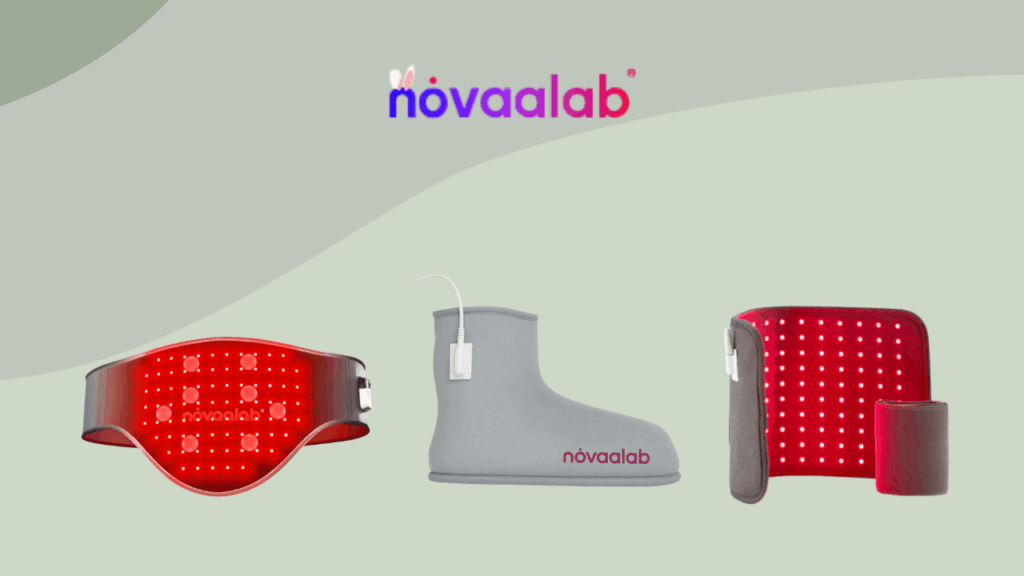
Owned by LM Consult and founded by Pascal Le Marechal, Novaalab offers red light therapy devices intended for pain relief, recovery, and routine use at home or in office settings. The brand organizes its offerings around support for different body areas, including the foot, back, knee, muscle, nerves, skin, whole body, and gums and teeth.
The product lineup includes devices like Light Pad for Deep Healing, Light Boot, and Novaa Back Pad. Such devices are grouped by use cases such as joint pain, back pain, oral care, and post training recovery. The brand also offers accessories like battery packs, sonic brush heads, and LED heads.
According to its official website, the brand describes its technology through a three-step process in which red light interacts with mitochondria for energy production. The makers state that reduced mitochondrial activity may slow healing, while exposure to specific wavelengths of red light may stimulate energy production and support cellular repair, reduce inflammation, and improve movement.
According to the brand, the device penetrates multiple tissue depths, addressing both surface-level discomfort and deeper connective tissues within the joint. This may allow the product to interact with muscles, ligaments, and other supporting structures that contribute to knee function, potentially helping to ease tension and improve joint responsiveness.
The red and near-infrared wavelengths emitted by the device are commonly linked with photobiomodulation therapy, a process in which light wavelengths are absorbed by cellular components responsible for energy production. Red light generally interacts closer to the skin’s surface, while near-infrared light may reach deeper tissues, allowing for a more comprehensive effect across different layers of the knee.
As this light energy is absorbed, it may temporarily enhance the efficiency of cellular energy production. In muscle and connective tissues, this increase in cellular activity can support the body’s natural repair and recovery processes.
The Novaa Light Pad could offer temporary relief from minor discomfort in the back, joints, nerves, and muscles, while also supporting relaxation and localized recovery. The device may help alleviate mild pain, stiffness, and inflammation by delivering targeted light energy to specific areas of the body, encouraging a general sense of physical ease. The product could particularly benefit commonly affected regions such as the back, neck, knees, and extremities.
According to the brand, the device uses a combination of red and near-infrared wavelengths, which are widely recognized in light-based wellness treatments for their ability to penetrate various tissue layers. Red light typically interacts with more superficial tissues at the skin level, helping to stimulate circulation and cellular activity near the surface. Near-infrared light, on the other hand, can reach deeper structures, including muscles, joints, and connective tissue, potentially supporting recovery in areas that are more difficult to reach with conventional therapies.
The Novaa Light Pad may also play a role in influencing cellular activity by supporting energy production within cells, which can help tissues respond to minor stress, strain, or injury. The device may ease tension within tendons and connective tissues by promoting muscle relaxation and improved localized circulation.
The Joint Comfort Set combines the Novaa Light Pad and the Novaa Knee Ultra to potentially help manage joint-related discomfort. The Light Pad may be used to address broader or flatter areas of the body, such as the back, shoulders, or hips, delivering consistent light exposure across larger surface regions. On the other hand, the Knee Ultra is specifically designed to wrap around the knee joint, providing more focused and targeted coverage that conforms to the joint’s structure.
The Glow Therapy Mask could help manage a range of common skin concerns, including wrinkles, acne, redness, and uneven skin tone, while supporting skin appearance and texture. It also aims to support underlying cellular repair processes, contributing to healthier-looking skin with continued use.
The product uses red and near-infrared light at clinically referenced wavelengths of 660 nm and 850 nm, which are frequently associated with light-based skincare treatments. These wavelengths interact with mitochondria, which may enhance cellular activity and support processes linked to skin renewal. This can include supporting collagen production, improving microcirculation, and aiding the skin’s natural repair mechanisms.
Novaalab structures its product lineup around accessibility for at-home use. The brand designs its red light therapy devices, including flexible pads, handheld units, and oral care tools, with lightweight construction, strap-on or hands-free formats, and simple controls such as plug-in operation or basic button interfaces.
The brand also emphasizes straightforward operation without the need for complex setup, mobile applications, or advanced calibration. As per the brand, most devices are intended for short use sessions of about 10–20 minutes that may fit into regular home routines. Products are intended for direct application to areas such as joints, the back, or other body regions, without the need for scheduled clinical visits or technical adjustments. Simple operation and plug-and-use formats may also support convenience and ease of operation.
Novaalab positions its devices within the non-invasive light therapy category, using red and near-infrared light as the primary operating mechanism across products like therapy pads, laser devices, facial masks, and oral care tools. The brand states that its devices typically operate within red and near-infrared wavelength ranges around 630–660 nm and 810–850 nm, delivered through LEDs or similar light-emitting components.
According to the brand, these devices are applied externally without the use of medications, injections, or surgical procedures. Such a positioning aligns the brand with a non-invasive wellness focus based on ease of use and repeatable home-based sessions. The brand also describes its products as intended for regular external use on or near the skin as part of ongoing home routines. Its focus on repeatable at-home sessions could make it easier to maintain a consistent routine without needing clinical procedures.
Novaalab shows limited product-specific clinical validation. Instead, the brand appears to rely mainly on general research related to photobiomodulation. The brand references broader scientific literature on red and near-infrared light therapy to support its product positioning. While this research may establish a general scientific context for the technology, it does not provide detailed validation of outcomes tied specifically to Novaalab’s individual devices.
Without device-specific trials, evaluation may depend more on general research trends and consistent use patterns rather than controlled studies tied directly to the brand’s hardware. This could make it harder for you to assess how the brand’s devices perform compared to those from brands with published device-level research.
When comparing Kineon and Novaalab, the major differences appear across their product range, technological integration, pricing tiers, and the level of specialization within their respective recovery ecosystems.
In terms of catalog breadth, Kineon operates with a focused and minimal portfolio built around a small number of devices that function within a tightly defined recovery system. Its lineup features Move+ Pro LED & Laser, Relief+ Trigger Point Therapy Tool, and bundled configurations like The Pain to Possible Bundle. Such offerings are intended to target specific joint areas such as knees, shoulders, and back. Meanwhile, Novaalab presents a broader catalog organized by body regions and use cases, including back, knee, muscle, skin, foot, nerve, and oral care applications. A few signature offerings in its catalog include Knee Ultra, Light Pad for Deep Healing, Oral Care Pro, and Light Boot. Such a catalog may create a modular ecosystem where each product serves a distinct purpose rather than contributing to a single unified protocol.
Kineon follows a protocol-driven model focused on consistency and repetition, with sessions typically lasting around 15 minutes once or twice daily. Its wearable, hands-free design enables simultaneous engagement with daily activities, indicating a structured routine focused on targeted joint application. Novaalab, while also emphasizing routine, adopts a more flexible and device-specific usage model. Sessions typically range from 10–20 minutes per day, but the experience varies depending on the device and body area being targeted.
Pricing further highlights a difference in positioning. Kineon maintains a relatively narrow premium pricing band, with its flagship MOVE+ Pro typically positioned around $420 (often discounted from higher list prices) and bundled sets ranging between $500–$520. On the other hand, Novaalab operates across a wider pricing spectrum, with entry-level devices starting around $100 and higher-end or full-body systems reaching up to approximately $2500. Bundle sets are typically priced between $610 and $730.
Kineon aligns with a tightly integrated, specialization-driven model focused on joint-specific recovery through a limited set of high-precision devices and a consistent usage protocol. Meanwhile, Novaalab offers a broader, modular system that covers multiple body areas and use cases, offering a wider product range and pricing spectrum with flexible, device-specific usage patterns.
When comparing Mitoredlight and Novaalab, both brands offer light therapy devices to support recovery and wellness needs. However, the brands have some nuances in their breadth of offerings, device designs, quality control standards, and accessibility.
From a product range perspective, Mitoredlight operates with a broad and layered ecosystem revolving around panel-based systems. The brand’s lineup includes scalable panel series such as MitoPRO+, MitoPRO X, and MitoADAPT, alongside targeted devices like facial masks, wearable belts, intranasal systems, and cognitive-focused helmets. The addition of BioPhotonic skincare products introduces a hybrid system where topical formulations and light exposure are designed to function together.
Meanwhile, Novaalab organizes its range around body-specific areas and recovery needs, including skin, nerve, knee, back, muscle, whole body, foot, and gums and teeth. Some featured offerings from the brand include Back Pad, Pulse R, Glow Therapy Mask, and Recovery Pod. While the range creates a modular catalog, it remains more device-specific and segmented, without extending into complementary product layers or large-scale panel systems.
Technology and system design also indicate some differences between the brands. Mito Red Light highlights multi-wavelength configurations, high diode density, and customizable modes, allowing adjustments based on application goals. Its panels are designed for higher output and broader coverage. Meanwhile, Novaalab relies primarily on red light therapy as a single modality applied across different device formats. Its differentiation lies less in multi-technology integration and more in accessibility, portability, and ease of use.
Mitoredlight supports both localized and full-body sessions depending on the device configuration, with panel systems enabling broader exposure and multi-zone coverage. Its modular design may allow you to build progressively larger setups, shifting from single-device use to more comprehensive configurations over time. Meanwhile, Novaalab follows a more consistent routine model focused on short, targeted sessions, typically 10 to 20 minutes, applied directly to specific areas.
We evaluated NovaaLab’s brand reputation through the BBB platform, where it currently holds an F rating. It also highlights some customer complaints, offering insight into service-related concerns reported by users. Commonly mentioned issues include delayed shipping timelines and inconsistent or limited communication when addressing order-related problems. These patterns suggest potential issues occurred during post-purchase interactions.
However, there were some users who reported satisfactory experiences, but the repetition of similar concerns across complaints indicates that strengthening the operational and customer service processes could help improve consistency in customer experience and brand perception over time.
To understand user responses, we looked for publicly available information on platforms like Trustpilot, where it currently holds a TrustScore of about 4.4 out of 5 based on over 4,000+ reviews. Many users describe positive experiences with the company’s red light therapy products, frequently noting perceived benefits such as reduced pain, improved recovery from injuries, and relief for joint or muscle conditions. Customers also mention that the devices feel well-built, durable, and easy to use.
At the same time, some reported incomplete orders, delayed deliveries, or receiving incorrect items, which in certain cases required multiple follow-ups to resolve. There are also mentions of slow response times or needing to repeat the same issue to multiple representatives, suggesting inconsistency in service quality.
Product reliability appears mixed in some cases. While many users describe durable devices, others report technical problems such as faulty connections, dim lights, or products stopping working after a few months. Some note that replacements were provided, but the process could be time-consuming or require additional documentation.
Novaalab is built around portable red and near-infrared light products intended for muscle recovery, joint comfort, and oral care applications. However, the brand’s positioning relies primarily on research available on light wavelengths and cellular response rather than trials conducted on its specific devices.
Factors like session length, positioning accuracy, and adherence to recommended red light exposure levels may impact your experience with the brand’s offerings. Other factors such as distance from the targeted area, frequency of use, and wavelength range/output intensity may also affect response.
When considering Novaalab, it is important to adhere to the time commitment required for routine use and follow operational guidance carefully. These devices are not positioned as replacements for medical care in complex deep tissue concerns.

Contact us at [email protected] or follow @leafsnap on Twitter! View our Privacy Policy.