
Solaray combines vitamins, minerals, and plant-based ingredients into its single-nutrient and blended formulations. Its product range includes standalone nutrients such as vitamin C, magnesium, and vitamin D, along with herbal extracts like ashwagandha and spirulina.
The brand claims to support commonly addressed concerns such as immune function, energy levels, digestion, bone and muscle health, and daily maintenance.
This review examines Solaray’s product offerings, compares its formulations and positioning with similar brands. We will also evaluate its reputation based on user feedback and real consumer experiences.
As per the official website, Solaray develops formulas that support digestion, immune health, and gut balance. It claims to follow a vertically integrated model, managing sourcing, production, and testing within its large facility in Utah.
The brand claims to conduct more than 15,000 tests each month across 580+ protocols to verify identity, potency, and purity, while also checking for contaminants like heavy metals and pesticides. Its manufacturing standards align with certifications such as NSF and cGMP, and some products also carry USDA Organic and Non-GMO Project Verified certifications.
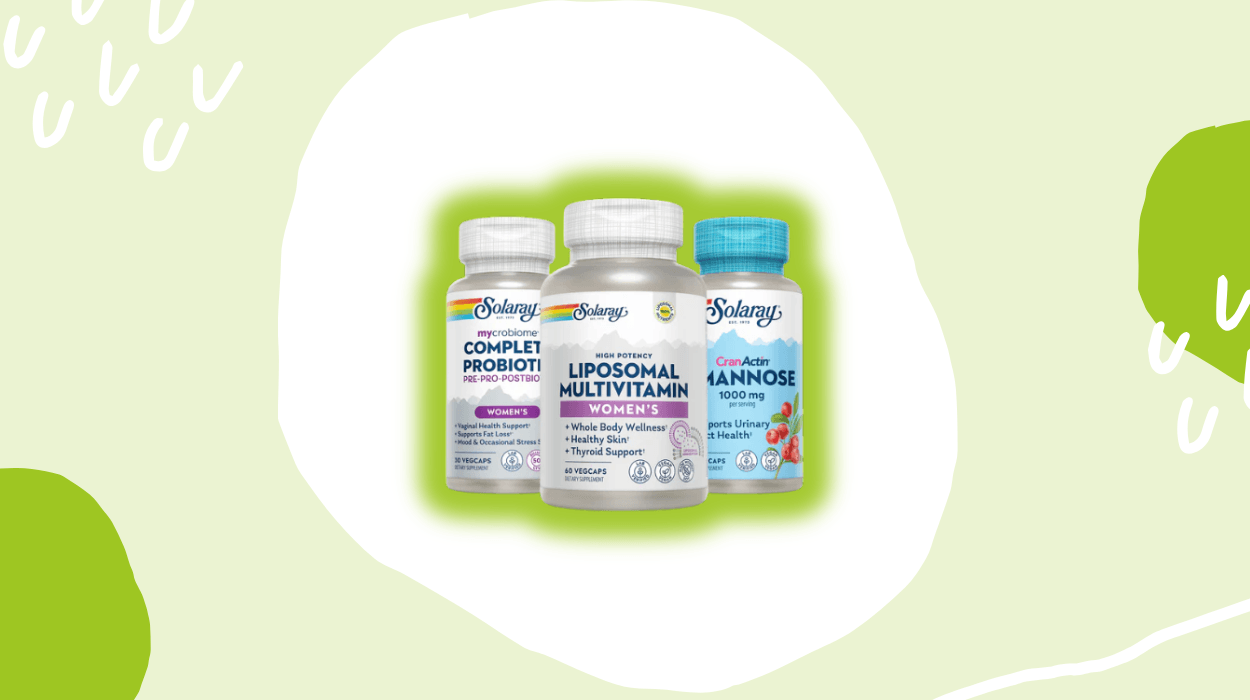
According to the official website, the brand also features specialized lines like Mycrobiome Complete, which includes probiotic formulas for different needs, including gender-specific and higher potency options. It provides formulas in multiple formats such as capsules, tablets, and liquids, making it easier to fit into different routines.
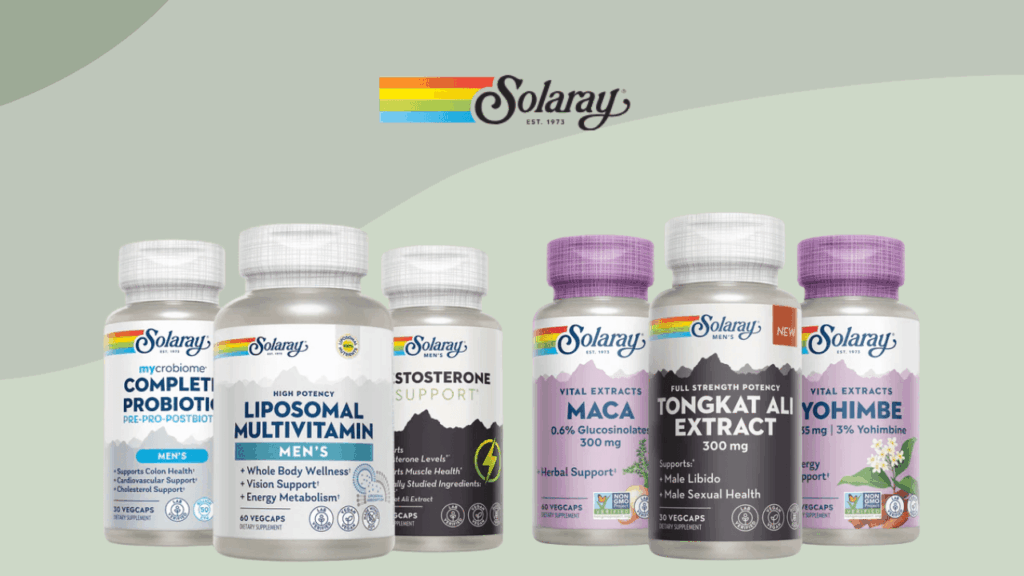
Tongkat Ali may support energy, hormonal balance, and physical performance through its interaction with endocrine and stress-related pathways. The product could help support testosterone balance by influencing signaling within the hypothalamic-pituitary-gonadal (HPG) axis, which regulates hormone production. It may help the body maintain natural hormone levels by supporting how signals are communicated between the brain and endocrine glands. Tongkat Ali is also linked to stress regulation. It may help modulate cortisol, a hormone released during stress, which can affect energy, mood, and recovery. It is also associated with supporting muscle strength and endurance. This is partly connected to its influence on hormonal balance and partly to its role in reducing fatigue, allowing for more sustained effort during activity. It may also support libido and reproduction through its interaction with hormonal pathways.
Magnesium Glycinate may help regulate the balance between muscle contraction and relaxation by influencing calcium movement within cells, supporting reduced muscle tension and physical comfort. It could interact with receptors that control neural excitability, contributing to a more stable and balanced state.
Magnesium glycinate may help moderate nerve signaling, which can support relaxation and improve sleep readiness. It also contributes to cardiovascular function by helping regulate heart rhythm and supporting normal blood vessel activity. The formulation may assist enzymes involved in ATP synthesis, which is essential for cellular processes throughout the body.
Vitamin D3 + K2 could support bone function, calcium balance, and immunity by combining fat-soluble vitamins along with supporting minerals. Vitamin D3 helps in increasing the absorption of calcium and phosphorus in the intestines, helping with processes related to immune function, muscle activity, and cellular maintenance. The product may contribute to maintaining bone density, muscle function, and overall physiological balance. Vitamin K2 helps prevent calcium deposition in soft tissues like blood vessels, which may provide skeletal support.
Vitamin D3 + K2 also includes calcium, which may help bone strength and influence muscle contraction and nerve signaling. Phosphorus works with calcium and could help give bones their rigidity and structure.
Berberine may support metabolic processes like blood glucose regulation and energy balance. It influences how cells take up and utilize glucose, while also affecting how the liver produces and releases glucose into the bloodstream, contributing to more stable blood sugar levels.
Berberine is also associated with lipid metabolism and may help maintain metabolic balance. The product claims to support microbial balance, which may aid in optimal digestion, nutrient absorption, and metabolic signaling.
Vitamin D3 is potentially helpful in supporting physiological functions related to immunity, bone integrity, and mineral balance. The product might help increase the efficiency with which calcium is absorbed from food, ensuring that adequate levels are available in the bloodstream.
Vitamin D3 is important for maintaining bone density and strength. It also works alongside other regulatory systems to maintain proper calcium levels, preventing imbalances that can affect skeletal integrity. The formulation may help regulate how the body responds to external challenges, supporting a balanced immune response in place of overstimulating response processes.
D-Mannose with CranActin may support urinary tract function by combining a simple sugar with cranberry-derived compounds and supportive ingredients. The formulation may help maintain a balanced internal environment.
D-mannose is known as a naturally occurring sugar that is absorbed and then excreted through the urinary tract. It can bind to bacterial adhesion structures, making it more difficult for them to attach to the lining of the urinary tract. Its inclusion in the product may support the body’s natural process of flushing out unwanted microbes during urination.
Cranberry extract added to the product may help reduce the ability of certain bacteria to stick to the urinary tract lining. Inulin and acacia are included to support beneficial gut bacteria. and support digestion, helping with the gradual release and processing of the formulation.
Vitamin B-Complex by Solaray provides all eight essential B vitamins along with additional supportive nutrients such as choline, inositol, and PABA. The B vitamins in this formulation may support nerve signaling and energy metabolism, contribute to cellular energy production, and help maintain antioxidant balance. They may also influence mood and cognitive function. The product also contains biotin, which may support the utilization of fatty acids and glucose, while pantothenic acid is involved in producing energy and hormone synthesis. Choline and inositol added may provide support for brain and liver function. Choline is involved in memory and muscle function, and also aids in fat metabolism and liver maintenance. Meanwhile, Inositol is involved in mood regulation and insulin signaling.
Turmeric Root Extract may assist with joint health, antioxidant balance, and physiological support. Curcumin, present in turmeric, may support balance in the body’s inflammatory response, which is relevant for joint comfort, mobility, and recovery from occasional physical strain. It may also help reduce oxidative stress at the cellular level.
The product may also support endothelial health by regulating circulation and contributing to maintaining normal blood flow and vascular function. The inclusion of tribulus could also assist with general vitality and metabolic support.
Solaray has been operating in the industry since 1973, giving it more than 50 years of continuous presence. The brand attributes its founding to Jim Beck in Utah and presents this timeline as an indicator of sustained operations in a competitive and evolving market. It also claims to have contributed to early product development trends, such as introducing herbal blends in capsule form, including cell salts, which helped transition traditional herbal practices into more standardized formats. Additional claims include category-specific formulations like prostate-focused products in the 1970s–80s and cayenne-based innovations introduced in 1988. These examples point to ongoing product experimentation and adaptation over time. This extended presence may indicate that you are engaging with a brand that has navigated multiple regulatory shifts, ingredient trends, and manufacturing changes across decades. It can also suggest a more established supply chain, familiarity with formulation challenges, and a history of iterative product refinement.
Solaray states that it follows a vertically integrated quality control model through its parent company, Better Being Co. (formerly Nutraceutical International Corporation), which it joined in 1993. This structure is presented as a way to manage multiple stages of production within a single system rather than relying heavily on external partners.
The brand reports that it operates a large in-house facility in Ogden, Utah, where it conducts raw material testing, formulation, blending, encapsulation, tableting, and packaging. This indicates greater oversight across the production lifecycle and reduced dependence on third-party manufacturers. This approach may lead to more consistent products with fewer differences between batches.
Solaray provides limited product-level transparency when it comes to ingredient sourcing. While the brand promotes sourcing from native habitats, this information is shared in general terms rather than tied to specific products. It consistently does not include detailed origin data, such as exact countries, farms, or supplier information for each ingredient. The brand does not provide ingredient-level traceability, origin maps, or batch-specific sourcing details across its range. This creates a broad sourcing narrative without clear, verifiable product-level detail. It can make it harder to confirm where ingredients come from or assess sourcing quality when comparing products.
Nature’s Way builds its identity around plant-based wellness. Herbs remain central to its portfolio, with products like black cohosh, raspberry leaf, and its Sambucus elderberry line made using a concentrated black elderberry extract. The brand organizes its offerings around immune support, women’s health, digestive balance, and cold and flu support. It also offers multivitamins through its Alive! line for different age groups and potency levels. Solaray, on the other hand, emphasizes verification, ensuring that every ingredient is proven through lab testing before reaching the final product.
This difference is also reflected in how both brands structure their product range. Nature’s Way focuses on accessibility and variety in formats, offering gummies, syrups, chewables, powders, and softgels, including additions like Weight Manager gummies as well as MCT oil powder made from coconuts. Meanwhile, Solaray takes a more formulation-driven approach, offering products that focus on specific nutrients and combinations such as Magnesium Glycinate, Vitamin D3 + K2, Berberine, and timed-release B-complex formulas. While Nature’s Way leans into curated support and condition-based categories, Solaray emphasizes ingredient precision and potency, often highlighting exact dosages and targeted blends.
When you compare pricing, both brands operate within a similar mid-range category, but the structure of their pricing differs slightly based on product positioning. As per its official website, Nature’s Way products generally start around $6 to $10 for basic formulas like calcium liquids or herbs, with multivitamins and targeted formulas ranging between $10 and $30. In comparison, Solaray’s pricing typically starts around $9 to $12 for single minerals, with mid-range products such as magnesium glycinate or vitamin complexes priced between $15 and $30. More specialized blends like berberine or liposomal multivitamins can reach up to $30 to $40+. While both brands overlap in the $10 to $30 range, Nature’s Way leans slightly more accessible at the entry level, whereas Solaray reflects its testing-intensive positioning with slightly higher pricing on advanced or high-potency formulations.
Nature’s Way highlights that its products are tested from raw ingredients to finished products and meet FDA and CFIA requirements. It also offers a transparency tool that allows you to look up ISO-accredited testing details for specific products. The brand also aligns its standards with its parent company, Schwabe, a pharmaceutical manufacturer in Europe. Solaray, however, goes deeper into measurable quality metrics. It claims that its Ogden, Utah, facility conducts up to 15,000 lab tests per month using over 580 testing protocols, screening for identity, potency, and contaminants like heavy metals and pesticides down to a 10 ppb reporting limit. The brand also details its use of advanced technologies such as ICP spectroscopy for heavy metals, UPLC for active ingredient measurement, PCR for microbial detection, and ELISA for allergen screening.
Thorne and Solaray differ in the depth and structure of their product catalogs. As per its official website, Thorne organizes its products into specific categories such as gut health, women’s health, men’s health, immune support, metabolism, and focus. Its listings include targeted products like Creatine for muscle performance and brain function, and Basic Nutrients for daily nutritional support. On the other hand, Solaray covers general categories like vitamins, minerals, and herbals. Its range includes products such as Tongkat Ali, Zinc Copper, Papaya Enzyme, and Liposomal Multivitamin Women’s 50+, reflecting a broader but less tightly segmented structure.
The formulation approach highlights a contrast in ingredient specificity and complexity. Thorne focuses on highly bioavailable and functional forms, such as magnesium glycinate, iron bisglycinate, and vitamin B12, to support methylation and nerve health. It also combines nutrients into advanced formulations like Omega 3 with CoQ10 and Vitamin D plus K2 liquid. More complex blends like Diabenil include botanicals and nutrients for blood sugar balance while also supporting nerves, eyes, and kidneys. Solaray, on the other hand, leans toward more traditional formulations with clearly labeled dosages, such as Magnesium Glycinate, Berberine, Super Strength Vitamin D3, and Calcium Citrate. It also offers combination products like Calcium Magnesium Zinc and QBC Plex with quercetin, bromelain, and vitamin C, but these remain relatively straightforward compared to Thorne’s multi-functional formulations.
Quality positioning and testing further differentiate the two brands. Thorne emphasizes manufacturing standards, clinical research, and third-party validation, with multiple products labeled NSF Certified for Sport, such as creatine, electrolytes, and whey protein isolate. It also highlights features like no lactose or preservatives in its Vitamin D products and provides detailed sections on its manufacturing process and ingredient sourcing. Solaray, while offering less product-specific clinical detail, emphasizes manufacturing quality through NSF Certified facilities. This certification indicates that its supplements are produced in safe and hygienic environments that meet or exceed NSF standards for public health protection. Personalization tools and user interaction also vary significantly. Thorne integrates an AI-powered wellness advisor called Taia, which allows you to ask questions, compare products, and receive personalized recommendations. It also supports subscriptions, rewards, and even HSA or FSA payments through Truemed. Meanwhile, Solaray takes a simpler approach with its quiz that helps you identify products suited to your routine, focusing more on general guidance rather than detailed personalization.
We evaluated Solaray by using BBB data and Trustpilot reviews to assess complaint patterns, customer service performance, and overall brand reliability. Nutraceutical Corporation, which is the parent company of Solaray, holds a BBB rating of F and is not BBB-accredited. The profile reports some complaints and feedback highlights recurring concerns such as unauthorized charges, difficulty obtaining refunds, and a lack of response to customer inquiries.
On TenereTeam, Solaray holds a TrustScore of 3.2 out of 5 based on 8+ reviews. Positive feedback focuses on perceived product effectiveness, affordability, and repeat use, with some users reporting noticeable results from the brand’s offerings. However, negative feedback reflects recurring concerns related to customer service, including unresponsiveness, order delivery failures, and difficulty reaching support. Additional issues include packaging quality concerns, such as leaking capsules, and skepticism around formulation clarity or dosage guidance. The brand highlights credible manufacturing (e.g., GMP-certified facilities) but is undermined by service lapses and transparency gaps.
We analyzed user experiences by assessing customer feedback from Amazon to understand how Solaray is perceived by different people. The brand’s Magnesium Glycinate holds a rating of 4.7 out of 5 based on 7,730+ reviews. Feedback patterns suggest the product is positioned effectively for routine supplementation, with users sharing subtle changes in their energy levels.
Tongkat Ali Supplement has a rating of 4.4 out of 5 from 3,351+ reviews. The product aligns with performance-oriented positioning, with users sharing changes in energy, vitality, and physical performance. However, response variability appears higher with some mentioning jittery sensations.
The brand’s Vitamin D3 plus K2 maintains a rating of 4.7 out of 5, which is based on 5,806+ reviews. Many users shared that they noticed some changes in their immune and bone health. However, some mention headaches or mild discomfort, indicating individual sensitivity. The brand is perceived as reliable for foundational support, with occasional tolerance differences depending on the product type.
Solaray emphasizes internal control over sourcing, production, and testing, along with adherence to standards, which are generally associated with manufacturing consistency.
However, the brand does not consistently provide detailed sourcing information, such as exact origins, supplier data, or batch-specific traceability. Variations in raw material quality and processing can also influence active compound levels, making such details relevant when assessing product quality.
Before considering Solaray and its offerings, it is important to review single product labels rather than relying on brand-level claims. High-dose or multi-ingredient combinations may increase the likelihood of overlap or unintended interactions. It is also useful to review excipient or additive content, especially if you are sensitive to fillers, binders, or capsule materials.
Solaray offers a structured manufacturing approach and a wide selection of products, but gaps in ingredient-level transparency and sourcing clarity may require you to rely more on your own evaluation rather than brand-level assurances when making a decision.

Contact us at [email protected] or follow @leafsnap on Twitter! View our Privacy Policy.