

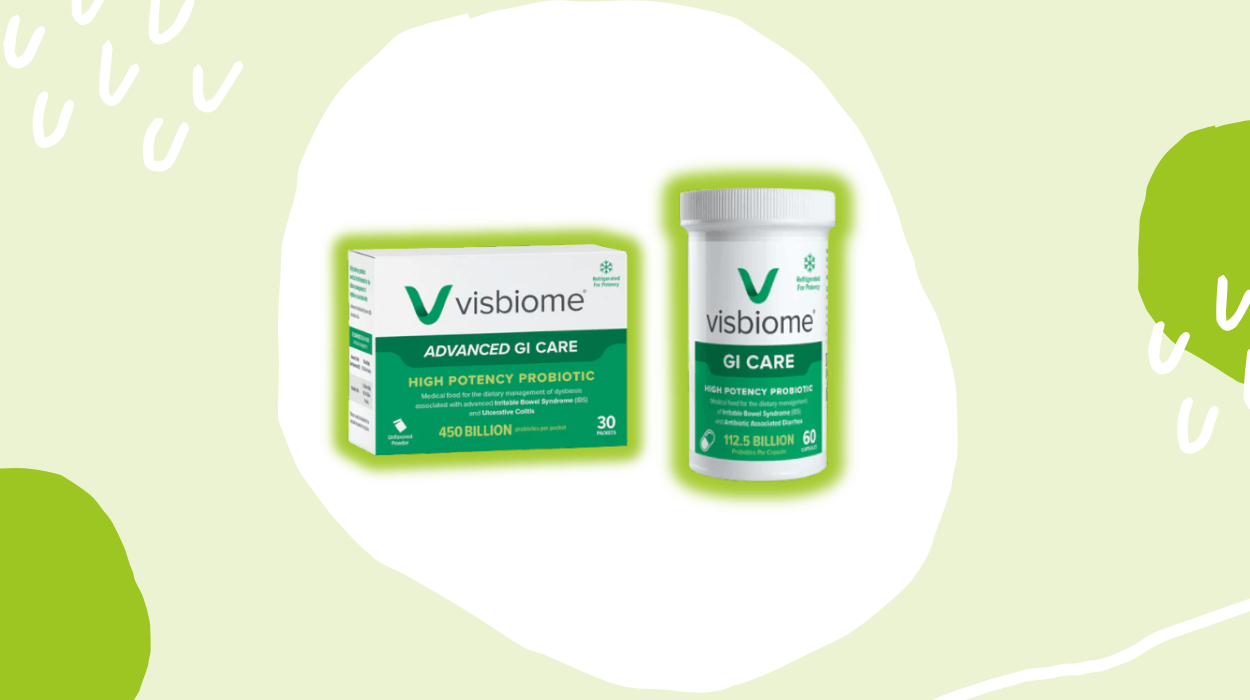

Visbiome offers high-potency, multi-strain probiotic formulations, which could support digestion and gut microbiome balance. Its product lineup includes formulations in capsule and powder formats. The brand describes that its offerings are intended for the management of irritable bowel syndrome, ulcerative colitis, and antibiotic-associated diarrhea.
In this review, we examine the brand’s core offerings, their strain composition, and potency claims. The review further discusses the advantages associated with the brand and potential limitations.
Founded in 2015 by Marc Tewey and Yamil Hernández, Visbiome is a probiotic brand positioned around digestive health and microbiome research. The brand ties its formulation standards to Professor Claudio De Simone (MD), whose research led to the creation of the De Simone Formulation, a blend of eight live and beneficial probiotic bacterial strains. Its formulations combine multiple high-potency probiotic strains rather than single-strain formulations.
The manufacturer presents the brand’s products as a medical food intended for use under physician supervision, describing them for targeting dysbiosis and other gastrointestinal conditions.
The brand’s catalog is organized into gut health and pediatric categories. Some core offerings are GI Care, Advanced GI Care, Extra Strength GI Care, and GI Care Kids. Such offerings are described as being shipped and stored under refrigeration with temperature monitoring sensors to maintain the potency and viability of live probiotic strains. According to its official website, the brand’s offerings hold a Clean Label Project certification.
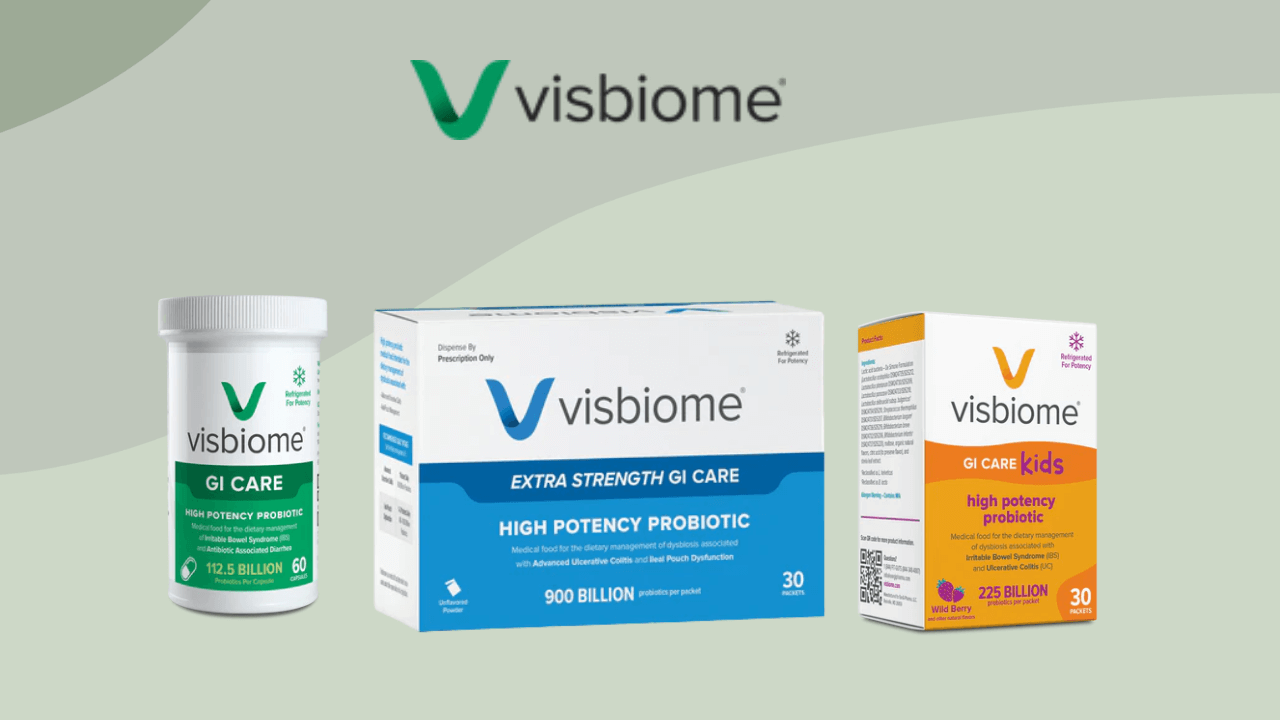
GI Care Kids is a probiotic formulation that the makers claim is intended for tackling dysbiosis associated with irritable bowel syndrome and ulcerative colitis in children and adolescents. According to its official website, GI Care Kid functions by supporting microbial balance in the gut. It contains Lactobacillus acidophilus, which may help maintain an acidic intestinal environment by producing lactic acid. Such effects may help discourage the growth of harmful bacteria and support nutrient absorption while strengthening the gut barrier.
Strains like Lactobacillus paracasei help suppress inflammatory responses, which is important in managing conditions like IBS and ulcerative colitis, where immune overactivation may contribute to symptoms.
Streptococcus thermophilus strains in the formula assist in lactose digestion and support the production of beneficial metabolites that help maintain a balanced intestinal ecosystem. Other strains like Bifidobacterium longum could help reduce gut inflammation and improve bowel regularity.
GI Care is formulated to support the management of antibiotic-associated diarrhea and irritable bowel syndrome (IBS). As per its official site, it contains strains like Lactobacillus plantarum, which support gut barrier strength by enhancing tight junction integrity between intestinal cells. It also produces antimicrobial compounds that help suppress pathogenic bacteria and reduce intestinal inflammation.
The formulation also contains Lactobacillus delbrueckii subsp. Bulgaricus strains that could help lower intestinal pH and create an environment that discourages harmful gut bacterial growth. Such strains also support the enzymatic breakdown of carbohydrates, which may improve nutrient absorption and support digestive regularity. GI Care further contains Bifidobacterium breve strains, which help ferment fibers into short-chain fatty acids that could nourish colon cells and promote bowel regularity.
As per the official site, the Advanced GI Care may help target dysbiosis. This probiotic blend may work by introducing strains that help crowd out harmful bacteria, support the production of short-chain fatty acids, and reinforce intestinal barrier integrity. Such actions may help stabilize gut flora, support immune signaling in the intestinal lining, and promote a healthier microbial balance.
The formulation contains a mix of lactic acid bacteria like Lactobacillus acidophilus DSM 24735, Lactobacillus paracasei DSM 24733, and Bifidobacterium longum DSM 24736. It also contains milk and may contain trace amounts of lactose and milk proteins like casein and beta-lactoglobulin. Proteins like casein and beta-lactoglobulin may help protect the live bacteria during processing and digestion, improving their survival through stomach acid.
Extra Strength GI Care is formulated to tackle symptoms associated with concerns like advanced ulcerative colitis and ileal pouch. As per its official site, it comes in a powdered format in single-use packets, with each packet delivering 900 billion CFUs of probiotics.
The formulation contains Lactobacillus acidophilus strains that contribute to lactic acid production, which lowers intestinal pH and influences microbial competition.
Lactobacillus plantarum strains in the formulation participate in carbohydrate fermentation and produce metabolites that support epithelial energy supply and barrier integrity. Extra Strength GI Care also contains Streptococcus thermophilus strains that contribute enzymes that assist in carbohydrate metabolism. These mechanisms could nourish the gut lining and support digestive processes, which are associated with better gut balance and improved nutrient absorption.
Visbiome states that its probiotic contains the original De Simone Formulation, developed in the early 1990s by Professor Claudio De Simone. According to the company, this formulation has been evaluated in more than 60–100 published human clinical trials across several decades, with research examining irritable bowel syndrome, ulcerative colitis, and pouchitis conditions.
Visbiome launched in 2016 under ExeGi Pharma following the separation between Professor De Simone and VSL Pharmaceuticals, and the company states that it continues to manufacture the original strain composition under his direction. This positioning centers the brand around historical continuity, defined strain identity, and high-potency dosing formats rather than newly developed blends. It may provide a clearer linkage between the current formulations and previously published clinical research. The historical continuity may support more structured decision-making if you prefer brands with multi-decade clinical visibility rather than newer formulations with limited research depth.
Visbiome builds its brand around healthcare professionals, which indicates that it relies on clinical framing instead of simplified consumer guidance. Much of the information uses medical terminology. The brand offers fewer plain-language explanations for general probiotic use compared to mainstream competitors. This positioning can make independent decision-making more difficult. You may find limited guidance on general use, self-directed dosing, or suitability for routine digestive support. The heavy reliance on clinical positioning can reduce accessibility, especially if you look for a more straightforward probiotic brand.
Visbiome references published studies that report remission or response rates in certain subgroups ranging approximately 56–77% in UC and pouchitis settings. However, these outcomes vary by condition and population.
Some studies have also shown microbiome shifts without statistically significant changes in certain inflammatory markers. IBS trials indicate that a portion of participants, often cited around 30–40%, did not experience meaningful relief from bloating or gas. Pilot studies have observed microbiome modulation without consistent shifts in key bacterial ratios. Across indications, non-response rates commonly fall within a 30–50% range, reflecting variability rather than uniform efficacy. This means that while the brand’s clinical data support targeted use in specific conditions, outcomes are not universally predictable. Individual microbiome composition and dosing context can influence response. The real-world results can vary substantially, and expectations should be aligned with condition-specific evidence rather than assuming consistent benefit across all gastrointestinal or metabolic contexts, and personalized medical evaluation may be necessary to determine suitability.
When comparing the brands, Visbiome and VSL3 reflect differences in their product segmentation, pricing range, accessibility, and brand positioning. While both brands focus on high-potency, multi-strain probiotic formulations, they organize and present their offerings and approaches in distinct ways.
Operating under Actial Nutrition, Inc., VSL3 operates and separates its offerings into two clearly defined lines. Its VSL3® line is positioned as a medical food range intended for dietary management of digestive concerns, including pouchitis, ulcerative colitis, and IBS. This line includes products across Powder, Capsules, and DS Powder formats. Beyond that, the brand also offers the VSL4 range, which is positioned to support general dietary needs. The VSL4 lineup includes products like Vaginal Health and Gut Capsules. Meanwhile, Visbiome maintains a more concentrated lineup revolving around a single core formulation line, developed around Professor Claudio De Simone’s research work. The brand emphasizes physician-guided use and condition-focused formulations. Its lineup features Advanced GI Care Powder, GI Care Capsules, Extra Strength GI Care Powder, and GI Care Kids Powder. The brand organizes its products primarily by concentration of probiotics strength and age-based classification rather than by regulatory category.
In terms of pricing structure, there are further differences between the brands. For instance, VSL3 products under the VSL3® line are generally priced at around $55-$150, while the VSL4 offerings are typically priced between $25-$35. Meanwhile, offerings like GI Care and Extra Strength GI Care are typically priced between $65 and $195.
VSL3 presents a more segmented formulation structure with clear regulatory distinctions between medical food and supplement categories. Its offerings are also priced at a low to moderate price range. Visbiome, meanwhile, maintains a narrower but high-strength probiotic lineup built around a single formulation line. Its offerings are priced at a mid to expensive price range.
Seed and Visbiome both operate within the microbiome products space, yet the brands differ in their positioning, range of offerings, quality standards, and sustainability practices.
Founded in 2015, Seed positions itself as a microbiome support platform that develops clinically studied probiotic and synbiotic formulations for supporting digestive and whole-body health. The brand's focus extends beyond digestive support into dermatological, pediatric, oral, vaginal, and systemic outcomes. Meanwhile, Visbiome, developed by ExeGi Pharma, positions itself around offering high-potency probiotic formulations intended specifically to support relief from common gastrointestinal conditions like ulcerative colitis, IBS, and pouchitis.
At the product level, Seed’s flagship DS–01® Daily Synbiotic product is presented as a clinically-validated daily probiotic formulated with 24 clinically studied strains and a novel prebiotic. Beyond this, the brand also extends into other products like DM–02™ Daily Multivitamin, PM–02™ Sleep + Restore, and VS–01™ Vaginal Synbiotic. These products extend beyond gastrointestinal health support into cognitive performance, sleep recovery, pediatric microbiome development, and vaginal health. Meanwhile, Visbiome keeps its formulations around supporting gut microbiome balance and minimizing discomfort from concerns like ulcerative colitis, antibiotic-associated diarrhea, IBS, and pouchitis. Some core products from the brand are GI Care capsules, Advanced GI Care powder, Extra Strength GI Care powder, and GI Care Kids powder.
Scientific validation is central to both brands but differs in application. Seed emphasizes strain-level validation, whole-genome sequencing, flow cytometry measuring Active Fluorescent Units, and formulation stability testing to ensure live bacterial strains remain at or above label throughout shelf life. As per its official website, its advisory boards include globally recognized researchers like Gregor Reid, Jacques Ravel, and Mark Hyman. Meanwhile, Visbiome’s credibility rests heavily on the legacy of Professor Claudio De Simone and the long-standing body of clinical research supporting the De Simone Formulation.
In terms of sustainability and environmental practices, there are further differences. Seed emphasizes the use of biodegradable shipping materials, refillable glass jars, bio-based trays, and carbon auditing partnerships. Through SeedLabs, the brand extends microbial research into biodiversity restoration, agriculture, biomaterials, and coral ecosystems. Visbiome, meanwhile, prioritizes cold-chain integrity to maintain bacterial potency, shipping products in insulated containers with ice packs and temperature monitoring sensors, with recommended refrigerated storage at 36–46°F. Its compliance framework includes Clean Label Project certification, gluten-free, non-GMO, and kosher certifications.
We assessed the verified consumer reviews of the brand’s two signature offerings on Amazon to analyze how they perform in real-world use. GI Care formulation holds a 4.7 out of 5 score from more than 4,000 reviews. Several users described symptomatic relief from gut issues like IBS symptoms, chronic bloating, and diarrhea after antibiotic use. Some also mentioned noticeable improvements in energy levels and reduced bloating within days or weeks of product use. However, price appears repeatedly as a concern, with some consumers describing the product as expensive even when they felt it worked.Advanced GI Care carries a 4.6 out of 5 rating, which is based on more than 700 reviews. Many users described improvements related to bile issues, candida cleanses, or general digestive balance. Shipping reliability is frequently highlighted, including insulated packaging and fast replacements when temperature indicators change. Cost again appears as a recurring downside, with people mentioning that the pricing felt high for the quantity provided.
Based on the available feedback, most users appreciated the brand’s offerings for their digestive efficacy, supporting reduction in gastrointestinal discomfort, and ease of use. However, negative feedback revolved around warm delivery without cooling materials, premium price positioning, and variability in results.
When evaluating the brand, we analyzed its operational consistency, background, and presence across independent review forums. Visbiome operates around a probiotic formulation, positioning itself in a clinically oriented niche. Its messaging suggests a focus on targeting digestive health concerns like IBS, ulcerative colitis, pouchitis, and related gut concerns.On TenereTeam, the brand holds a 4.0 out of 5 score based on a limited number of reviews. Available feedback commonly highlights the high-potency probiotic formulations from the brand, reports of improved digestion and reduced bloating, and ease of mixing the tasteless powder with water. However, negative feedback revolves around side effects like gas and bloating, concerns about higher cost, and occasional shipping delays to remote locations.
Beyond TenereTeam, the brand shows no active presence on major independent review forums like ThingTesting, Better Business Bureau, and ConsumerAffairs. Such a limited third-party visibility makes it harder to assess the brand’s reputation at scale. Its reputation appears moderately positive but not widely documented across independent platforms.
Visbiome presents its offerings as high-potency probiotic strains, which are intended for targeting common gastrointestinal conditions. These offerings rely on high CFUs of probiotics and strict cold-chain handling to preserve live bacteria viability. A need for refrigeration could add storage and travel constraints and increase routine complexity.
Tolerance and response variability are further considerations to look out for. Consuming high-potency probiotic formulations may trigger temporary bloating, gas, or digestive discomfort during the adjustment period.
When considering the brand, it is important to note that your experiences can vary based on microbiome composition, diet, medication use, and adherence. Reviewing storage capability, intake guidance, and medical suitability also remains important before considering long-term use.

Contact us at [email protected] or follow @leafsnap on Twitter! View our Privacy Policy.